Tag: sustainable production

  • Nyrstar and VDL Groep Collaborate on Critical Minerals

    Nyrstar and VDL Groep Collaborate on Critical Minerals

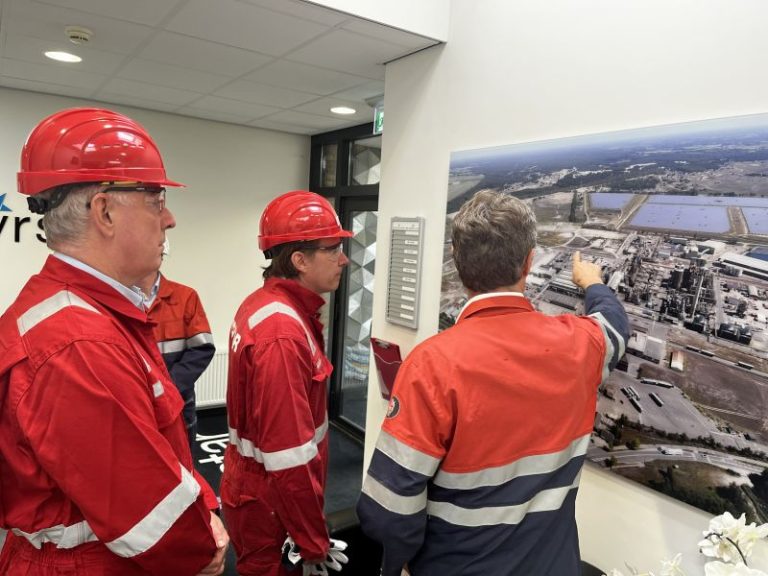
    In a bid to bolster Europe’s industrial capabilities, Nyrstar Budel in the Netherlands recently hosted Willem van der Leegte and Geert Jakobs from VDL Groep. This meeting underscored the importance of collaboration across the value chain, particularly in the processing of critical minerals essential for advanced manufacturing applications. The partnership aims to enhance Europe’s resilience by tapping into local resources and expertise.

    Nyrstar has identified an opportunity to extract valuable materials such as germanium, indium, antimony, and bismuth from its existing production streams. This initiative aligns with the European Union’s goal of achieving 40% domestic capacity for critical raw materials, which is vital for sustaining high-tech manufacturing and clean energy initiatives across the continent. The discussions with VDL highlighted the potential for these materials to support various strategic industries, including defense and green energy.

    The dialogue also explored future supply chains for germanium, which is crucial for VDL’s defense applications, as well as the integration of green hydrogen production by VDL’s partner, Alquion, into Nyrstar’s sustainable production processes. Such synergies are seen as pivotal for advancing the strategic relevance of the Noord-Brabant region and enhancing the collective expertise in critical processing within Europe.

    As the industry faces increasing demands for sustainable practices and local sourcing of materials, the cooperation between Nyrstar and VDL Groep exemplifies a proactive approach to addressing these challenges. Both companies expressed optimism about continuing their collaboration to foster innovation and strengthen the supply chains necessary for a competitive European industrial landscape.


  • Ionic Rare Earths Completes Feasibility Study for UK Rare Earth Facility

    Ionic Rare Earths Completes Feasibility Study for UK Rare Earth Facility

    Ionic Rare Earths Ltd has completed a feasibility study for its rare earth oxide manufacturing facility in Belfast, UK, confirming the project’s strong financial and environmental viability. The company operates a demonstration plant in Northern Ireland, maintaining a continuous supply of rare earth oxide.

    The study highlights an after-tax net present value (NPV) of $502 million, with an internal rate of return (IRR) of 43.6% and a capital payback period of just 2.4 years. Based on a throughput of 1,200 t/y, the facility is expected to produce 400 t/y of separated magnet rare earth oxides (REO) over a 20-year asset life, generating annual earnings of nearly $1.8 billion.

    Managing Director Tim Harrison emphasized the project’s role in promoting magnet recycling, describing it as environmentally friendly, commercially viable, and a step toward reducing dependence on Chinese rare earth production. “This represents a low capital risk pathway to sovereign magnet REO production, offering strong financial returns through a sustainable, circular economy model,” Harrison stated.

    With backing from the UK government, Ionic is now working on site permits and finalizing the front-end engineering design, with a final investment decision expected in the first half of 2025. Construction is slated to finish by late 2026, and the first commercial deliveries are targeted for early 2027.

    The project is anticipated to create 70 jobs, including roles at a technical center focused on further research in rare earth separation and magnet recycling. Ionic also plans to use the feasibility study to advance agreements for feedstock and off-take contracts.

    The company already has a partnership with Brazilian developer Viridis Mining and Minerals and is advancing its Makuutu heavy rare earths project in Uganda toward production.

  • Horizon Europe Awards €7.3 Million Grant to REPTiS Project for Sustainable Titanium Production

    Horizon Europe Awards €7.3 Million Grant to REPTiS Project for Sustainable Titanium Production

    The Horizon Europe program has allocated a four-year €7.3 million grant under the Resilient Value Chains 2024initiative to the REPTiS project (Responsible Extraction and Processing of Titanium and other Primary Raw Materials for Sourcing EU Industrial Value Chains and Strategic Sectors). The project includes participation from Ukraine’s Velta LLC, the Velta RD Titan Research and Development Center, and 11 leading European companies and research institutes.

    Europe is currently grappling with challenges in the titanium market, such as securing a sustainable supply chain and developing low-carbon production technologies. The REPTiS project aims to tackle these issues by demonstrating innovative solutions for extracting and processing critical titanium raw materials. This involves mining ilmenite ore at Ukraine’s Byrzulivske deposit, producing low-carbon titanium powder using the Ukrainian-developed Velta Ti Process, and manufacturing final products with advanced technologies like 3D printing and Metal Injection Molding.

    Andriy Brodsky, CEO of Velta, highlighted the significance of the project, stating, “The substantial funding for our consortium project underscores the EU’s recognition of Ukraine as a strategic partner—one capable of establishing a secure titanium supply chain from raw materials to final titanium products, which are critical globally.”

    The consortium, composed of European companies and research institutes, will focus on several key areas:

    • Energy Efficiency and Environmental Impact: Implementing new approaches to reduce energy consumption and environmental impact during titanium production at Velta’s mining facilities in Ukraine.
    • Advanced Titanium Powder Production: Showcasing cutting-edge titanium powder production technologies at the Velta RD Titan research center, including waste recycling and powder spheroidization through the Velta Ti Process.
    • Final Product Manufacturing: Producing and testing various final products, including aircraft components, medical implants, and watch casings, from Ukrainian titanium powder.

    Additionally, a comprehensive Life Cycle Assessment (LCA) will be conducted, evaluating the environmental efficiency of the improvements made under the REPTiS project, particularly the Velta Ti Process, compared to traditional titanium extraction and production methods.

  • World’s Largest Gold Consumers Struggle to Meet Demand with Mined Production

    World’s Largest Gold Consumers Struggle to Meet Demand with Mined Production

    A recent study by The Gold Bullion Company reveals that the world’s biggest gold consumers are not meeting their domestic gold demand through mined production, with India leading the gap. The study utilized data from the World Gold Council to analyze the disparity between gold demand and mined production across various countries.

    India, with a population exceeding a billion, has a substantial gold demand, totaling over 747 tonnes in 2023, primarily driven by jewelry and gold bar consumption. This amounts to approximately 0.52 grams per person. However, the country’s mine production significantly lags behind, producing only 15.1 tonnes, making demand nearly 50 times higher than supply.

    China, the second largest consumer, also faces a significant gap despite having the highest mine production among the top ten countries. With a population of over 1.4 billion, China’s annual gold demand reached 909.7 tonnes, but mine production could only cover about half of that.

    In third place is Turkey, where gold demand has been rising, from 1.13 grams per person in 2021 to 2.34 grams in 2023. The country’s mine production in 2023 was 36.5 tonnes, six times less than its demand of 201.6 tonnes.

    The United States also experiences a shortfall, with 2023 mine production at 166.7 tonnes, falling short by about 80 tonnes compared to its demand.

    Rick Kanda, managing director at The Gold Bullion Company, emphasized the importance of sustainable metal production, noting its critical role in environmental conservation, economic stability, and societal benefits. He highlighted that sustainable practices help conserve finite resources, reduce energy consumption, and minimize pollution, thus supporting a balanced approach to resource utilization.