Tag: strategic partnership

  • U.S. and Kazakhstan Forge Joint Venture to Secure Global Tungsten Supply

    U.S. and Kazakhstan Forge Joint Venture to Secure Global Tungsten Supply

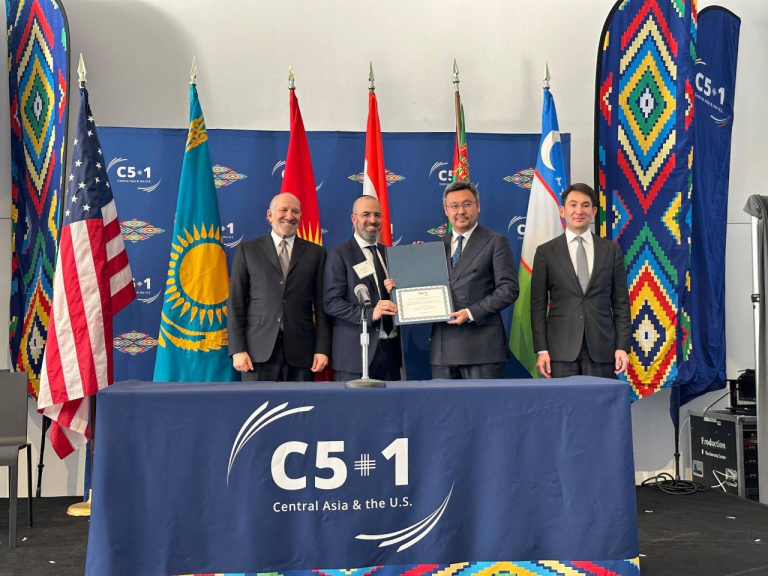
    Following the announcement of the joint venture between US-based Cove Capital LLC and Kazakhstan’s National Mining Company, JSC Tau-Ken Samruk, further details have emerged regarding the development timeline and scale of the Northern Katpar and Upper Kairakty tungsten projects.

    Cove Kaz Capital Group LLC (“Cove Kaz”), a portfolio company of U.S.-based Cove Capital LLC, will hold a 70 per cent interest, with Tau-Ken Samruk retaining 30 per cent ownership of Severniy Katpar LLP, which owns the Northern Katpar and Upper Kairakty tungsten projects.

    Cove Kaz will oversee marketing of 100 per cent of project output and has entered into a Letter of Intent with the International Trade Administration at the U.S. Department of Commerce to prioritise supply for U.S. government and commercial needs.

    The announcement was made in Washington, D.C., during the C5+1 Leaders’ Summit by U.S. President Donald J. Trump and Kazakhstan President Kassym-Jomart Tokayev.

    Total development costs for the Northern Katpar and Upper Kairakty projects are estimated at USD $1.1 billion. The Export-Import Bank of the United States has issued a Letter of Interest for USD $900 million in financing, complemented by a similar commitment from the U.S. International Development Finance Corporation.

    Cove Kaz’s project team will be led by Dominic Heaton, who previously oversaw development of the Nui Phao integrated tungsten mine and refinery in Vietnam – the world’s largest tungsten operation outside China. Preparatory work has already commenced to support a Definitive Feasibility Study for Northern Katpar, including the establishment of downstream refining capacity in Kazakhstan to produce ammonium paratungstate (APT) and other tungsten compounds.

    Pini Althaus, Chief Executive Officer of Cove Capital and Cove Kaz Capital, expressed gratitude for U.S. and Kazakh government support:

    “On behalf of Cove Capital and Cove Kaz, I wish to thank President Donald J. Trump, Secretary of Commerce Howard Lutnick, and the U.S. Trade Advocacy Center for their exceptional engagement. Their efforts have aligned financing, offtake pathways, and policy support to deliver a secure, allied tungsten supply for America’s industrial and defence needs.

    “I also wish to thank President Kassym-Jomart Tokayev for his leadership and partnership. This collaboration is a win for both nations—strengthening U.S. supply chains while fostering investment and long-term prosperity in Kazakhstan.”

    Tungsten – A Critical Industrial and Defence Mineral

    Tungsten is ranked by the U.S. Defense Logistics Agency as a “material of interest” and by the European Union as the raw material of highest economic importance due to its unique physical properties: the highest tensile strength at high temperatures, the highest melting point of any metal, and exceptional corrosion resistance.

    Its density and durability make tungsten indispensable in high-performance cutting and drilling tools, aerospace alloys, semiconductor contacts, and radiation shielding. In defence applications, tungsten is used in armour-piercing munitions, missile components, aircraft ballast, and other high-stress environments.

    Currently, China controls over 80 per cent of global tungsten production and processing. In February 2025, China imposed new export restrictions on tungsten and tungsten-containing products to the United States.

    Severniy Katpar LLP

    Severniy Katpar LLP holds licences for two projects—Northern Katpar and Upper Kairakty—located approximately 30 kilometres apart in the established Karaganda mining district of central Kazakhstan, less than 160 kilometres south of the city of Karaganda.

    Feasibility studies completed in April 2023 report total JORC-compliant mineral resources of 1.4 million tonnes of tungsten trioxide (WO₃), accounting for around 70 per cent of Kazakhstan’s total tungsten resources. For comparison, the U.S. Geological Survey estimates China’s reserves at 2.4 million tonnes.

    Combined production from both projects is expected to reach 12,000 metric tonnes per annum (mtpa) of tungsten trioxide—approximately 15 per cent of current global output.

    Cove Capital’s Broader Commitment in Kazakhstan

    Cove Capital’s portfolio company, Kaz Resources LLC, became in 2023 the first U.S. entity to receive critical minerals and rare earth concessions in Kazakhstan. These include licences for 13 minerals such as lithium, tantalum, beryllium, niobium, and rare earth elements.

    In 2024, Cove Capital and Tau-Ken Samruk formalised a joint venture for exploration of rare earths at the Akbulak project in the Kostanay region, with Cove holding 75 per cent and “Qazgeology” JSC 25 per cent. Cove is fully financing exploration activities until reserves are booked.

    About Cove Capital LLC

    Founded in 2015, Cove Capital is a mining-focused investment and development firm headquartered in New York and Melbourne. Since 2018, the company has focused on critical minerals projects that enhance U.S. and allied supply chains. Led by CEO Pini Althaus, Cove Capital brings extensive expertise across exploration, mining, processing, and offtake structuring.

    About Tau-Ken Samruk

    Tau-Ken Samruk, Kazakhstan’s national mining company, manages the sustainable development of the nation’s mineral wealth. Through partnerships with international investors, it aims to strengthen Kazakhstan’s mining sector and support the country’s long-term economic growth.

  • Kazakhstan and US Forge Strategic Alliance in Rare Earth Exploration

    Kazakhstan and US Forge Strategic Alliance in Rare Earth Exploration

    Kazakhstan’s state mining company, Tau-Ken Samruk, and US-based Cove Capital are set to begin geological exploration at the Akbulak site in the Kostanai Region, targeting the discovery of rare earth elements in a significant international venture.

    “This initiative reflects our commitment to modernising industry and infrastructure while building a research base capable of supporting high-technology sectors,” said a spokesperson for the Samruk Kazyna Sovereign Wealth Fund.

    The exploration forms part of a wider strategic partnership between the firms, focusing on advancing high-potential industries. In line with this, Kazakhstan aims to overhaul its production capabilities, introduce advanced processing technologies, and further strengthen its scientific foundation.

    According to the Ministry of Industry and Construction, rare and rare-earth metals contribute 2.4% of the nation’s metallurgy output. Since 2018, the government has allocated 67 billion tenge (£114 million) to support the industry. Large-scale geological surveys are ongoing, with 25 sites across 100,000 square kilometres and 38 promising mineral deposits identified in 2024 alone.

    Currently, Kazakhstan produces a wide array of strategic metals including beryllium, tantalum, niobium, scandium, titanium, rhenium, and osmium, with by-products such as bismuth, antimony, selenium, and tellurium. Technologies for extracting gallium and indium are also in place. Future economic opportunities are seen particularly in the production and recycling of battery materials, heat-resistant alloys, semiconductor materials, and permanent magnets.

  • Hungary’s MOL Expands Oil and Gas Operations in Kazakhstan, Eyes Broader Energy Partnership

    Hungary’s MOL Expands Oil and Gas Operations in Kazakhstan, Eyes Broader Energy Partnership

    Hungarian energy company MOL has secured approval to expand its oil and gas extraction operations in western Kazakhstan, following a new agreement with the Kazakh government. To date, MOL has invested 80 billion forints in the region, producing 300 million cubic meters of gas from a field where it operates five wells. The agreement supports MOL’s participation in developing additional oil and gas fields, leveraging its advanced extraction technologies to tackle challenging reserves.

    Hungarian Foreign Minister Péter Szijjártó announced the deal at a press conference, highlighting the emergence of a broader Kazakh-Chinese-Hungarian strategic partnership. This collaboration could enable MOL to participate in the development of a large, technologically complex field, further boosting energy production.

    The partnership also opens doors for cooperation in nuclear energy. Szijjártó revealed that dry cooling technology, developed by Hungarian company MVM, is being considered for cooling future nuclear power plants in Kazakhstan. This follows a recent referendum in Kazakhstan approving the construction of such facilities.

    In addition, Hungarian firm Globalia has been approved to build solar power plants in several regions of Kazakhstan. Key initiatives under the partnership include the construction of a multimodal cargo terminal in Budapest, increased supplies of Kazakh oil to Hungary, and the transport of uranium and critical minerals.

    To support these projects, a joint investment fund will be established, strengthening energy and infrastructure ties between the two nations.

  • Kazakhstan and China Strengthen Strategic Partnership Through High-Level Discussions

    Kazakhstan and China Strengthen Strategic Partnership Through High-Level Discussions

    Kazakhstan’s Deputy Prime Minister and Minister of Foreign Affairs, Murat Nurtleu, recently hosted Han Chunlin, the newly appointed Ambassador of China to Kazakhstan, to discuss strengthening bilateral relations. Their discussions centered on political, trade-economic, and cultural-humanitarian collaboration, with an emphasis on upcoming high-level visits and shared initiatives within multilateral frameworks. Both parties reaffirmed their commitment to advancing mutual cooperation, leveraging their roles in regional organizations like the Shanghai Cooperation Organisation (SCO) to address shared goals in security, economic development, and combating transnational challenges like terrorism and drug trafficking.

    Kazakhstan’s relationship with China has significantly evolved since its independence in 1991. The two nations have successfully navigated border agreements, expanded economic partnerships, and established a robust strategic alliance. This cooperation reflects Kazakhstan’s strategic intent to balance geopolitical dynamics in the region while diversifying its international partnerships. The meeting also highlighted plans for enhanced cultural exchange and investment projects, further solidifying the ties between the countries.

    The Foreign Minister expressed his optimism for future collaborations and wished Ambassador Han success in his role. This meeting follows an earlier dialogue between Han Chunlin and Kazakh President Kassym-Jomart Tokayev, focusing on strengthening trade, cultural exchanges, and investment opportunities as key pillars of bilateral relations.

  • Britain – Kazakhstan rare earth relations

    Britain – Kazakhstan rare earth relations

    In March, Kazakhstan and the United Kingdom signed a Roadmap for Cooperation in the field of critical minerals. This initiative aims to strengthen the partnership by establishing joint ventures within Kazakhstan. Kazinform’s correspondent investigates the benefits that Kazakhstan stands to gain from this collaboration with the UK.

    As the world rapidly moves towards a “green” future, the demand for critical minerals is steadily increasing. These minerals, including rare elements and certain metals, are crucial for the economic prosperity and national security of leading nations. The creation of sustainable supply chains and access to these elements’ deposits are at the heart of the UK’s strategy for critical minerals, adopted in July 2022 and updated in March last year.

    “We are moving towards a world based on critical minerals: we need lithium, cobalt, and graphite for electric vehicle batteries; silicon and tin for our electronics; rare earth elements for electric vehicles and wind turbines,” states the UK strategy document.

    The document emphasizes that critical minerals will become even more significant in the future, with expectations that by 2040, the world will need four times more of these minerals for clean energy technologies.

    Participants at the “Energy Transition 2023” conference at the Chatham House in the UK reported that wind generators and electric vehicle manufacturers urgently need neodymium and praseodymium, while suppliers of high-voltage power lines require cobalt and aluminium.

    Of the 18 critical minerals identified by the British Geological Survey, eight are already produced in Kazakhstan, with raw material bases for the other eight available in the country. This positions Kazakhstan among the top 10 key partners for the UK in this sector.

    Kazakhstan and the UK approved a Roadmap for Strategic Partnership in the field of critical minerals in March 2024. The British side emphasizes “sharing experience in mineral extraction and processing with support for the full lifecycle of raw material extraction,” viewing London as a financial and trade hub. Kazakhstan’s Ministry of Industry and Construction aims to create production with added value for critical raw materials, parts, or components for subsequent delivery to consumer countries.

    Deputy Minister of Industry and Construction, Iran Sharkan, noted that the minimum raw material processing threshold for investors matches the intermediate level, meaning goods of low technological complexity or semi-finished products. Specific projects include collaborative work on advanced international practices and modern technology for geological mapping, as well as promoting best practices in regional exploratory and mapping work for critical minerals between the Geological Survey of Kazakhstan and the British Geological Survey.

    One existing example of cooperation is the joint venture between MaritimeHouse and “Zhezkazganredmet” for rhenium processing in Kazakhstan. Rhenium is a rare metal mainly used as an alloying addition in the production of heat-resistant alloys essential for high-temperature installations like aircraft engines, industrial gas turbines, and rocket engines.

    According to Kazakhstan’s Ministry of Industry and Construction, beryllium, tantalum, vanadium, copper, titanium, and phosphorus are already being supplied to the UK market. However, the ministry did not comment on the degree of processing or the form of the exported products in response to Kazinform’s inquiry.

    Experts highlight that cooperation with Kazakhstan is vital for the UK to achieve its goals of securing access to mineral resources. Jeff Townsend, founder of the British Critical Minerals Association, stated that about 40% of Kazakhstan’s territory has been fully explored, making it an incredible opportunity to build a continuous supply chain from initial exploration and extraction to early processing stages and subsequent processing and marketing in the UK.

    Political changes in Kazakhstan over recent years have made the country more attractive to British companies. However, Townsend noted three challenges: the lack of understanding of Kazakhstan’s business environment among British companies, logistical difficulties in delivering goods to the UK, and competition with Chinese companies. Despite these challenges, the British believe that their technological advantages and expertise will help them overcome these obstacles and maintain their competitiveness.

  • EBRD and Kazakhstan Collaborate to Modernize Mining Sector

    EBRD and Kazakhstan Collaborate to Modernize Mining Sector

    An a significant move to enhance the national mining sector, the European Bank for Reconstruction and Development (EBRD) and Kazakhstan have signed a Memorandum of Understanding (MoU). The agreement, aimed at promoting modernisation and development within the sector, was formalized today by Kazakhstan’s Minister of Industry and Construction, Kanat Sharlapaev, and EBRD First Vice President, Jürgen Rigterink. This partnership will focus on improving governance, transparency, and regulation, adhering to international standards and practices.

    The MoU is a crucial element of the EBRD’s strategy for responsible exploration and mining of critical raw materials. It includes the creation of an advanced system for capturing, processing, and disseminating geoscientific documents such as maps and data. Additionally, the initiative aims to develop the legal and regulatory frameworks governing the mining sector.

    The signing ceremony was attended by EU Executive Vice-President Valdis Dombrovskis, underscoring the agreement’s importance within the EU-Kazakhstan critical raw materials roadmap and their broader strategic partnership.

  • EU and Australia Nearing Strategic Partnership on Raw Materials for Green and Digital Transitions

    EU and Australia Nearing Strategic Partnership on Raw Materials for Green and Digital Transitions

    The European Union (EU) and Australia are on the brink of forging a strategic partnership aimed at securing the essential raw materials crucial for their respective green and digital transitions. According to a spokesperson from the European Commission, negotiations have been underway for a memorandum of understanding (MoU) that will lay the groundwork for this partnership. Commission spokesperson Johanna Bernsel disclosed to POLITICO on Monday that they anticipate signing this pivotal agreement as early as May. Sources close to the discussions revealed that both parties have reached a substantial consensus on the content of the MoU, which is nearing its final form. An official, speaking on condition of anonymity due to the confidential nature of the talks, suggested that the announcement of the deal could be expected in the upcoming weeks or months.

  • European Lithium and Sizzle conclude business merger

    European Lithium and Sizzle conclude business merger

    European Lithium has finalized a strategic partnership with Sizzle Acquisition, resulting in the establishment of Critical Metals.

    This collaboration positions the Wolfsberg Lithium Project as the inaugural flagship asset of Critical Metals, with the company’s immediate focus on advancing the mine’s construction and commissioning.

    The successful conclusion of the transaction and subsequent listing of Critical Metals on the Nasdaq represent significant milestones in bolstering the development of this pivotal lithium asset, essential for Europe’s transition to green energy.

    As part of the agreement, European Lithium has received 67,788,383 ordinary shares in Critical Metals, securing the company’s status as the largest shareholder with an 83.03% stake in the issued capital.

    The estimated value of European Lithium’s investment in Critical Metals currently stands at $839 million (A$1.3 billion), based on the closing share price of $12.38 per share as of February 29, 2024.

  • Korean companies are interested in projects related to engineering, mining, and nuclear energy

    Korean companies are interested in projects related to engineering, mining, and nuclear energy

    The President of Kazakhstan recently engaged in negotiations with the President of the Republic of Korea, Moon Jae-in, as reported by the Akorda press service. The discussions centered around the future prospects of the strategic partnership between Kazakhstan and South Korea.

    Kassym-Jomart Tokayev, the President of Kazakhstan, emphasized the friendly relations shared between the two nations and highlighted the significance of the dynamic development of their economic ties. The President noted that bilateral trade turnover has consistently shown growth, surpassing 6 billion dollars last year. Furthermore, Korean companies have made substantial investments in Kazakhstan’s economy, totaling over 8 billion dollars, positioning them as one of the top 10 major investors in the country.

    The President also drew attention to the presence of more than 700 Korean companies and joint ventures currently operating in Kazakhstan, including prominent names such as KIA, Hyundai, Samsung, LG, and others. During the negotiations, Kassym-Jomart Tokayev outlined promising areas of economic cooperation, particularly in the extraction of rare earth metals and the development of nuclear energy.

    President Moon Jae-in of Korea expressed his country’s keen interest in further enhancing mutually beneficial cooperation with Kazakhstan. He emphasized that Korean companies exhibit a special interest in expanding existing projects and undertaking new ventures in machinery manufacturing, mining, and nuclear energy sectors.