Tag: social responsibility

  • Kazchrome Recognized as Central Asia’s Best Social Partner

    Kazchrome Recognized as Central Asia’s Best Social Partner

    Kazchrome, a subsidiary of ERG, has been named the “Best Social Partner” in Central Asia by the Council of Trade Unions of Central Asia (CTSCA). This award reflects Kazchrome’s exemplary efforts in fostering social responsibility, workplace safety, and community development.

    The award was announced during the CTSCA’s VI meeting in Dushanbe, with Kazchrome CEO Sergey Prokopiev receiving the honor. Prokopiev credited the recognition to the company’s dedication to creating favorable employee conditions and supporting regional communities. As a key employer, Kazchrome has been pivotal in advancing socio-economic development in its operational areas.

    In 2024, Kazchrome allocated approximately 9 billion tenge for employee welfare programs, including professional development, corporate culture initiatives, and comprehensive social support. The company also invested significantly in community projects such as public space enhancements, cultural center construction, and procurement of healthcare and educational resources.

    Kazchrome’s ongoing initiatives are part of a broader ERG effort to uphold sustainability and social responsibility principles, ensuring long-term growth and community well-being.

  • Qarmet:  A New Era for Kazakhstani Metallurgy Under Domestic Ownership

    Qarmet: A New Era for Kazakhstani Metallurgy Under Domestic Ownership

    Following the state acquisition of ArcelorMittal Temirtau and the departure of its long-standing investor in 1995, Qarmet JSC remains a focal point of interest. Ambitious plans are underway for the enterprise under the new domestic shareholder, with implementation overseen by the government. The top priorities set by the company’s management reflect a commitment to revitalizing operations and ensuring safety.

    Upon the tragic incident at the Kostyanko mine last year, the Kazakhstani government opted to terminate investment cooperation with ArcelorMittal Temirtau, acquiring its assets for $286 million. The Allur Group of companies, led by Andrey Lavrentyev, emerged as the new owner, restoring the plant’s historical name — Qarmet.

    In addition to asset acquisition, the investor has pledged an additional $3 billion for production modernization and environmental protection, with $1.3 billion earmarked for the current year alone. With the new ownership and name come renewed optimism among the plant’s workers, anticipating solutions to existing equipment and working condition issues.

    Talgat Temirkhanov, Qarmet’s official representative, highlighted the development of a comprehensive plan for industrial safety and production modernization, leveraging international best practices and collaborations with industry leaders like BaowuSteel and the Boston Consulting Group.

    The company’s management underscores the priority of restoring production while enhancing labor safety, with a focus on addressing critical equipment issues. General Director Vadim Basin outlined moderate production targets for 2024, anticipating increases in steel and iron ore concentrate production alongside a slight decrease in coal mining volumes.

    In alignment with the name change, Qarmet’s focus extends to environmental sustainability, labor protection in mines, and social responsibility. Investments in new drilling rigs, modern heading combines, and gas monitoring stations underscore the commitment to improving production environments.

    Decisions have been made to introduce positioning systems at all mines, along with plans for central dispatching and mine degassing. New construction initiatives include the development of coke batteries, polymer coating lines, and beneficiation plants, signaling a drive toward revitalizing the plant and empowering its workforce.

  • How does the environmental agenda affect Kazakhstan’s industry?

    How does the environmental agenda affect Kazakhstan’s industry?

    The adoption of ESG principles, encompassing environmental, social, and corporate governance aspects, is gaining momentum worldwide, and Kazakhstan is no exception. According to inbusiness.kz, major manufacturing companies in the country are actively modernizing their facilities, implementing measures to reduce emissions, and promoting waste recycling practices.

    By incorporating ESG principles into their operations, companies can not only improve their environmental impact but also enhance their social and managerial aspects, ultimately leading to improved financial and economic performance. Natalya Lim, a partner at PwC, emphasizes the urgent need for a global and unified approach to address critical issues such as climate change, poverty, inequality, and water scarcity.

    Lim believes that the corporate sector plays a decisive role in overcoming these challenges, and organizations in Kazakhstan are demonstrating their readiness to take responsibility and drive positive changes. In the industrial sector, companies like “KazMunaiGaz” are leading the way by adopting their own “Low Carbon Development Program for 2022-2031.” The objective of this program is to reduce greenhouse gas emissions by 15% by 2031 compared to the baseline year of 2019.

    Moreover, “KazMunaiGaz” is actively collaborating with partners to develop renewable energy projects with a total capacity of at least 1 gigawatt, along with an energy storage system of 300/600 megawatts. These efforts reflect the commitment of Kazakhstani companies to sustainable development and their contribution to mitigating environmental challenges while driving economic growth.
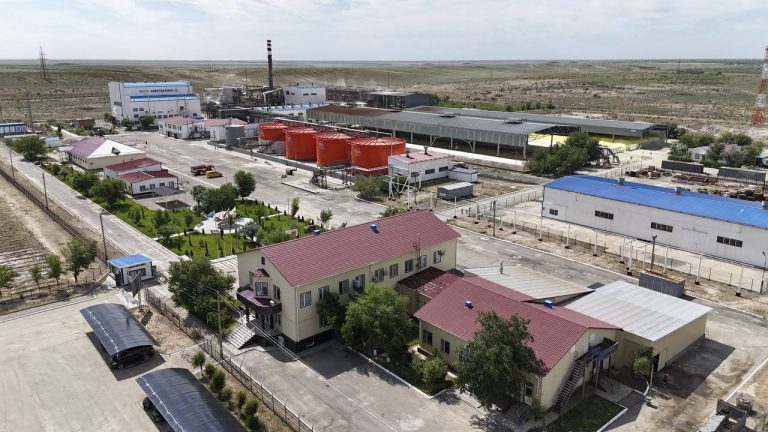
    Another industrial giant, Eurasian Resources Group, is actively working on reducing emissions at its facilities and minimizing their environmental impact. For instance, on August 10th, they showcased a unique ore processing plant for handling the tailings of the Donskoy Mining and Processing Plant to the Prime Minister of Kazakhstan, Alihan Smailov. This plant was built by the multinational company “Kazchrome” (a subsidiary of ERG) in the city of Khromtau, Aktobe region.

    Why is this project important? The Donskoy Mining and Processing Plant was founded in 1938 in Khromtau and is the world’s second-largest deposit of confirmed chromium reserves. The ore extracted here is used for the production of ferroalloys in metallurgy, the manufacturing of refractories, and in the chemical industry for producing chromium compounds.

    Every year, in the process of crushing and grinding chromium ore at the plant, around 900,000 tons of tailings waste are generated. Currently, there are already 14.5 million tons of accumulated tailings containing up to 35% chromium oxide. “Kazchrome” decided to address this issue by constructing the ERG Green ore processing plant.

    This plant will enable the extraction of chromium oxide from the tailings through gravity-based enrichment, and the resulting commercial concentrate can be used in metallurgy for further processing.

    The new facility will allow for the processing of approximately 1.7 million tons of tailings annually, both the existing waste and the continuously generated new waste. Consequently, this will not only improve the environmental conditions in the Aktobe region but also enhance the economic efficiency of the plant itself.

    “The most important thing is that after processing, the tailings must be properly reclaimed in accordance with all environmental standards to minimize the impact on the environment and public health,” commented Alihan Smailov during his visit to the factory.

    In parallel with this, by the end of 2024, as part of the program for processing accumulated tailings, three more initiatives are planned to be implemented. As a result, ERG will ensure the production of 200,000 tons of ferrochrome, leading to an additional revenue of approximately 10 billion tenge in tax receipts annually for the state.

    “Following the company’s mission and ESG principles, management must ensure high environmental standards. Therefore, the group has developed an Environmental Strategy as part of our comprehensive ‘Green Metallurgy’ program. Within the environmental strategy until 2030, we plan to invest 228 billion tenge,” noted Shuhrat Ibragimov, Chairman of the Supervisory Board and member of the Board of Directors of ERG, during the project presentation.

    Investors are involved in the process
    Initiatives like these require substantial investments, and modernizing existing facilities or building new ones is difficult without the assistance of investors.

    For example, the total investment in the ERG Green plant project amounted to 96 billion tenge. Part of the funding was provided by the Development Bank of Kazakhstan, which, according to the project list, has actively begun working in the ESG direction.

    “We consider supporting projects that adhere to the principles of sustainable development to be important. This project aligns with the Environmental Code’s principles of sustainable development – the preservation of natural resources for current and future generations, as well as the principle of integration – the balance between environmental tasks and economic development,” commented Marat Yelibaev, Deputy Chairman of the Board of BRK.

    Like other development institutions, the Development Bank of Kazakhstan is focusing on projects that incorporate ESG principles into their operations. For instance, earlier this year, the bank issued its first “green” bonds, and the proceeds from the bond issuance were directed towards a project by the KEGOC company for modernizing the power grids in Western Kazakhstan.

    In the summer, a credit agreement was signed with the “Almaty Power Plants” to convert TEC-2 in Almaty to natural gas. This project will be financed jointly with the European Bank for Reconstruction and Development and the Asian Development Bank.

    From the example of BRK and other financial institutions, a clear trend is emerging: ESG initiatives of businesses are of interest to investors. This signals that in the near future, many more environmental projects will be implemented by industrial and infrastructure companies.

  • Explained: The EU’s handicap in the global race for critical raw materials

    Explained: The EU’s handicap in the global race for critical raw materials

    The EU is highly dependent on third countries for the raw materials needed to engineer its energy transition and digital transformation.

    Russia’s war in Ukraine and the need to wean itself off fossil fuels in order to reach climate targets have prompted the EU to accelerate its green transition in recent months but also forced it to acknowledge its dependencies over access to critical raw materials.

    In the global race for raw materials, the EU faces multiple challenges.

    The first one is China, which recently started restricting exports of gallium and germanium, two metals essential for the production of semiconductors, in response to Western curbs on Beijing’s access to micro-processing technology.

    The EU considers both materials of high strategic importance. As well as semiconductors and other electronic devices, they are used for military applications such as missile defence and radar systems.

    Beijing’s restrictions come as a stark warning as the EU attempts to diversify and boost domestic supply of raw materials to reduce dependency on third countries.

    Reliance on ‘low-governance’ countries

    But diversifying supply chains could mean the EU has to source these materials from countries that don’t adhere to the same standards.

    Recent data suggests the EU’s supply is highly dependent on countries that have a low governance level, based on indicators including political stability, rule of law and corruption control.

    The EU’s Critical Raw Materials Act (CRMA), adopted in March this year, stipulates that EU strategic projects to scale up supply must be assessed taking into account all aspects of sustainability, including environmental protection, socially responsible practices and respect for human rights such as the rights of women.

    But many countries feeding EU supply are not aligned with European values. This raises concerns about the impact on the local communities where materials are mined, as well as the potential exploitation of natural resources.

    For example, the Democratic Republic of Congo, whose governance indicators are among the lowest in the world, supplies 63% of the EU’s cobalt, which is essential for manufacturing batteries for electrical vehicles.

    Diversifying supply a challenge

    The EU is also highly dependent on single countries for key materials such as Magnesium (China, 97%), Lithium (Chile, 97%), Iridium (South Africa, 93%) and Niobium (Brazil, 92%). These dependencies make supply chains vulnerable.

    The Critical Raw Materials Act aims to ensure no third country provides more than 65% of the Union’s annual consumption of any raw material.

    But diversifying supply is complex when refineries of many essential materials are monopolised by one or more global powers. China dominates the refining market for many critical raw materials.

    Russia’s invasion of Ukraine and the ensuing energy crisis has shown the acute dangers of over-reliance for supplies of raw materials. China’s increasingly antagonistic stance and the political instability in many African countries have also served as reminders of the fragility of the EU’s trading relationships.

    A spiralling global demand

    The demand for raw materials is growing steeply, as developed countries race to digitalise and decarbonise their economies. This can only happen with sufficient supply of raw materials, meaning countries must scale up extracting, refining and recycling operations.

    The global demand for lithium, for example, is set to increase a staggering 89-fold by 2050, according to the European Commission. Demand for gallium will multiply 17-fold during the same time.

    The Critical Raw Materials Act sets targets for the Union to extract 10%, process 40% and recycle 15% of its annual consumption of raw materials by 2030.

    To meet these targets and compete on the global stage, European Commission President Ursula von der Leyen has said the EU needs to speed up investments in research and development, recognising that the bloc’s global share of R&D expenditure has fallen 10% in the last 20 years.