Tag: royalty tax

  • Kazakhstan Vice Minister Details Royalty Shift, Strategic Investor Status and 50 New Auctions in Mining Sector Overhaul

    Kazakhstan Vice Minister Details Royalty Shift, Strategic Investor Status and 50 New Auctions in Mining Sector Overhaul

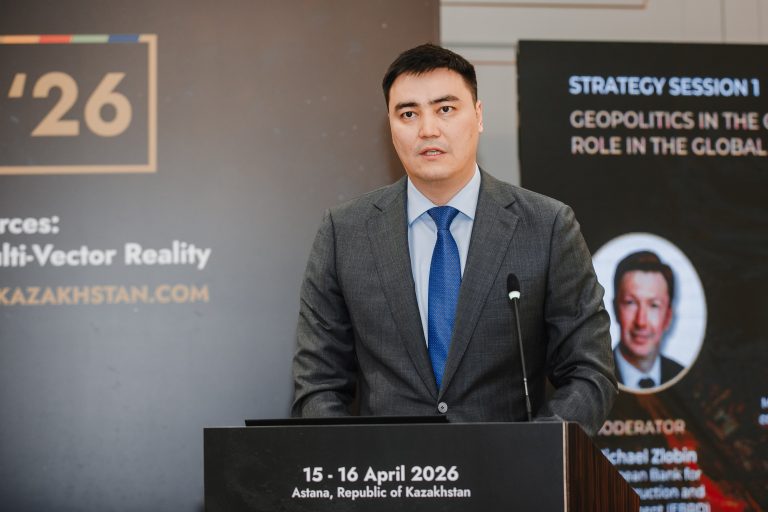
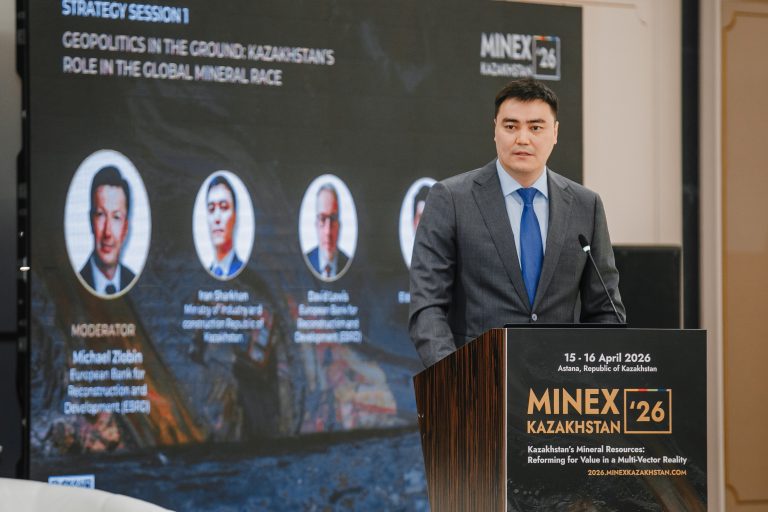
    Kazakhstan’s vice minister of industry and construction has set out the most detailed account yet of how the country intends to move away from its raw material export model, outlining a package of tax, regulatory and infrastructure reforms at the MINEX Kazakhstan 2026 forum in Astana.

    Iran Sharkhan described the transition as a shift toward a value-added economy, with domestic deep processing, technology development and the attraction of long-term strategic investors at its core. He confirmed that 2025 amendments to the Subsoil and Subsoil Use Code were designed to improve sector regulation, attract investment and digitalise licensing and permitting procedures — building a more transparent and predictable environment for business.

    On taxation, the government plans to replace the mineral extraction tax with a royalty system, a change officials say will improve transparency and better align Kazakhstan with international investment norms. Alongside this, a new strategic investor status will be introduced, granting preferential conditions to companies that commit to processing raw materials inside the country — creating a direct financial incentive for domestic value-added production rather than export of unprocessed ore.

    Sharkhan emphasised the breadth of Kazakhstan’s geological endowment, noting that the state register contains approximately 10,000 deposits. In 2025 alone, seventeen new deposits were added, including Kok-Zhon, Altyn-Shoko and Samombet. Geological survey coverage has now exceeded two million square kilometres, with particular emphasis being placed on more detailed mapping scales to improve the precision of prospective area identification.

    To expand business access to subsoil resources, auctions for exploration and extraction rights across 50 deposits of solid minerals are planned for this year. On the infrastructure side, a modern laboratory complex is being built in Astana on the basis of the National Geological Survey, with commissioning scheduled for 2028. The facility is expected to raise the quality of geological research and accelerate the pace of deposit development across the country.

  • Kazakhstan Vice Minister Outlines Royalty Reform and 50 New Auction Sites at MINEX 2026 as Country Targets Value-Added Mining Model

    Kazakhstan Vice Minister Outlines Royalty Reform and 50 New Auction Sites at MINEX 2026 as Country Targets Value-Added Mining Model

    Kazakhstan’s vice minister of industry and construction has set out the government’s priorities for the mining and subsoil use sector at the MINEX Kazakhstan 2026 forum in Astana, anchoring the country’s strategy around a shift from raw material exports to domestic deep processing, legislative modernisation and the attraction of long-term strategic investors.

    Speaking at the forum, Iran Sharkhan said Kazakhstan was moving decisively from a resource-based economic model toward value-added production. “The priority is deep processing of raw materials within the country, technology development and attracting strategic investors oriented toward long-term impact,” he said. He added that improving the investment climate remained a core government objective, pointing to amendments introduced in 2025 to the Subsoil and Subsoil Use Code aimed at refining sector regulation, stimulating investment and digitalising licensing procedures.

    Two legislative changes stand out. The first is a transition from a mineral extraction tax to a royalty-based system, which officials say will improve transparency and make the sector more attractive for sustained investment, particularly in processing. The second is the formal establishment of a strategic investor status, granting preferential conditions to investors who commit to processing raw materials domestically — directly incentivising value chain development over simple extraction and export.

    Kazakhstan’s mineral resource base encompasses approximately 10,000 registered deposits. In 2025, seventeen deposits were placed on the state register for the first time, including Kok-Zhon, Altyn-Shoko and Samombet. Geological survey coverage has now reached 2.038 million square kilometres against a 2026 target of 2.2 million square kilometres, with a transition to more detailed mapping scales planned to improve the identification of prospective areas. In 2026, auctions for subsoil use rights across 50 deposits are planned for exploration and hard mineral extraction. A modern laboratory complex is also under development in Astana on the basis of the National Geological Survey, with commissioning scheduled for 2028.

    MINEX Kazakhstan 2026, running from 14 to 16 April, has brought together more than 500 participants, over 100 speakers, 40 exhibitors and more than 1,000 visitors from 33 countries, with sector reform, processing development and investment attractiveness as its central themes.

  • Kazakhstan Pivots From Raw Materials to Value-Added Economy With Royalty Reform and Strategic Investor Status at MINEX 2026

    Kazakhstan Pivots From Raw Materials to Value-Added Economy With Royalty Reform and Strategic Investor Status at MINEX 2026

    Kazakhstan is accelerating its transition from a raw materials export model toward a higher value-added economy, with deep in-country processing, legislative reform and the attraction of long-term strategic investors now at the centre of its mining sector strategy, according to the country’s vice minister of industry and construction.

    Speaking at the MINEX Kazakhstan 2026 forum in Astana, Iran Sharkhan outlined the government’s core priorities for the subsoil use sector. “Kazakhstan is moving from a raw materials model to a value-added economy,” he said. “The priority is deep processing of raw materials within the country, technology development and attracting strategic investors oriented toward long-term impact.”

    Central to the reform agenda are two significant legislative changes introduced through 2025 amendments to the Subsoil and Subsoil Use Code. The first is a shift from a mineral extraction tax to a royalty-based system, which the ministry says will improve sector transparency and make Kazakhstan more attractive for long-term investment, particularly in the deep processing segment. The second is the formal introduction of a “strategic investor” status, granting preferential conditions to investors who commit to processing raw materials domestically — creating a direct incentive for value-added industrial development over simple extraction and export.

    On the geological front, Kazakhstan’s mineral resource base encompasses approximately 10,000 registered deposits. In 2025, seventeen deposits were placed on the state register for the first time, including Kok-Zhon, Altyn-Shoko and Samombet. Survey coverage has now reached 2.038 million square kilometres against a target of 2.2 million square kilometres by 2026, with a transition to more detailed geological mapping scales planned to improve the identification of prospective areas. In 2026, auctions for subsoil use rights across 50 deposits are planned for both exploration and hard mineral extraction. A modern laboratory complex is also under development in Astana on the basis of the National Geological Survey, with commissioning scheduled for 2028.

    MINEX Kazakhstan 2026, running from 14 to 16 April in Astana, has brought together more than 500 participants, over 100 speakers, 40 exhibitors and more than 1,000 visitors from 33 countries, with industry reform, processing development and investment attractiveness as its central themes.