Tag: royalties

  • Agnico Eagle Exits Sweden’s Barsele Project, Strengthens Stake in Goldsky

    Agnico Eagle Exits Sweden’s Barsele Project, Strengthens Stake in Goldsky

    Agnico Eagle has agreed to sell its 55% interest in the Barsele gold project in northern Sweden, shifting from direct project ownership to a royalty-based exposure while significantly increasing its equity position in partner Goldsky Resources.

    Under the transaction, Agnico Eagle will receive $20 million in cash and 75.5 million Goldsky shares, valued at C$2.64 each, resulting in Goldsky becoming the sole owner and operator of the Barsele project. The deal also includes a 2% net smelter return royalty retained by Agnico Eagle.

    The sale will be executed through Agnico Sweden AB’s divestment of its stake in Gunnarn Mining AB. Completion is expected by June 30, subject to approvals from the TSX Venture Exchange and Goldsky shareholders.

    Following the transaction, Agnico Eagle’s ownership in Goldsky will increase to approximately 32.5% on a non-diluted basis, up from about 4.1%, with its shareholding rising from roughly 7.4 million to nearly 82.9 million shares. An amended investor rights agreement will allow Agnico Eagle to participate in future equity financings to maintain ownership of up to 19.99% and to nominate up to three directors to Goldsky’s board, though the company said it has no immediate plans to exercise those rights.

    Agnico Eagle said the move reflects ongoing portfolio optimization. While exploration over the past decade has expanded Barsele’s mineral resources, the company noted that additional work is required to move the project toward development.

    Located in Västerbottens Län, around 600 km north of Stockholm, the Barsele project remains one of Sweden’s more advanced gold exploration assets. Agnico Eagle continues to operate producing mines across Canada, Australia, Finland and Mexico.

  • Kyrgyzstan Unveils Critical Minerals Strategy at MINEX Eurasia Conference in London

    Kyrgyzstan Unveils Critical Minerals Strategy at MINEX Eurasia Conference in London

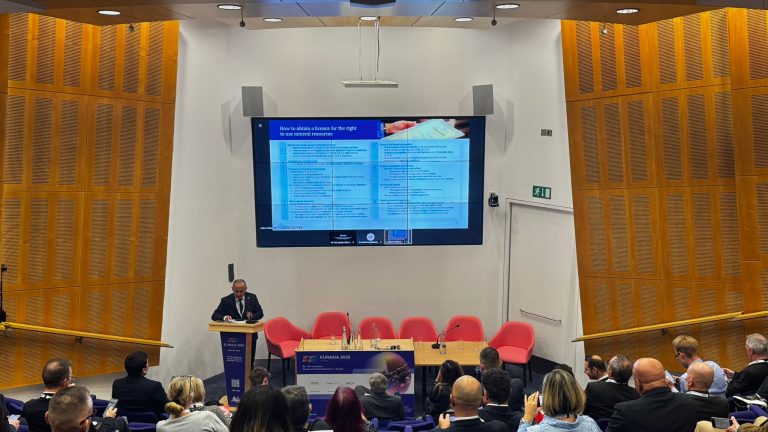
    London, 1 December 2025 – The MINEX Eurasia conference in London hosted a keynote address by H.E. Meder Mashiev, Minister of Natural Resources, Ecology, and Technical Supervision of Kyrgyzstan, outlining the country’s strategic vision for its critical minerals sector.

    Kyrgyzstan’s Strategic Minerals Vision

    The Minister outlined Kyrgyzstan’s methodical approach to prioritising and developing its critical minerals sector, identifying 21 key minerals based on global demand, local deposits, and resource concentrations. Kyrgyzstan’s analysis resulted in the selection of 4 priority projects, 5 promising deposits, and 16 prospective areas for further study and development. These assets, spread across antimony, beryllium, rare earths, molybdenum, bismuth, zinc, silver, and others, offer significant commercial and strategic potential for investors and end-users in energy, electronics, and high-value manufacturing.

    Investment and Development Framework

    State companies, notably Kyrgyzgeology, are driving exploration and project development, supported by government incentives and openness to international partnership. Strategic sites are being actively promoted for joint ventures or direct investment. Major domestic and international firms manage several large sites, while more than 100 mining enterprises operate in the country—spanning gold, copper, and polymetallic ores.

    Tax and Licensing Regime

    The session detailed Kyrgyzstan’s tax policy, which includes a mix of one-time bonuses for mining rights, royalties, profit tax, and VAT. The overall effective tax burden stands between 25–30%, complemented by social and environmental levies such as waste disposal, emissions, and water usage fees. Procedures for subsoil use licensing are harmonized with those in neighbouring countries, with initiatives being considered to simplify the processes and make it more transparent.

    ESG, Transparency, and Sustainable Mining

    Kyrgyzstan’s evolving strategy strongly emphasizes environmental, social, and governance (ESG) standards, aiming to foster responsible mineral development, minimize ecological impact, ensure transparency, and maximize benefits for local communities. The new strategy promotes the deployment of advanced technologies, environmental sustainability, and transparent investment processes, aligning with best practices to attract reliable, long-term partners.

    Opportunities for International Partnership

    Kyrgyzstan welcomes active collaboration with global investors and mining enterprises, seeking to leverage modern mining technologies, improve environmental outcomes, and maximize economic benefits. The country’s critical mineral strategy is closely linked to green growth targets and broader Eurasian supply chain integration.

  • The Devil is in the Detail: Key Concerns of Kazakhstan’s Mining Sector Investors

    The Devil is in the Detail: Key Concerns of Kazakhstan’s Mining Sector Investors

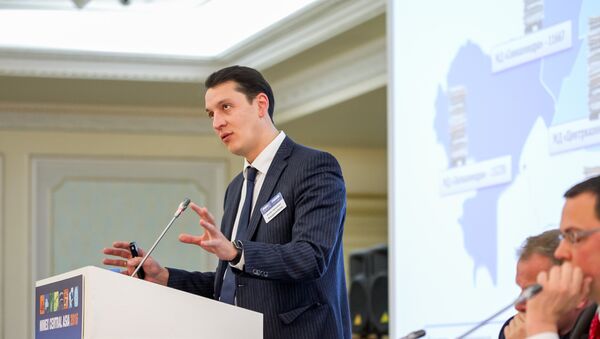
    While Kazakhstan has established itself as one of the most attractive jurisdictions for geological exploration investment, recent developments have unsettled international partners. Ruslan Baimishev, President of the Kazakhstan Mining Chamber, outlined these concerns during a panel discussion in Almaty, as reported by LS.

    Baimishev noted that major industry players invest with long-term horizons—often 10 to 15 years—making regulatory stability crucial. He acknowledged that reforms in 2018 had positioned Kazakhstan as a globally competitive mining jurisdiction. However, he warned against backtracking, citing attempts to reintroduce restrictive policies, such as stricter reserve reporting rules and restricted access to geological data.

    “During the last parliamentary session, several draft laws initially welcomed by MPs were later amended, effectively reverting to outdated practices and deviating from international standards,” Baimishev explained. Though these changes were ultimately halted, the mere attempt sent worrying signals to investors.

    Another pressing issue is tax reform. The new Tax Code, set to take effect in 2026, introduces higher land lease fees, which could discourage large-scale exploration. Baimishev argued that while the intent—to incentivise faster project development—is logical, investors need clarity on post-exploration taxation. He also criticised proposed royalty rates, which, despite being marketed as investor-friendly, may apply unevenly, disadvantaging existing license holders.

    On a positive note, Baimishev praised ongoing government-business dialogue and improvements in geological data accessibility. However, he urged further refinements, particularly in licensing procedures for restricted areas.

    Separately, Nikolai Radostovets of the Republican Association of Mining and Metallurgical Enterprises raised concerns over a proposed 1% R&D levy. While 30% would fund geological studies—a sector priority—he argued the remaining 70% should support industry-specific innovation rather than being absorbed into the state budget.

    Saken Shayakhmetov of Kazakhmys added that without strategic R&D investment, Kazakhstan risks falling behind technologically as mineral reserves deplete.

  • 15th MINEX Kazakhstan Forum Highlights Second Phase of Mining Law Reform

    15th MINEX Kazakhstan Forum Highlights Second Phase of Mining Law Reform

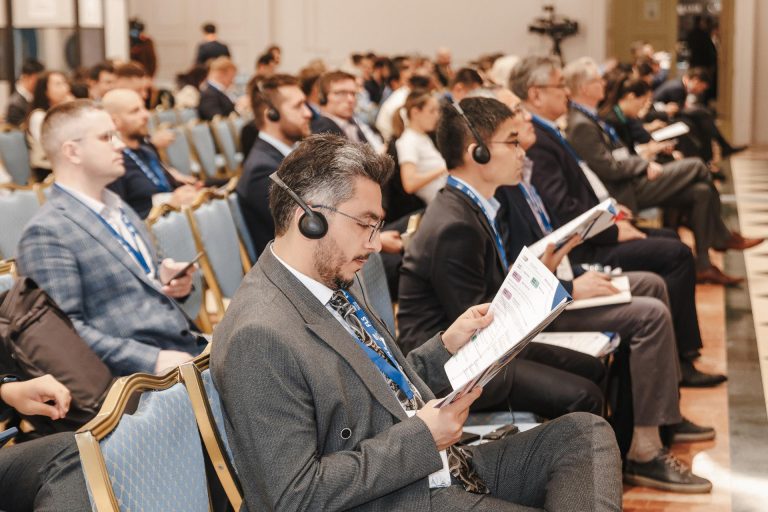
    The 15th anniversary MINEX Kazakhstan Forum has officially opened in Astana, bringing together over 450 delegates and more than 100 speakers from 30 countries, including Central Asia, Europe, the Americas, the Middle East, Southeast Asia, Africa, and Australia. The forum emphasizes Kazakhstan’s growing importance in the global mineral resource market.

    The central theme of the event is “A New Era in Kazakhstan’s Mineral Development: From Exploration to Processing.” Key discussions focused on sustainable development, ESG principles, technological innovation, digitization, investment, exploration, and cross-border cooperation.

    During the plenary session, Nikolai Radostovets, Executive Director of the Republican Association of Mining and Metallurgical Enterprises (AGMP), highlighted the need to continue reforms in subsoil use and taxation.

    He praised the government’s proactive efforts in attracting both domestic and foreign investment in geological exploration. Over 3,000 licenses have been issued, demonstrating momentum in the sector. However, Radostovets emphasized that a second phase of subsoil use reform is necessary to address remaining legislative gaps.

    Notably, he proposed splitting the current Subsoil Code into two separate laws — one for hydrocarbons and another for solid minerals — to better address the specific needs of each sector.

    Radostovets also outlined key priorities for transforming the sector:

    • Classifying exploration expenses as tax-deductible,

    • Introducing agreements for processing low-grade deposits,

    • Stimulating the processing of technogenic mineral formations,

    • Developing a new Tax Code with provisions tailored to the mining sector.

    One of the central issues is the introduction of royalties for new and existing deposits. While initial industry reactions were hesitant, similar to past transitions from contracts to licensing, Radostovets expressed optimism that fair and competitive royalty rates will encourage investment and higher value-added processing.

    The executive also called for greater alignment between the Subsoil Code and other legislation, such as the Water and Land Codes, to address legal inconsistencies.

    Legislative amendments — more than 60 proposals — are currently under review by the Ministry of Industry and Construction. A working group will begin public discussions in the coming weeks, and the finalized amendments are expected to be submitted to Parliament in September 2025.

    Radostovets stressed the importance of coal as a strategic resource, advocating for investment in coal chemistry despite global calls to move away from coal combustion. He also promoted the development of industrial clusters, including copper and aluminum clusters, to support local value-added production.

    “We are optimistic. The MINEX Kazakhstan Forum not only facilitates dialogue and debate but helps us move forward with meaningful reforms in Kazakhstan’s mining sector,” Radostovets concluded.

  • Kazakhstan Considers New Royalty-Based Tax Model for Mining Sector

    Kazakhstan Considers New Royalty-Based Tax Model for Mining Sector

    Kazakhstan plans to transition from its current mineral extraction tax to a royalty-based system, calculated on the sale value of mineral raw materials. Minister of Industry Kanat Sharlapayev believes this will enhance transparency and attract foreign investors. The new model aims to incentivize domestic processing by imposing lower taxes on minerals processed locally compared to those exported raw. The proposal is set to be included in the 2026 Tax Code. Additionally, the minister emphasized boosting geology research as a fundamental science, advocating increased state funding.

  • Junior Mining Companies in Kazakhstan to Transition from Mineral Extraction Tax to Royalties in 2025

    Junior Mining Companies in Kazakhstan to Transition from Mineral Extraction Tax to Royalties in 2025

    In a significant shift for Kazakhstan’s mining industry, junior mining companies that have already discovered solid minerals and confirmed their respective reserves will transition from the Mineral Extraction Tax (MET) to royalties starting in 2025, announced Vice Minister of Industry and Construction Iran Sharkan.

    “Everyone knows that the MET has long outlived its usefulness. It’s a cumbersome tool. We need to move to an internationally recognized and understood system of royalties. We support this transition. Fundamentally, we plan to start the phased transition in 2025, beginning with junior companies and then expanding to all entities,” Sharkan stated at the AMM-2024 forum. He emphasized that this reform in subsoil use marks the logical conclusion of a process that began in 2017.

    Sharkan elaborated that the ministry is collaborating with the Ministry of National Economy and the Ministry of Finance to ensure a smooth and environmentally responsible transition. Additionally, the ministry plans to discuss with the industry how to define junior companies, which he described as new players in subsoil use who have defended their reserves and are moving to the extraction phase.

    Furthermore, Sharkan highlighted that Kazakhstan will continue to adopt modern standards. Existing deposits protected under the GKZ (State Reserves Committee) standards will remain valid, while all new projects will adhere to the international reporting system.

    In October 2023, Maxim Kononov, the first deputy executive director of the Republican Association of Mining and Metallurgical Enterprises (AGMP), noted that the MET for technogenic mineral formations (TMF), residues left by subsoil users, should be set at 0.1 of the current rate to encourage investors to process TMFs. He advocated for synchronizing industry and tax legislation to ensure that TMFs, which do not constitute subsoil, are not subject to MET.

    Kononov argued that such measures would spur large-scale TMF processing projects in Kazakhstan. He criticized the current tax framework, stating that applying standard MET rates to TMFs makes such projects unprofitable. He also pointed out the ambiguity in taxing solid minerals extracted from TMFs owned by taxpayers and not considered subsoil under the Subsoil Code.

    With MET rates increased by 50% for exchange-traded metals and by 30% for others since early 2023, Kononov warned that any further tax burdens would harm the industry.

  • Kazakhstan to Shift Junior Exploration Companies from Mineral Extraction Tax to Royalties by 2025

    Kazakhstan to Shift Junior Exploration Companies from Mineral Extraction Tax to Royalties by 2025

    Vice Minister of Industry and Construction Iran Sharkan announced that starting in 2025, junior exploration companiesthat have already discovered and confirmed reserves of solid minerals will be transitioned from the mineral extraction tax (MET) to royalties. Sharkan explained that the MET has become outdated and cumbersome, necessitating a shift to a universally understood international royalties system. The phased transition will begin with junior companies and eventually include all entities.

    At the AMM-2024 forum, Sharkan emphasized that the transition to royalties marks the logical conclusion of the mining reform initiated in 2017. The Ministry, in collaboration with colleagues from the Ministry of National Economy and the Ministry of Finance, aims for a smooth, environmentally friendly transition. Discussions will be held with the industry to define what constitutes a junior company, which Sharkan described as a new player in mining that has confirmed reserves and is moving to the extraction stage.

    Sharkan also mentioned that Kazakhstan will continue adopting modern standards. While old deposits protected by the State Reserves Committee (SRC) standards will remain in force, new projects will adhere to the international reporting system. In October 2023, Maxim Kononov, the first deputy executive director of the Republican Association of Mining and Metallurgical Enterprises (AMME), suggested setting the MET for technogenic mineral formations (TMFs) at 0.1 of the existing rate to encourage investment in TMF processing.

    Kononov advocated for synchronizing sectoral and tax legislation, noting that TMFs not classified as subsoil should not be taxed under the MET. He proposed a reduced coefficient, such as 0.1 of the current MET rates, for TMFs owned by the state. These measures would boost large-scale processing of TMFs in the country. Kononov criticized the current tax regime for making TMF extraction projects unprofitable and called for clearer taxation norms for solid minerals in TMFs.

    Since January 2023, MET rates have increased by 50% for exchange-traded metals and by 30% for others. Kononov warned that any further tax increases would be detrimental to the industry.