Tag: reindeer herding

  • Europe’s Green Transition Paradox: Rare Earths vs. Sami Rights in Sweden’s Kiruna

    Europe’s Green Transition Paradox: Rare Earths vs. Sami Rights in Sweden’s Kiruna

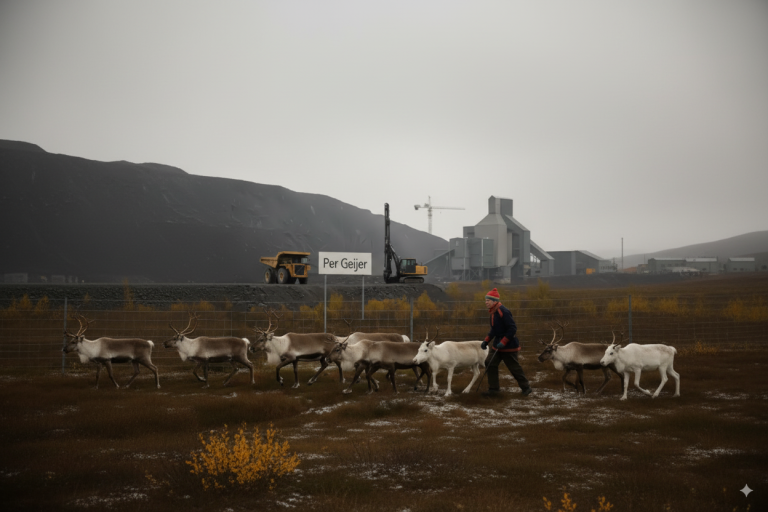
    Kiruna, Sweden — When LKAB confirmed earlier this year that its Per Geijer deposit contains approximately 1.2 billion tonnes of ore, including 2.2 million tonnes of rare-earth oxides (REO), the news sent shockwaves through European capitals. Designated as Europe’s largest known rare-earth deposit, the Per Geijer project was swiftly elevated to “strategic project” status under the EU’s Critical Raw Materials Act (CRMA). However, beneath the surface of this economic boon lies a complex paradox: the deposit directly intersects the Gábna Sami community’s centuries-old reindeer migration corridor, a vital lifeline now further threatened by climate change and a century of mining activity.

    The CRMA’s 2030 benchmarks are clear: at least 10% of strategic raw materials must be mined within the EU, 40% processed domestically, 25% recycled, and no more than 65% dependence on any single third country. Rare earths, however, remain a critical weak link. According to Eurostat and the European Commission, 95% of the EU’s rare-earth imports in 2024 originated from China, Malaysia, and Russia, with Europe’s dependency on China for heavy rare earth elements (REEs) being effectively absolute. Per Geijer is thus positioned as a linchpin in Europe’s clean-tech ambitions, supplying essential elements like neodymium, praseodymium, and dysprosium for electric-vehicle motors and offshore wind turbines. Yet, for the Sami people, the stakes are profoundly different. “The mine would cut our land in half,” says Lars-Marcus Kuhmunen, head of the Gábna sameby. “It would end reindeer herding as we know it.”

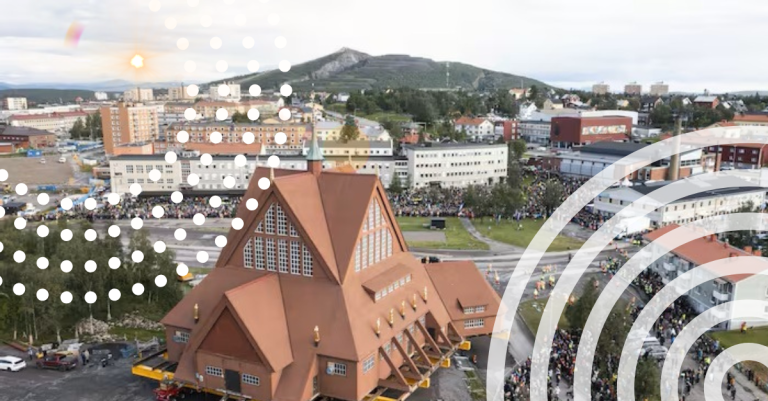
    Mining is not new to Kiruna. LKAB’s century-old Kiirunavaara iron-ore mine has already forced the relocation of the entire town, including Kiruna Church, which was moved 5 kilometers in August 2024 to avoid subsidence. For the Sami, the situation is exacerbated by the rapid warming of the Arctic, which is occurring nearly four times faster than the global average. Winter rain events now frequently ice over lichen, starving reindeer herds, while hotter summers erode their weight reserves. The loss of migration access is not merely a cultural loss but a threat to their survival.

    LKAB first unveiled Per Geijer in January 2023, estimating it could contain over 1 million tonnes of REO, but cautioned that permitting could take 10–15 years. Even with a smooth process, production is unlikely before the 2030s. This year, the company launched an 8-kilometer underground exploration drift to better define the orebody, signaling intent but not immediate production. While LKAB emphasizes its role in Europe’s green transition, it has yet to propose concrete solutions for preserving Sami migration routes.

    Even if the rare earths are mined, Europe lacks sufficient separation and alloying capacity. China currently dominates all midstream processing stages. Efforts are underway to address this, such as REEtec’s Herøya plant in Norway, backed by LKAB, which aims for commercial separation by 2025, and Solvay’s La Rochelle facility in France, upgrading to produce magnet-grade oxides. However, analysts, including Bernstein Research, warn that without accelerated funding and permitting, Europe risks falling short of CRMA targets.

    CRMA status does not override Swedish law, and projects must still pass national environmental reviews and address Indigenous rights substantively. Nordic precedent is clear: in 2021, Norway’s Supreme Court struck down the Fosen wind farm, ruling it violated Sami cultural rights by disrupting grazing. The case set a precedent that green-transition infrastructure can be unlawful if it severs reindeer husbandry.

    Industry observers suggest that any workable compromise at Per Geijer would require engineered migration corridors built before production, seasonal traffic windows to avoid peak herding periods, legally binding co-management with Sami herders backed by compensation tied to measurable herd health, and off-site processing via facilities like REEtec to minimize local disruption.

    Europe’s decarbonization targets and geopolitical autonomy are colliding head-on in Kiruna. The paradox is not unique to Sweden but symptomatic of global green-transition mining conflicts. For mining professionals, Per Geijer illustrates how permitting risk is now as much about cultural rights and climate resilience as ore grade and cut-off ratios. Investors should track Indigenous rights litigation closely, as a single ruling could reshape the economics of strategic minerals across the Nordics.

    With production realistically a decade away, Europe’s dependence on Chinese REEs will persist into the 2030s. In the meantime, Sami concerns are escalating, and Brussels faces a choice: fast-track raw material security or enforce the same environmental and cultural protections it champions abroad. The Per Geijer paradox will test whether Europe can mine its way to a green future without undermining the Arctic’s oldest cultural landscapes.

  • Historic Swedish Church Completes Epic Relocation by LKAB

    Historic Swedish Church Completes Epic Relocation by LKAB

    In a meticulously orchestrated feat of engineering, the iconic Kiruna Kyrka, a 1912 red wooden church weighing 672 tonnes, arrived at its new location in the Arctic town of Kiruna on Wednesday after a two-day, five-kilometre (three-mile) journey. The relocation was necessitated by the expansion of Europe’s largest underground mine, operated by LKAB.

    The church, which began its journey on Tuesday, inched forward at a pace of half a kilometre per hour on two remote-controlled flatbed trailers. Its arrival around 2:30 pm (1230 GMT) was celebrated with a musical fanfare, marking the culmination of a complex logistical operation.

    Kiruna’s entire town centre is being relocated due to the LKAB iron ore mine’s deepening excavations, which have compromised the stability of the ground. The church’s new location, chosen to preserve its character and connection to its surroundings, has been rotated 180 degrees, positioning the altar to face west—a symbolic gesture towards the town and its residents.

    The relocation has captivated widespread attention, with large crowds gathering along the route to witness the historic event. Lisa Weber, a 26-year-old real estate agent from Germany, travelled to Kiruna specifically to see the relocation, describing it as a “historical” moment. “It’s something that you do once in your life, or see once in your life,” she told AFP.

    King Carl XVI Gustaf of Sweden participated in the festivities, engaging with the Argentinian driver, Sebastian Druker, who remotely controlled the trailers using a joystick. The king also joined an attempt to set a world record for the largest “kyrkkaffe” (a coffee break following a church service).

    The town’s relocation process, which began nearly two decades ago, is expected to continue for years. The new town centre was inaugurated in September 2022. LKAB has offered financial compensation or rebuilding services to those affected by the relocation, with 23 historic buildings already moved before the church.

    Despite the meticulous planning, not all residents are satisfied. Critics, including local podcast hosts Alex Johansson and Magnus Fredriksson, have expressed dissatisfaction with LKAB’s handling of the relocation. “LKAB maybe didn’t read the room so well when they destroyed the whole town and then they stage this huge street party for the people,” Fredriksson remarked to broadcaster SVT.

    LKAB’s discovery of Europe’s largest known deposit of rare earth elements near the Kiruna mine in 2023 has added another layer of complexity to the situation. These elements are crucial for the green transition, particularly in the manufacturing of electric vehicles. However, activists argue that mining operations are detrimental to the region’s pristine forests, lakes, and traditional Sami reindeer herding practices.

    The relocation of the church alone is estimated to cost LKAB 500 million kronor ($52 million). Designed by Swedish architect Gustaf Wickman, the church features a blend of architectural influences, including designs inspired by the Indigenous Sami people. The church’s handblown glass windows were removed before the move and replaced with painted plywood. The separate belltower will be relocated next week.

    As Kiruna continues to adapt to the demands of modern industry, the relocation of the Kiruna Kyrka stands as a testament to the town’s resilience and the intricate balance between progress and preservation.