Tag: Qarmet

  • Qarmet Advances Major Construction Projects to Enhance Production Capacity

    Qarmet Advances Major Construction Projects to Enhance Production Capacity

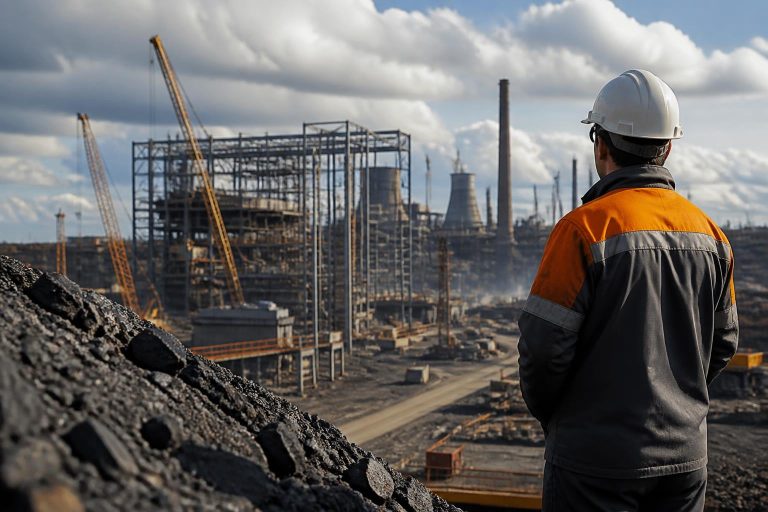
    Qarmet is making significant strides in the construction of strategically important facilities that are set to underpin the company’s future production growth, product line expansion, and extensive technological upgrades. The new production capacities are taking shape, with massive concrete foundations and installed metal structures and technological equipment already visible on-site.

    A key project in this initiative is the construction of a new section rolling mill, with engineering, equipment supply, installation supervision, and construction work being managed by CERI. To date, over 1,500 tonnes of rebar and more than 1,500 tonnes of metal structures have been delivered to the site. The complex will feature 11 overhead cranes, with construction activities progressing across the entire site: specialists are pouring concrete for the foundations of buildings and technological equipment, erecting reinforced concrete frames, and installing metal structures and crane equipment.

    The project is currently in an active implementation phase. Once the new section rolling mill is operational, Qarmet will be able to produce an additional 540,000 tonnes of metal products annually. The facility will also commence the production of high-strength rebar grades A600 and A1000, alongside new product types that are in demand in both domestic and international markets, including angles and channels.

    Simultaneously, large-scale construction is underway at the new coke battery No. 8-9 site. Currently, the coal tower structure is being erected at a height of +5.3 meters, and the upper foundation slab for coke battery No. 9 is being reinforced. Specialists are also working on soil development and reinforcing the flue gas ducts of the transverse bore, constructing the walls of the longitudinal bore of KB-9, and laying the foundation for the future chimney.

    At coke battery No. 8, the installation of metal structures continues, with 300 out of the planned 500 tonnes already installed. The groundwork for the end platforms of coke batteries No. 8 and No. 9 has been fully completed. Once the complex is operational, its production capacity will reach 1.5 million tonnes of dry coke per year. The implementation of this project will strengthen Qarmet’s raw material base and enhance the resilience of its complete metallurgical cycle.

    “The new section rolling mill and coke batteries No. 8-9 are crucial elements of Qarmet’s extensive investment programme and a clear testament to the company’s ongoing technological renewal. Today, the construction sites are not only forming the bodies of future productions but are also laying the foundation for the new industrial strength of the enterprise. The implementation of these projects will increase output volumes, expand the range of in-demand metal products, strengthen the raw material base, and enhance the resilience of the entire production cycle,” noted Qarmet specialists.

    Tons of concrete and metal structures are already taking shape in the outlines of new productions. Step by step, Qarmet is renewing key links in the technological chain, implementing modern solutions, and creating capacities that will define a new level of efficiency, reliability, and competitiveness for the company for decades to come.


  • Kazakh PM Orders New Measures to Accelerate Metallurgical Sector Growth

    Kazakh PM Orders New Measures to Accelerate Metallurgical Sector Growth

    Prime Minister Olzhas Bektenov has directed Kazakhstan’s Ministry of Industry and Construction to formulate additional stimulus measures for the country’s metallurgical sector within the next month, signaling a renewed push to boost industrial output and investment. The directive was announced during a government meeting reviewing Kazakhstan’s socio-economic performance in the first half of 2026. Bektenov tasked the ministry, alongside state mining company Tau-Ken Samruk, with ensuring full utilization of non-ferrous metallurgical enterprises, including by supplying imported gold for domestic refining. In the ferrous metallurgy segment, the Prime Minister highlighted the need for Qarmet, under its modernization program, to expand its product range to include items most in demand in both domestic and international markets. Bektenov stressed that the pace of growth in the manufacturing sector depends on the timely implementation of investment projects. He instructed the ministry and regional administrations to review all investment projects within one week to identify challenges and outline specific remedial measures. Additionally, the Prime Minister ordered the submission of draft amendments within one month to introduce new mechanisms aimed at improving the efficiency of Kazakhstan’s special economic zones. Bektenov also emphasized the importance of maintaining current construction activity levels, calling for continuous monitoring of housing commissioning and swift resolution of emerging issues. He recalled President Kassym-Jomart Tokayev’s directive to begin a large-scale program for building social and infrastructure facilities, with a particular focus on modern healthcare institutions. The announcement follows earlier reports that Kazakhstan plans to launch eight non-ferrous metallurgy projects in 2026, expected to create over 1,500 jobs, underscoring the government’s commitment to expanding the mining and metals sector as a key driver of economic growth.

  • Qarmet Builds Industrial Ecosystem Around Kazakhstan Steel Plant With Plans for 150-Hectare Special Economic Zone

    Qarmet Builds Industrial Ecosystem Around Kazakhstan Steel Plant With Plans for 150-Hectare Special Economic Zone

    Kazakhstan’s Qarmet steelmaker is expanding its Qarmet Service industrial cluster into a broader ecosystem of localised manufacturers, with active production lines already operating and a proposed 150-hectare special economic subzone under development in partnership with the Karaganda Regional Administration and the Ministry of Industry and Construction.

    The industrial cluster currently spans 20,000 square metres, of which approximately 7,500 square metres are occupied by operating production lines. Facilities already in operation include lines for knitted gloves, textile waste processing, yarn and fibre production, non-woven universal wipes and fire-safety stickers. The remaining capacity provides room for several additional manufacturing operations.

    An offtake contract for respirator production has already been signed, with the new enterprise preparing workstations and procuring equipment. Further projects under development include big-bag containers, cleaning and washing products, secondary plastic goods and personal protective equipment including safety footwear, protective eyewear and hard hats.

    Qarmet’s coordinator for the Kazakhstan Content programme, Zhandos Sarmanov, said the company was continuing to attract partners and localise high-demand product categories, noting that placing suppliers in close proximity to the main steelmaking complex improves supply chain resilience and reduces delivery times. Qarmet has also published a list of product categories for which it is willing to consider long-term and offtake contracts.

    The broader economic rationale for the cluster is explicit: job creation, local tax revenues, development of small and medium enterprises, reduced import dependence and the formation of a competitive industrial environment around one of Central Kazakhstan’s largest employers.

  • Qarmet Launches Manganese Ore Production at West Karazhal Deposit

    Qarmet Launches Manganese Ore Production at West Karazhal Deposit

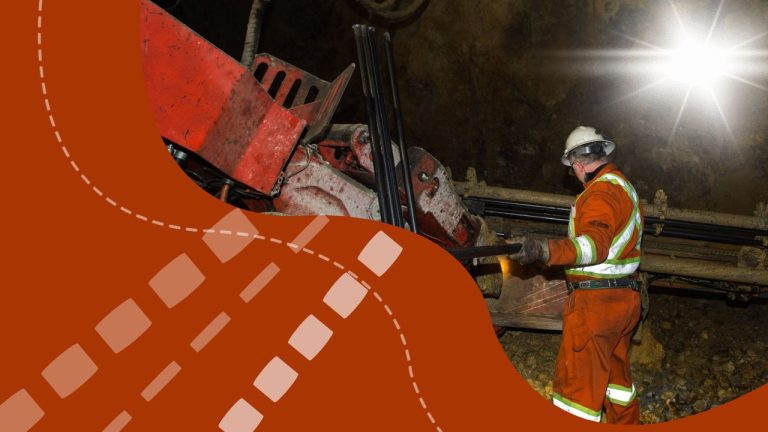
    Qarmet has commenced manganese ore extraction at the West Karazhal deposit of its Iron Ore Department following the breakthrough connection of underground workings, marking the first such operation at the site in more than 30 years.

    The newly developed mining horizon has been integrated with the mine’s main automotive decline, enabling large-scale underground equipment to access previously remote sections of the шахта. Previously, operations in this area were carried out manually without high-capacity machinery. The technical upgrade now allows the company to begin industrial-scale manganese mining.

    The West Karazhal deposit is considered one of the largest manganese resources globally, with reserves estimated at 349 million tonnes. In 2026, Qarmet plans to extract 500,000 tonnes of manganese ore, with a long-term target of reaching design capacity of 2.5 million tonnes per year.

    Manganese is set to become a strategic focus for the operation, forming a central pillar of Qarmet’s long-term development plans. The company intends to increase production volumes, introduce advanced engineering solutions and adopt best international practices in both mining and processing.

    According to Qarmet, interest from potential buyers has already been confirmed through supply inquiries, underscoring the commercial prospects of the project.

    Meanwhile, the Atasu mine currently produces 2.2 million tonnes of ore annually. Through the construction of the Central Shaft Group, the company aims to quadruple output to 9.5 million tonnes by 2028.

  • President Tokayev Reviews Qarmet’s 2025 Results and Supports Further Development Plans

    President Tokayev Reviews Qarmet’s 2025 Results and Supports Further Development Plans

    Kazakhstan’s President Kassym-Jomart Tokayev has been presented with Qarmet’s preliminary operating results for 2025 and the key priorities of its investment program. The company reported strong positive dynamics, with steel production increasing by 22 percent over two years, coal concentrate output rising by 26 percent, and iron ore concentrate production growing by 32 percent. Over the same period, production costs were reduced by 28 percent, while the number of steel grades produced expanded from 260 to 350.

    Qarmet Chairman Andrey Lavrentyev reported on the implementation of nine major investment projects aimed at forming the country’s “steel framework” and reducing dependence on imported rolled metal products. The company is also expanding the production of new premium steel grades, including specialized products intended for the construction of nuclear power plants.

    The president was briefed on development programs for Qarmet’s coal and mining divisions, with particular emphasis placed on occupational safety and social initiatives. The company is upgrading its own medical and educational facilities, and a new collective labor agreement has been signed with trade unions. The agreement provides enhanced social guarantees for Qarmet’s workforce of 35000 employees.

    Tokayev was also informed about the creation of a large metallurgical cluster around Qarmet, enabling small and medium-sized enterprises to engage in deeper processing of raw materials. This initiative was launched jointly with the National Investment Holding Baiterek. In addition, Qarmet is carrying out systematic cooperation with machine-building plants to increase the use of domestically produced steel in manufacturing.

    Following the meeting, the president gave a positive assessment of the company’s performance and endorsed Qarmet’s proposed development plan. He stressed the importance of continuing comprehensive modernization efforts, addressing social issues, improving the environmental situation, and further expanding machine-building production.

  • Qarmet Launches Construction of Major Zinc Coating and Polymer Complex in Kazakhstan

    Qarmet Launches Construction of Major Zinc Coating and Polymer Complex in Kazakhstan

    Kazakh mining and metallurgical company Qarmet has officially begun construction of a state-of-the-art continuous galvanizing and polymer coating complex, marking a key step in the modernization of Kazakhstan’s mining and metals industry. The foundation stone was laid on October 10, with the facility expected to become operational by 2027.

    The project is being implemented in partnership with Belgium’s John Cockerill, one of the world’s leading steel and engineering companies founded in 1817. The Belgian firm will supply the core equipment for the new lines.

    Once completed, the modernization will expand Qarmet’s production capacity significantly. The hot-dip galvanizing line will increase annual output to 844,000 tonnes, up by 252,000 tonnes, while the polymer coating line will grow from 115,000 tonnes to 254,000 tonnes per year. The new complex will also create around 350 new jobs.

    The expansion aligns with President Kassym-Jomart Tokayev’s directive to modernize Kazakhstan’s mining and metallurgical sector and strengthen industrial competitiveness. Total investment in the project amounts to 84 billion tenge (approximately $180 million).

  • Over 3 Million Tonnes of Secondary Resources Processed in Karaganda

    Over 3 Million Tonnes of Secondary Resources Processed in Karaganda

    In early 2024, Qarmet established a new specialised department—the Recycling Department—with the primary goal of managing the processes of recycling secondary resources.

    As of the end of May 2025, the company has processed over 3.1 million tonnes of secondary raw materials, which is more than three times the figure for the same period last year. Based on these achievements, the forecast for 2025 is 7.6 million tonnes of processed materials, equivalent to a 95.2% increase compared to the results of 2024.

    Significant results have also been achieved in the processing of steelmaking slag. At the beginning of 2024, the monthly output of metallic scrap did not exceed 4,000 tonnes. However, by the third quarter, thanks to the modernisation of equipment operation approaches and improvements in internal processes, this figure increased to 20,000 tonnes per month.

    Additional impetus for the development of steelmaking slag processing came from contracts with subcontractor organisations, which completed commissioning and start-up work by the end of the year and transitioned to industrial operation of the equipment. This not only significantly increased processing volumes but also became a driver for creating new jobs in related industries, ensuring additional employment and the development of production cooperation.

    For Qarmet, the recycling of secondary resources is not just a technological direction but a crucial element of sustainable development.

  • Kazakh Industry Ministry Denies Role in Potential Qarmet Investment Deal

    Kazakh Industry Ministry Denies Role in Potential Qarmet Investment Deal

    The Ministry of Industry and Construction of Kazakhstan has clarified that it is not involved in preparing a potential investment agreement with Qarmet for the modernization of its steel division, citing limited jurisdiction. The ministry’s response came after an inquiry from inbusiness.kz via the e-Otinish government platform.

    In its statement, the ministry emphasized that its role is to formulate and implement policies for industry and mining, while investment agreements fall outside its scope. It advised directing questions to Qarmet directly.

    Despite reaching out to Qarmet in early March, inbusiness.kz has yet to receive answers regarding the potential deal, including whether the steel and mining company would receive tax incentives or other state benefits.

    The ministry, now led by Yersaiyn Nagaspayev, recently made headlines when Nagaspayev visited Qarmet’s facilities in the Karaganda region, one of his first official trips since his appointment.

    Meanwhile, reports indicate that Qarmet plans to secure up to 3.5billion in financing by 2028 from Chinese, international, and Kazakh banks. The company previously had a 450 million debt to former owner ArcelorMittal, partially repaid last year. In 2024, Qarmet also obtained a $350 million export loan from the Kazakh Development Bank at a 9.17% fixed rate.

    Despite claiming $200 million in monthly revenue, Qarmet has not publicly disclosed its financial statements since 2022, raising transparency concerns. The company produces 3.2M tons of pig iron, 3.5M tons of steel, and 6.1M tons of coal annually, employing 29,117 workers—though reports suggest early retirement layoffs occurred last year.

  • Kazakhstan Defies Global Steel Production Decline with 6.5% Growth in 2024

    Kazakhstan Defies Global Steel Production Decline with 6.5% Growth in 2024

    Despite a global downturn in steel production and a 20% average drop in steel prices, Kazakhstan has emerged as a standout performer in 2024, achieving an 8th-place ranking worldwide with a 6.5% increase in production. This growth contrasts sharply with the global trend, where steel output fell by 0.8%, according to the World Steel Association. Major producers like China, the United States, Japan, and Russia recorded declines, while countries such as the UK, Argentina, and Pakistan saw even steeper drops.

    The global steel crisis has forced several major plants to halt operations, including Hyundai Steel’s Pohang-2 in South Korea, Acerinox in Spain, and Huachipato in Chile, which closed after 74 years of operation. Similarly, facilities in the US and Portugal have been temporarily idled.

    Kazakhstan’s success is attributed to strategic investments in domestic raw materials and the expansion of production at the Qarmet metallurgical plant. Yerbol Ismailov, Managing Director of Qarmet, highlighted that the company’s growth was anticipated, driven by $3.5 billion in investmentsand a focus on modernization. Qarmet produced over 3.5 million tons of steel in 2024, a 15% increase from the previous year, with plans to reach 5 million tons annually by 2028.

    However, challenges remain. Competing with China and Russia, which offer lower production costs, has been difficult. Qarmet has addressed this by reducing operational costs by 23.5%, lowering the price per ton of slab from 440∗∗to∗∗320, with a target of $280. The company has also implemented anti-corruption measures, digitized operations, and optimized procurement processes to enhance efficiency.

    Despite rumors of financial instability, Qarmet has invested heavily in worker safety, digitalization, and waste management, underscoring its commitment to sustainable growth.

  • Qarmet Reports Robust Growth in 2024 and Ambitious Targets for 2025

    Qarmet Reports Robust Growth in 2024 and Ambitious Targets for 2025

    Kazakhstan’s leading steel producer Qarmet has announced impressive results for 2024 and outlined ambitious plans for the coming year. The company, formerly known as ArcelorMittal Temirtau, demonstrated significant growth across all its major departments.

    Steel Department: Five-Year Production Record
    The company’s Steel Department posted a production volume of 3.5 million tons, marking a notable 16% increase compared to the previous period. May 2024 saw a production peak of 330,000 tons, the highest in five years, showcasing the department’s efficiency and growth trajectory.

    Coal Department: Solid Gains
    The Coal Department mined 6.6 million tons of coal in 2024, reflecting an 8.2% increase from the prior period. This consistent growth underscores Qarmet’s strategic focus on optimizing operations and meeting market demands.

    Iron Ore Department: Leading the Charge
    2024 was a standout year for the Iron Ore Department, which achieved a production volume of 3.3 million tons—an impressive 23% surge compared to the previous period. This sharp growth highlights the department’s strong operational performance.

    Environment & Safety: Significant Progress
    Qarmet’s commitment to sustainability was evident in its ecological and safety initiatives. Preliminary degassing of mines in 2024 resulted in a 50% reduction in methane gas levels, emphasizing the company’s focus on environmental responsibility and worker safety.

    Ambitious Goals for 2025
    Qarmet aims to build on its 2024 successes by achieving a 5% increase in production across steel, coal, and iron ore.

    The targets for 2025 are:

    • Steel: 3.7 million tons
    • Coal: 7.0 million tons
    • Iron Ore: 3.5 million tons

    With a strong foundation and ambitious plans, Qarmet is poised for continued growth and leadership in its sectors, combining operational excellence with a commitment to sustainability and innovation.