Tag: PGE

  • Poland’s Coal Exit Stalls Amid Political Battles, But Economics Point to Faster Phase-Out

    Poland’s Coal Exit Stalls Amid Political Battles, But Economics Point to Faster Phase-Out

    In August 2023, Poland’s state-owned utility PGE stunned the nation by pledging to become carbon neutral by 2040 and quit coal entirely by 2030 — a decade earlier than planned. The move, in line with EU climate ambitions, was quickly reversed after fierce backlash from mining unions in Silesia, Poland’s coal heartland, and political pressure ahead of national elections.

    Eighteen months into the new pro-EU government of Prime Minister Donald Tusk, progress on the energy transition remains slow. A key reform to loosen restrictions on wind turbine construction passed parliament last week but faces an expected presidential veto from Karol Nawrocki, a coal supporter elected with backing from the previous ruling party.

    Poland’s reliance on coal is deeply rooted in its geology, economic history, and cultural identity. With 27.8 billion tonnes of reserves — the second-largest in the EU — coal still generates 57% of the country’s electricity, the highest share in Europe. Mining employs tens of thousands and carries strong political weight, particularly in Silesia, where miners are held in high public esteem.

    Economically, the sector is struggling. Domestic output has dropped from over 250 million tonnes annually in the 1980s to about 85 million today, with production costs among the highest in the world at over 900 złoty ($243) per tonne. Heavy subsidies keep the industry afloat, costing taxpayers 9 billion złoty in 2025 — about 600 złoty per household.

    Poland’s slow pace on clean energy has left it vulnerable to rising carbon costs under the EU Emissions Trading System, with new ETS2 rules set to extend carbon pricing to households from 2027. Around one-third of Polish homes still burn coal for heating, making them particularly exposed. Analysts warn that political resistance to ETS2 could delay implementation and stall the transition further.

    Despite delays, Poland’s draft National Energy and Climate Plan projects coal’s near-total disappearance by 2035. Energy experts argue this could happen sooner, as economics increasingly favour renewables. In April, coal’s share of monthly electricity generation dipped below 50% for the first time, and renewables now account for 29% of the energy mix, nearly double the share in 2020.

    Yet the political tug-of-war between coal defenders and clean energy advocates continues to shape policy — and Poland’s future competitiveness. Major investors, including Google, Amazon, and Mercedes, have warned that the country’s coal-heavy power mix could deter investment, while its fast-growing battery industry risks losing ground under new EU carbon footprint rules.

    “The energy market and society need this investment pathway to be implemented,” said Tobiasz Adamczewski of think tank Forum Energii, adding that a just transition for coal communities will be key.

  • Poland’s PGE to Phase Out Coal-Fired Power Units by 2025

    Poland’s PGE to Phase Out Coal-Fired Power Units by 2025

    Poland’s largest power utility, PGE, plans to cease electricity production at its four remaining coal-fired units at the Rybnik power plant by the end of 2025, according to a report from the Polish Press Agency. The units, which collectively generate 900 megawatts (MW), have capacity market contracts running until this deadline. While coalcontinues to dominate Poland’s electricity generation, profitability is declining as state-controlled utilities like PGE shift towards renewable energy. Additionally, banks are increasingly reluctant to finance coal-based operations.

    PGE has already phased out four coal-fired units at the Rybnik plant and is preparing to replace them with an 882 MW gas-fired unit, scheduled for commissioning by the end of 2026. The company reiterated that the decision to end coal production was made in 2020. The timeline for ending heat production at the coal-fired units has been extended to August 31, 2026.

  • Poland’s PGE Vows to Ensure Turow Lignite Mine’s Operations Amid Environmental Concerns

    Poland’s PGE Vows to Ensure Turow Lignite Mine’s Operations Amid Environmental Concerns

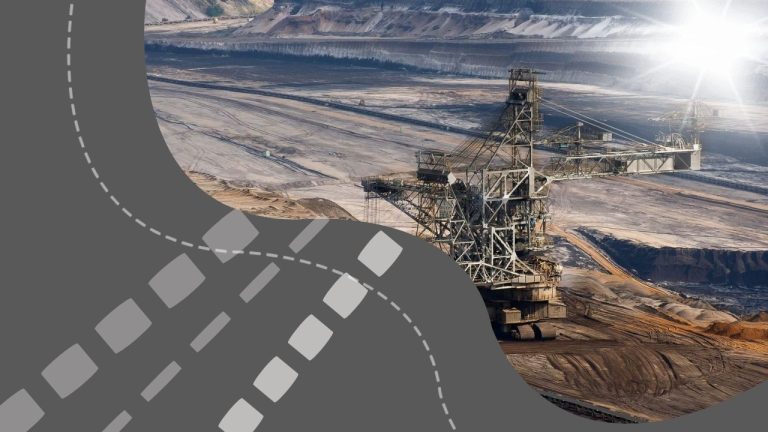
    In response to a recent setback, Poland’s prominent utility company, PGE, pledged on Monday to undertake all necessary measures to sustain the operations of its Turow lignite mine and power plant situated near the Czech border. CEO Dariusz Marzec emphasized the company’s commitment to rectifying past shortcomings, prioritizing ecological considerations, and safeguarding the region’s safety. The announcement follows a local court’s decision on March 13, which annulled an environmental permit issued in 2022 for the Turow project but permitted the continuation of mining activities for the time being. Environmental advocacy groups have consistently raised concerns about the mine’s detrimental environmental impact, particularly on the adjacent power plant, prompting legal challenges against the operating license extending until 2044. PGE disclosed that it is presently awaiting a formal rationale for the court’s ruling and intends to pursue legal recourse accordingly to defend the continuity of the mine and power complex. Marzec expressed optimism regarding a favorable resolution of the matter.

  • Court suspends case against Poland’s Turów coal mine

    Court suspends case against Poland’s Turów coal mine

    The decision, which allows the mine to continue operating for the time being, was welcomed by the Polish government. However, the environmental groups that brought the case have expressed disappointment that the proceedings will drag on further.

    It marks the latest twist in a long-running legal battle over the mine, which has also drawn in Poland’s neighbours, the Czech Republic and Germany, whose borders are close to Turów.

    The provincial administrative court in Warsaw had yesterday been due to rule on the environmental decision that granted Turów, an open pit brown coal mine that feeds a nearby power station, a concession to operate until 2044.

    Instead, the court suspended the case because parallel proceedings before the General Directorate for Environmental Protection (GDOŚ) regarding an application from the mine’s owner – state-owned energy firm PGE – to amend the environmental decision have not been concluded.

    The judge noted that PGE recently withdrew its bid to amend the environmental decision, which led GDOŚ to discontinue proceedings. However, she stressed that, until the discontinuation becomes final and binding, the administrative court cannot rule on the legality of the permit.

    This development was welcomed by government figures, who argue that the mine and power plant in Turów are essential for Poland’s energy security.

    “The fight for Turow continues,” wrote climate minister Anna Moskwa. State assets minister Jacek Sasin called it “a key decision for Poland’s energy security”, adding that “the functioning of the mine is not threatened and the mining concession is valid until 2044”.

    Even before the ruling was issued, Moskwa had insisted that the mine would remain open whatever happened. “Obviously, regardless of this ruling and decision – because we have different experiences – Turow will not be closed. We will defend energy security,” she told Polskie Radio.

    A lawyer from one of the environmental groups that has challenged the legality of the environmental decision, Agnieszka Stupkiewicz of Frank Bold, admitted that the court had no choice but to suspend proceedings.

    However, she criticised the “scandalous” behaviour GDOŚ, saying that the agency had not kept parties in the case nor the administrative court informed of PGE’s decision to withdraw its bid to amend the environmental decision.

    Her group and other climate organisations from Poland, the Czech Republic and Germany brought their case against the environmental decision last year, arguing that there were a number of shortcomings in how it was reached, including a failure to take account of the mine’s impact on the climate.

    In July, the provincial administrative court in Warsaw ordered the environmental permit to be provisionally suspended ahead of a final ruling, finding that there is a risk of significant environmental damage.

    That decision was, however, later overturned by the Supreme Administrative Court. It meant that the mine was allowed to continue functioning until a final ruling on the environmental decision is issued by the Warsaw court.

    Meanwhile, yesterday’s decision by the court to suspend proceedings was welcomed PGE’s CEO, Wojciech Dąbrowski, who said that “Turów mine and power plant will remain one of Poland’s most important sources of energy for at least 20 years”.

    “From the very beginning, we have not recognised the legitimacy of any allegations made against the environmental decision on the Turów mine,” he added.

    His comments come just a day after PGE presented a new strategy to become carbon neutral by 2040, including abandoning the use of coal by 2030. That will be achieved in part by a government plan to transfer energy firm’s coal assets to a single, separate entity.


  • PGE Polska Grupa Energetyczna S A : with the approval of the Board of Directors of the European Investment Bank to support the financing of the Baltica Offshore Wind Farm

    PGE Polska Grupa Energetyczna S A : with the approval of the Board of Directors of the European Investment Bank to support the financing of the Baltica Offshore Wind Farm

    The European Investment Bank (EIB) approved the in-principle financing of the Baltica OWF project to be implemented by the PGE Group. The total financing package amounts to EUR 1.4 billion. This is a significant step towards ensuring an optimal financing structure that will enable the construction of PGE’s first offshore wind farms in the Baltic Sea.

    Project will consist of several sages – for each of the stages of the Baltica OWF – stages Baltica 2 and Baltica 3 – there is one tranche to be disbursed in the Project Finance formula in the amount of up to EUR 350 million, and one tranche to be disbursed based on guarantees from financial institutions, banks or export credit agencies.

    Accelerating the energy transformation is a priority, which is why the EIB Group and the European Commission established the REPowerEU initiative. This aims to make the European Union independent of Russian energy resources and move the EU energy sector towards renewable energy. The Baltica Offshore Wind Farm project meets these goals.

    Obtaining a preliminary credit decision from the European Investment Bank is a significant step for financing the construction of the largest offshore wind farm in the Baltic Sea. The presence of a recognized and experienced international financial institution in financing the project is a signal that we are a reliable partner for financial institutions, the projects we run meet the highest standards, and the interest of the financial sector in cooperation with PGE in the field of offshore wind energy is really high

    Wojciech Dąbrowski, President of the Management Board of PGE Polska Grupa Energetyczna.

    Diversification of energy sources and independence from fossil fuels are key tasks for Poland and the European Union, and Baltica Offshore Wind Farm is a very important project implementing these goals. Supporting energy transition is a priority for the EIB as it accelerates green economic development and supports labor market

    Vice-President of the EIB, prof. Teresa Czerwińska.

    PGE is building the Baltica OWF together with its Danish partner – Ørsted. The project with a total capacity of approx. 2.5 GW consists of two stages – Baltica 2 with a capacity of approx. 1.5 GW, which is scheduled to be commissioned in 2027, and Baltica 3 with a capacity of approx. is planned by the end of this decade.

  • Polish government outlines offer to buy coal assets from state energy firms

    Polish government outlines offer to buy coal assets from state energy firms

    [vc_section][vc_row][vc_column width=”1/6″][/vc_column][vc_column width=”1/2″][vc_row_inner][vc_column_inner][vc_empty_space][vc_column_text]

    Poland’s government has outlined details of the billions of zloty it is proposing to pay state energy firms to buy their coal assets.

    [/vc_column_text][/vc_column_inner][/vc_row_inner][vc_empty_space][vc_separator][vc_empty_space height=”10px”][vc_row_inner][vc_column_inner width=”2/3″][widget-SocialWidget][/vc_column_inner][vc_column_inner width=”1/3″][link url=”https://notesfrompoland.com/2023/07/17/polish-government-outlines-offer-to-buy-coal-assets-from-state-energy-firms/” content_text=”News source”][/vc_column_inner][/vc_row_inner][vc_empty_space][vc_column_text]The move is part of a process to create a new separate entity to gradually wind down the use of coal and allow other energy firms to focus on developing lower-emission sources.

    The four firms – PGE, Tauron, Energa and Enea – on Friday received a proposal from the state assets ministry on behalf of the state treasury. It outlined purchase prices and debt settlement mechanisms that will now be negotiated further.

    Enea would receive almost 2.5 billion zloty (€560 million) for its shares in Enea Wytwarzanie – Poland’s largest producer of electricity from hard coal – and 632 million zloty for Enea Elektrownia Połaniec, a coal power plant. The state treasury will also provide guarantees covering up to 70% of 2.4 billion zloty in debts owed to Enea by the subsidiaries.

    A similar purchase amounting to 849 million has been proposed to PGE, 153 million to Energa and a symbolic 1 zloty to Tauron. PGE and Tauron have also been offered deals relating to debt owed by their subsidiaries.


    The state assets ministry notes that the offer made on Friday is part of the “final phase” in setting up an entity called the National Energy Security Agency (NABE), which was approved by the government last year.

    NABE is being created to take control of state energy firms’ coal assets, which in turn is supposed to help those firms more easily obtain financing for investment in cleaner forms of energy.

    Poland still produces around 70% of its electricity from coal, by far the highest proportion in the European Union. While the government still sees coal remaining the main source of energy for some time, it has taken steps to transition towards renewables and nuclear, which together will generate three quarters of power by 2040.


    “NABE will guarantee energy security in the transformation process,” wrote the ministry on Saturday. It noted that, as a result of EU climate policies, “financial institutions have been limiting their involvement in financing entities with coal assets”.

    Wojciech Dąbrowski, the CEO of PGE, said that he welcomed the ministry’s proposal, which would help his firm with “obtaining financing for investments in line with the strategic direction that we – as a leader of the energy transformation in Poland – have set for ourselves”.

    Shares in the four state energy firms subject to the proposal rose this morning – 30% for Enea, 24.7% for Tauron, 20% for PGE and 4% for Energa – notes financial news service Bankier.pl


    Under plans being developed by the government and state energy firms, Poland’s first nuclear power plant is due to open by 2033, with two more to subsequently follow.

    A number of state and private firms are also developing plans to launch so-called small modular reactors (SMRs) to produce nuclear energy.

    Recent years have seen a rapid expansion in renewables, especially solar, in Poland. The government and state energy firms are also planning to develop both offshore and onshore wind in the coming years.


    Main image credit: Enea press materials[/vc_column_text][vc_empty_space][epic_post_tag compatible_column_notice=”” font_size=”17px”][/vc_column][vc_column width=”1/6″][vc_text_separator title=”LATEST NEWS” color=”juicy_pink”][vc_empty_space height=”10px”][widget-LatestPosts post_number=”4″][vc_empty_space height=”10px”][vc_text_separator title=”MOST POPULAR” color=”juicy_pink”][vc_empty_space height=”10px”][widget-popular-posts post_count=”4″][vc_empty_space][vc_wp_search title=”Search”][vc_empty_space][lvs display_like=””][/vc_column][vc_column width=”1/6″][/vc_column][/vc_row][/vc_section][vc_section][vc_row][vc_column][distance desktop_type=”50″][/vc_column][/vc_row][vc_row][vc_column width=”1/2″][epic_block_28 compatible_column_notice=”” number_post=”6″ post_offset=”0″ first_title=”You may also like”][/epic_block_28][vc_empty_space][/vc_column][vc_column width=”1/2″][epic_hero_5 compatible_column_notice=”” hero_margin=”0″ content_filter_number_alert=”” post_offset=”0″][/vc_column][/vc_row][/vc_section]