Tag: Pax Silica

  • Norway Joins US-Led Pax Silica Coalition Bringing Sovereign Wealth Fund Capital and Critical Mineral Reserves to Allied Supply Chain Push

    Norway Joins US-Led Pax Silica Coalition Bringing Sovereign Wealth Fund Capital and Critical Mineral Reserves to Allied Supply Chain Push

    Norway is set to formally join Pax Silica, the US-led initiative designed to secure critical mineral supply chains and reduce Western dependence on China across artificial intelligence, clean energy and advanced technology sectors, with the signing scheduled for Wednesday.

    The Norwegian government confirmed the move following a report by Semafor that Washington planned to add the Nordic country this week as part of a broader effort to counter China’s dominance in key materials and infrastructure. Launched in December, Pax Silica is a central pillar of the Trump administration’s allied coordination strategy, encompassing critical minerals access, supply chain resilience and technology value chain integration.

    Norway’s accession brings two assets of particular strategic interest. The country is home to the world’s largest sovereign wealth fund — the Government Pension Fund Global — and holds significant critical mineral reserves, including the Fen rare earth deposit recently confirmed as Europe’s largest. “Norway is home to the world’s largest sovereign wealth fund, and the depth of that institutional capital combined with critical mineral reserves are important,” said Jacob Helberg, the US State Department’s undersecretary for economic affairs.

    Norwegian Trade and Industry Minister Cecilie Myrseth framed the decision in terms of economic opportunity as much as geopolitical alignment. “This initiative can give Norwegian companies better access to advanced technological value chains,” she said, pointing to the potential for deeper integration with allied economies.

    Norway joins a coalition that already includes the UK, Japan, South Korea, Singapore, Israel, Australia, the UAE, India, the Netherlands, Qatar, the Philippines and Sweden, which signed on in March. The expanding membership reflects growing Western urgency to build coordinated alternatives to Chinese dominance across mineral supply chains that underpin semiconductor manufacturing, battery production and clean energy infrastructure.

  • US Plans $250M Contribution to $1 Trillion Supply Chain Investment Consortium

    US Plans $250M Contribution to $1 Trillion Supply Chain Investment Consortium

    The United States government is set to contribute $250 million to a major international investment consortium aimed at securing global supply chains for energy and critical minerals, a senior Trump administration official announced Monday.

    Under Secretary of State for Economic Affairs Jacob Helberg confirmed that Washington will lead the consortium, which is expected to bring together up to $1 trillion in assets under management drawn from sovereign wealth funds and institutional investors. The fund will count Japanese tech conglomerate SoftBank Group, Singapore’s state-owned Temasek Holdings, and Abu Dhabi’s Mubadala Investment Company among its founding participants.

    Helberg outlined the consortium’s top priorities as investments focused on preserving access to energy and rare earth minerals for the United States and its allies — with a particular emphasis on what he described as “mineral security, logistics, and likely energy security infrastructure.” Officials will convene to review a list of candidate projects before making joint investment decisions.

    Congress is expected to be formally notified of the $250 million US commitment in the near term. Representatives for SoftBank, Temasek, and Mubadala had not responded to requests for comment at time of publication.

    The fund forms a central pillar of a broader US-led supply-chain alliance known as Pax Silica, which has expanded its remit to include energy infrastructure following the blockade of the Strait of Hormuz. Helberg cited the ripple effects on global energy markets since the outbreak of conflict with Iran as a key driver, stressing the need to eliminate “single-points of failure” in critical supply networks. Deputy Energy Secretary James Danly is set to lead the consortium’s energy-focused efforts.

    The initiative comes amid heightened concern over the vulnerability of global supply chains exposed by nearly a month of conflict, during which energy infrastructure and key shipping lanes in the Gulf region have been repeatedly targeted, disrupting flows of oil, natural gas, and industrial inputs worldwide. Pax Silica currently counts Japan, India, South Korea, the United Kingdom, the United Arab Emirates, Qatar, and Singapore among its member states.

  • A Strategic Assessment of Promise vs. Reality in Central Asia’s Mineral Development

    A Strategic Assessment of Promise vs. Reality in Central Asia’s Mineral Development

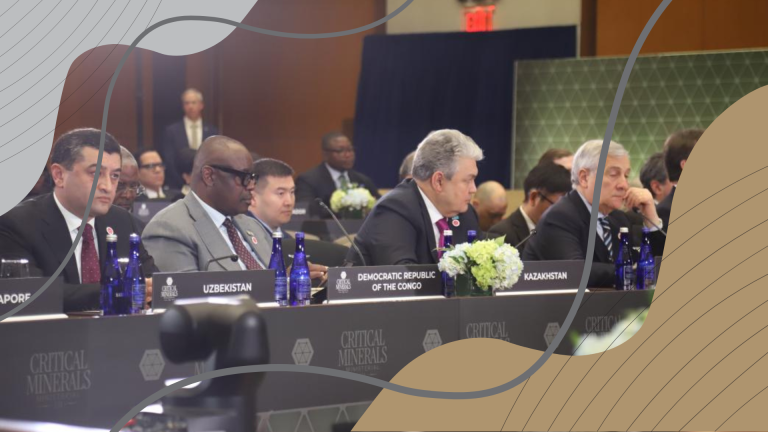
    Central Asia’s role in global critical minerals took a decisive turn at the 4 February 2026 Critical Minerals Ministerial in Washington, where officials from more than 50 countries acknowledged the region as a strategic hub rather than a geopolitical buffer.

    While Washington presented an ambitious framework to advance mineral sovereignty, analysts caution that the region—not the U.S.—must drive implementation to avoid becoming a passive arena for major‑power competition.

    U.S. Strategy: A Vertical Integration “New Order”

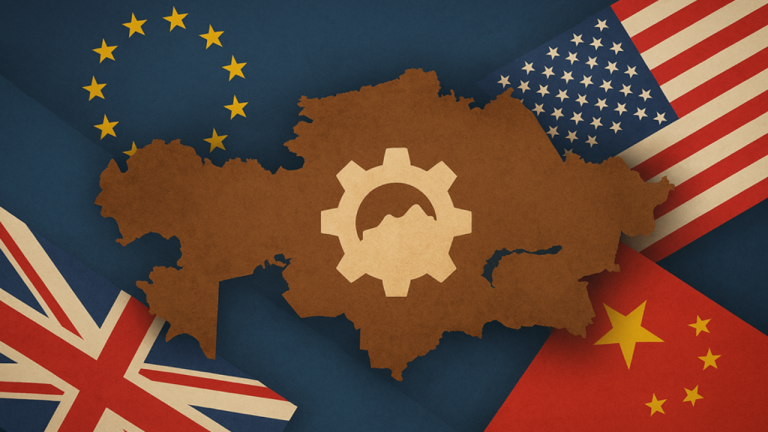
    The U.S. vision, centred on the FORGE initiative and the concept of “Pax Silica,” positions minerals and energy as shared strategic assets among trusted partners and offers an alternative to dependency on China.
    Washington differentiates its value proposition in three areas:

    1. Market Stability Through Price Floors
      Proposed tariff‑backed price floors aim to counter predatory market dumping and protect investments in assets such as Kazakhstan’s rare earth reserves.
    2. Vertical Value Integration
      The U.S. framework prioritises domestic processing and refining over raw‑ore exports, enabling Central Asian states to capture more value across the supply chain.
    3. Connectivity Autonomy
      By incorporating the Middle Corridor into initiatives like TRIPP, the West presents routes that bypass Russia and China, reducing geopolitical transit pressures.

    Kazakhstan and Uzbekistan have responded quickly—Kazakhstan has declared critical minerals the “new oil” and joined the Abraham Accords to strengthen supply‑chain integration, while Uzbekistan has pursued strategic MOUs to modernise mining and secure battery‑metal supply chains.

    Reality Check: Gaps Between Intent and Implementation

    Despite strong rhetoric, Western engagement has largely taken the form of frameworks and MoUs—not operational projects.

    Three challenges persist:

    • Operational Disparity – China continues to deliver turnkey, financed projects backed by contractors and long‑term offtake agreements, while Western partners emphasise declarations.
    • U.S. Inward Focus – Washington’s drive for techno‑economic sovereignty favours selective, de‑risked engagements rather than proactive industrial development in the region.
    • Execution Gaps – Uzbekistan’s $2.6bn program covering 76 projects illustrates regional ambition, but real progress requires partners capable of building at scale.

    Strategic Imperative: Central Asian Agency

    Experts argue that relying on future U.S. demand is a strategic mistake.
    To convert high‑level dialogue into economic gains, Central Asia must prioritise:

    1. Midstream Capabilities

    Refining and producing intermediary products offer higher margins and reduce reliance on long‑distance transport of low‑value raw ore.

    2. Direct Private‑Sector Engagement

    Regional firms should proactively present project‑ready opportunities to U.S. companies rather than depending on government‑to‑government frameworks.

    Conclusion

    The U.S. “New Order” provides Central Asia with a potential pathway to diversify away from Beijing and Moscow while improving price stability and long‑term sovereignty.
    But success hinges on regional execution. Astana and Tashkent must convert diplomatic signals into tangible midstream capacity—and do so quickly—to secure their strategic autonomy before the current window closes.

  • Ending the ‘Extract-and-Export’ Era: How FORGE and Pax Silica Transform Central Asian Mining

    Ending the ‘Extract-and-Export’ Era: How FORGE and Pax Silica Transform Central Asian Mining

    The 2026 Critical Minerals Ministerial in Washington has signaled the definitive end of Central Asia’s era as a “landlocked” geopolitical afterthought. For decades, the five nations of the region were viewed through the narrow lens of the “Great Game”—a buffer zone between Russian security interests and Chinese infrastructure investments. However, the “New Order” proposed by the Trump administration, articulated by Vice President JD Vance and Secretary of State Marco Rubio, has repositioned Kazakhstan, Uzbekistan, and their neighbors as the indispensable pivot of a new Western-aligned industrial statecraft.

    The Mineral Sovereignty Pivot

    The strategic argument for Central Asian states to embrace the U.S.-led FORGE (Forum on Resource Geostrategic Engagement) initiative and the proposed Preferential Trade Zone rests on the promise of escaping “coercive dependencies”. For years, Central Asian producers have been vulnerable to the same market distortions Vance identified in Washington: a “foreign supply” (read: China) that floods markets to crash prices and kill domestic projects.

    By joining the new trading bloc, countries like Kazakhstan and Uzbekistan are being offered a “necessary foundation for private financing” and a “price floor” enforced by adjustable tariffs. This mechanism is a game-changer for the region. It essentially guarantees that if Kazakhstan develops its potentially world-class rare earth element (REE) reserves—estimated by some to reach 20 million metric tons—its investments will be shielded from predatory pricing strategies designed to maintain Beijing’s monopoly.

    Kazakhstan: The Vanguard of the New Order

    Kazakhstan has moved first and most aggressively to align with this reindustrialization doctrine. President Kassym-Jomart Tokayev’s branding of critical minerals as the “new oil” is not mere rhetoric; it is backed by a landmark memorandum of understanding (MOU) with the U.S. signed in November 2025, which focuses on technology transfer and processing capacity.

    Perhaps most significantly, Kazakhstan’s accession to the Abraham Accords in November 2025 serves as a profound geopolitical signal. While traditionally a Middle Eastern normalization framework, its expansion to Kazakhstan—the first member with preexisting ties to Israel—is being used to facilitate secure, tech-driven supply chains that reduce the region’s reliance on China. This “unorthodox” alignment places Astana at the heart of the Pax Silica vision, where silicon, minerals, and energy are treated as shared strategic assets among “trusted partners”.

    Uzbekistan and the C5+1 Renaissance

    Uzbekistan is rapidly following this blueprint. On February 5, 2026, during the Ministerial, Tashkent signed its own strategic MOU with the U.S. to secure supply chains for rare earths and critical minerals like lithium, magnesium, and indium. For President Mirziyoyev, this is a path to modernize a mining sector that has often relied on outdated Soviet-era surveys.

    The broader C5+1 diplomatic platform, now celebrating its tenth anniversary, has evolved from a symbolic talk shop into a “pragmatic, project-driven economic coordination framework”. This “renaissance of American influence” is evidenced by the $17 billion in investment projects agreed upon following recent summits and the integration of the Middle Corridor (Trans-Caspian International Transport Route) into the Trump Route for International Peace and Prosperity (TRIPP).

    The Argument for Central Asian Alignment

    The “New Order” offers Central Asia three structural advantages that neither Moscow nor Beijing can—or will—match:

    1. Vertical Value Integration: Unlike China’s “extract-and-export” model, the U.S. framework emphasizes domestic processing and refining. This allows Central Asian states to capture high-value segments of the supply chain rather than remaining mere “resource bases”.

    2. Market Stability: The Project Vault and price floor mechanisms provide a buffer against “market whiplash”. For a region where commodity price volatility can destabilize entire national budgets, this sovereign de-risking is a vital survival tool.

    3. Connectivity Autonomy: By backing the Middle Corridor/TITR, the U.S. and its partners are providing the region with its first viable route to global markets that does not pass through Russia or China. This reduces the ability of larger neighbors to use transit as a tool of political pressure.

    Central Asia is currently in a “hedging game,” and both Pakistan and Central Asian states have approached these initiatives with a degree of caution to avoid immediate Chinese retaliation. However, the message from the 2026 Ministerial is clear: in an economy of “real things,” those who control the minerals control the future. For Kazakhstan and Uzbekistan, the American proposal is not just about mining; it is about finally securing their economic and territorial sovereignty.