Tag: Orano Group

  • Uzbekistan and France Strengthen Economic Partnership Through Uranium Mining Initiatives

    Uzbekistan and France Strengthen Economic Partnership Through Uranium Mining Initiatives

    (Paris, France) – Uzbekistan and France are deepening their economic partnership, forging new trade agreements and collaborations that could reshape the energy landscape of Central Asia. French nuclear giant Orano signed a major agreement during President Shavkat Mirziyoyev’s state visit to Paris earlier this month, signifying a significant leap forward in uranium mining cooperation between the two nations.

    The details of the agreement, estimated to be worth billions of euros, remain undisclosed. However, sources indicate it involves Orano increasing its current uranium mining operations in Uzbekistan and potentially expanding into new areas. Uzbekistan, holding significant uranium reserves, is keen to develop its nuclear energy sector and position itself as a key supplier to international markets.

    This multi-million-euro deal builds on a series of agreements signed during President Mirziyoyev’s visit, totaling up to €12 billion in investments across diverse sectors like infrastructure, energy, and water management.

    “Uzbekistan views France as a key strategic partner in its drive to modernize its economy and transition towards cleaner energy sources,” said a senior Uzbek government official, speaking on condition of anonymity. “This partnership opens doors for significant technological transfer and investment in Uzbekistan’s nuclear sector.”

    French companies, including Suez and Orano, are already actively investing in Uzbekistan, contributing to key sectors like utilities and resource development. The France-Uzbekistan Chamber of Commerce, launched last year, further underscores the growing bilateral economic ties.

    Critics, however, raise concerns regarding the environmental and social impacts of expanding uranium mining operations in Uzbekistan. They call for greater transparency and stringent safety regulations to ensure responsible resource development and protect local communities.

  • Kazakhstan’s Ascendant Role in the Global Uranium Market

    Kazakhstan’s Ascendant Role in the Global Uranium Market

    A New Era for Uranium Mining

    The global uranium market is experiencing what industry leaders describe as a “second uranium renaissance” or, as Cameco’s Sean Quinn prefers to call it, a “rejuvenation.” This revival is marked by robust demand, structural supply shortfalls, and growing support for nuclear energy from both political entities and financial institutions.

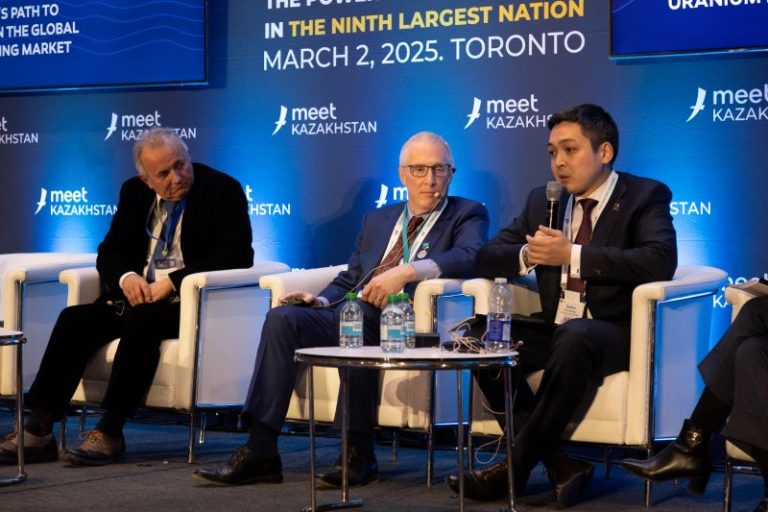
    During a panel discussion at the MeetKazakhstan conference held on 2 March 2025 at the 93rd PDAC‘2025 Convention in Toronto, key players from Kazatomprom, Cameco, and Orano shared insights into Kazakhstan’s remarkable journey to becoming the world’s leading uranium producer and discussed the future landscape of the industry.

    Kazatomprom: Strategic Vision and Market Discipline

    Dastan Kosherbayev, Chief Director for Strategy and International Development at Kazatomprom, emphasized the company’s multi-vector policy that mirrors Kazakhstan’s broader approach to international relations. “We pursue no geopolitical ambition and we’re driven strictly by business or commercial interests,” Kosherbayev stated, highlighting the company’s long-standing partnerships with major industry players.

    Kazatomprom became the world’s number one uranium producer in 2011 and the top seller in 2018, maintaining what Kosherbayev described as an “impeccable record” of delivering on all obligations since the company’s establishment in 1997.

    The company’s competitive advantage lies in its geology and mining methods. Kazakhstan’s uranium deposits allow for cost-efficient extraction using in-situ recovery (ISR), which Kosherbayev noted is “the most environmentally friendly method that enables us to produce uranium without disrupting any other activities.”

    Market Discipline and Global Presence

    A key factor in the uranium market’s recovery has been Kazatomprom’s commitment to market discipline. Since 2017, the company has implemented production cuts that removed 48,000 tons of uranium from the market, helping eliminate surplus and revitalize the industry.

    Kazatomprom maintains a diverse sales portfolio, with transportation routes through both the Northern route via St. Petersburg and the Trans-Caspian International Transport Route, providing logistical flexibility for deliveries to Western markets.

    Updated Strategic Direction

    Kosherbayev revealed that Kazatomprom has recently updated its long-term strategy, focusing on five major strategic goals:

    1. Replenishing the resource base to address the upcoming structural uranium deficit expected at the beginning of the next decade
    2. Exploring potential opportunities in conversion and enrichment, though “not at any cost”
    3. Investigating possible expansion into rare earth metals, leveraging existing capabilities at their Ulba Metallurgical Plant
    4. Enhancing trading functions through Kazatomprom’s Swiss trading facility
    5. Continuing commitment to ESG principles

    When asked about international expansion, Kosherbayev indicated that Kazatomprom is open to opportunities but prioritizes securing guaranteed demand. “A lot of behind-the-scenes work is carried out currently, and should something arise, we’re going to notify the general public in due course,” he explained.

    Partnerships: Keys to Success in Kazakhstan

    Cameco’s Long-Term Perspective

    Sean Quinn, Senior Vice-President and Chief Legal Officer at Cameco, shared insights from his company’s nearly three-decade involvement in Kazakhstan. Cameco’s interest dates back to 1992, shortly after Kazakhstan declared independence, with JV Inkai being formed in 1998 and beginning production in 2008.

    Quinn attributed their success to several factors: “We’ve taken a very long-term view… geographical diversity is important to Cameco… and we’ve had a patient, long-term focus.” He added that having significant operating assets in different jurisdictions, particularly in Northern Saskatchewan, has allowed the company to weather industry ups and downs.

    Orano’s Evolution from Exploration to Innovation

    Christian Polak, Senior Advisor for Strategy and Partnership at Orano Mining, traced his company’s journey in Kazakhstan back to the 1990s. “In 1996, we signed an agreement with Kazatomprom. We set up the company KATCO where Orano is 51% and Kazatomprom is 49%,” Polak explained.

    He emphasized the importance of the initial decade spent building relationships and understanding the country before beginning production in 2006. KATCO now employs approximately 1,200 people.

    The partnership has evolved beyond commercial relationships to include scientific collaboration. In 2022, Orano signed a memorandum of understanding with Kazatomprom during the Kazakh president’s visit to France, establishing around 20 scientific projects focused on geology, processing, mining, and environment.

    Sustainable Development and Future Outlook

    Polak highlighted Orano’s commitment to sustainable mining practices in Kazakhstan. “Even as we continue to produce, we have to think about the future of the country and the future of deposits,” he stated. Orano works closely with Kazatomprom to develop technologies that predict environmental conditions after production ends.

    Building positive relationships with local communities is equally important: “We have to share very closely with the populations… to restitute what we found before we arrived.”

    Looking ahead, all three companies see opportunities for growth as nuclear energy gains renewed support globally. Quinn mentioned Cameco’s investments in Westinghouse and other fuel cycle opportunities like Global Laser Enrichment (GLE) as providing “even greater exposure to some of that untapped demand.”

    Kosherbayev noted that while uranium accounts for 90% of Kazatomprom’s revenue, the company is exploring opportunities to extract valuable by-products such as rare earth elements, beryllium, tantalum, and niobium from its mining operations.

    A United Industry

    Despite being competitors, the panel emphasized the collaborative nature of the uranium industry. As Kosherbayev concluded, “We may have our differences, but we are like a family… siblings may have their own differences internally, but externally we all come as a big family.”

    This spirit of cooperation, combined with strategic vision and sustainable practices, positions Kazakhstan and its international partners to continue leading the global uranium market as nuclear energy plays an increasingly important role in the world’s energy transition.

  • Mongolia and Orano Sign Uranium Mining Agreement for Zuuvch Ovoo

    Mongolia and Orano Sign Uranium Mining Agreement for Zuuvch Ovoo

    The Orano Group and the Mongolian government have formalized an agreement for the development and operation of the Zuuvch Ovoo uranium mine, marking Mongolia’s reentry into uranium mining after nearly three decades. Managed by Badrakh Energy—a joint venture between Orano and MonAtom Group—the project encompasses the Zuuvch Ovoo and Dulaan Uul deposits, with estimated uranium resources nearing 90,000 tonnes.

    Using in-situ leach technology, production is set to commence within four years, targeting a capacity of 2,500 tU annually over 30 years. An initial investment of $500 million will be followed by $1.6 billion throughout the mine’s lifespan. The project will generate 1,600 jobs and ensure over 51% of the direct benefits, including taxes and royalties, flow to Mongolia.

    The initiative aligns with Mongolia’s Vision 2050 goals, supporting economic growth and low-carbon energy. Prime Minister Oyun-Erdene Luvsannamsrai highlighted its contribution to inward investment and employment, while Orano CEO Nicolas Maes emphasized its role in global energy security.

  • Does Europe need Niger’s uranium?

    Does Europe need Niger’s uranium?

    Could Europe Face an Energy Crisis if Niger Halts Uranium Mining for France?

    Amidst the aftermath of the coup in Niger, questions loom over the future of uranium supply, a cornerstone of the nation’s economy. Niger, nestled in the Sahel region, possesses extensive underground uranium reserves, making it a vital player in the global uranium market.

    France, a former colonial power in Niger, faces a precarious situation. A significant portion, approximately two-thirds, of France’s electricity generation relies on nuclear power plants powered by uranium extracted from Niger. Furthermore, France exports electricity to European nations that lack their own nuclear power facilities.

    With coup plotters holding sway in Niger for just over a month, concerns have surged regarding the uninterrupted flow of uranium to global markets. The implications of any disruption in this supply chain are profound, given France’s dependence on nuclear energy and its role as an electricity exporter to Europe.

    To shed light on this critical issue, DW has sought insights from experts both in Niger and Europe, delving into the intricate web of the energy supply chain. As Niger’s uranium supply faces uncertainty in the wake of recent events, the consequences for Europe’s energy stability remain a topic of intense scrutiny.

    Inequitable Relations Emerge Amidst Niger’s Political Shift

    Following the coup in Niger on July 26, the diplomatic and economic ties between the two nations have entered a precarious phase.

    The new military junta, led by General Abdourahamane Tiani, has displayed growing disenchantment with France. Upon assuming power, the junta swiftly enacted measures to disrupt the status quo, including suspending uranium exports and issuing a 48-hour ultimatum for the departure of the French envoy. Notably, Ambassador Sylvain Itte has defied expulsion orders and remains stationed in Niamey. Despite the junta’s actions, President Emmanuel Macron’s government is reluctant to relinquish its sway and access to essential raw materials. Nevertheless, patience in Niger for such imbalances is wearing thin.

    Mahaman Laouan Gaya, a former Nigerien energy minister and former secretary-general of the Organization of African Petroleum Producers (APPO) until 2020, voiced the prevailing sentiment in Niger, emphasizing the glaring disparities in the partnership. Gaya pointed out that in 2010, Niger exported uranium valued at €3.5 billion ($3.8 billion) to France but received a mere €459 million in return.

    Gaya further noted that if Niger were to decide against exporting uranium to France, the repercussions would be profound for France but hold limited impact on the Nigerien economy. The stark reality is that approximately 90% of Niger’s population lacks access to electricity, and exploitative pricing mechanisms have resulted in inadequate income from its exports. The growing sense of inequality in this partnership is a matter of concern as the dynamics between the two nations continue to evolve.

    Is Uranium Production at a Standstill?

    For decades, the French nuclear giant Orano (formerly known as Areva) has been engaged in uranium mining operations within Niger. The primary purpose of this material is to manufacture fuel rods intended for use in France’s 56 nuclear power plants.

    Presently, there is uncertainty surrounding whether the junta’s imposed moratorium on uranium exports is being effectively enforced.

    A spokesperson for the company recently informed the AFP news agency that the ongoing crisis has not had any immediate impact on Orano’s capacity to supply uranium.

    In contrast, Hama Amadou, Niger’s former prime minister and a prominent opposition figure, shared a different perspective in an interview with Voxafrica. According to him, the mining company continues to produce uranate, the foundational material for uranium.

    Amadou expressed skepticism regarding the notion that the new authorities had annulled the uranium mining contracts between France and Niger. He raised questions about why the French state appears concerned about its interests in Niger, given these circumstances.

    As this situation unfolds, the status of uranium production remains uncertain, and differing viewpoints persist regarding its continuity.

    French Control Over Niger’s Mining Operations Remains Strong

    The largest uranium mine in the Sahara, situated on the outskirts of Arlit, is under the firm control of Somair. This mining company is predominantly owned by France’s state-owned Orano group, holding a 63% stake, while the remaining 37% is in the hands of Niger’s state-owned company, Sopamin.

    In 2021, the Somair mine played a pivotal role, accounting for over 90% of Niger’s uranium exports. Furthermore, France and the previous government led by Mohamed Bazoum had reached an agreement to recommence operations at another mine.

    Notably, in May, Orano solidified its presence in Niger by signing new contracts with the Nigerien government. These agreements extended French uranium mining activities in the country until the year 2040.

    Nigerien journalist Seidick Abba has emphasized that the recent coup has not altered the existing commercial arrangements between these corporate entities. He clarified that uranium would continue to be transported from the mine near Arlit to France via Cotonou, emphasizing that the contractual terms do not grant Niger the authority to halt these shipments.

    Despite the political upheaval, the junta lacks the means to obstruct these deliveries, underscoring the enduring strength of these arrangements.

    Europe’s Alternative Uranium Suppliers

    While France has been a significant recipient of uranium from Niger, accounting for roughly one-fifth of its supply, it is essential to note that alternative sources exist. Data from the Euratom Supply Agency reveals that Central Asian nations such as Kazakhstan and Uzbekistan have also played a substantial role in supplying uranium to France.

    These alternative uranium suppliers provide France with diversification options, reducing its dependency on a single source.

    As recently as 2022, Alex Vines from the London-based think tank Chatham House noted that Niger held the position of France’s third-largest supplier of uranium. However, Vines asserted that the level of dependence on Niger was somewhat overstated, as France engages in uranium trade with other nations like Kazakhstan, Australia, and Namibia. This diverse network of suppliers allows France to readily diversify its uranium sources, reducing reliance on any single provider.

    According to the World Nuclear Association, Niger contributed only 5% of the uranium sold on the global market in 2022. Some analysts have raised concerns about potential price hikes and their far-reaching consequences if Niger’s uranium were to become scarcer on the international market.

    In 2022, during a period when many power plants faced cooling water shortages, the dominance of French nuclear power within Europe became evident, resulting in increased energy prices.

    To mitigate concerns regarding a possible energy crisis stemming from the situation in Niger, European Commission spokesman Adalbert Jahnz offered reassurance. Jahnz explained that the European Union (EU) maintains an adequate supply of natural uranium stocks, ensuring a buffer against short-term supply disruptions. He confirmed the presence of ample deposits on the global market, assuring that the EU’s medium and long-term uranium needs could be met without issue.