Tag: oil and gas

  • Azerbaijan and Uzbekistan Near Completion of Exploration on Ustyurt Plateau, Drilling Set for 2027

    Azerbaijan and Uzbekistan Near Completion of Exploration on Ustyurt Plateau, Drilling Set for 2027

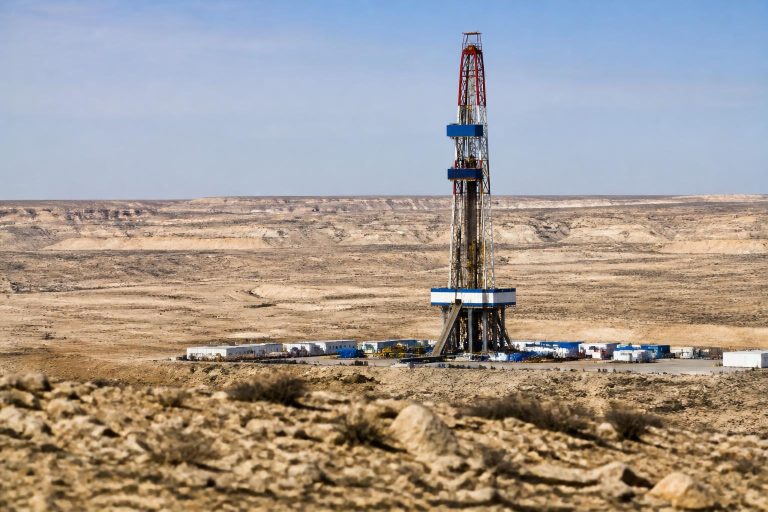
    Azerbaijan and Uzbekistan are advancing towards the practical phase of developing hydrocarbon resources on the Ustyurt Plateau, with drilling operations scheduled to commence in 2027. During a state visit to Tashkent, Azerbaijani President Ilham Aliyev announced that the project is in the final stages of exploration. The oil and gas project is jointly owned by Uzbekistan’s Uzbekneftegaz and Azerbaijan’s SOCAR, each holding a 30% stake, while British company BP controls the remaining 40%.

    The collaboration between Azerbaijan and Uzbekistan began with a cooperation agreement in August 2024, which initiated geological exploration activities. In July 2025, the parties signed a production-sharing agreement that included a 3D seismic survey covering at least 1,000 square kilometres and the drilling of one exploratory well. BP officially joined the project in May 2026, taking on the role of operator.

    The commencement of industrial production on the Ustyurt Plateau is expected to be a lifeline for Uzbekistan, which is experiencing a decline in domestic natural gas production due to depleting reserves. In June 2026, gas production fell to 2.5 billion cubic metres, a 30% decrease compared to the previous year. For the first half of the year, Uzbekistan produced 18.3 billion cubic metres of gas, which is 16% lower than the figures for 2025. In peak years, the country produced around 70 billion cubic metres, but by 2025, annual production had dropped to 42 billion cubic metres.

    This decline in production has intensified Uzbekistan’s reliance on gas imports. In the first six months of 2026, the country spent $972 million on gas and liquefied hydrocarbons imports, 1.4 times more than the previous year. The main suppliers are Russia and Turkmenistan. However, during certain months when domestic demand decreases, Uzbekistan exports surplus gas, primarily to China.


  • Kazakhstan Lawmaker Proposes Unified Disclosure Rules for Subsoil Users

    Kazakhstan Lawmaker Proposes Unified Disclosure Rules for Subsoil Users

    A member of Kazakhstan’s Mazhilis has proposed introducing unified transparency standards for subsoil users, calling for mandatory disclosure of income and production data across the mining and oil and gas sectors.

    Deputy Yerlan Barlybayev, representing the Ak Zhol faction, submitted the proposal to Prime Minister Olzhas Bektenov, arguing that greater transparency is essential to uphold the constitutional principle that subsoil resources belong to the people.

    The инициативa highlights inconsistencies in disclosure practices among companies operating in the extractive industries. While joint-stock companies are required by law to publish financial statements, many major players in Kazakhstan’s mining and oil and gas sectors operate as limited liability partnerships, whose financial reporting is accessible only to their founders. These include companies such as Tengizchevroil, Kazakhmys Corporation and Kazzinc, as well as entities registered in foreign jurisdictions or within the Astana International Financial Centre.

    According to Barlybayev, this lack of transparency prevents the public from objectively assessing how effectively the country’s natural resources are being utilised. He emphasised that the issue lies not in corporate structure itself, but in the absence of consistent disclosure standards for large subsoil users.

    To address this, the proposal calls for all major extractive companies to provide public reporting aligned with the requirements applied to listed companies under securities market legislation. This would ensure a comparable level of transparency across the sector.

    As a longer-term measure, the deputy also suggested that new entities seeking licences for strategic deposits should be established exclusively as joint-stock companies. While this requirement would not affect existing investors, it is expected to improve transparency and governance standards over time.

    The proposal reflects growing attention to accountability and resource governance in Kazakhstan’s extractive industries.

  • Kazakhstan Considers Mandatory Disclosure Rules for Subsoil Users

    Kazakhstan Considers Mandatory Disclosure Rules for Subsoil Users

    Kazakhstan may introduce new transparency requirements for subsoil users, as lawmakers call for stricter disclosure of financial and production data across the mining and oil and gas sectors.

    Mazhilis deputy Yerlan Barlybayev has proposed legislative changes requiring all major subsoil users to publicly report their revenues and extraction volumes. Citing the constitutional principle that subsoil resources belong to the people, he argued that the state must ensure full transparency in how these resources are utilised and how related revenues are managed.

    Currently, disclosure requirements vary depending on corporate structure. While joint-stock companies are legally required to publish financial statements, many of Kazakhstan’s largest subsoil users, including Tengizchevroil, Kazakhmys Corporation and Kazzinc, operate as limited liability partnerships. As a result, they report only to their founders rather than the public. In addition, some major operators are registered in foreign jurisdictions or within the Astana International Financial Centre, further limiting public access to information.

    Barlybayev noted that this lack of uniform transparency prevents society from objectively assessing how national resources are being exploited. He proposed introducing mandatory public reporting standards for all large subsoil users, aligned with disclosure requirements applied to publicly listed companies under securities market legislation.

    As a longer-term measure, the deputy suggested that new legal entities seeking rights to develop strategic deposits should be required to register exclusively as joint-stock companies. According to him, this approach would not affect existing investors but would gradually improve transparency across the sector.

    At the same time, Barlybayev emphasised that the core issue lies not in corporate structure itself, but in the absence of unified transparency standards for major resource operators.

    The proposal follows the signing of Kazakhstan’s new Constitution on 18 March, which reinforces state ownership of subsoil resources and has prompted renewed debate over governance and accountability in the extractive industries.

  • Kazakhstan moves to define “underexplored areas” as part of subsoil use reform

    Kazakhstan moves to define “underexplored areas” as part of subsoil use reform

    Recent amendments to Kazakhstan’s Subsoil Code have given formal shape to the idea of designating so-called underexplored areas, where subsoil use rights could be granted under simplified conditions. The concept itself is not controversial: territories that are objectively complex, high-risk and poorly studied may justify more flexible terms for investors. However, experts say the success of the reform will depend on how “underexplored” is defined in practice.

    Industry specialists warn that relying on a purely formal or simplified definition risks creating new disputes, allegations of lobbying and inefficient decisions. Geological knowledge alone is not sufficient to determine the true level of exploration. Instead, the degree of exploration should be assessed through a combination of factors, including drilling history, certainty of petroleum systems, presence or absence of proven reserves, technological readiness, market interest and auction results.

    Kazakhstan offers clear examples of why a narrow approach can be misleading. Parts of the Pre-Caspian Basin are formally considered well explored, yet large areas have seen little or no modern exploration activity since Soviet times. Conversely, the Chu-Sarysu Basin is sometimes labelled underexplored, despite hosting multiple discovered and producing gas fields and attracting strong investor interest at recent auctions.

    Experts argue that underexploration should be understood as a lack of sufficient certainty to justify a reliable forecast of commercial reserves, rather than the absence of individual geological surveys. Even areas covered by seismic data may remain underexplored if drilling has not reached target horizons or failed to confirm industrial-scale hydrocarbons.

    The issue becomes more complex when considering unconventional resources such as coalbed methane and shale hydrocarbons. Although legally classified as hydrocarbons, these resources often remain underexplored due to the absence of proven technologies, economic models and successful commercial examples. Coal basins like Karaganda are well studied for coal mining, but industrial production of coalbed methane has yet to be established, making such resources effectively underexplored from an oil and gas perspective.

    Market behaviour is another critical indicator. Areas repeatedly offered at auctions without attracting bidders signal high risk and low certainty, while strong investor demand suggests that simplified access mechanisms may be inappropriate. Ignoring these signals could undermine fair competition.

    To reduce subjectivity, analysts propose an integrated scoring system that combines geological data, drilling results, technological readiness and market activity. Such a framework would allow regulators to justify decisions transparently, strengthen investor confidence and reduce legal and reputational risks. A clear, well-defined methodology, experts conclude, could become one of the most effective elements of Kazakhstan’s subsoil use reform, benefiting the state, investors and regulators alike.

  • Hungary’s MOL Expands Oil and Gas Operations in Kazakhstan, Eyes Broader Energy Partnership

    Hungary’s MOL Expands Oil and Gas Operations in Kazakhstan, Eyes Broader Energy Partnership

    Hungarian energy company MOL has secured approval to expand its oil and gas extraction operations in western Kazakhstan, following a new agreement with the Kazakh government. To date, MOL has invested 80 billion forints in the region, producing 300 million cubic meters of gas from a field where it operates five wells. The agreement supports MOL’s participation in developing additional oil and gas fields, leveraging its advanced extraction technologies to tackle challenging reserves.

    Hungarian Foreign Minister Péter Szijjártó announced the deal at a press conference, highlighting the emergence of a broader Kazakh-Chinese-Hungarian strategic partnership. This collaboration could enable MOL to participate in the development of a large, technologically complex field, further boosting energy production.

    The partnership also opens doors for cooperation in nuclear energy. Szijjártó revealed that dry cooling technology, developed by Hungarian company MVM, is being considered for cooling future nuclear power plants in Kazakhstan. This follows a recent referendum in Kazakhstan approving the construction of such facilities.

    In addition, Hungarian firm Globalia has been approved to build solar power plants in several regions of Kazakhstan. Key initiatives under the partnership include the construction of a multimodal cargo terminal in Budapest, increased supplies of Kazakh oil to Hungary, and the transport of uranium and critical minerals.

    To support these projects, a joint investment fund will be established, strengthening energy and infrastructure ties between the two nations.

  • Goldman Sachs Finds ESG Funds Increasingly Invest in Oil, Gas, and Mining

    Goldman Sachs Finds ESG Funds Increasingly Invest in Oil, Gas, and Mining

    In a recent study by Goldman Sachs Group Inc., analysts discovered that fund managers are progressively including oil, gas, and mining stocks in portfolios registered as ESG. This shift aligns with a regulatory rethink on environmental, social, and governance strategies, allowing ESG investors to hold assets that may become sustainable in the future. The study coincides with criticisms from the US Republican Party, which has accused the ESG sector of blacklisting fossil fuels.

    Goldman Sachs’ analysis, which focused on funds registered under the European Union’s Sustainable Finance Disclosure Regulation (SFDR)—the largest ESG investing rulebook—revealed that fund managers’ exposure to these sectors has increased over the past year. Among Article 8 funds, which manage over $7 trillion in assets, 51% now include oil and gas companies, up from 47% a year ago. For metals and mining, 46% of Article 8 funds hold these stocks, with 32% of Article 9 funds doing the same. This represents a 5% to 6% increase from last year.

    Goldman Sachs analysts noted that while ESG funds remain generally underweight in commodities, there is growing openness to holding metals and mining companies. The upcoming overhaul of SFDR is expected to promote transition investing, allowing funds to hold previously controversial assets if they can demonstrate improvements in ESG profiles.

    The study also highlights a growing recognition of uranium as a crucial mineral for the energy transition, given its role in nuclear energy. Despite recent signs of a wider ESG retreat, with $17 billion in outflows for Article 8 and 9 funds in the first half of 2024, assets in these categories are nearing all-time highs. Additionally, sustainable fixed-income funds saw significant inflows of $115 billion, contrasting with $75 billion for non-sustainable funds.