Tag: non-ferrous metals

  • China’s East Hope Group Advances $12.6 Billion Aluminium Megaproject in Kazakhstan

    China’s East Hope Group Advances $12.6 Billion Aluminium Megaproject in Kazakhstan

    China’s East Hope Group, one of the world’s largest producers of electrolytic aluminium and alumina, is progressing plans for a colossal $12.6 billion investment in Kazakhstan’s aluminium sector, according to the country’s Ministry of Industry and Construction.

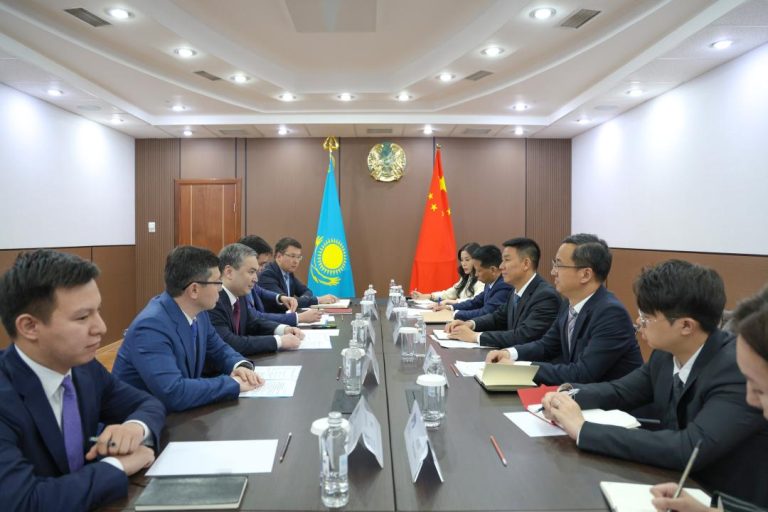
    Kazakhstan’s Industry and Construction Minister Yersayin Nagaspayev held discussions with Chen Lei, East Hope Group’s Director for Strategic Investments. The two sides discussed establishing a full-cycle aluminium cluster within Kazakhstan, spanning the entire process from bauxite extraction through to primary aluminium output.

    Nagaspayev emphasised that full-cycle production projects are in keeping with Kazakhstan’s state industrial policy, which is geared towards deeper processing and the manufacture of high-value-added goods.

    The talks also covered the project’s current status, the formation of a raw materials base, and the development of production capacity and industrial cooperation. The company is currently undertaking geological exploration across multiple blocks in the Aktobe and Kostanay regions. The broader vision encompasses the development of 11 bauxite and coal deposits across the Kostanay and Aktobe regions, with the project expected to generate approximately 10,000 jobs once fully operational. KursivThe Times Of Central Asia

    The initiative has been gathering momentum since February 2025, when East Hope registered a subsidiary in Kazakhstan to serve as the project’s principal operational centre. An investment framework agreement was subsequently signed between East Hope and the Kazakh government. The Times Of Central AsiaMysteel

    As part of the scheme, East Hope Group intends to construct a 1-gigawatt coal-fired power station in the Kostanay region, whilst also exploring potential renewable energy ventures. The project is designed around circular economy principles, with the aim of creating a complete production cycle for green aluminium products. Qazaqgreen

    Both parties reaffirmed their commitment to advancing the project and strengthening investment cooperation.

  • EU Industrial Accelerator Act Seen as Key to Reviving Metals Production

    EU Industrial Accelerator Act Seen as Key to Reviving Metals Production

    The proposed Industrial Accelerator Act (IAA) is being positioned as a pivotal opportunity to strengthen Europe’s industrial base, with the non-ferrous metals sector highlighting its critical role in achieving the European Union’s climate, digital and security objectives.

    Industry stakeholders argue that the IAA must prioritise restoring a viable business case for producing metals within Europe, which has been undermined in recent years by persistently high energy prices and rising operational costs. They stress that without targeted measures to address energy affordability, the credibility of the IAA as an industrial policy tool could be compromised.

    Among the key proposals is the development of “lead markets” to support demand for low-carbon materials. However, industry representatives warn that such mechanisms must remain realistic, flexible and aligned with sector-specific conditions. They emphasise the need for accompanying incentives, including VAT reductions and public procurement criteria, to prevent European producers from being undercut by cheaper imports.

    The introduction of local content requirements is also seen as a strategic priority to reduce reliance on critical raw materials from third countries and to support a “Made in EU” approach. At the same time, stakeholders caution that these measures must be carefully calibrated to avoid increasing production costs excessively or disrupting global supply chains. Flexibility is recommended, particularly in recognising partnerships with allied countries such as the UK, Canada, Australia and Japan.

    Green public procurement is identified as another key lever, with calls for minimum EU-wide standards based on life-cycle sustainability criteria. Industry groups argue that procurement frameworks should prioritise material efficiency, recyclability and end-of-life recovery, while remaining achievable and aligned with existing regulatory frameworks.

    Permitting reform is also highlighted as a major requirement. Current processes for obtaining environmental approvals can take years, delaying investment and project development. Stakeholders propose the introduction of EU-wide time limits for permitting decisions, alongside measures to streamline administrative procedures and improve regulatory predictability.

    Access to finance remains a central concern, particularly given the high capital and operating costs associated with decarbonisation. The IAA is expected to support both CAPEX and OPEX through long-term, predictable funding mechanisms, including carbon contracts for difference and dedicated instruments to mitigate energy price volatility.

    In addition, stakeholders advocate for a more coordinated approach to critical raw materials, including tailored stockpiling strategies to enhance short-term supply security. However, they emphasise that long-term resilience will depend on increasing domestic extraction, processing and recycling capacity within Europe.

    Overall, industry representatives stress that the success of the IAA will depend on its ability to balance climate ambition with industrial competitiveness. Without addressing structural cost disadvantages and regulatory barriers, they warn that Europe risks further erosion of its metals production base in an increasingly competitive global market.

  • Online Auction for Gold-Bearing Pirali Site in Navoi Region Closes with Record Bid

    Online Auction for Gold-Bearing Pirali Site in Navoi Region Closes with Record Bid

    Tashkent, Uzbekistan — An online auction for the right to conduct geological exploration at the gold-bearing Pirali site in Navoi region has concluded with a record-breaking bid, according to the official website of the E-auksion platform.

    The bidding process, which began on the morning of August 21, lasted 23 hours and 29 minutes, with a total of 461 bids placed. The winning bid was submitted by NBK 111, offering 99.09 billion soums—24 times higher than the starting price.

    Winner and Company Background

    According to the Unified State Register of Enterprises and Organizations (EGRPO), NBK 111 was registered in Tashkent in May 2024 and specializes in the mining of non-ferrous metal ores. The company’s charter capital stands at 1.005 billion soums. A 40% stake in NBK 111 is owned by Chinese citizen Zhang Qian, while the remaining 60% is controlled by Nurmahmad Pulatov. Pulatov also holds significant stakes in other enterprises, including a 90.7% share in Quwwatt Group (glass production in Jizzakh) and a 100% stake in BEEK Electro (electrical appliance manufacturing). All three companies share the same contact phone number, indicating potential business ties.

    Site Details and Gold Reserves

    The Pirali site covers an area of 484 hectares and is located in the Navbahor district, approximately 20.5 kilometers northwest of Zafarabad settlement and 38.5 kilometers north of the city of Navoi. Preliminary estimates suggest that the site contains gold reserves of around 2.4 tons.

    Recent Auction Activity

    This week has seen significant activity in the auctioning of major gold deposits in Uzbekistan. The Temirchi site in Navoi region was sold for 67.78 billion soums, while the Terekli site near Almalyk saw its price surge nearly 20-fold to 81.8 billion soums.

    The successful auction of the Pirali site underscores the growing interest in Uzbekistan’s mineral resources and the competitive nature of the country’s mining sector.

  • Global Heavy Industry Faces Fourth Year of Decline as China Shifts Economic Focus

    Global Heavy Industry Faces Fourth Year of Decline as China Shifts Economic Focus

    Global heavy industry, particularly the demand for steel and non-ferrous metals, is poised for a fourth consecutive year of decline, driven by stagnation in the construction sector and China’s transition from a supply-and-volume-based economic model to one emphasizing demand and quality. This shift, according to Stefan Borgas, CEO of global refractory supplier RHI Magnesita, requires significant structural changes in China’s financing, regulations, and investor mindset.

    China’s steelmaking capacity, currently at 1.25 billion metric tons per year, far exceeds its demand of around 1 billion metric tons. This surplus has led to record steel exports, with over 110 million metric tons shipped in 2024, the second-highest volume ever. Borgas highlighted that this excess steel is flooding foreign markets, reducing demand for refractories and related products. For instance, India’s steel demand grew by 8% last year, but production increased by only 4% due to Chinese imports.

    While the steel industry remains a key profit driver for RHI Magnesita, accounting for 65-70% of its earnings, the non-ferrous metals sector is experiencing a slowdown. Few new copper, nickel, or aluminum plants are under construction, and existing projects are not expected to advance for several years, leading to a projected weakening of RHI Magnesita’s non-ferrous business in 2025.

    In response to these challenges, RHI Magnesita is advocating for the inclusion of refractory-grade magnesite on the EU’s Critical Raw Materials list by 2026. Borgas emphasized the strategic importance of refractories, stating, “Without refractories, you cannot refine critical minerals; if somebody controls your refractories, they can stop you from making copper.”

    The company is also advancing its recycling efforts, with a goal to source 20% of its refractory inputs from secondary materials by 2030. A new laser-based, robotics-supported recycling unit, developed with Norwegian and German partners, aims to enhance the precision of sorting refractory materials.

    Additionally, RHI Magnesita is exploring greater integration into alumina sourcing following recent acquisitions. Alumina prices surged last year, peaking at 785−787 per metric ton in November 2024, before settling at $470 per metric ton in March 2025. Borgas noted that partnerships or acquisitions could help mitigate future price volatility.

    Despite global trade uncertainties, including potential tariffs under US President Donald Trump, Borgas expressed confidence in the company’s flexible global supply chain. However, he acknowledged that adapting raw materials supply to tariff expansions would be challenging.

  • East Hope Group to Build Major Industrial Park in Kazakhstan, Investing Over $12 Billion

    East Hope Group to Build Major Industrial Park in Kazakhstan, Investing Over $12 Billion

    Chinese conglomerate East Hope Group (EHG) has announced plans to construct a large-scale industrial park in Kazakhstan, focusing on non-ferrous metallurgy and advanced mineral processing technologies. The project was revealed by the press service of Kazakh Invest, the national investment company that facilitated negotiations between EHG and Kazakh authorities.

    A tripartite agreement has already been signed between the Chinese investor, Kazakhstan’s Ministry of Foreign Affairs, and the Ministry of Industry and Construction. EHG is set to invest over $12 billion to establish metallurgical production facilities in the country. The company has registered a subsidiary in Kazakhstan and is currently evaluating potential sites for construction across various regions.

    The project is expected to create up to 10,000 new jobs at different stages of its development. While specific details about the products to be manufactured in the industrial park remain undisclosed, EHG is a prominent player in the global market for aluminum and other non-ferrous metals. The goods produced in Kazakhstan are planned to be exported to Europe, Central Asia, and China.

    According to Yerzhan Yelekeev, Chairman of the Board of Kazakh Invest, the project will help localize production, introduce cutting-edge processing technologies, and strengthen Kazakhstan’s position as a leading exporter of non-ferrous metals.

  • China’s East Hope Group to Invest $12 Billion in Kazakhstan’s Non-Ferrous Metals Sector

    China’s East Hope Group to Invest $12 Billion in Kazakhstan’s Non-Ferrous Metals Sector

    China’s East Hope Group (EHG) has announced plans to build a vertically integrated non-ferrous metals production facility in Kazakhstan. The project, which includes an industrial park, a mining and processing plant, an electrolysis plant, and a power plant, is expected to attract over $12 billionin investment. The announcement was made during a meeting on February 17 between Kazakh First Deputy Prime Minister Roman Sklyar and EHG’s General Director Changjun Meng.

    According to the Prime Minister’s press service, the initiative will create approximately 10,000 jobs and focus on export-oriented production. EHG, which has previously developed a similar 20-square-kilometer project in China, discussed plans to finalize an investment agreement with Kazakh officials.

    On February 18, EHG signed an agreement to implement the project, which will establish new production facilities in two regions of Kazakhstan. The project will incorporate advanced metallurgical technologies, boost exports to international markets such as the European Union, Central Asia, and China, and include the construction of new electrical capacities. Both parties also agreed to finalize an investment agreement outlining specific cooperation terms, government support measures, and mutual obligations.

    EHG, a global leader in non-ferrous metals, semiconductor technologies, and industrial innovations, is known for its investments in low-carbon industrial complexes and international projects.

  • Chinese East Hope Group to Implement Major Non-Ferrous Metals Project in Kazakhstan

    Chinese East Hope Group to Implement Major Non-Ferrous Metals Project in Kazakhstan

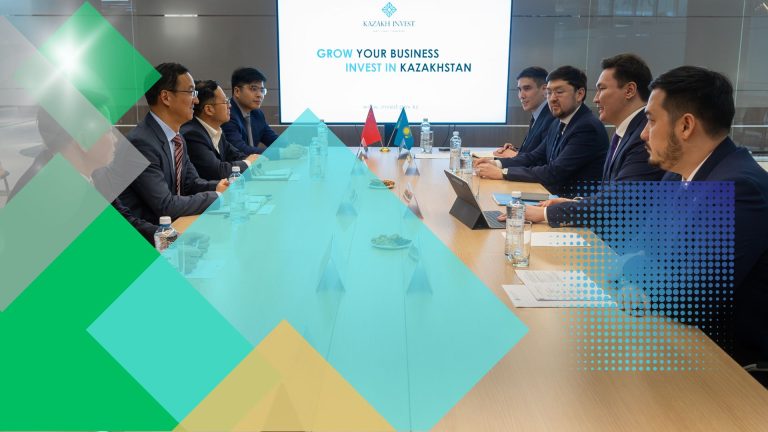
    East Hope Group, a leading Chinese company in non-ferrous metals production, has launched a major investment project in Kazakhstan. Chairman of the Board of JSC “NC” KAZAKH INVEST, Erzhan Elekeev, met with East Hope Group’s CEO Changjun Meng to discuss the prospects of collaboration in the production and advanced processing of non-ferrous metals.

    As part of this investment project, East Hope Group plans to build a large industrial park in Kazakhstan, introducing cutting-edge technologies in the field of non-ferrous metallurgy for deep processing and production of finished products. The project’s cost is expected to exceed $12 billion, with the company planning to supply products to the European Union, Central Asia, and China. The project aims to create up to 10,000 new jobs at various stages of implementation.

    Changjun Meng mentioned that the company has registered a subsidiary in Kazakhstan, which will serve as the main operational center for the project, coordinating further steps for its implementation. Preliminary geodetic and hydrogeological surveys of land plots in several regions have already been conducted, and the company plans to start more detailed studies soon. Erzhan Elekeev emphasized the project’s importance for the development of Kazakhstan’s processing industry and highlighted that its implementation would be a significant step in strengthening economic ties with international partners. “Attracting major strategic investors like East Hope Group opens new perspectives for Kazakhstan. We view this project not only in terms of investment volumes but also in the context of introducing advanced technologies, creating new jobs, and localizing production. The project’s implementation will allow Kazakhstan to occupy a key position in the global non-ferrous metals supply chain and significantly expand the export of finished products.

    We are ready to provide comprehensive support and create favorable conditions for the successful implementation of investments,” stressed Erzhan Elekeev. The parties also discussed the prospect of signing an investment agreement, which would outline the main conditions of cooperation and secure the parties’ commitments. In particular, East Hope Group expressed its readiness to sign a tripartite framework agreement with the Ministry of Foreign Affairs and the Ministry of Industry and Construction of Kazakhstan, marking an important milestone in the project’s development. Following the meeting, Erzhan Elekeev and Changjun Meng expressed confidence in the successful implementation of the initiative and noted Kazakhstan’s high potential as an industrial hub for non-ferrous metals production and deep processing.

    Background Information

    East Hope Group is one of the world’s largest producers in the field of metallurgy and technological innovations. The company has invested approximately $10 billion in the construction of low-carbon industrial complexes in China and continues to expand its international presence. As of 2022, East Hope Group ranked 39th among China’s top 500 private enterprises and 24th in the ranking of China’s top 500 private manufacturing enterprises. The group comprises over 300 subsidiaries. Its main assets are concentrated in mainland China (mainly in Shanghai, Beijing, Xinjiang, Ningxia, Inner Mongolia, Jiangsu, and Hubei), with subsidiaries operating in Vietnam, Cambodia, Singapore, Indonesia, the UAE, and other countries. East Hope Group’s commercial and residential real estate projects are located in Shanghai and Chengdu. Its alumina processing facilities are in Henan province, aluminum production facilities in Baotou and Xinjiang, silicon production facilities in Fukang, and feed and additive production facilities in Xinjiang, Jiangsu, Hubei, Shanghai, and Beijing. —

  • Kazakhstan’s Extractive Industry in 2024: Results and Challenges

    Kazakhstan’s Extractive Industry in 2024: Results and Challenges

    The extractive sector in Kazakhstan faced numerous hurdles in 2024, with a mix of progress and setbacks across various industries. While many companies are expected to release full production reports in spring 2025, preliminary data offers insight into the performance and challenges encountered by the nation’s resource sectors.

    Mining and Metallurgy

    According to Kazakhstan’s National Statistics Bureau (Qazstat), the industrial production index for the extractive industry stood at 99.8% in 2024 compared to the previous year. The decline was mainly attributed to a drop in coal production, despite positive trends in other areas.

    Coal Mining

    The coal industry in Kazakhstan experienced a decline in production, with a 3.9% decrease in total output, which amounted to 108.46 million tonnes. This was due to reduced extraction of both hard and brown coal. However, despite the drop in volume, the total value of the coal sector increased by 2.9%, reaching 537.79 billion tenge.

    The coal industry continues to face challenges such as logistical issues, with disruptions in transportation to Russia and Europe. These challenges are compounded by the growing global shift toward greener energy solutions, putting further pressure on traditional coal industries. In response, the government is focusing on the development of “clean coal” technologies and strengthening cooperation with international partners.

    Mining of Non-Ferrous Metals

    In terms of non-ferrous metals, Kazakhstan witnessed positive developments, with production of copper and zinc ores growing by 7.4% and 15.9%, respectively. The production of refined copper rose by 11.6%, while zinc output also saw a slight increase. Meanwhile, silver production continued to decline, which is expected to continue due to the diminishing quality of ore.

    The mining of iron ore experienced growth, with a 20.2% increase, bringing the total output to 57.21 million tonnes. Notably, production of iron ore pellets also showed positive trends.

    Precious Metals

    Kazakhstan’s precious metal mining sector remained relatively stable, with gold production seeing a small increase of 0.09% compared to 2023. The country produced 132.32 tonnes of raw and semi-processed gold. Gold extraction is expected to grow in the coming years, with new mining projects in development, including those at Bakhtai, Sarymbet, and Novoleninogorsk.

    Despite this, silver mining saw a sharp decline, falling by 18.5% as companies reported decreasing yields. The primary reasons for this downturn are lower ore content and reduced demand for silver.

    Challenges for the Extractive Sector

    Kazakhstan’s extractive sector faced several key challenges in 2024, many of which stemmed from global trends and domestic issues. While some sectors, such as copper and gold, showed positive growth, others, like coal and silver, faced significant obstacles.

    One of the primary concerns for the coal sector was logistical issues caused by trade disruptions with Russia, as well as fluctuating global prices. Additionally, the push for greener energy alternatives has placed pressure on traditional coal industries, creating an uncertain future.

    Despite these challenges, the extractive industry remains a vital part of Kazakhstan’s economy, accounting for a significant portion of national revenue. Moving into 2025, the sector is expected to focus on innovation and international collaboration to overcome these obstacles and drive growth across the country’s resource industries.

  • Almalyk Mining and Metallurgical Complex Begins Granulated Production of Gold, Silver, and Copper

    Almalyk Mining and Metallurgical Complex Begins Granulated Production of Gold, Silver, and Copper

    The Almalyk Mining and Metallurgical Complex (AGMK) has recently commenced the production of gold, silver, and copper in granulated form. According to company information, granulated gold is extensively used in the jewelryindustry, medicine, radioelectronics, microelectronics, the chemical industry, and the manufacturing of measuring instruments.

    In the jewelry industry, losses increase during the melting of bars and other mechanical processes, leading to financial losses for jewelers. The use of gold and silver granules helps reduce the cost of jewelry items and improve their quality. Moreover, raw materials in granulated form are a key requirement of leading manufacturers in the modern jewelry industry.

    In addition, AGMK specialists have also established the production of granulated copper. After analyzing the market, the company plans to start producing granules from other non-ferrous metals.

  • Kazakhstan Sees Significant Increase in Non-Ferrous Metal Production in April 2024

    Kazakhstan Sees Significant Increase in Non-Ferrous Metal Production in April 2024

    In April 2024, Kazakhstan significantly boosted the production of various non-ferrous metals. The country extracted 13.84 million tons of copper ore and 57,000 tons of copper-zinc ore during the month. These figures represent an increase of nearly 7% and 3% respectively compared to the previous year.

    Between January and April, miners extracted 52.16 million tons of copper ore, an 8.2% rise from 2023 levels, according to data released by the National Bureau of Statistics. In April alone, Kazakh companies produced 39,520 tons of unprocessed copper, up 8.4% year-on-year. Overall, nearly 160,000 tons of this metal were produced in the first four months of 2024, marking a 13.2% increase.

    The extraction of gold-bearing ores also showed positive growth in April. A total of 2.93 million tons were extracted, a slight increase of 1.3% from the previous year. The production of gold-bearing concentrates surged by 53.2% year-on-year, reaching approximately 34,000 tons. Additionally, the production of refined gold increased by 1.3 tons in April, nearly hitting the 6.5-ton mark, which is a 25.8% rise.