Tag: Navoiuran

  • Navoiuran Launches Global Investor Campaign Ahead of Eurobond Issuance

    Navoiuran Launches Global Investor Campaign Ahead of Eurobond Issuance

    State-owned enterprise Navoiuran has initiated a high-level international outreach campaign as it prepares to issue corporate eurobonds, seeking to attract global investment for its uranium sector development projects.

    With the support of top-tier financial and legal advisors, Navoiuran has compiled a list of promising projects and developed a comprehensive investor presentation. A series of non-deal roadshows were held in Abu Dhabi and Dubai (UAE), as well as in New York and Boston (USA), to gauge market sentiment and build investor confidence.

    The current favorable capital market environment has served as a key motivator for the upcoming issuance. By entering the eurobond market, Navoiuran aims to attract a wide range of investors and secure funding under competitive terms.

    To ensure transparency and boost credibility, high-ranking company representatives participated directly in the roadshows, following recommendations from underwriter banks and international consultants.

    Investor discussions included engagements with major financial institutions such as Abu Dhabi Investment AuthorityFirst Abu Dhabi BankBREVAN HOWARDMashreq CapitalENBD AMBHM CapitalQ Market MakerMarket SecuritiesEmirates Investment BankUABBoston MFS, and FMR.

    The underwriting consortium—Citi, ADCB, and Natixis—reported strong interest in the bond issuance, signaling investor confidence in both the enterprise and Uzbekistan’s broader economic outlook.

  • Uzbekistan’s Uranium Resources A Significant Asset for the Future

    Uzbekistan’s Uranium Resources A Significant Asset for the Future

    Uzbekistan’s Uranium Resources: A Significant Asset for the Future

    Uzbekistan is making strides in expanding its uranium resources through modernisation, digitalisation and strategic international partnerships. Recent geological explorations and research have revealed promising prospects for new deposits, positioning the nation as a key player in the global nuclear energy market.

    Domestic Exploration and Development

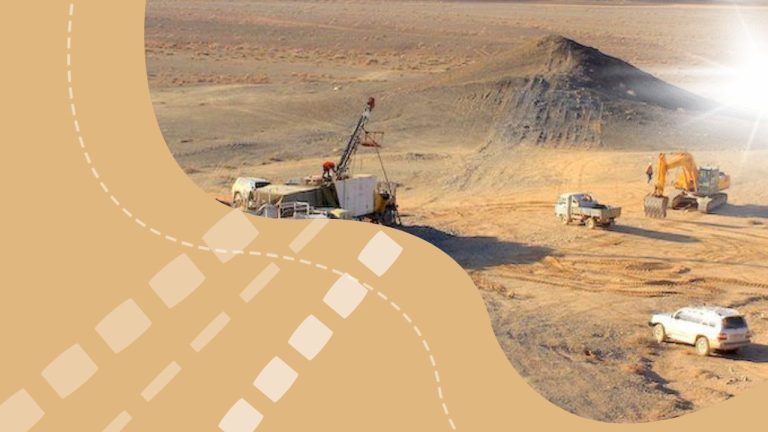
    The state-owned enterprise “Navoiuran” is spearheading the effort to boost the country’s uranium reserves. Through its dedicated geological exploration expeditions – “Bukantau”, “Nurota”, and “Zirabulok” – the company is actively surveying and drilling across the northern, central, and southern regions of Uzbekistan.These expeditions are focused on identifying new uranium deposits and enhancing the resource base. Exploration work involves detailed geological studies, geophysical surveys, and core sampling to assess the concentration of valuable elements such as Uranium, Molybdenum, and Selenium.

    International Collaboration

    Recognising the importance of global collaboration, Uzbekistan is actively partnering with foreign entities to accelerate uranium exploration and development. Notably, joint research initiatives with Japanese companies JOGMEC and Itochu have fostered financial and technological advancements. These collaborations have led to the successful implementation of international standards in research and geological services at the Jasaga deposit.

    Key Objectives and Future Prospects

    Uzbekistan has set an ambitious goal of expanding its uranium mineral resource base to 100,000 tonnes by 2030. To achieve this, “Navoiuran” is committed to:

    • Continued exploration and development activities
    • Implementing advanced technologies and digitalisation
    • Investing in training programs for young professionals
    • Attracting foreign investment through international partnerships

    By focusing on these key objectives, Uzbekistan aims to solidify its position as a major uranium producer, enhance its influence in the global energy sector, and strengthen its international standing.

  • Navoiuran State Enterprise: Perspective Plans Discussed with Itochu Corporation

    Navoiuran State Enterprise: Perspective Plans Discussed with Itochu Corporation

    A high-level meeting took place in Uzbekistan at the state enterprise ‘Navoiuran’ with a delegation from the Japanese corporation Itochu Corporation, led by Daisuke Inoue, Executive Director and Chief Operating Officer of the Metals and Mineral Resources Department.

    The Japanese delegation was warmly received by the enterprise’s management, headed by Director General J. Faizullaev. During the discussions, the enterprise’s leadership emphasised the long-standing cooperation with Itochu Corporation, highlighting the relationship’s foundation of mutual trust and friendship.

    While the specific details of the perspective plans were not fully elaborated in the initial report, the meeting signals continued collaborative efforts between Navoiuran State Enterprise and the prominent Japanese corporation.

    The engagement underscores the ongoing international business relationships and strategic partnerships in the metals and mineral resources sector.

  • Uzbekistan’s Uranium Deposits Attract Foreign Investors

    Uzbekistan’s Uranium Deposits Attract Foreign Investors

    Representatives of the China Nuclear Uranium Corporation (CNUC) met with the general director of state company Navoiuran, Jamal Faizullaev, to discuss the possibility of mining black shale uranium at the Jantuar and Ma’danli deposits in the Navoi region of Uzbekistan. Samples have already been taken from the deposits to complete geological studies.

    According to the International Atomic Energy Agency (IAEA), Uzbekistan ranks seventh in the world in terms of uranium reserves, and fifth in terms of uranium production. Until 1991, all uranium mined and processed in Uzbekistan was shipped to Russia, but since 1992, virtually all Uzbek uranium has been exported to the U.S. and other countries through Nukem Inc. In 2008, South Korea’s Kepco signed agreements to purchase 2,600 tons of uranium over six years through 2015 for about $400 million. In May 2014, China’s CGN agreed to purchase $800 million worth of uranium through 2021.

    In November 2023, state-owned Navoiuran and China National Nuclear Corporation (CNNC) signed a memorandum of cooperation on uranium mining and processing. CNNC is the main investor in Chinese nuclear power plants. The company currently has 22 operating units, six units under construction, and is the largest uranium producer in China.

    Besides Chinese investors, Uzbek uranium reserves continue to attract other major market players. In January 2006, Russia’s Techsnabexport, a subsidiary of JSC Atomredmetzoloto, signed a memorandum of understanding with Navoi Mining and Metallurgical Combine (NMMC) and the State Committee on Geology (Goskomgeologiya) to establish a joint venture for uranium mining at the (JV) Aktau deposit. The JV was originally scheduled to begin operations in late 2006, but after four years of negotiations, no agreement was reached, and Russia withdrew in mid-2010.

    In October 2007, Japan’s Itochu Corporation agreed with NMMC to develop technology for the extraction and processing of black shale uranium at the Rudnoye deposit. In mid-2008, Mitsui & Co. signed a basic agreement with Goskomgeologiya to establish a JV for geological research in the development of black shale uranium resources at the Zapadno-Kokpatasskaya mine, 300 km northwest of Navoi. Then, in mid-2009, Goskomgeologiya and the Japan Oil, Gas and Metals National Corporation (JOGMEC) signed an agreement on exploration for uranium and rare-earth metals in the Navoi region with the stipulation that JOGMEC receive 50% of the extracted raw materials. In August 2013, JOGMEC received a license for uranium exploration at two sandstone deposits for five years.

    During the November 2023 state visit by French President Emmanuel Macron to Uzbekistan, President Shavkat Mirziyoyev held a meeting with Orano Chairman, Claude Imoven. The meeting discussed the prospects of cooperation with the French company in the field of geological exploration and uranium mining in Uzbekistan. France’s Orano is the world’s largest producer of uranium and nuclear fuel, with assets totalling 29 billion.

    Uzbekistan’s uranium production increased to 3,560 tons in 2022 from 2,385 tons in 2015. Furthermore, President Mirziyoyev has approved an ambitious uranium production target of 7,100 tons in 2030.

  • B2Gold’s Investment Hopes in Uzbekistan Dashed after Six-Year Search

    B2Gold’s Investment Hopes in Uzbekistan Dashed after Six-Year Search

    According to the World Gold Council, Uzbekistan ranked 10th in the world in terms of gold production (110.8 tons) in 2023.

    According to the World Gold Council, Uzbekistan ranked 10th in the world in terms of gold production (110.8 tons) in 2023.

    Industry sources suggest that Canadian gold mining company B2Gold is preparing to change its investment strategy in Uzbekistan. While the specific reasons remain unclear, the decision may be linked to the challenges of operating within the country’s state-controlled mining industry.

    The company first announced its investment plans during the round table of the MINEX Uzbekistan Forum, held in Tashkent on 17 May 2017. According to the Foreign Investment Promotion Agency, B2Gold entered the market in 2018. In 2019, B2Gold invested $2.18 million in projects in Uzbekistan, and in 2020, more than $3 million. In July 2023, Reuters reported that B2Gold Corp was considering additional opportunities to acquire gold assets to accelerate growth. The company’s CEO, Clive Johnson, said the company was looking at assets that are already operating, not those that are in development.  Since B2Gold’s projects in Uzbekistan are at an early stage, this may have been the main reason for the company’s management to close the branch in Tashkent to concentrate on consolidating production assets with smaller producers in other countries of the world. In addition to Canada, where B2Gold acquired the Sabina Gold deposit in April 2023 for C$1.1 billion (US$832.1 million), the company is engaged in gold mining in Mali, Namibia and the Philippines.

    Uzbekistan has an ambitious goal of doubling its economy by 2030.

    This growth is reflected in the increasing role of national enterprises. Over the past six years, their share within the overall industry has grown from 10% to 17%, and their contribution to budget revenues has increased from 11% to 25%.  In 2023 Uzbekistan has laid out bold targets for its mining sector within its 2030 Development Strategy. The nation aims to explore 60,000 km of potentially mineral-rich areas by 2024.

    Key production goals (47 and 48) include:

    • Increasing copper production by 3.5 times to fuel high-value manufacturing.
    • Increasing gold production by 1.5 times.
    • Tripling silver production.
    • Tripling uranium production.

    To support downstream industries, Uzbekistan plans to boost copper processing capacity within the electrical sector by 300 thousand tons. Additionally, the nation is seeking $1.5 billion in investment to localize the production of household appliances.

    Uzbekistan’s strategy emphasises the adoption of international standards for assessing its mineral reserves, ensuring transparency and alignment with global best practices.

    On November 6, 2023, Minister of Mining and Geology Bobir Islamov announced the development of a new subsoil law.  This law aims to attract foreign investment by improving the legal framework for mining operations, providing transparent regulations, and reducing tax rates. Islamov emphasized that Uzbekistan spends $230 million annually on geological exploration and that the new law, developed in partnership with international consultants, will clearly outline opportunities for investors. As a positive result of these efforts, companies like the French Orano Mining and Canadian juniors, such as B2Gold, have begun investing in Uzbekistan’s mining industry.

    On November 6, 2023, Minister of Mining and Geology Bobir Islamov announced the development of a new law on subsoil use. He emphasized the need to accelerate geological exploration, an area where Uzbekistan spends roughly $230 million annually.  “In order to attract investors, of course, we need a very good legal framework – transparent and stable. To do this, together with consultants from the European Bank for Reconstruction and Development, with the involvement of international consultants from the Boston Consulting Group, we have developed a new law on subsoil use that provides direct action in order to clearly delineate and show all the opportunities for investors, their obligations, and, most importantly, the order of the game,” he said. Islamov specifically noted that tax rates for using subsoil were reduced, including a reduction from 10% to 7% on gold and copper, and from 10% to 2.7% on tungsten. These changes have helped attract companies like the French Orano Mining and Canadian juniors, including B2Gold, to invest in Uzbekistan’s mining industry.

    On January 15, 2024, President Shavkat Mirziyoyev reviewed progress and future plans for the geological sector, a strategic area for Uzbekistan’s growing economy. The country has committed significant resources, allocating around 1 trillion soums per year (about $80 million), resulting in the exploration of 31,000 square kilometres.  This investment focus has attracted $1.7 billion in investment projects to the industry.

    Two weeks later, on 1 February 2024, President Shavkat Mirziyoyev reviewed development plans for Uzbekistan’s metallurgical sector. The extraction of gold and other solid minerals is centralised under four state-owned enterprises: the Navoi Mining and Metallurgical Combine, the Almalyk Mining and Metallurgical Combine, the Uzbek Metallurgical Combine, and the Navoiuran State Enterprise. These enterprises have received significant investment in recent years, totalling $7.4 billion.

    On 14 February 2024, the Uzbek government released its state investment strategy for 1Q2024. 17 mining projects with foreign investors feature, mainly Chinese and Turkish. The total value of foreign mining projects is $3.6 billion of which $1.6 billion is financing from a Gulf consortium made up of Vision Invest (Saudi), Qatar Mining and ADQ (UAE) which appears to be financing for the Yangi Kon lithium venture.

    It is hard to forecast how the market will react to the possible exit or decrease in investment from the only foreign investor in Uzbekistan’s gold mining sector. This uncertainty is heightened by past experiences, such as Newmont (the world’s largest gold mining company) leaving the country in 2006 due to unfounded tax claims by the Uzbek government.

    The mining targets (goal 48), as per Uzbekistan 2030 Strategy, is to explore 60,000km of sites with commercial potential in 2024. Uzbekistan’s mining development plans and strategies will be presented at the National Mining and Metallurgy Company (NGMK) booth #2744 at the PDAC convention in Toronto from 3-6 March 2024. The Uzbek delegation will be represented by leading specialists and heads of companies and government organizations, including The Ministry of Mining and Geology, Department of Strategic Development and Investments, Department of Energy Resources Development, Department of International Cooperation and Investment Attraction, Almalyk Mining and Metallurgical Combine, Navoi Mining and Metallurgical Combine and Navoiuranium.

    The 10th Mining and Exploration Forum MINEX Central Asia will be held in Bishkek on 18-20 June 2024. The Forum will provide an international platform for assessing the investment potential of the countries of the region and discussing strategies for attracting foreign investors to explore promising deposits of critical ores and metals in Central Asia, including Uzbekistan.