Tag: Navoi Mining and Metallurgical Combine

  • Navoi Mining and Metallurgical Combine Expands Capacity at Tech Waste Recycling Plant

    Navoi Mining and Metallurgical Combine Expands Capacity at Tech Waste Recycling Plant

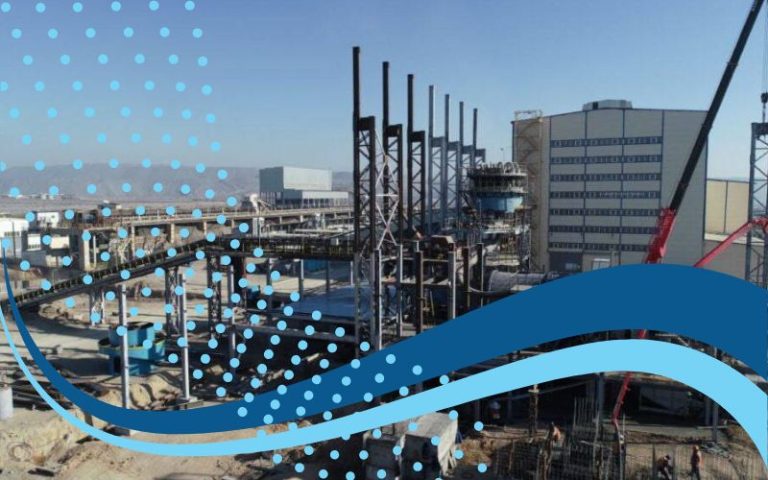
    Navoi Mining and Metallurgical Combine (NGMC) continues its ambitious expansion drive with significant progress reported at Hydrometallurgical Plant 7 (GMZ-7) – a facility specializing in processing technogenic waste.

    Located in the Kyzylkum Desert, GMZ-7 stands as a testament to NGMC’s commitment to sustainable development. Unlike other hydrometallurgical plants in the combine, GMZ-7 boasts the unique advantage of eliminating the costs associated with ore mining, processing, sorting, and transportation.

    Having processed 16 million tonnes of technogenic waste in 2024, GMZ-7 aims to reach 19 million tonnes this year. Further cementing this commitment, NGMC has initiated a major investment project: “Expansion of Processing Capacity of Hydrometallurgical Plant No. 7,” slated for completion in 2030.

    “Within the framework of the Sustainable Development Programme of JSC ‘NGMK’, construction work is underway for installing four new mills, each with a capacity to process 10 million tonnes of technogenic waste annually. These additions will bring the total number of mills on site to ten. Two of the new mills have already been commissioned. Essential equipment and spare parts are being localised and manufactured by Navoi Machine-Building Plant and Zarqush Repair and Mechanical Plant,” explained Olzhon Akhatov, Deputy Chief Engineer at GMZ-7.

    Further expansion plans include extending several factory sections, marking a crucial step towards boosting production volumes.

    These investments underline NGMC’s dedication to technological innovation and responsible resource management, showcasing its position as a leader in sustainable industrial practices.

  • Navoi Mining and Metallurgical Combine Reports 40% Profit Increase

    Navoi Mining and Metallurgical Combine Reports 40% Profit Increase

    Navoiy Gornometallurgichesky Kombinat (NGMK) has announced a 40% rise in net profit, reaching $2.1 billion, according to the company’s press service.

    Kuvandik Sanakulov, Chairman and CEO, commented: “NMMC achieved record revenue in 2024, increasing gold production by 5.4%. Thanks to the acceleration of investment projects, the company has successfully implemented 24 major investment projects worth $3 billion over the past eight years. This has enabled us to meet the production targets set for 2026 ahead of schedule – two years earlier than planned. At the same time, NGMK continues to maintain its position as one of the most cost-efficient producers in the industry, while investing in the company’s future sustainable growth.”

    Key Highlights:

    • Gold Production: The total gold production for FY 2024 amounted to 3.10 million ounces, representing a 5.4% increase compared to 2.94 million ounces in FY 2023. This growth was driven by the launch of new mining and processing capacities during the period.
    • Revenue: NGMK reported revenue of $7.4 billion for FY 2024, a 29.8% increase from $5.7 billion in FY 2023, marking a record-high for the company.
    • All-in Sustaining Costs (AISC): The total AISC for the period was $979 per ounce, up from $866 per ounce in FY 2023. This increase was primarily driven by higher royalty payments following increased gold sales, fuel costs related to the higher volume of material extraction, and rising labour expenses.
    • Adjusted EBITDA: Adjusted EBITDA for FY 2024 reached $4.6 billion, a 39.4% increase from $3.3 billion in FY 2023. Gold price growth outpaced cost increases, resulting in a rise in the adjusted EBITDA margin to 62% in 2024, up from 58% in 2023.
    • Net Profit: The company posted a net profit of $2.1 billion in FY 2024, compared to $1.5 billion in FY 2023.
    • Cash Flow and Investments: Net cash used in investing activities (capital expenditures) totalled $914 million in FY 2024, an increase of 34.6% from $679 million in FY 2023. This reflects the company’s ongoing investment programme aimed at increasing production at existing mines and exploring new deposits near mining operations.
    • Debt Position: NGMK’s leverage ratio (net debt to adjusted EBITDA) improved to 0.5x by the end of FY 2024, compared to 0.7x at the end of FY 2023, indicating strong financial stability and the company’s ability to service external debt. As of 31 December 2024, the company successfully completed its debut Eurobond issue, raising $1 billion in October 2024, split into two tranches of $500 million each, with maturities of 4 and 7 years.

    Financial Performance Summary:

    Indicator 2024 2023
    Gold Production (million ounces) 3.10 2.94 +5.4%
    All-in Sustaining Costs (AISC) $979 $866 +13.0%
    Revenue (billion USD) $7.4 $5.7 +29.8%
    Operating Profit (billion USD) $3.9 $2.9 +34.5%
    Adjusted EBITDA (billion USD) $4.6 $3.3 +39.4%
    Adjusted EBITDA Margin (%) 62% 58% +4 ppts.
    Net Profit (billion USD) $2.1 $1.5 +40.0%
    Operating Cash Flow (billion USD) $2.7 $2.0 +35.0%
    Net Cash Used in Investing (million USD) $914 $679 +34.6%
    Net Debt (billion USD) $2.5 $2.2 +13.6%
    Net Debt / Adjusted EBITDA Ratio 0.5x 0.7x -28.6%

    Full IFRS financial results are available online at: NGMK Annual Report 2024

    About the Company

    NGMK is the world’s fourth-largest gold producer, with an annual output of 3.1 million ounces of gold (2024) and a total mineral resource base of 148 million ounces. The company’s operating mines include the Muruntau-Mutenbay gold deposit, the largest in the world with a resource base of over 100 million ounces. NGMK’s business model encompasses exploration, construction of mining operations, mining, and processing, as well as gold refining and the manufacture and repair of mining equipment. The company employs over 47,000 people across 12 major mining and 9 processing plants.

    Further information about NGMK can be found on the company’s website: www.ngmk.uz.

  • B2Gold’s Investment Hopes in Uzbekistan Dashed after Six-Year Search

    B2Gold’s Investment Hopes in Uzbekistan Dashed after Six-Year Search

    According to the World Gold Council, Uzbekistan ranked 10th in the world in terms of gold production (110.8 tons) in 2023.

    According to the World Gold Council, Uzbekistan ranked 10th in the world in terms of gold production (110.8 tons) in 2023.

    Industry sources suggest that Canadian gold mining company B2Gold is preparing to change its investment strategy in Uzbekistan. While the specific reasons remain unclear, the decision may be linked to the challenges of operating within the country’s state-controlled mining industry.

    The company first announced its investment plans during the round table of the MINEX Uzbekistan Forum, held in Tashkent on 17 May 2017. According to the Foreign Investment Promotion Agency, B2Gold entered the market in 2018. In 2019, B2Gold invested $2.18 million in projects in Uzbekistan, and in 2020, more than $3 million. In July 2023, Reuters reported that B2Gold Corp was considering additional opportunities to acquire gold assets to accelerate growth. The company’s CEO, Clive Johnson, said the company was looking at assets that are already operating, not those that are in development.  Since B2Gold’s projects in Uzbekistan are at an early stage, this may have been the main reason for the company’s management to close the branch in Tashkent to concentrate on consolidating production assets with smaller producers in other countries of the world. In addition to Canada, where B2Gold acquired the Sabina Gold deposit in April 2023 for C$1.1 billion (US$832.1 million), the company is engaged in gold mining in Mali, Namibia and the Philippines.

    Uzbekistan has an ambitious goal of doubling its economy by 2030.

    This growth is reflected in the increasing role of national enterprises. Over the past six years, their share within the overall industry has grown from 10% to 17%, and their contribution to budget revenues has increased from 11% to 25%.  In 2023 Uzbekistan has laid out bold targets for its mining sector within its 2030 Development Strategy. The nation aims to explore 60,000 km of potentially mineral-rich areas by 2024.

    Key production goals (47 and 48) include:

    • Increasing copper production by 3.5 times to fuel high-value manufacturing.
    • Increasing gold production by 1.5 times.
    • Tripling silver production.
    • Tripling uranium production.

    To support downstream industries, Uzbekistan plans to boost copper processing capacity within the electrical sector by 300 thousand tons. Additionally, the nation is seeking $1.5 billion in investment to localize the production of household appliances.

    Uzbekistan’s strategy emphasises the adoption of international standards for assessing its mineral reserves, ensuring transparency and alignment with global best practices.

    On November 6, 2023, Minister of Mining and Geology Bobir Islamov announced the development of a new subsoil law.  This law aims to attract foreign investment by improving the legal framework for mining operations, providing transparent regulations, and reducing tax rates. Islamov emphasized that Uzbekistan spends $230 million annually on geological exploration and that the new law, developed in partnership with international consultants, will clearly outline opportunities for investors. As a positive result of these efforts, companies like the French Orano Mining and Canadian juniors, such as B2Gold, have begun investing in Uzbekistan’s mining industry.

    On November 6, 2023, Minister of Mining and Geology Bobir Islamov announced the development of a new law on subsoil use. He emphasized the need to accelerate geological exploration, an area where Uzbekistan spends roughly $230 million annually.  “In order to attract investors, of course, we need a very good legal framework – transparent and stable. To do this, together with consultants from the European Bank for Reconstruction and Development, with the involvement of international consultants from the Boston Consulting Group, we have developed a new law on subsoil use that provides direct action in order to clearly delineate and show all the opportunities for investors, their obligations, and, most importantly, the order of the game,” he said. Islamov specifically noted that tax rates for using subsoil were reduced, including a reduction from 10% to 7% on gold and copper, and from 10% to 2.7% on tungsten. These changes have helped attract companies like the French Orano Mining and Canadian juniors, including B2Gold, to invest in Uzbekistan’s mining industry.

    On January 15, 2024, President Shavkat Mirziyoyev reviewed progress and future plans for the geological sector, a strategic area for Uzbekistan’s growing economy. The country has committed significant resources, allocating around 1 trillion soums per year (about $80 million), resulting in the exploration of 31,000 square kilometres.  This investment focus has attracted $1.7 billion in investment projects to the industry.

    Two weeks later, on 1 February 2024, President Shavkat Mirziyoyev reviewed development plans for Uzbekistan’s metallurgical sector. The extraction of gold and other solid minerals is centralised under four state-owned enterprises: the Navoi Mining and Metallurgical Combine, the Almalyk Mining and Metallurgical Combine, the Uzbek Metallurgical Combine, and the Navoiuran State Enterprise. These enterprises have received significant investment in recent years, totalling $7.4 billion.

    On 14 February 2024, the Uzbek government released its state investment strategy for 1Q2024. 17 mining projects with foreign investors feature, mainly Chinese and Turkish. The total value of foreign mining projects is $3.6 billion of which $1.6 billion is financing from a Gulf consortium made up of Vision Invest (Saudi), Qatar Mining and ADQ (UAE) which appears to be financing for the Yangi Kon lithium venture.

    It is hard to forecast how the market will react to the possible exit or decrease in investment from the only foreign investor in Uzbekistan’s gold mining sector. This uncertainty is heightened by past experiences, such as Newmont (the world’s largest gold mining company) leaving the country in 2006 due to unfounded tax claims by the Uzbek government.

    The mining targets (goal 48), as per Uzbekistan 2030 Strategy, is to explore 60,000km of sites with commercial potential in 2024. Uzbekistan’s mining development plans and strategies will be presented at the National Mining and Metallurgy Company (NGMK) booth #2744 at the PDAC convention in Toronto from 3-6 March 2024. The Uzbek delegation will be represented by leading specialists and heads of companies and government organizations, including The Ministry of Mining and Geology, Department of Strategic Development and Investments, Department of Energy Resources Development, Department of International Cooperation and Investment Attraction, Almalyk Mining and Metallurgical Combine, Navoi Mining and Metallurgical Combine and Navoiuranium.

    The 10th Mining and Exploration Forum MINEX Central Asia will be held in Bishkek on 18-20 June 2024. The Forum will provide an international platform for assessing the investment potential of the countries of the region and discussing strategies for attracting foreign investors to explore promising deposits of critical ores and metals in Central Asia, including Uzbekistan.

  • There are currently no interested buyers for the Kyzylkum phosphorite complex

    There are currently no interested buyers for the Kyzylkum phosphorite complex

    This extension aims to provide all applicants with an opportunity to delve deeper into the economic and financial activities of the company, as detailed in the official statement.

    Previously, it was recalled that following the breakdown of economic ties with the former USSR states and Kazakhstan’s decision to cease phosphate fertilizer production in the republic, Uzbekistan decided to establish its own raw material base.

    The Navoi Mining and Metallurgical Combine took on the role of creating this new production giant. In 1998, the first line of a modern mining and processing complex in Kyzylkum, with a nearly completed production cycle from operational exploration to the production of phosphorite raw materials, was inaugurated.

    However, post-commissioning, issues arose as locally produced phosphamide was found to contain a high chlorine content, damaging the chemical plants adapted for Karatau phosphorites previously imported from Kazakhstan. Consequently, a combined scheme for enriching phosphate rocks was necessary, with Engineering Dobersek GmbH, a German company, supplying ore washing equipment for 10 million euros.

    In 2014, the phosphorite plant required additional funding of approximately $60 million, with Navoi MMC State Enterprise contributing about $30 million. The People’s Bank of Uzbekistan provided a $35 million loan from the Pension Savings System.

    In 2018, the complex was transferred to the chemical industry, and in 2020, by government decree, 100% of the authorized capital of the Kyzylkum phosphorite complex was merged with the authorized capital of the Almalyk Mining and Metallurgical Plant.