Tag: MiningIndustry

  • Kazakhstan Investment Day in Frankfurt

    Kazakhstan Investment Day in Frankfurt

    Analysis of the Germany-Kazakhstan Strategic Partnership

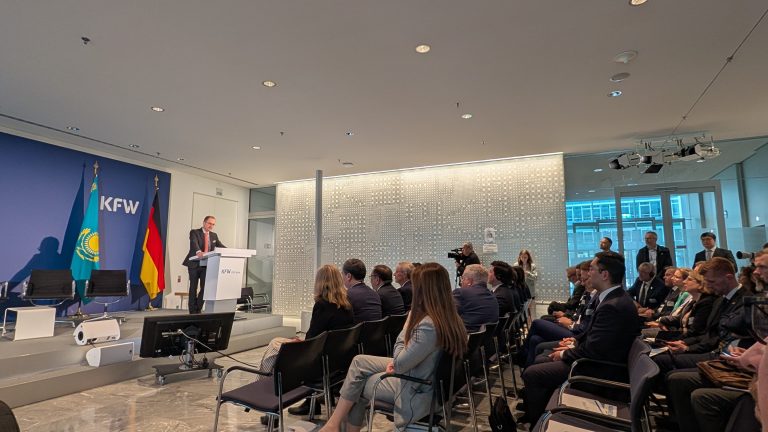
    The Kazakhstan Investment Day, held on 24 February 2026, at the KfW Bankengruppe headquarters in Frankfurt, highlighted a pivotal shift in Eurasian trade dynamics. The event centered on the deepening energy and mining alliance between Germany and Kazakhstan, a relationship that has gained strategic urgency as Kazakhstan effectively replaces Russian oil volumes and leverages deep-rooted cultural ties to strengthen bilateral cooperation.

    Financial and Strategic Framework

    The scale of this partnership is substantial, with bilateral trade recently seeing a 10% increase to reach €4 billion. Kazakhstan is currently positioned to supply 21 of the 34 critical raw materials (CRMs) identified on the EU’s strategic list.

    To facilitate this, several financial and logistical mechanisms have been established:

    • The Development Bank of Kazakhstan (DBK): A $1 billion financing program (2025–2030) has been launched, specifically dedicated to the extraction and processing of rare and critical materials.

    • Foreign Direct Investment (FDI): Kazakhstan aims to attract $400 billion in FDI by 2029, supported by Germany’s raw materials fund and backing from institutions like KfW IPEX and DEG.

    • The Middle Corridor: The Trans-Caspian International Transport Route is being developed as a highly efficient logistical artery connecting Central Asia to Europe, bypassing sanctioned territories.

    Operational Success vs. Bureaucratic Hurdles

    There is a notable contrast between engineering achievements and administrative delays. Industry leaders from Thyssen Schachtbau and Qazaq Kalium have demonstrated successful deep-shaft mining projects, proving that German technology is effectively unlocking Kazakh resources. Furthermore, the German development agency GIZ is pivoting its strategy by forming a dedicated in-country team focused exclusively on CRM partnerships.

    However, several impediments remain:

    • The “Bearocracy”: Despite the strategic need, Kazakh businesses face extreme delays and bureaucratic hurdles regarding German visa regimes, a point acknowledged by German officials.

    • Sanction Compliance: German leadership maintains a hard line, stating there will be zero support for any trade or logistics involving Russia or sanctioned companies.

    • Implementation Lag: While the financial architecture is in place, the actual development of new mining projects remains slowed by EU-wide bureaucratic processes.


    A Shifting Global Context

    The global competition for resources is accelerating. Coinciding with these discussions in Frankfurt, China introduced a supply ban of critical minerals to 40 major Japanese industrial firms over “remilitarisation” concerns. This geopolitical shift forces Japan to seek immediate alternative suppliers, placing Kazakhstan and the broader Central Asian region directly in their sights. The consensus is clear: while the foundations for a Euro-Kazakh partnership are solid, the slow pace of European administration may cause the EU to lose ground in an increasingly aggressive global race for resources.

  • Orbminco Commences Geophysical Surveys at Bronze Fox Copper-Gold Project in Mongolia

    Orbminco Commences Geophysical Surveys at Bronze Fox Copper-Gold Project in Mongolia

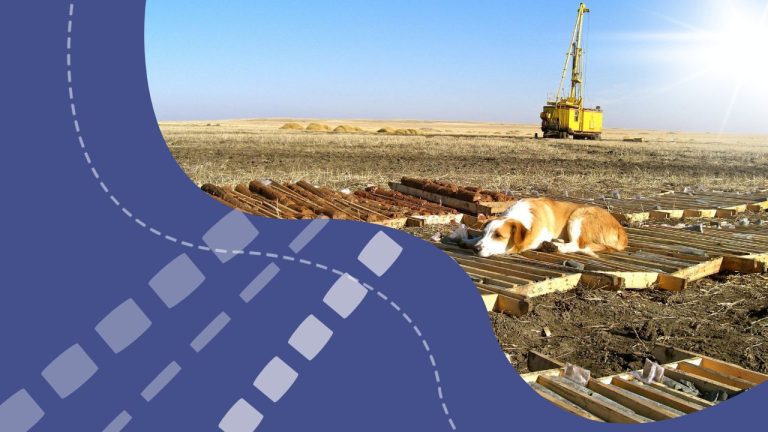
    Orbminco Limited (ASX: OB1) has commenced geophysical surveys at its Mongolian Bronze Fox Project, advancing exploration ahead of an upcoming drilling program.

    Key Highlights

    • Geophysical Surveys: IP and Gravity surveys now underway to refine the final hole design for Q3 2025 diamond core drilling.
    • Targeted Prospects: Drilling will focus on the high-grade copper-gold extension at West Kasulu and the undrilled Shuteen North prospect.
    • Strategic Position: Mongolia’s Southern Gobi region continues to attract global mining interest, positioning Orbminco as a key independent explorer in this world-class copper province.

    Orbminco’s Managing Director, Ralf Kriege, expressed enthusiasm, stating, “The team is eager to build on recent geological findings at a time when Mongolian projects in the Southern Gobi Copper-Gold Belt are gaining unprecedented attention.”

    For further details, visit Orbminco Limited.

  • Uzbekistan’s $500 Million Quest for Rare Metals

    Uzbekistan’s $500 Million Quest for Rare Metals

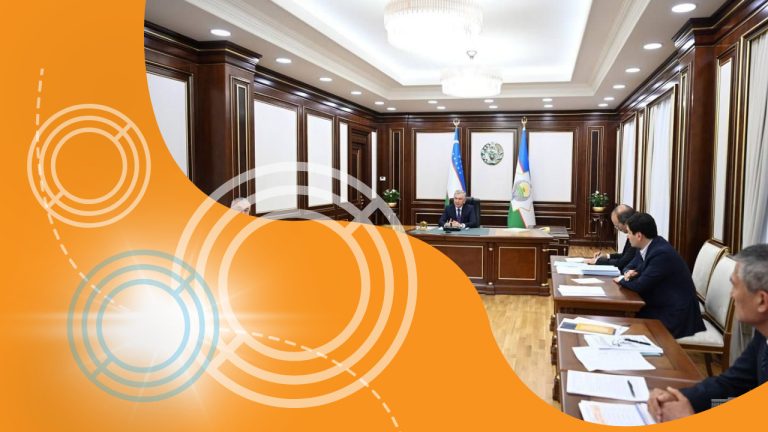
    On April 29, President Shavkat Mirziyoyev chaired a meeting to discuss tasks related to geology and the mining-metallurgical industry.

    The domestic geological sector receives an annual allocation of one trillion Uzbekistani som. As a result of targeted programs implemented last year, the production volume in the mining industry reached nearly 11 billion US dollars. However, the majority of this volume is attributed to precious and non-ferrous metals, despite the vast untapped potential for critical industrial minerals. Specifically, our country has identified 32 types of such valuable minerals.

    In connection with this, during a presentation on January 15, the head of state provided instructions to utilize opportunities in this field. Today’s meeting covered the measures, plans, and proposals being implemented.

    The world is witnessing dynamic technological advancements. There is a growing demand for rare earth metals in the electric vehicle industry, green energy, and electrical engineering. Consequently, prices for molybdenum, tellurium, selenium, and graphite have significantly risen in recent years on the global market.

    The President emphasized the emerging prospects. The need to expand the exploration of existing deposits and explore new critical raw material sources was underscored.

    Currently, our country extracts six types of such raw materials. Additionally, there is potential to produce high-value-added products from platinum, indium, vanadium, and minerals containing tungsten, molybdenum, rhenium, zinc, and manganese. For instance, production in previously nonexistent powder metallurgy could reach 300 million dollars annually, and equipment and components could generate 100 million dollars per year.

    Recently, an agreement was reached with the European Union regarding critical raw materials, providing broad access to this significant market.

    Considering this, responsible parties have been tasked with developing a program for prospective projects related to rare earth metals, involving foreign experts and investors, with a budget of 500 million dollars. Emphasizing the need for a scientific approach, a project office will be established, and leading institutes and research centres will be engaged.

    During the meeting, discussions also centred on increasing the extraction of precious metals at the Navoi Mining and Metallurgical Combine.

    Officials reported on opportunities for further increasing both reserves and gold production volumes.

    The President instructed a 10-15% reduction in production costs at the combine, expansion of industrial cooperation, and localization efforts. Additionally, the establishment of an Advanced Technology Research Center for Precious Metals was prioritized.