Tag: mining reform

  • Kazakhstan Digitalises 22 Mining Services and Raises $40 Million Through Online Auctions as MINEX Forum Charts New Era of Mineral Development

    Kazakhstan Digitalises 22 Mining Services and Raises $40 Million Through Online Auctions as MINEX Forum Charts New Era of Mineral Development

    Kazakhstan has digitalised 22 state services for the subsoil use sector and processed more than 500 licence applications through a new unified platform since its launch at the start of 2026, the country’s vice minister of industry and construction told the MINEX Kazakhstan forum in Astana — the country’s flagship annual gathering for the mining and geology sector, now in its 15th year.

    Speaking at the forum, which this year runs under the theme “A New Era of Mineral Resource Development in Kazakhstan: From Exploration to Processing,” vice minister Zhannat Dubirova outlined the practical impact of the digitalisation drive. In January alone, digital auctions conducted through the new Unified Subsoil Use Platform attracted $40 million in investment commitments across 21 licence areas. The platform allows investors to access available sites and submit auction applications directly, without intermediaries. Compliance monitoring across the approximately 3,000 active licences and contracts for solid minerals, previously conducted manually, has also been fully digitalised.

    Almas Kushimov, director of the Ministry of Industry and Construction’s subsoil use department, reported strong market appetite for new resource opportunities. Over the past two years, 117 subsoil areas and deposits have been sold through electronic auctions, generating a combined signature bonus of more than 29 billion tenge. An auction covering 50 deposits of gold, silver, coal and rare metals is planned for June 2025.

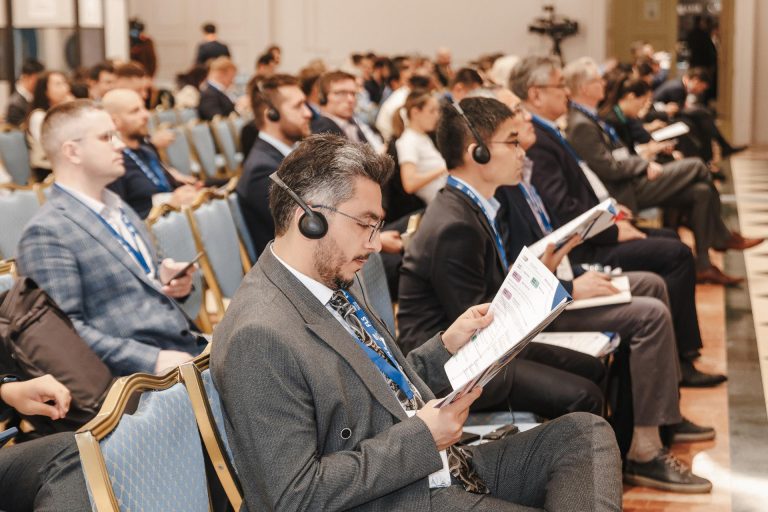
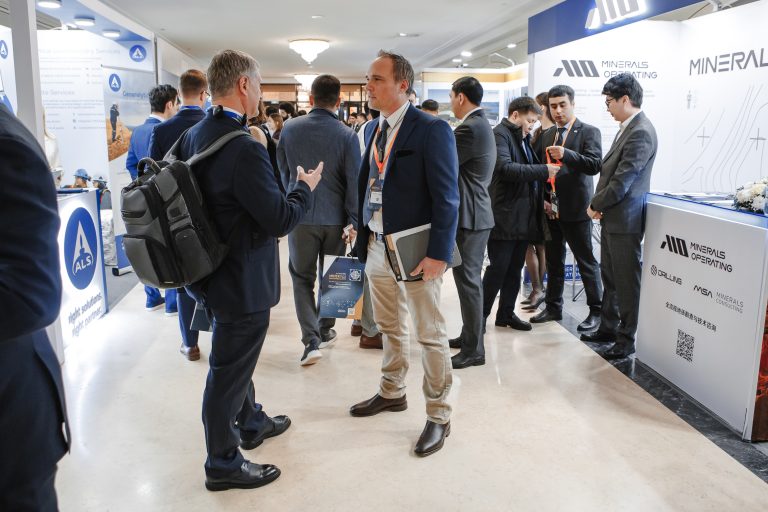
    The forum brought together approximately 100 speakers, more than 450 delegates and around 40 exhibitors from countries across Central Asia, Europe, North America, Africa, the Middle East, Australia, China, India, Malaysia and Singapore. Sessions covered investment climate, Kazakhstan’s strategic role in global critical raw material supply chains, uranium industry development and nuclear energy prospects. The forum is due to close with a workforce development and national competency session, followed by a gala evening at which the Kazakhstan Mining Chamber will present its annual Mining Industry Achievement Awards.

  • Kazakhstan Tightens Mining Code to Combat Illegal Extraction and Strengthen Investor Accountability

    Kazakhstan Tightens Mining Code to Combat Illegal Extraction and Strengthen Investor Accountability

    Kazakhstan is introducing stricter rules on subsoil use as part of an updated version of its Mining and Subsoil Code, aiming to increase accountability for financial obligations and curb illegal mineral extraction. The new draft, presented to the Mazhilis by Deputy Minister of Industry and Construction Iran Sharkhan, proposes several key reforms, LS reports.

    Under the revised Code, auction winners will be required to pay signing bonuses before receiving their mining licenses. Failure to do so will result in a five-year ban on both the company and its beneficiaries, preventing them from applying for new subsoil rights or acquiring such rights from third parties. According to Sharkhan, this measure is intended to eliminate abuse and make investor participation more transparent.

    The amendments also introduce tough penalties for covert mineral extraction disguised as pilot industrial mining. Any such violations will now result in the immediate revocation of exploration licenses. To improve oversight, the government plans to impose strict operational thresholds — for instance, removing or relocating more than 1,000 cubic meters of soil or rock will only be permitted if clearly justified by project needs.

    Additionally, the separation of industrial-innovation projects from subsoil operations will be prohibited to prevent the misuse of exploration licenses for commercial mining activities.

    Sharkhan noted that in 2025–2026, authorities plan to inspect 440 sites for signs of illegal extraction. To date, 300 areas have already been reviewed, revealing seven cases where unauthorized mining was detected.

    Another key aspect of the reform is the transition to electronic documentation. Applications for mining licenses will now be submitted via a unified digital platform that includes an interactive map of exploration sites available for development — part of a broader effort to streamline administration and boost transparency in Kazakhstan’s extractive sector.

  • 15th MINEX Kazakhstan Forum Highlights Second Phase of Mining Law Reform

    15th MINEX Kazakhstan Forum Highlights Second Phase of Mining Law Reform

    The 15th anniversary MINEX Kazakhstan Forum has officially opened in Astana, bringing together over 450 delegates and more than 100 speakers from 30 countries, including Central Asia, Europe, the Americas, the Middle East, Southeast Asia, Africa, and Australia. The forum emphasizes Kazakhstan’s growing importance in the global mineral resource market.

    The central theme of the event is “A New Era in Kazakhstan’s Mineral Development: From Exploration to Processing.” Key discussions focused on sustainable development, ESG principles, technological innovation, digitization, investment, exploration, and cross-border cooperation.

    During the plenary session, Nikolai Radostovets, Executive Director of the Republican Association of Mining and Metallurgical Enterprises (AGMP), highlighted the need to continue reforms in subsoil use and taxation.

    He praised the government’s proactive efforts in attracting both domestic and foreign investment in geological exploration. Over 3,000 licenses have been issued, demonstrating momentum in the sector. However, Radostovets emphasized that a second phase of subsoil use reform is necessary to address remaining legislative gaps.

    Notably, he proposed splitting the current Subsoil Code into two separate laws — one for hydrocarbons and another for solid minerals — to better address the specific needs of each sector.

    Radostovets also outlined key priorities for transforming the sector:

    • Classifying exploration expenses as tax-deductible,

    • Introducing agreements for processing low-grade deposits,

    • Stimulating the processing of technogenic mineral formations,

    • Developing a new Tax Code with provisions tailored to the mining sector.

    One of the central issues is the introduction of royalties for new and existing deposits. While initial industry reactions were hesitant, similar to past transitions from contracts to licensing, Radostovets expressed optimism that fair and competitive royalty rates will encourage investment and higher value-added processing.

    The executive also called for greater alignment between the Subsoil Code and other legislation, such as the Water and Land Codes, to address legal inconsistencies.

    Legislative amendments — more than 60 proposals — are currently under review by the Ministry of Industry and Construction. A working group will begin public discussions in the coming weeks, and the finalized amendments are expected to be submitted to Parliament in September 2025.

    Radostovets stressed the importance of coal as a strategic resource, advocating for investment in coal chemistry despite global calls to move away from coal combustion. He also promoted the development of industrial clusters, including copper and aluminum clusters, to support local value-added production.

    “We are optimistic. The MINEX Kazakhstan Forum not only facilitates dialogue and debate but helps us move forward with meaningful reforms in Kazakhstan’s mining sector,” Radostovets concluded.

  • Kazakhstan to Shift Junior Exploration Companies from Mineral Extraction Tax to Royalties by 2025

    Kazakhstan to Shift Junior Exploration Companies from Mineral Extraction Tax to Royalties by 2025

    Vice Minister of Industry and Construction Iran Sharkan announced that starting in 2025, junior exploration companiesthat have already discovered and confirmed reserves of solid minerals will be transitioned from the mineral extraction tax (MET) to royalties. Sharkan explained that the MET has become outdated and cumbersome, necessitating a shift to a universally understood international royalties system. The phased transition will begin with junior companies and eventually include all entities.

    At the AMM-2024 forum, Sharkan emphasized that the transition to royalties marks the logical conclusion of the mining reform initiated in 2017. The Ministry, in collaboration with colleagues from the Ministry of National Economy and the Ministry of Finance, aims for a smooth, environmentally friendly transition. Discussions will be held with the industry to define what constitutes a junior company, which Sharkan described as a new player in mining that has confirmed reserves and is moving to the extraction stage.

    Sharkan also mentioned that Kazakhstan will continue adopting modern standards. While old deposits protected by the State Reserves Committee (SRC) standards will remain in force, new projects will adhere to the international reporting system. In October 2023, Maxim Kononov, the first deputy executive director of the Republican Association of Mining and Metallurgical Enterprises (AMME), suggested setting the MET for technogenic mineral formations (TMFs) at 0.1 of the existing rate to encourage investment in TMF processing.

    Kononov advocated for synchronizing sectoral and tax legislation, noting that TMFs not classified as subsoil should not be taxed under the MET. He proposed a reduced coefficient, such as 0.1 of the current MET rates, for TMFs owned by the state. These measures would boost large-scale processing of TMFs in the country. Kononov criticized the current tax regime for making TMF extraction projects unprofitable and called for clearer taxation norms for solid minerals in TMFs.

    Since January 2023, MET rates have increased by 50% for exchange-traded metals and by 30% for others. Kononov warned that any further tax increases would be detrimental to the industry.