Tag: mining investments

  • Uzbekistan’s NMMC Reports $7.23 Billion Gold Production in First Half of 2026

    Uzbekistan’s NMMC Reports $7.23 Billion Gold Production in First Half of 2026

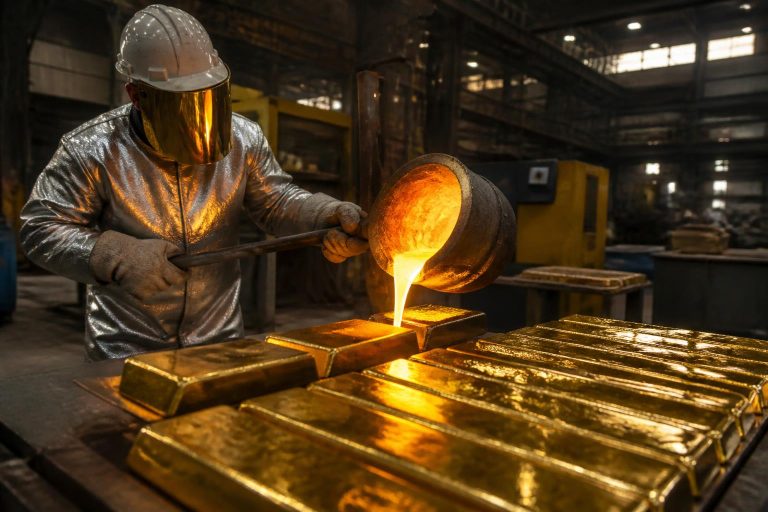
    In the first half of 2026, Uzbekistan’s Navoi Mining and Metallurgical Company (NMMC) achieved a remarkable production of 1.51 million troy ounces of gold, valued at approximately UZS 86.2 trillion (around $7.23 billion). This achievement is attributed to the company’s ongoing commitment to substantial investments in gold mining, ore processing, and infrastructure development. The operational results reflect a robust output, with NMMC producing 1,508.8 thousand troy ounces of gold during this period.

    The company has also made significant strides in local economic development, investing $236.8 million under Uzbekistan’s Investment Programme, which has resulted in the creation of 1,008 new jobs. As part of its localization programme, NMMC produced localized products worth UZS 808.7 billion (approximately $67.8 million). Furthermore, the company engaged in inter-industry cooperation by purchasing around UZS 4.2 trillion (about $352.2 million) worth of products from local producers, thereby bolstering the domestic economy.

    NMMC is actively advancing its major investment projects, particularly the fifth stage of the second phase of the Muruntau mine development, a key asset for the company. Between January and July 2026, over 96 million cubic meters of rock were mined at this site. The company has also enhanced its operational capabilities by supplying new haul trucks and mining equipment to its Central Mining Administration’s transport division. Additionally, construction and installation of conveyor lines using cyclic-flow technology are underway at the mine, which is expected to improve efficiency.

    At the Kokpatas and Daugyztau gold deposits, construction and installation of the tailings storage facility for Hydrometallurgical Plant No. 3 are ongoing. The company has introduced new electric excavators, motor graders, and front-end loaders to enhance operations at the Daugyztau and Vostochny mines.

    Moreover, NMMC is expanding Hydrometallurgical Plant No. 7 to increase its processing capacity. While construction works for the ore preparation and screening sections have been completed, efforts continue on thickening and desorption facilities, as well as on the power-supply infrastructure. The modernization of Hydrometallurgical Plant No. 2, the company’s largest facility by production performance, is also in progress, with the launch of additional mill blocks bringing the total number of operating mills to 82.

    Lastly, NMMC is reconstructing the tailings facility serving Hydrometallurgical Plants No. 2 and No. 7, which includes the construction of new waste-storage cells, embankments, water-intake facilities, and a 21-kilometer slurry pipeline. These developments not only signify NMMC’s commitment to enhancing its operational efficiency but also reflect its dedication to sustainable mining practices in Uzbekistan.


  • Ukrainian Mining Sector Receives Investment Boost from the the American-Ukrainian Investment Fund

    Ukrainian Mining Sector Receives Investment Boost from the the American-Ukrainian Investment Fund

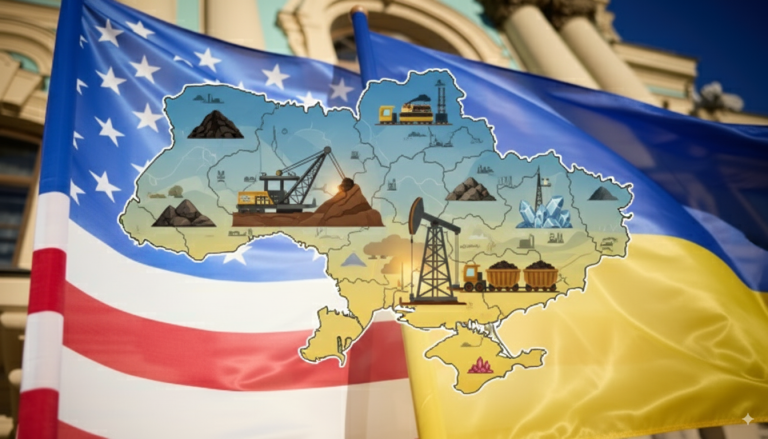
    The inaugural meeting of the American-Ukrainian Reconstruction Investment Fund Steering Committee took place in Kyiv on 3rd September, marking a significant step in attracting private investments into Ukraine’s key industries. The fund was established as a pivotal mechanism to enhance Ukraine’s economic recovery and growth by involving the private sector in rebuilding critical infrastructure and mining sectors.

    The meeting, which was attended by representatives from both the Ukrainian and American governments, was chaired by Prime Minister Yulia Sverdenko. The American delegation included Scott Besant, the US Treasury Secretary, Connor Holman, Chief Investment Officer at the US Development Finance Corporation (DFC), and Robert Stebbins, DFC’s Vice President.

    During the session, the committee finalised the operational regulations, established specialized subcommittees, and granted powers to open bank accounts, select fund administrators, and appoint investment advisors. The next step is identifying key pilot projects for investment, with discussions scheduled for later this month when DFC representatives visit Kyiv.

    Lithium and Gold Reserves in Kirovograd: A Major Mining Contest Launched

    One of the most pressing topics to emerge from the meeting was the Ukrainian government’s announcement of a competition to develop the Lithium Deposit of Dobro, located in the Kirovograd region. The project offers a lucrative opportunity for extracting nine strategically significant minerals, including lithium, gold, niobium, and beryllium. The competition is open to both Ukrainian and international firms with experience in natural resource exploitation and adequate financial and technical capabilities. However, companies from aggressor nations and those in sanctioned jurisdictions will not be allowed to participate.

    The government is looking to partner with firms willing to invest a minimum of $12 million in geological surveys and a further $160 million in industrial extraction and beneficiation activities. The agreement will be long-term, spanning 50 years, with the state retaining ownership of the resources until they are allocated through the contract.

    Ukraine’s Oil and Gas Transparency: The Launch of the National Well Registry

    In another landmark move, Ukraine’s State Geological Survey (Derzhgeonadra) has launched the National Oil and Gas Well Registry, a digital platform providing transparent access to over 12,500 well records. This new database will include active, suspended, and monitoring wells, and aims to streamline access to essential geological data for government bodies, natural resource users, and the public. This initiative strengthens Ukraine’s commitment to better resource management and international best practices in natural resource transparency.

    Ukraine’s Role in the Global Mineral Economy

    Ukraine’s mining sector is attracting attention not only for its rich mineral reserves but also for its growing role in the global economy. The upcoming Mineral Deal Forum, scheduled for 24th September in Kyiv, will bring together government officials, business leaders, and investors to discuss the future of Ukraine’s mining industry and its critical minerals. Key figures from the Ukrainian government, such as Deputy Prime Minister Taras Kachka and Minister of Economy Yegor Perelygin, will speak at the forum, alongside business leaders like Serhiy Pylypenko, the CEO of Kovalska Group, a leading construction firm that has successfully navigated the challenges of wartime operations.

    The forum promises to be a key event for understanding how Ukraine plans to integrate its vast natural resources into the global supply chain, particularly for critical minerals required in industries like renewable energy and electronics.

    Gold Hits Record Highs: What This Means for Mining Investments

    Meanwhile, the global price of gold has reached new heights, with the spot price of an ounce (31.1g) surging to $3,645 per ounce. This sharp increase in value, which has doubled over the last three years, comes amid rising global instability and the possibility of changes in US Federal Reserve policies. Investors are flocking to gold as a safe haven, which could signal further growth for mining industries worldwide, including in Ukraine.

  • U.S. Strengthens Critical Minerals Alliance with Uzbekistan in Bid to Counter China

    U.S. Strengthens Critical Minerals Alliance with Uzbekistan in Bid to Counter China

    The United States has ramped up its efforts to secure critical mineral supplies by signing a new cooperation agreement with Uzbekistan, focused on boosting American mining investments in the Central Asian nation.

    The announcement follows a series of high-level meetings in Washington, where an Uzbek delegation engaged with U.S. business leaders. While specific companies and investment figures were not disclosed, Uzbekistan’s government confirmed that the deal includes commitments to invest in mineral exploration and extraction, the construction of grinding equipment, and specialist training for Uzbek workers.

    The initiative builds on a September memorandum of understanding aimed at enhancing collaboration in the critical minerals sector. On Wednesday, U.S. Secretary of State Marco Rubio met with Uzbek Foreign Minister Bakhtiyor Saidov, underscoring Washington’s intent to strengthen strategic ties in mineral-rich Central Asia.

    “There’s great potential ahead for investments between our countries and cooperation in the critical minerals and other sectors,” Rubio posted on social media following the meeting.

    Uzbekistan, with its extensive deposits of key elements such as rare earths, lithium, and uranium, has been actively courting foreign investors. In early 2025, President Shavkat Mirziyoyev launched a $2.6 billion national program to develop 76 mining projects targeting 28 different elements. The initiative focuses on utilizing advanced technologies to extract raw materials, improve mineral purity, and produce higher value-added products.

    For the U.S., Uzbekistan represents a vital link in reshaping global supply chains away from China’s dominance. The Trump administration has also expanded its critical mineral diplomacy beyond Central Asia, initiating talks with Pakistan, Ukraine, and the Democratic Republic of Congo. These countries hold strategic reserves of minerals essential for defence, battery manufacturing, and clean energy technologies.

    As competition intensifies for access to global mineral reserves, Uzbekistan’s alignment with U.S. strategic goals may position it as a key player in future resource security initiatives.

  • Kazakhstan Expands Geological Exploration and Resource Discoveries in 2024

    Kazakhstan Expands Geological Exploration and Resource Discoveries in 2024

    Kazakhstan’s Ministry of Industry and Construction has highlighted a productive year in geological exploration, adding 17 deposits of solid minerals and six hydrocarbon fields to the national resource balance. Among the key findings are substantial reserves of gold (107.5 tons), silver (1,900 tons), copper (4.9 million tons), and iron ore (128 million tons). The year also saw reserves of tungsten, molybdenum, manganese, zinc, and lead significantly boosted, while chromium resources were documented at 464.1 thousand tons.

    Six newly identified hydrocarbon fields brought an estimated 1,776.5 million cubic meters of natural gas to the national inventory. However, the ministry did not specify the time frame for these discoveries. Looking ahead, over 20 billion tenge will be allocated for geological research between 2024 and 2026, with the goal of increasing Kazakhstan’s explored area from 1.5 million to 2.2 million square kilometers.

    Efforts are underway to study 60 promising locations for noble, ferrous, and non-ferrous metals, with a special focus on rare and rare-earth elements. Among these, the Kuyrektykol deposit stands out, with preliminary estimates indicating 800,000 tons of reserves. These developments underscore the country’s commitment to bolstering its mining sector and ensuring a robust resource base for future economic growth.