Tag: mining

  • Vast Resources Advances Mining Operations in Romania and Seeks New Investment Partnerships

    Vast Resources Advances Mining Operations in Romania and Seeks New Investment Partnerships

    Vast Resources, a mining company with operations in Romania, Tajikistan, and Zimbabwe, has announced the continuation of production activities at the Băița Plai polymetallic mine in Romania while initiating discussions for a joint venture with other mining companies to attract foreign investment, according to Economica.net.


    At Băița Plai, Vast reported the mining of 13,562 tonnes during the second half of 2024, alongside the production of 307.8 tonnes of copper concentrate with an average copper grade of 18.06%. Mining operations are running in parallel with underground drilling and reprofiling work.


    The company is also in discussions with potential off-takers and financiers regarding the restart of mining at the Manaila Polymetallic Mine, fully owned by Vast Resources Romania.


    Meanwhile, at the former Hanes Gold Mine, operated under a management contract, Vast has commenced on-site development after a harsh winter. A gravity concentrator has been installed to process gold and polymetallic alluvial minerals directly from the surface, with production expected to start this quarter. Additionally, facilities are prepared to truck significant quantities of ore to Băița Plai for processing, pending approval of new transport permits.


    Vast also confirmed receipt of separation tests for its Blueberry Gold Project, demonstrating gold extraction without the use of cyanide.

  • China Deepens Grip on Uzbekistan’s Mineral Sector Amid Global Race for Critical Resources

    China Deepens Grip on Uzbekistan’s Mineral Sector Amid Global Race for Critical Resources

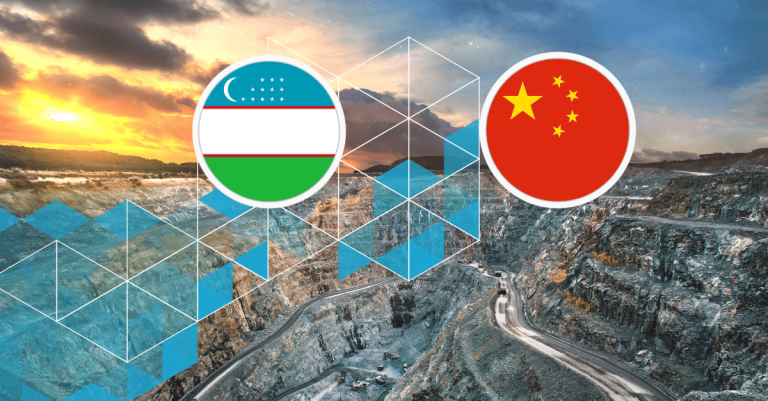
    As global powers intensify their pursuit of critical minerals, Central Asia has emerged as a strategic pivot. Among its nations, Uzbekistan stands out—not only for its rich deposits of copper, tungsten, molybdenum, and rare earth elements, but also for its increasingly central role in China’s mineral strategy.

    Already heavily involved in the region’s energy and infrastructure sectors, China has taken a proactive investment stance in Uzbekistan’s mining industry. In 2024, Limaomaoli Metal Company launched construction of the Syurenata mining complex in Parkent, aimed at processing 1 million tons of iron ore concentrate annually. Simultaneously, China Baoli Technologies is investing $200 million in a non-ferrous metal facility in the Ipak Yuli Free Economic Zone, targeting up to 45,000 tons of annual output with $18 million in export potential.

    Copper, a linchpin in global energy transition efforts, is another key focus. China Mining Energy Group is spearheading a $200 million copper mining project in Chust (Namangan region), expected to yield 30,000 tons per year and create 420 local jobs. Additionally, Boi Yi Da is planning a new copper processing plant in the same region, while a $2.7 billion project to tap copper and silver reserves in Bobotog is under negotiation.

    For Uzbekistan, these ventures promise significant job creation, technological transfer, and a move up the value chain—critical steps toward its goal of becoming a producer of value-added mineral products. They also reflect Tashkent’s broader push to localize mineral processing, boost exports, and attract FDI into downstream sectors.

    For Beijing, meanwhile, these deals help secure raw materials essential for its green economy and industrial resilience, while also reducing reliance on vulnerable maritime supply routes. The copper and iron ore flowing from Uzbekistan may soon become vital to China’s supply diversification strategy.

    Yet, the growing Chinese footprint is not without challenges. Concerns around environmental degradation and transparency in resource deals are mounting. Public unease over Chinese firms acquiring mineral rights is increasingly voiced in Uzbek media and civil society. Moreover, critics warn that unless Chinese investments support advanced processing, Uzbekistan risks becoming locked into the role of a mid-tier raw exporter.

    There’s also increasing Western interest. France has inked uranium deals with Tashkent, and the U.S. recently signed a critical minerals investment agreement. China’s accelerated moves may reflect efforts to edge out competitors and reinforce dominance over global mineral supply chains.

    Ultimately, China’s growing influence in Uzbekistan’s mining sector presents both a strategic opportunity and a test. A long-term, mutually beneficial partnership will require more than capital—it will demand transparency, environmental responsibility, and alignment with Uzbekistan’s industrial transformation goals.

  • Kazakhstan to Auction 50 Gold and Rare Metal Deposits in June 2025

    Kazakhstan to Auction 50 Gold and Rare Metal Deposits in June 2025

    Kazakhstan’s Ministry of Industry and Construction has announced that 50 deposits containing gold and rare metals will be made available for exploration and production rights via an electronic auction set for June 2025.

    Almas Kushumov, Director of the Ministry’s Department of Subsoil Use, revealed the plans during the MINEX Kazakhstan forum. According to Kushumov, the auction will include deposits with confirmed balance reserves of gold, coal, rare metals, and polymetals.

    The auction will take place through the Unified Subsoil Use Platform (minerals.e-qazyna.kz), and all procedures — including document submission — will be handled online. Licenses granted through this process will cover both exploration and production, with the latter valid for 25 years.

    Companies from the United States, European Union, and China have already expressed interest and submitted applications. The Ministry expects to publish the full list of 50 available deposits in the coming days.

    Between 2023 and 2024, Kazakhstan successfully awarded 117 deposits through similar electronic auctions, raising more than KZT29 billion (approximately $55.9 million) in signing bonuses.

    Kazakhstan currently has over 9,000 registered deposits, including 987 solid mineral sites. Due to outdated geological data—some of it over 30 years old—the government is putting strong emphasis on both exploration and production.

    The 2018 introduction of the Code on Subsoil and Subsoil Use has notably improved the investment environment, reportedly tripling private capital inflow into the sector.

    The state mining firm Tau-Ken Samruk is also pushing forward with exploration at the Kuirektykol rare earth site, where recent studies suggest the potential for significant new reserves that could elevate Kazakhstan’s standing as a global rare earth leader.

  • Kazakhstan Targets Nearly ₸12 Billion Investment in Rare Earth Metal Development

    Kazakhstan Targets Nearly ₸12 Billion Investment in Rare Earth Metal Development

    Kazakhstan is set to attract nearly ₸11.79 billion (approx. $26 million) in investments for the exploration and development of rare earth metal deposits over the next four years, according to the Ministry of Industry and Construction.

    Currently, Kazakhstan does not produce rare earth raw materials. However, it already extracts several critical metals recognized by the EU, UK, and US, including beryllium, tantalum, niobium, fluorspar, titanium, rhenium, vanadium, antimony, bismuth, scandium, phosphorus, coking coal, bauxite, barite, copper, magnesium, tellurium, and manganese.

    The government has identified cobalt, tungsten, lithium, and other metals used in batteries and magnet production as key priorities. The national mineral reserve includes 56 cobalt deposits, 21 tungsten deposits, and 7 lithium fields. Exploration and production initiatives for lithium are already underway, including partnerships with German investors, potentially totaling $500 million if reserves are confirmed.

    As part of its 2024–2028 strategic plan, Kazakhstan aims to:

    • Expand its resource base,

    • Implement advanced extraction technologies,

    • Modernize production,

    • Develop new standards for critical minerals.

    The state budget and alternative funding sources will support this effort. In addition, Kazakhstan seeks to become a key player in the battery material supply chain. In 2024, it began manganese sulfate processing, capturing 5% of the global market.

    Several mid-term projects are also in development, including:

    • Cobalt, lithium, tin, and tungsten processing facilities,

    • A UK-Kazakh project in Zhezkazgan processing imported heat-resistant nickel alloys to extract rhenium,

    • A Chinese investment in tungsten trioxide production.

    The Ministry of Industry believes these initiatives will significantly strengthen Kazakhstan’s position in rare and critical metal production within three years. Kazakhstan is already a leading global producer of titanium, beryllium, and tantalum, and aims to attract new partners through technology transfer agreements.

    These moves align with Kazakhstan’s broader strategic partnership with the United States, particularly in energy and critical minerals. President Kassym-Jomart Tokayev has emphasized the importance of developing what he called the country’s “new oil” — critical minerals vital for the global energy transition.

  • Xanadu Mines Withdraws Key Resolution on Khuiten Metals Put Option at EGM

    Xanadu Mines Withdraws Key Resolution on Khuiten Metals Put Option at EGM

    Xanadu Mines Ltd has announced the outcome of its Extraordinary General Meeting, revealing that a key resolution concerning the exercise of a 25% Put Option related to Khuiten Metals Pte Ltd was not presented to shareholders. The company had previously communicated its intention to withdraw the resolution ahead of the meeting.

    The move may have strategic implications for Xanadu Mines, potentially affecting its investment structure and stakeholder expectations. The decision marks a notable moment in the company’s evolving approach to portfolio management and partnerships.

    Xanadu Mines Ltd, listed on the ASX and TSX, operates primarily in Mongolia, offering investors exposure to copper-gold discoveries and low-cost growth opportunities. Its flagship Kharmagtai project remains central to its exploration portfolio.

    The company currently holds a market capitalization of $64.45 million and maintains a strong technical sentiment rating of “Strong Buy,” with an average daily trading volume of 96,971 shares.

  • Kazakhstan Urged to Develop Coal Chemistry Amid Surge in Rare Earth Interest

    Kazakhstan Urged to Develop Coal Chemistry Amid Surge in Rare Earth Interest

    As global demand for rare earth elements grows, Kazakhstan must not overlook the development of coal chemistry, said Nikolai Radostovets, Executive Director of the Republican Association of Mining and Metallurgical Enterprises (AGMP), at the MINEX Kazakhstan forum.

    “Technologies around the world are constantly evolving. First it was aluminum, then copper and steel. Now rare earths are in high demand. But we also want to see investment interest in the coal industry. Many have recently told Kazakhstan to phase out coal combustion — and we understand this,” Radostovets said.

    Despite global energy transition initiatives and the rise of renewables, coal remains a vital energy source, he emphasized. “You see how the situation is changing. Coal is still a very important product. We need concrete proposals and actions from the government to develop coal chemistry. We’re looking at stimulating cluster-based initiatives, and our industry is actively working on forming clusters with local manufacturers.”

    Discussions are also underway regarding the development of copper and aluminum clusters. “I believe the president and prime minister, by supporting our sector’s cluster initiatives, will create opportunities for processing and developing new products,” he added.

    Global coal giant China Energy is currently selecting a suitable deposit in Kazakhstan to develop coal chemistry. In January, Prime Minister Olzhas Bektenov confirmed the company’s $4 billion interest in coal chemical investment projects in the country.

    Kazakhstan ranks among the world’s top 10 countries in coal reserves, with an estimated 33.6 billion tons. At current consumption rates, that supply could last 300 years. Currently, coal generates about 70% of Kazakhstan’s electricity.

    Vice Minister of Energy Sungat Yesimkhanov previously announced that up to 5 GW of coal-based energy capacity is expected to be introduced by 2035. This includes several power blocks at Ekibastuz GRES-1 and GRES-2, as well as new thermal plants in Kokshetau, Semey, and Ust-Kamenogorsk. While the government forecasts coal’s share in electricity generation to decline to 34% by 2035, major infrastructure projects remain coal-dependent.

  • Uzbekistan Signs Deals with US Firms for Critical Minerals Investment

    Uzbekistan Signs Deals with US Firms for Critical Minerals Investment

    Uzbekistan announced on Wednesday (April 9, 2025) that it has secured investment agreementswith U.S. companies to develop its minerals sector, as global demand for critical minerals continues to surge. These minerals—including copper, lithium, and cobalt—are vital for manufacturing high-tech products such as electric vehicles and solar panels.

    The move comes as both the U.S. and the European Union aim to reduce reliance on China, the world’s leading producer of critical minerals. A delegation from Uzbekistan’s government signed the agreements during meetings in Washington, according to the country’s trade ministry. The deals cover exploration, extraction, the production of grinding machinery, and training programs for Uzbek specialists.

    Central Asia, including former Soviet republics like Uzbekistan, has become a focal point for Western nations looking to diversify supply chains away from Russia and China. Uzbek President Shavkat Mirziyoyev has been pushing for economic liberalization after decades of isolation under his predecessor. In March 2025, he unveiled a $2.6 billion investment plan to boost the country’s mining and processing capabilities.

  • 15th International Mining and Geology Forum MINEX Kazakhstan Kicks Off in Astana

    15th International Mining and Geology Forum MINEX Kazakhstan Kicks Off in Astana

    The 15th anniversary of the International Mining and Geology Forum MINEX Kazakhstan has commenced in Astana, attracting over 100 leading speakers and 450 delegates from 30 countries, including Central Asia, Europe, North and South America, the Middle East, Southeast Asia, Africa, and Australia. The participation of global industry leaders highlights Kazakhstan’s growing significance as a key player in the global minerals market.

    The forum’s central theme, “A New Era in Kazakhstan’s Mineral Resource Development: From Exploration to Processing,” addressed critical industry topics such as sustainable development, ESG principles, technological innovation, digitalization, investment, exploration, and cross-border cooperation.

    During the plenary session, Nikolai Radostovets, Executive Director of the Association of Mining and Metallurgical Enterprises (AGMP), emphasized the need for continued reforms in subsoil use legislation and taxation. He noted that the Kazakhstani government is actively working to attract both foreign and domestic companies to geological exploration, with over 3,000 licenses already issued. A second phase of reforms in subsoil use is now anticipated.

    Radostovets highlighted that while the 2017 Subsoil Code initiated industry reforms—introducing a licensing system and establishing CRISCO Association—some issues remain unresolved. President Kassym-Jomart Tokayev has since stressed the importance of completing these reforms. Currently, the Ministry of Industry and Construction is reviewing over 60 amendments to the Subsoil Code, including proposals from AGMP.

    One key discussion point was the potential division of the Subsoil Code into separate codes for hydrocarbons and solid minerals, as seen in other countries, to address differing industry needs. Radostovets also underscored the importance of royalty rates for new deposits, stating that consultants are evaluating rates to align with international tax standards and encourage higher processing levels.

    Additionally, he called for public discussions on proposed amendments, noting that past legislative gaps in the Water and Land Codes had led to enforcement challenges. A working group under the Ministry will soon review amendments, with parliamentary consideration expected by September 2025.

    Radostovets also addressed the need for investment in coal, despite global shifts away from coal burning, emphasizing coal chemistry development and cluster initiatives for copper and aluminum. He expressed optimism that MINEX Kazakhstan would facilitate progress in the second phase of subsoil use reforms.

  • Adriatic Metals PLC Reports 2024 Financial Results Amid Strategic Expansion

    Adriatic Metals PLC Reports 2024 Financial Results Amid Strategic Expansion

    Adriatic Metals PLC, a Europe-based mining company, has published its audited financial statements for the year ended December 31, 2024. The company, now transitioning from exploration to revenue generation, highlighted progress at its flagship Vareš Silver Operation in Bosnia and Herzegovina, a project boosting local employment and economic growth.

    The announcement comes amid heightened EU scrutiny of mining activities as the bloc seeks to strengthen its critical minerals supply chain. Despite global commodity price fluctuations and political risks, Adriatic Metals secured 50million in funding in May 202430 million debt drawdown from Orion, rescheduling its first repayment to March 31, 2025.

    In early 2025, the company secured a 25 million prepayment deal with  Trafigura 50 million to expand the Vareš Processing Plant to 1.3Mtpa and enhance production at the Rupice Mine.

    The financials revealed a net loss of 62.491 million for 2024, compared to a∗ restated 30.112 million loss in 2023. Cash reserves stood at $20.697 million as of year-end.

    Adriatic Metals is also evaluating a London Stock Exchange listing transfer, potentially enabling FTSE UK Index inclusion. The company’s 2025 strategy focuses on debt repaymentand achieving nameplate capacity by mid-year.

  • Kazakhstan Explores Investment Opportunities with Turkey’s Çalik Holding

    Kazakhstan Explores Investment Opportunities with Turkey’s Çalik Holding

    Kazakhstan’s Minister of Industry and Construction, Ersayin Nagaspayev, held a meeting with Ahmet Çalık, Chairman of the Board of Çalik Holding, to discuss potential investment opportunities in the country’s industrial and mining sectors.

    Çalik Holding, a major Turkish financial-industrial group with an annual revenue of $2.5 billion, operates across 34 countries, including Central Asia, the Balkans, the Middle East, and Africa. The company specializes in resource extraction, construction, light industry, energy, and finance.

    The meeting focused on the group’s interest in investing in Kazakhstan’s economy, particularly in the mining sector. Çalik Holding is considering acquiring ready-to-extract deposits of precious and base metals such as gold, silver, copper, zinc, and lead, or conducting geological exploration in areas with high potential for mineral discovery.

    Both sides highlighted the strong potential for cooperation in industry, construction, mining, and geological exploration. Minister Nagaspayev emphasized that Kazakhstan has fully digitized its mineral rights application process through the unified “Minerals.e-qazyna.kz” platform. Additionally, the Ministry has prepared a list of 50 solid mineral deposits, which will be auctioned electronically in the second quarter of this year.

    At the conclusion of the meeting, both parties reaffirmed their interest in strengthening and expanding their partnership.