Tag: minerals

  • U.S. and Ukraine Earmark $150 Million for Minerals Deal

    U.S. and Ukraine Earmark $150 Million for Minerals Deal

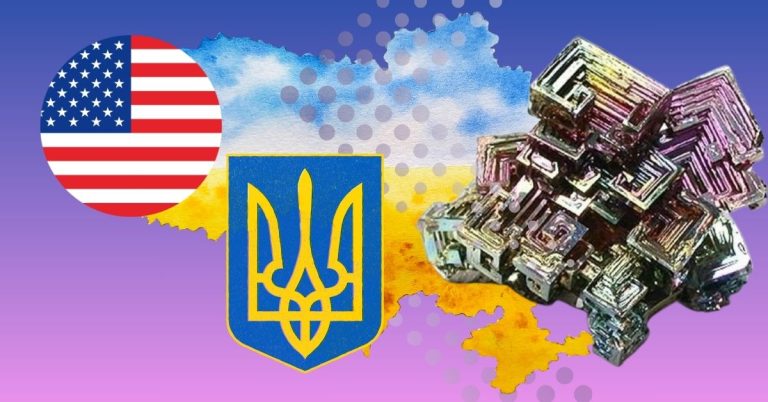
    The United States and Ukraine have committed $150 million to establish a reconstruction investment fund designed to channel foreign capital into Ukraine’s natural resources sector.

    Announced on 17 September by Ukraine’s Economy Minister, Oleksii Sobolev, the fund will see Washington and Kyiv invest $75 million each, with the U.S. contribution provided through the International Development Finance Corporation (DFC). Ukraine will finance its share in two instalments, drawn from this year’s and next year’s budgets.

    “This is definitely enough to make the first proper large-scale investments,” Sobolev told journalists.

    The initiative forms part of a wider U.S.-Ukraine resources agreement, signed in April, granting Washington favourable access to projects in natural resources, infrastructure, and defence. The fund will operate on a project-by-project basis, with both parties contributing only once an investment is approved.

    DFC officials visited Ukraine earlier this month, inspecting potential starter projects such as titanium, zirconium, and hafnium deposits in Kirovohrad Oblast. Mateo Goldman, DFC’s Senior Vice President for Investments, said: “Our $75 million investment is a major step to activating the fund and opening the Ukrainian market to new investment opportunities.”

    The fund’s board is expected to finalise its structure by late November, including the appointment of an administrator and approval of investment guidelines.

    Prime Minister Yulia Svyrydenko described the initial funding as a demonstration of “trust and long-term commitment” from Washington, noting that reinvested profits over the next decade will bolster Ukraine’s economic recovery.

    With U.S. interest in Ukraine’s critical raw materials and gas reserves, Kyiv hopes the partnership will accelerate both energy security and post-war reconstruction.

  • U.S. and Ukraine Near Landmark Deal on Mineral Access and Reconstruction Fund

    U.S. and Ukraine Near Landmark Deal on Mineral Access and Reconstruction Fund

    The United States and Ukraine are poised to finalize a landmark strategic agreement that would grant Washington preferential access to future Ukrainian mineral and energy projects in exchange for continued military aid and investment, according to multiple media reports.

    A draft of the agreement, obtained by Reuters, outlines the creation of a joint U.S.-Ukrainian reconstruction fund. This fund would receive 50% of profits and royalties from newly issued resource permits. While the U.S. will not directly own Ukrainian assets or infrastructure, the deal secures American or U.S.-designated entities first-in-line access to new mineral and energy development licenses.

    The proposed agreement exempts existing contracts and drops earlier provisions that would have allowed U.S. influence over Ukraine’s gas infrastructure.

    Bloomberg reported that the deal covers a wide range of critical resources including graphite, aluminum, oil, and natural gas. With Ukraine holding an estimated $15 trillion in mineral reserves—among the largest in Europe—the agreement positions the country as a key supplier of strategic raw materials.

    Ukrainian Prime Minister Denys Shmyhal described the plan as a “strategic investment partnership” that will help rebuild Ukraine and secure its long-term development. Crucially, only future U.S. military aid will be counted as contributions to the fund—previous military support, amounting to tens of billions of dollars, will not be monetized under this framework.

    The deal requires ratification by Ukraine’s parliament. Economy Minister Yulia Svyrydenko is currently in Washington to finalize negotiations.

    The agreement aligns with U.S. President Donald Trump’s broader policy goals, including securing critical resources and promoting a negotiated ceasefire with Russia. Although peace talks remain stalled, recent backchannel diplomacy—including a private meeting between Presidents Trump and Zelensky at the Vatican—suggests renewed communication.

  • Kazakhstan Summarizes 2024 Results in Geology and Subsoil Use

    Kazakhstan Summarizes 2024 Results in Geology and Subsoil Use

    The Ministry of Industry and Construction of Kazakhstan has released its report on the results for 2024 in the fields of geology and subsoil use. A key objective for the Ministry is to increase the geological exploration of Kazakhstan’s territory to replenish the country’s mineral resource base, thus supporting the active development of all industrial sectors.

    Kazakhstan’s mineral resource base includes over 9,500 deposits, including 987 deposits of solid minerals, 355 hydrocarbon deposits, more than 3,500 deposits of common minerals, and over 4,500 groundwater deposits.

    In the past year, 23 new deposits were registered by subsoil users, and the exploration results showed an increase in reserves: 20 tons of gold, 48,000 tons of copper, 464,000 tons of chrome, and about 290,000 tons of lead and zinc.

    The average reserve fulfillment coefficient for gold, uranium, iron, and manganese has shown a 2% increase over the last decade.

    Efforts to attract investments into subsoil use are also ongoing, with the state geological exploration program identifying 38 promising areas for solid minerals, including rare earth metals (2.6 million tons), beryllium (23,800 tons), brown coal (1.1 billion tons), gold (19 tons), zirconium (2 million tons), niobium (500,000 tons), and tungsten (400,000 tons).

    Additionally, the Kuyretykol deposit has been discovered, with reserves of around 800,000 tons of rare earth metals, including cerium and lanthanoids.

    The opening of areas available for geological exploration has led to a significant rise in private investments for the exploration of solid minerals. In 2023, private investment increased 2.5 times compared to 2018, reaching 82 billion tenge.

    In 2024, 606 exploration licenses were issued, showing growth from previous years. For mining, 33 licenses were issued.

    Private investment in geological exploration is on the rise, as businesses show increased interest in searching for promising subsoil areas. In 2024, two electronic auctions took place, with major foreign companies such as Rio Tinto, Fortescue, Kratos Resources, and others competing with local companies like Kazakhmys and ERG Exploration for exploration rights.

    Foreign companies are already operating in Kazakhstan, investing in exploration with at least 41 billion tenge and social obligations totaling 7.8 billion tenge, covering an area of 25,000 km². The expected results from the exploration of these deposits are expected between 2026 and 2028.

    Growth in private investment in geological exploration is directly linked to the level of funding and effectiveness of early-stage geological studies that identify promising exploration areas. State geological exploration funding amounts to approximately 8 USD per square kilometer.

    From 2018 to 2023, the allocation for geological exploration amounted to 51.2 billion tenge, while investments in subsoil use exploration reached 357 billion tenge.

    In January 2025, an electronic auction for 21 plots took place, attracting over 50 companies. The total signing bonus amounted to 20 billion tenge, with investments of 40 million USD attracted.

    Stable funding for state geological exploration positively impacts private investments and stimulates further exploration. This is essential for expanding the country’s mineral resource base.

    On January 1, 2025, the Unified Subsoil Use Platform (minerals.e-qazyna.kz) was launched, providing open access to all geological data. The platform has digitized 22 government services, processing 506 applications since its launch. It contains a register of geological reports, including over 60,000 reports for free online access, and provides detailed information about licenses, contracts, occupied and free territories, and previous geological and geophysical studies.

    For specific geological materials, subsoil users can apply through the National Geological Service’s website, and requests are processed within five business days.

  • Сhinese Geologists Discover Two New Minerals at Bayan Obo Rare-Earth Mine

    Сhinese Geologists Discover Two New Minerals at Bayan Obo Rare-Earth Mine

    Chinese geologists, in collaboration with several research institutions including the CAS Institute of Geology and Geophysics and Inner Mongolia Baotou Steel Union Co., Ltd., have made a significant breakthrough at Bayan Obo, the world’s largest rare-earth mine. They have identified two new minerals, Oboniobite and Scandio-fluoro-eckermannite, marking the 19th and 20th discoveries since research began in 1959. Oboniobite, characterized by its yellow-brown to brown hue and plate-like structure, measures between 20 to 100 micrometers. Meanwhile, Scandio-fluoro-eckermannite, the first mineral containing scandium found in China, appears in pale yellow or light blue with a columnar shape up to 350 micrometers. The discovery underscores the ongoing importance of Bayan Obo in mineral research and its contribution to scientific knowledge.

  • UN Launches Panel to Address Critical Energy Transition Minerals

    UN Launches Panel to Address Critical Energy Transition Minerals

    UN Secretary-General António Guterres has announced the formation of a Panel on Critical Energy Transition Minerals, recognizing the escalating demand for minerals vital to renewable energy technologies. Co-chaired by Ambassador Nozipho Joyce Mxakato-Diseko of South Africa and Director-General for Energy Ditte Juul Jørgensen of the European Commission, the panel aims to establish global principles to ensure environmental and social standards, equity, transparency, sustainability, and human rights in the minerals value chain.

    Speaking at the panel’s launch, Secretary-General Guterres emphasized the importance of managing critical minerals responsibly in the transition to renewable energy, particularly for developing countries. He stressed the need to ensure that the renewables revolution advances with justice, benefiting all stakeholders, especially marginalized communities.

    Ambassador Mxakato-Diseko commended the Secretary-General’s initiative, highlighting the panel’s alignment with sustainable development goals and climate agreements. She emphasized the objective of building trust and certainty to unlock the potential of critical minerals for shared prosperity while leaving no one behind.

    Director-General Jørgensen underscored the urgent need for a fair and transparent approach in the global minerals value chain to meet ambitious renewable energy goals. She expressed her commitment to developing principles that uphold sustainability and human development standards, both globally and locally.

    Critical energy transition minerals such as copper, lithium, nickel, cobalt, and rare earth elements are essential for achieving the targets set at COP28 and limiting global warming to 1.5°C. Without a significant increase in the supply of these minerals, the transition to renewable energy will face significant hurdles.

    While developing countries with abundant mineral reserves have the potential to drive green economic growth, proper management is crucial to avoid perpetuating commodity dependence and exacerbating environmental and social challenges. The panel aims to address these issues by providing globally agreed guidance for responsible and fair value chains.

  • Norwegian Mineral Strategy to ramp up production of materials crucial to global industry

    Norwegian Mineral Strategy to ramp up production of materials crucial to global industry

    In 2021, Norway was revealed to be the location of another large deposit of critical raw materials (CRM),1 as 240 million MT of phosphate, vanadium, and titanium were estimated to be in Storeknuten. This would already be a vast resource of three of the 30 critical raw materials, but since then has been shown by drilling operations to be as much as 910 million MT. The global economy, industry, and the current state of world politics mean that Norway has been presented with an opportunity to take a more prominent role in supplying much of the world’s industrial innovations. This includes the EU and the US, and stands to give Norway a lot more political and economic power in the coming years via developing green industries, increasing exports and growing the number of jobs in the Norwegian industry.

    As the name suggests, the EU defines critical raw materials as materials that are critical to industry. Generally speaking, this includes metals and minerals that cannot be replaced by a more common material, that have a significant supply risk, and if there is a disruption of supply, will have economic consequences. For Norway, this will include aluminium, copper, cobalt, zinc, and much more. With the EU moving towards less dependence on China, Russia and other countries for importing, Norway has become a key player in supplying these materials.

    CRM in Europe

    The shift towards greater production of CRMs comes from a variety of factors, and the EU plan, known as the Critical Raw Materials Act, has a number of objectives. This act, introduced in March 2023, seeks to strengthen the EU’s CRM capacity, reduce dependency, increase preparedness, and promote supply chain sustainability and circularity.2 The reduction of dependency essentially means the diversification of Europe’s supply of materials. Ideally, no more than 65% of one critical material is to be imported from one source. This would lead to several advantages, including the facilitation of manufacturing more green energy solutions, as well as the political advantages of not relying too much on one country’s source. With political tensions in China and the war in Ukraine with Russia, this would be a significant development for the EU and is a key cause of the Critical Raw Materials Act’s existence.

    Similarly, and since Norway is not an EU Member State, Norway has its own Green Industrial Initiative. This roadmap aims to increase investment and create jobs within green industries, as well as cutting pollution as it turns towards low-to-no emissions. Vital to this are critical metals and materials. Norway currently has a lot of these materials for not only themselves but also Europe.

    The Norwegian Mineral Strategy

    As such, Norway has had to change its strategy in terms of mining and processing these materials in order to keep up with the demand from the EU and themselves. In June, the Norwegian government unveiled the Norwegian Mineral Strategy. This strategy is a five-pillar process that aims to improve the Norwegian mineral industry and is a first step towards ‘the world’s most sustainable mineral industry.’3 Within this strategy are five key areas of focus.

    Faster implementation of mineral projects

    This is primarily concerned with the mapping of critical raw materials as well as reducing the time taken to process the mined materials. Obviously, this will reduce the time from mining the material or mineral to using it or exporting it for use, which in turn will reduce the time taken to develop green industries and grow profit for the economy.

    The mineral industry must contribute to the circular economy

    A circular economy is designed to minimise both the materials put in as well as the waste materials or pollution outputted. Norway’s circular economy is relatively low at 2.4% as of writing this, so an increase would be beneficial for green plans as well as profits. This will also decrease the cost of construction as material is recycled for use.

    A more sustainable mineral industry

    Similar to many countries and companies, Norway is aiming for its mineral industry to be zero emission or net zero by 2030. This will also specifically target the use of non-environmentally friendly chemicals in manufacturing processes. This will not only develop new industries as methods and constructions need to be updated or replaced, and therefore create new jobs, it will also benefit the planet and make the industry as a whole much more appealing to people conscious of the effects of industry on the planet.

    Private capital is a must

    Private capital will be key to funding these endeavours. Furthermore, all options will be explored to increase the profitability of mineral mining and processing, as well as increase the opportunities for communities, i.e. creating jobs. Altogether this aims to greatly stimulate the Norwegian economy.

    Norway will continue to supply international partnerships with green value chains

    This new strategy aims to change Norway’s global image to being a mineral nation and to further strengthen the ties between Norway and the rest of Europe in terms of trading critical materials. The mining industry has frequently overlooked value chains, leading to wasted resources and isolated operations, leading to miscommunication and bogged-down production.

    These five points constitute the Norwegian Mineral Strategy and are an excellent vision of Norway’s hope for its future in mining and processing critical raw materials. With these coming to fruition, Norway will occupy a spot of increasing power on the world stage.

    Europe’s position and Norway’s future

    As mentioned earlier, Europe currently has a tenuous relationship with China. The political issues in China under EU criticism range from the mistreatment of Uighur Muslims to China’s continued alliance with Russia after their invasion and sustained war in Ukraine. Yet, China is currently able to mine two-thirds of the 30 raw materials, giving them a dominating position in industrial endeavours.

    Similarly, Russia was a very contentious country even before the invasion of Ukraine, and most of Europe is on edge regarding a future with Russia. Still, Russia is in the top three countries for mining critical raw materials, with China at the top and the US between them. The EU being strong allies with just one of these three is a weak position, and one that they have started looking to rectify in recent years. Norway has an abundance of these materials and so it is easy to see how this will not only benefit the EU but Europe as a whole and especially Norway. With the EU diversifying their sources of critical raw materials, Norway stands to profit greatly from exporting to Europe, as well as its own industry developing both in economic terms and green industrial terms.

    All of these factors, along with the new Norwegian Mineral Strategy, mean that Norway may well be catapulted up in the ranks of top critical raw material exporters, and Norway itself will only benefit from this in profit and political power. The benefits to industry will also give the country a swathe of new jobs and the ability to develop green solutions and industries to benefit the world and humanity as a whole.


  • Meeting of Maia Bitadze with a new special manager of the company “Georgian Manganese”

    Meeting of Maia Bitadze with a new special manager of the company “Georgian Manganese”

    The Chair of the Environmental Protection and Natural Resources Committee, Maia Bitadze with a new special manager of the company “Georgian Manganese”, Besik Kirtadze and the Environmental Director, Irakli Nozadze and deliberated on the issues to be urgently addressed.

    Despite the certain progress we have achieved in terms of re-cultivation and other directions, the issues remain lingering that require urgent solutions. At that, it is imperative to ensure coordination of “Georgian Manganese” with all other companies that operate in the extraction and processing of mines and minerals. Hence, the Committee aspires to intensify cooperation with the company to ensure the meticulous solution of the ecological problems within the outlined plans and schedules”, – M. Bitadze noted.