Tag: metallurgy

  • Uzbekistan and China’s Henan Investment Group Discuss Expansion of Mining and Metallurgy Projects

    Uzbekistan and China’s Henan Investment Group Discuss Expansion of Mining and Metallurgy Projects

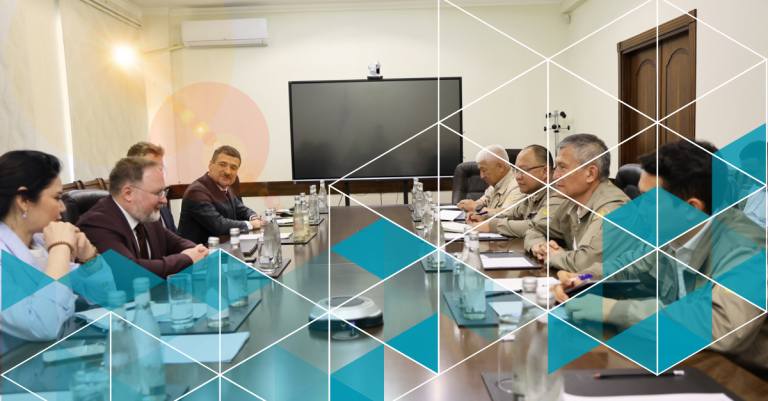
    On 27 May 2025, Minister of Mining Industry and Geology of Uzbekistan B. Islamov and senior ministry officials met with a delegation led by Zhu Hongbing, General Director of Henan Investment Group Co., Ltd. The meeting focused on the progress and future prospects of projects being implemented by the Chinese company in Uzbekistan’s mining sector.

    Key topics included the attraction of foreign investment into Uzbekistan’s geology and mining industries. Both sides emphasized the strategic importance of expanding cooperation in geological exploration and metallurgy.

    Representatives of Henan Investment Group highlighted Uzbekistan’s growing investment appeal and underscored the potential for joint ventures, particularly in untapped mineral-rich regions. The Chinese delegation expressed readiness to deepen collaboration and further develop long-term initiatives in the country.

    The Uzbek side reaffirmed its commitment to supporting foreign investors and ensuring transparency in mining-related procedures, including through mechanisms like open auctions for subsoil rights.

  • Navoi Mining and Metallurgical Combine Expands Capacity at Zarmitan Mine in Uzbekistan

    Navoi Mining and Metallurgical Combine Expands Capacity at Zarmitan Mine in Uzbekistan

    Navoi Mining and Metallurgical Combine (NMMC) has announced the expansion of its operations at the Zarmitan mine, part of its Southern Mining Department. Earlier this May, the company launched a new skip shaft at the site, as reported by the news agency Uza.

    NMMC has been implementing an investment project titled “Development of Lower Horizons of the Mining Complex Based on the Deposits of the Zarmitan Gold Ore Zone” for several years. Mine Construction Alliance s.r.o. was selected as the contractor for the construction of the vertical mine shaft. The same company is also responsible for deepening the “Main” shaft at Zarmitan.

    The shaft, with a diameter of 6.5 meters, has been extended to a depth of 1,000 meters. Ore extracted from various underground levels of the mine will now be lifted to the surface using the new shaft and then sent for processing at the fourth hydrometallurgical plant. Estimates indicate that up to 1.4 million tons of gold-bearing ore will pass through the facility annually.

    The annual economic impact of the skip shaft’s launch is projected at 19.2 billion UZS. Notably, the company expects to save on fuel costs for dump trucks, which would have otherwise spent more time transporting raw materials.

    The mine shaft is equipped with various automation systems, with all operations managed from a central control panel. NMMC claims that this project marks a significant breakthrough for Uzbekistan’s mining and metallurgical sector, highlighting advanced engineering and digital solutions.

  • Kazakhstan Extends Export Bans to Boost Domestic Processing of Raw Materials

    Kazakhstan Extends Export Bans to Boost Domestic Processing of Raw Materials

    Kazakhstan’s Interagency Commission on Foreign Trade Policy and Participation in International Economic Organizations has continued to drive the domestic processing of raw materials by extending export bans. The government outlined the results of a recent meeting on the official website of the Prime Minister of the Republic.

    The government has decided to extend the ban on the transportation of liquefied gas, a measure initially implemented to prevent fuel shortages on the domestic market.

    Additionally, a six-month export ban has been imposed on steel billets and semi-finished products. This measure is not new but has already yielded positive results. According to the Interagency Commission, domestic metallurgical plants have shifted their focus to deeper processing of raw materials and have increased rebar exports by 30,000 tons.

    The authorities also plan to support the metallurgy sector with anti-dumping duties on seamless pipes from China and galvanized steel from Ukrainian producers.

    Another import restriction will apply to stone products and drywall from countries outside the Eurasian Economic Union, with local companies’ capacities deemed sufficient to meet domestic demand.

  • Kazakhstan to Launch 190 Industrial Projects Worth $3 Billion in 2025

    Kazakhstan to Launch 190 Industrial Projects Worth $3 Billion in 2025

    Kazakhstan is set to implement 190 industrial projects worth 1.5 trillion tenge ($3 billion) in 2025, marking the highest number of such initiatives in the past five years. This announcement was made by the Ministry of Industry and Construction of Kazakhstan, highlighting the country’s push to boost its industrial sector.

    Among these projects are nine major investments in metallurgy, machine building, and the chemical industry, with plans for completion by 2035. Once these new enterprises reach their full operational capacity, the total value of their output is expected to reach $7.3 billion annually.

    Key projects include the launch of hot-briquetted iron production, the construction of a copper smelting plant, a potash salt production complex, and a hydrometallurgical plant. Additionally, Kazakhstan will ramp up production of hydrogen peroxide, liquid glass, sulfuric acid, mineral fertilizers, polypropylene, and yellow phosphorus, according to Sputnik Kazakhstan.

    These initiatives are part of Kazakhstan’s broader strategy to diversify its economy and strengthen its industrial base, positioning the country as a key player in regional and global markets.

  • Kazakhmys Denies Allegations of Illegal Export of Rare Earth Metals

    Kazakhmys Denies Allegations of Illegal Export of Rare Earth Metals

    Kazakhmys Corporation has officially denied media reports alleging the illegal export of copper ores and concentrates without proper analysis and the concealment of rare earth metal content. The company stated that all its products undergo strict quality control, and in cases where copper concentrates are exported, independent chemical analyses are conducted in world-class laboratories such as SGS Kazakhstan.

    Kazakhmys also emphasized that it does not engage in the targeted extraction of rare earth metals. Small amounts of rare metals are recovered from production waste and processed at state-owned and private enterprises within the country, in full compliance with legal regulations.

    The company assured that its operations are entirely transparent and are closely monitored by the relevant authorities. Kazakhmys supports enhanced government oversight of raw material exports and is open to cooperation with authorities for any necessary inspections.

  • Celebrating 80 Years of Kazakhstan’s First Steel Production

    Celebrating 80 Years of Kazakhstan’s First Steel Production

    In 2024, Kazakhstan marked the 80th anniversary of its first steel production—a milestone that symbolized resilience and industrial growth. The Kazakh Metallurgical Plant in Temirtau, commissioned during WWII, became a cornerstone of economic development. This achievement was commemorated with events involving metallurgical veterans, youth, and cultural programs.

    Artworks by prominent Kazakh artists capture the essence of the industry. Paintings like Turysyn Abuov’s “Renowned Steelworkers of Temirtau” showcase the grit and passion of metallurgists, while P. Antonyenko’s portraits immortalize their legacy.

    Qarmet, Kazakhstan’s largest steel company, continues this tradition of innovation, aiming for record production by 2028 and investing in modernization efforts. The company’s acquisition by Andrey Lavrentyev in 2023 has sparked reforms, including community projects like restoring Temirtau’s tram system. Qarmet employs 35,000 people and exports to over 40 countries, embodying the enduring spirit of Kazakhstan’s metallurgical industry.

  • Bulgarian President Radev: Metallurgy and Heavy Industry Are Key to Europe’s Economic Future

    Bulgarian President Radev: Metallurgy and Heavy Industry Are Key to Europe’s Economic Future

    Bulgarian President Rumen Radev emphasized the critical role of the metallurgy, mining, and heavy industries in shaping Europe’s economic resilience during the Metallurgist’s Day celebration in Sofia, which he attended under his official patronage. He urged Bulgaria to leverage this opportunity to strengthen its economic position within Europe’s industrial landscape. Reflecting on recent global challenges, including the pandemic, the energy crisis, and the Ukraine conflict, Radev argued that these events revealed Europe’s overreliance on external energy resources and the limitations of a solely green-tech focus, advocating instead for a balanced industrial strategy.

  • Kazakhstan’s Role in Global Metal Markets: A Leading Producer of Copper and Aerospace Titanium

    Kazakhstan’s Role in Global Metal Markets: A Leading Producer of Copper and Aerospace Titanium

    Kazakhstan is reinforcing its position as a global leader in metal production, ranking 11th worldwide for copper production and holding a dominant share in aerospace titanium and other critical metals. Kanat Sharlapayev, Minister of Industry and Construction, highlighted that Kazakhstan accounts for 20% of the aerospace titanium market and 30%of global supplies of metals like beryllium and niobium.

    Sharlapayev emphasized that Kazakhstani enterprises control most of these markets, with significant state ownershipand minimal foreign investment. He clarified that purchases of Kazakh metals strictly adhere to market-based pricing, underscoring the country’s robust role in metallurgical production rather than merely raw material supply.

    Kazakhstan’s high standards in metallurgy—including advanced hydrometallurgy—make it an attractive partner for Western and European companies. Sharlapayev noted that Kazakhstan’s metal production capabilities are of particular interest in sectors like battery manufacturing, positioning the nation as a key player for international partnerships. He highlighted that for many metals, Kazakhstan does not require technology transfer, showcasing a self-sufficient and advanced metallurgical industry.

  • Kazakhstan Extends Metal Scrap Export Ban to All Transport Types

    Kazakhstan Extends Metal Scrap Export Ban to All Transport Types

    The Republic’s Ministry of Industry and Construction has extended the export restrictions on scrap and waste of ferrous and non-ferrous metals for another six months. While the previous ban only applied to railway transportation, the new directive now covers all forms of transport, according to Kursiv. The ministry’s order prohibits the export of copper, aluminum, and lead scrap, used lead batteries, waste containing lead, cadmium, or mercury, ferrous metal ingots suitable for remelting, and railway track elements.

    This measure aims to secure raw materials for Kazakhstan’s metallurgical plants. The country is currently focusing on establishing advanced processing clusters, with the deep processing of secondary metals being a crucial step towards this goal. Additionally, the metal scrap export ban is expected to boost the domestic steel industry.

    It should be noted that the ban has faced opposition from third-country buyers of ferrous metal scrap. The Russian Association of Electrometallurgical Enterprises has already voiced its protest.

  • Kazakhstan Ministry of Industry and Trade Reports Growth in Metallurgy Sector

    Kazakhstan Ministry of Industry and Trade Reports Growth in Metallurgy Sector

    The Head of the Ministry of Industry and Trade of Kazakhstan, Kanat Sharlapayev, shared the results of the metallurgy industry’s progress. He announced that from January to April of 2024, there was a 5.1% increase in production, as reported by the department’s press center. Sharlapayev highlighted that by 2025, steel and pig iron production is expected to increase to 4 million tons and 3 million tons, respectively. Additionally, the production of flat rolled products is projected to reach 2.6 million tons according to government plans. Several companies, including KazMinerals, “KazZinc,” and “Kazakhmys,” will contribute to the growth of copper production, while “KazZinc” is tasked with lead and zinc production, and the “Kazakhstan Aluminum Plant” will ramp up aluminum production.