Tag: Marco Rubio

  • EU and US Sign Critical Minerals Partnership and Action Plan Covering Full Supply Chain From Exploration to Recycling

    EU and US Sign Critical Minerals Partnership and Action Plan Covering Full Supply Chain From Exploration to Recycling

    The European Union and the United States have formalised a strategic partnership on critical minerals, signing a Memorandum of Understanding and agreeing a joint Critical Minerals Action Plan in Washington DC that commits both sides to coordinated action across the full mineral value chain — from exploration and extraction through processing, refining, recycling and recovery.

    The MoU was signed by EU Trade and Economic Security Commissioner Maroš Šefčovič and US Secretary of State Marco Rubio, while the accompanying Action Plan was set out by Šefčovič and US Trade Representative Jamieson Greer. Together, the two instruments formalise a partnership that traces its origins to commitments made at a Critical Minerals Ministerial meeting held in Washington on 4 February 2026, alongside Japan, and to a joint EU-US statement issued in August 2025.

    The MoU covers bilateral cooperation across the entire supply chain and encompasses support for innovation, investment and geological mapping, as well as both supply-side and demand-side measures. The Action Plan goes further, setting out a framework for exploring a broad range of trade policy instruments designed to reinforce coordinated international action. These include border-adjusted price floors — a mechanism that has been under active discussion among allied governments as a tool to protect non-Chinese producers from market distortion — alongside standards-based markets, price gap subsidies and offtake agreements.

    Cooperation under the Action Plan is also expected to extend to the development of common standards for mining, processing and recycling; joint research and innovation programmes; stockpiling strategies; and mechanisms for rapid response to supply disruptions. Both sides intend to advance the critical minerals agenda through relevant international forums including the G7 and the Forum on Resource Geostrategic Engagement, known as FORGE, with the Action Plan explicitly paving the way toward a possible plurilateral trade initiative with a wider group of like-minded partners.

    The agreement reflects the convergence of European and American concerns about the fragility of critical mineral supply chains and the dominant position China holds across multiple points of the value chain — from mining through processing and refining — for minerals essential to the energy transition, advanced manufacturing and defence.

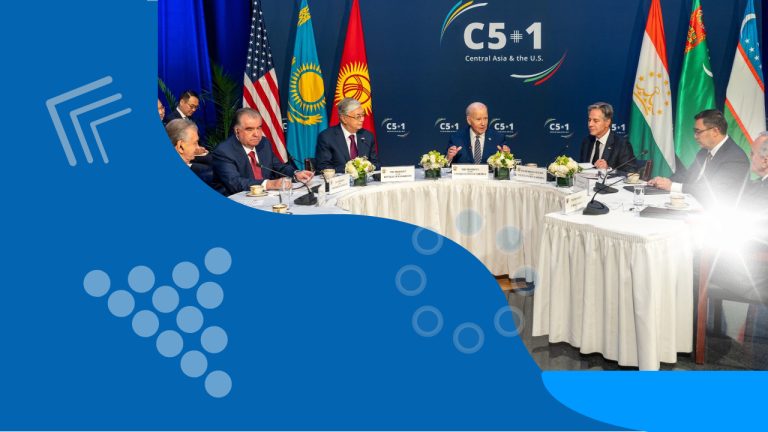
  • Central Asia in Focus: U.S. Senators Call for Increased Engagement

    Central Asia in Focus: U.S. Senators Call for Increased Engagement

    In a move that could redefine U.S. relations with Central Asia, the Trump administration is signaling readiness to repeal the decades-old Jackson-Vanik Amendment, a Cold War-era trade restriction that has long hindered stronger economic ties with the region. The potential policy shift, highlighted during the recent Senate confirmation hearing for then-designate Secretary of State Marco Rubio, could pave the way for expanded cooperation on trade, energy, critical minerals, and counterterrorism efforts in a strategically vital part of the world.

    A Long-Overdue Repeal

    The Jackson-Vanik Amendment, originally enacted in 1974, was designed to pressure nonmarket economies—primarily the Soviet Union—to allow freedom of emigration by imposing trade barriers. While most former Soviet republics have since been exempted from its provisions, five Central Asian nations—Kazakhstan, Uzbekistan, Tajikistan, Turkmenistan, and Azerbaijan—remain subject to its restrictions. Critics argue that the amendment is an outdated relic with no relevance to today’s geopolitical realities.

    During his confirmation hearing, Senator Steve Daines (R-MT) pressed Rubio on the need to repeal Jackson-Vanik, emphasizing its negative impact on U.S.-Central Asia relations. Rubio appeared to agree, calling the amendment “an absurd relic of the past.” This bipartisan acknowledgment signals growing momentum for legislative action, particularly as lawmakers like Senators Chris Murphy (D-CT) and Todd Young (R-IN), along with Representative Jimmy Panetta (D-CA), have already introduced bills aimed at granting permanent normal trade relations (PNTR) to key Central Asian states.

    Repealing Jackson-Vanik would not only remove unnecessary trade barriers but also position the United States as a more attractive partner for investment and collaboration in a region increasingly dominated by Russia and China.

    Strategic Opportunities Abound

    Central Asia, home to resource-rich nations like Kazakhstan and Uzbekistan, offers immense untapped potential for U.S. businesses and strategic interests. Kazakhstan, the region’s largest economy, is spearheading the development of the Trans-Caspian International Transport Route, or “Middle Corridor,” which aims to connect Europe and Asia via rail and maritime links while bypassing Russia. Strengthening U.S. involvement in this initiative could bolster European energy security and reduce Moscow’s influence over global markets.

    Kazakhstan also holds significant reserves of rare earth elements—critical components for green energy technologies and advanced electronics. Currently, China dominates global production and processing of these materials, controlling over 85% of the supply chain. By establishing PNTR and fostering closer trade ties with Kazakhstan, the United States could diversify its sources of critical minerals and reduce reliance on Beijing.

    Similarly, Uzbekistan, under President Shavkat Mirziyoyev’s reformist leadership, is opening its doors to foreign investors and seeking to modernize its rapidly growing economy. Tashkent recently signed an agreement with Washington to support its bid to join the World Trade Organization (WTO). With PNTR status, Uzbekistan could emerge as a competitive hub for IT exports, rivaling Eastern Europe and India.

    Countering Russian and Chinese Influence

    Beyond economics, deeper engagement with Central Asia aligns with broader U.S. goals of countering Russian and Chinese dominance in the region. Beijing’s Belt and Road Initiative (BRI) has financed infrastructure projects across Central Asia, often saddling countries with unsustainable debt. For instance, Kyrgyzstan owes nearly 37% of its external liabilities to China’s Export-Import Bank. By offering high-quality alternatives through public-private partnerships and financing mechanisms like the U.S. International Development Finance Corporation (DFC), Washington can provide Central Asian nations with viable alternatives to predatory lending practices.

    Energy diplomacy presents another avenue for U.S. influence. Supporting projects such as an undersea gas pipeline from Turkmenistan to Azerbaijan could unlock new routes for hydrocarbon exports to Europe, driving down energy prices and aiding industrial revitalization. Such initiatives align with President Trump’s vision of reducing Russia’s stranglehold on European energy markets.

    A Historic Presidential Visit?

    Looking ahead, experts suggest that President Trump should consider making a landmark visit to Central Asia—the first by a sitting U.S. president. Such a trip could yield tangible outcomes, including deals on energy cooperation, mining rights for critical minerals, and enhanced trade agreements. Given Kazakhstan’s vast reserves of rare earth elements, a bilateral agreement on mineral extraction could serve as a major diplomatic win.

    Counterterrorism Collaboration

    Finally, Central Asia remains a crucial front in the fight against terrorism, especially given its proximity to Afghanistan. With U.S. troops having withdrawn from Afghanistan in 2021, regional partners are essential for intelligence sharing, border security, and counter-radicalization efforts. Facilitating regional cooperation among Central Asian states on counterterrorism initiatives would further stabilize the area and protect U.S. national security interests.

    A Policy Shift Long Overdue

    As the Trump administration contemplates its approach to Central Asia, repealing the Jackson-Vanik Amendment represents a practical and symbolic starting point. By removing outdated barriers and embracing opportunities for collaboration, the United States can strengthen its presence in a region where it has historically lagged behind competitors like Russia and China.

    For Central Asian leaders eager to diversify their international partnerships, the prospect of closer ties with Washington offers hope for economic growth and greater geopolitical balance. And for the United States, engaging more deeply with Central Asia promises both immediate economic benefits and long-term strategic advantages.

  • Ukraine: A Potential Key Player in the Global Critical Raw Materials Race?

    Ukraine: A Potential Key Player in the Global Critical Raw Materials Race?

    In a recent statement, U.S. Secretary of State Marco Rubio provided a clear outlook on the future of American policy regarding critical raw materials. As global supply chains for these materials continue to shift, Ukraine’s vast reserves of key minerals could play a pivotal role in reshaping the global balance of power, particularly in the ongoing confrontation between the U.S. and China.

    Rubio highlighted several critical materials essential for advanced technology, renewable energy, and national security, including neodymium, dysprosium, lithium, cobalt, nickel, and titanium. Remarkably, Ukraine is home to abundant reserves of these very materials—and more. With its substantial deposits of germanium and gallium, Ukraine is positioned to be a critical player in the global supply of strategic resources.

    A Treasure Trove of Critical Materials

    • Titanium Ore (Ilmenite): Ukraine ranks 11th in the world for ilmenite reserves, found in the Irshanske, Byrzulivske, and Malyshevske deposits across the Zhytomyr, Kirovohrad, and Dnipropetrovsk regions. Titanium is vital for aerospace, defense, and high-tech manufacturing.
    • Lithium: As a key component in batteries, particularly for electric vehicles and renewable energy storage, Ukraine holds 1% of the world’s lithium reserves—equivalent to 30% of Europe’s supply. Major deposits can be found in Polokhivske (Kirovohrad region) and Balka Kruta (Zaporizhzhia region). The strategic importance of lithium was recently highlighted by China’s attempts to use the resource as leverage in international relations.
    • Germanium and Gallium: Crucial for electronics and telecommunications, these materials are abundant in Ukraine’s coal and lignite deposits in the Donetsk and Lviv-Volyn basins. Before the full-scale war, Ukraine was the world’s third-largest exporter of germanium, although exports have been halted due to the ongoing conflict. Ukraine’s reserves of these rare metals remain a critical asset for global tech industries.
    • Rare Earth Elements (Neodymium and Dysprosium): Located in the Zhytomyr region, these elements are indispensable in the production of magnets for electric vehicles, wind turbines, and high-tech equipment.
    • Nickel and Cobalt: Essential for battery production, Ukraine’s nickel and cobalt reserves are also noteworthy, found in deposits like Devladivske (Dnipropetrovsk region), Lypovenkivske (Kirovohrad region), and Dereniukhivske (Mykolaiv region). While the reserves are smaller compared to other countries, they still contribute to Ukraine’s strategic importance.
    • Manganese and Iron: Ukraine is a major global player in manganese and iron ore production, with significant deposits in the Nikopol Manganese Basin and the Kryvyi Rih Iron Ore Deposit. These resources are fundamental to the global steel and metallurgy industries.

    Ukraine’s Growing Role in Global Supply Chains

    As the global supply chain for critical raw materials becomes increasingly volatile, especially with rising tensions between the U.S. and China, Ukraine has the potential to become a key partner for the U.S. in securing access to these vital resources. With its diverse array of minerals and metals, the country offers not only essential raw materials but also strategic geopolitical leverage in a rapidly changing world order.

    The country’s natural resources, coupled with its strategic location in Europe, make it a valuable partner for countries looking to diversify their supply chains and reduce reliance on China.

    By prioritising partnerships with the U.S. and other nations, Ukraine can play a pivotal role in shaping the future of critical materials and ensure its place as a key player in the global economy.

    The Road Ahead

    The ongoing geopolitical shifts present an opportunity for Ukraine to position itself as a leading supplier of critical materials. With strategic investments in its mining and extraction sectors, Ukraine can not only boost its economy but also secure its place in the new global order. Now more than ever, the world needs Ukraine’s resources, and Ukraine is ready to take center stage.