Tag: Magnesium

  • A Strategic Assessment of Promise vs. Reality in Central Asia’s Mineral Development

    A Strategic Assessment of Promise vs. Reality in Central Asia’s Mineral Development

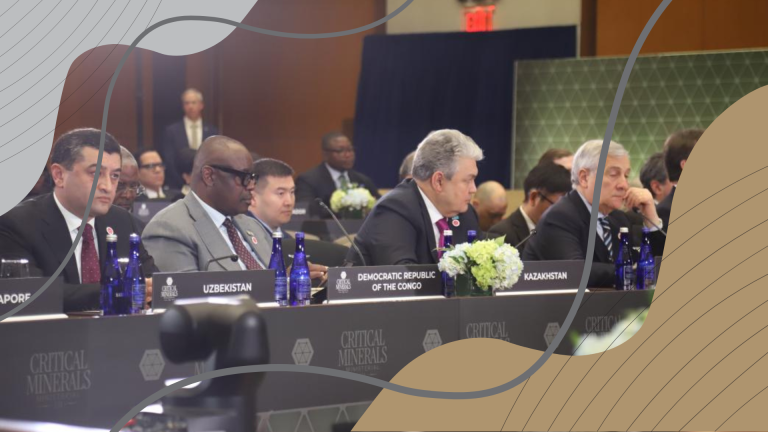
    Central Asia’s role in global critical minerals took a decisive turn at the 4 February 2026 Critical Minerals Ministerial in Washington, where officials from more than 50 countries acknowledged the region as a strategic hub rather than a geopolitical buffer.

    While Washington presented an ambitious framework to advance mineral sovereignty, analysts caution that the region—not the U.S.—must drive implementation to avoid becoming a passive arena for major‑power competition.

    U.S. Strategy: A Vertical Integration “New Order”

    The U.S. vision, centred on the FORGE initiative and the concept of “Pax Silica,” positions minerals and energy as shared strategic assets among trusted partners and offers an alternative to dependency on China.
    Washington differentiates its value proposition in three areas:

    1. Market Stability Through Price Floors
      Proposed tariff‑backed price floors aim to counter predatory market dumping and protect investments in assets such as Kazakhstan’s rare earth reserves.
    2. Vertical Value Integration
      The U.S. framework prioritises domestic processing and refining over raw‑ore exports, enabling Central Asian states to capture more value across the supply chain.
    3. Connectivity Autonomy
      By incorporating the Middle Corridor into initiatives like TRIPP, the West presents routes that bypass Russia and China, reducing geopolitical transit pressures.

    Kazakhstan and Uzbekistan have responded quickly—Kazakhstan has declared critical minerals the “new oil” and joined the Abraham Accords to strengthen supply‑chain integration, while Uzbekistan has pursued strategic MOUs to modernise mining and secure battery‑metal supply chains.

    Reality Check: Gaps Between Intent and Implementation

    Despite strong rhetoric, Western engagement has largely taken the form of frameworks and MoUs—not operational projects.

    Three challenges persist:

    • Operational Disparity – China continues to deliver turnkey, financed projects backed by contractors and long‑term offtake agreements, while Western partners emphasise declarations.
    • U.S. Inward Focus – Washington’s drive for techno‑economic sovereignty favours selective, de‑risked engagements rather than proactive industrial development in the region.
    • Execution Gaps – Uzbekistan’s $2.6bn program covering 76 projects illustrates regional ambition, but real progress requires partners capable of building at scale.

    Strategic Imperative: Central Asian Agency

    Experts argue that relying on future U.S. demand is a strategic mistake.
    To convert high‑level dialogue into economic gains, Central Asia must prioritise:

    1. Midstream Capabilities

    Refining and producing intermediary products offer higher margins and reduce reliance on long‑distance transport of low‑value raw ore.

    2. Direct Private‑Sector Engagement

    Regional firms should proactively present project‑ready opportunities to U.S. companies rather than depending on government‑to‑government frameworks.

    Conclusion

    The U.S. “New Order” provides Central Asia with a potential pathway to diversify away from Beijing and Moscow while improving price stability and long‑term sovereignty.
    But success hinges on regional execution. Astana and Tashkent must convert diplomatic signals into tangible midstream capacity—and do so quickly—to secure their strategic autonomy before the current window closes.

  • Greenland Resources Secures €500,000 EU-Backed Funding to Advance Magnesium Extraction at Malmbjerg Project

    Greenland Resources Secures €500,000 EU-Backed Funding to Advance Magnesium Extraction at Malmbjerg Project

    Greenland Resources Inc. has entered into a Financial Sustainability Agreement with EIT RawMaterials GmbH, securing €500,000 in EU-backed funding to advance innovative magnesium extraction at its Malmbjerg molybdenum project in Greenland. The funding, provided through Horizon Europe, will support testing of magnesium recovery from saline process water—an initiative aligned with the EU’s Critical Raw Materials Act, as magnesium remains one of Europe’s most import-reliant minerals.

    The company also plans a non-brokered private placement of up to 112,122 common shares at $1.65 each, raising approximately $185,000. The offering, pending Cboe approval, is expected to close around November 20, 2025. Greenland Resources has applied for additional Horizon Europe–supported programs, aiming to cover a substantial portion of the project’s equity capex.

    Under the agreement, EIT RawMaterials will invest through Greenland Resources’ subsidiary in Greenland, with securities convertible into company shares via put and call options exercisable within six months. At least €375,000 of the funding will be advanced immediately, with the remainder contingent upon final project reporting and approval.

    The Initial Conversion, tied to the offering’s expected closing date, would see EIT RawMaterials receive up to 493,939 shares at $1.65, depending on the final amount of Initial Funds disbursed. Any later conversion of Remaining Funds would be priced at the 20-day volume-weighted average, subject to a minimum of $1.65 per share.

    EIT RawMaterials CEO Bernd Schäfer emphasized Europe’s pressing need to secure magnesium supplies, noting that China currently produces nearly all of the EU’s consumption. He said the investment supports innovative, low-carbon production pathways vital for European industry and defence sectors.

    Greenland Resources Executive Chairman Ruben Shiffman said the funding sets an important precedent for future EU strategic investments, demonstrating that public European financing can be deployed through the company’s Greenland subsidiary and converted into its Canadian-listed parent entity.

    The Malmbjerg project, which received a 30-year exploitation licence in June 2025, contains both molybdenum and magnesium. The project’s design focuses on low environmental impact, with high-grade molybdenum expected to supply up to 25% of the EU’s annual consumption and fully meet its defence needs during the first decade of production. Magnesium recovery from saline water is being incorporated into updated feasibility economics.

    With China dominating global production of both molybdenum and magnesium, the EU views long-term supply diversification as essential. The Malmbjerg project, supported by the European Raw Materials Alliance, is positioned as a key strategic source for Europe’s green, industrial, and defence sectors.

  • EIT RawMaterials Invests in Greenland Resources to Boost Europe’s Magnesium Supply and Reduce Dependence on China

    EIT RawMaterials Invests in Greenland Resources to Boost Europe’s Magnesium Supply and Reduce Dependence on China

    EIT RawMaterials GmbH has announced a €0.5 million equity investment in Greenland Resources A/S, a wholly owned subsidiary of Greenland Resources Inc. and developer of the Malmbjerg molybdenum project in central-east Greenland. The initiative aims to accelerate the recovery of magnesium—currently being evaluated as a potential by-product—from both process water and primary ore, strengthening Europe’s resource security amid growing concerns over supply concentration.

    China currently supplies around 95%–97% of Europe’s magnesium imports, posing a major vulnerability for industrial sectors reliant on the metal. Magnesium is a critical alloying element in aluminum production and plays an essential role in lightweight mobility, defence applications, and modern manufacturing.

    Supported by the EU-backed European Institute of Innovation and Technology (EIT), EIT RawMaterials has collaborated with Greenland Resources from the outset to develop sustainable European molybdenum production. The new financing, provided under the Horizon Europe framework, will enable testing and scaling of low-emission technologies to extract magnesium from saline process water generated during molybdenum operations. Additional investment from existing Greenland Resources shareholders will focus on recovering magnesium directly from primary ore.

    Bernd Schäfer, CEO and Managing Director of EIT RawMaterials, emphasized the strategic importance of the effort. “Magnesium is mission-critical for Europe’s competitiveness — from lightweight mobility to defence — and yet the EU depends on China for nearly all its supply,” he said. He noted that the initiative addresses risks to key industries such as aluminum manufacturing, where magnesium is indispensable, and aligns with EU efforts to expand access to critical raw materials while reducing carbon intensity.

    The investment supports the objectives of the EU’s Critical Raw Materials Act (CRMA), which targets diversification and increased security of critical material supplies by 2030. Magnesium is officially classified as both a critical and strategic raw material, making projects that expand domestic or allied production a clear priority for the EU.

    By advancing technologies to recover magnesium from both process water and ore, the project aims to add new, lower-carbon supply streams to Europe’s raw materials portfolio. It complements the EU’s broader CRMA Strategic Projects and fits within EIT RawMaterials’ mission to mobilize investment and innovation across the raw materials value chain.

    Greenland Resources secured a 30-year exploitation licence for molybdenum and magnesium in June 2025, creating a robust permitting framework for the development pathway that this investment supports.

  • Harnessing Nature’s Elements: Magnesium’s Role in Planetary Restoration and Sustainable Investing

    Harnessing Nature’s Elements: Magnesium’s Role in Planetary Restoration and Sustainable Investing

    Amid the global climate crisis—marked by rising temperatures, ocean acidification, pollution, and land degradation—nature itself may hold solutions to address these challenges. Minerals like magnesium play a crucial role in planetary restoration efforts, offering potential benefits across ecosystems, agriculture, oceans, and human health.

    Magnesium, a cornerstone of photosynthesis, is vital for agriculture and forest health. It enhances plant nutrient uptake, bolsters soil fertility, and strengthens plant immunity. In oceans, magnesium hydroxide may help mitigate ocean acidification, preserving marine ecosystems like coral reefs. Magnesium is also essential for over 300 enzymatic processes in humans, supporting bone strength, nerve function, and cardiovascular health.

    Beyond magnesium, minerals such as olivine, lithium, cobalt, nickel, copper, and rare earth elements play pivotal roles in advancing sustainability. Olivine’s ability to sequester carbon when spread across beaches and exposed to ocean waves exemplifies nature’s potential to mitigate greenhouse gas emissions. Meanwhile, critical minerals fuel clean energy innovations like electric vehicles and renewable energy storage, which are essential for reducing carbon emissions.

    However, mineral extraction poses significant challenges, from environmental degradation to water contamination and CO2 emissions. Investors must consider not only a mineral’s quality and location but also environmental safeguards, geopolitical risks, regulatory frameworks, and local community relations. Collaboration across multiple sectors is key to responsible mining practices that prioritize both profits and planetary health.

    Strategic mineral investments represent an opportunity not only for financial returns but also for contributing to sustainable solutions for global challenges. With careful planning, investors can help shape a future where natural resources drive positive environmental change.

  • Transforming Raw Materials into Strategic Strength: EIT Raw Materials Advocates for Bold Action in FP10

    Transforming Raw Materials into Strategic Strength: EIT Raw Materials Advocates for Bold Action in FP10

    Berlin, Germany – EIT RawMaterials, a leading knowledge and innovation community, has issued a compelling call for Europe to transform its raw materials sector into a cornerstone of strategic strength. The organisation has outlined key recommendations for the upcoming Framework Programme 10 (FP10), urging the European Union to invest €4 billion to secure its raw materials future.

    The Challenge: Dependency on Imports

    Europe’s heavy reliance on imported critical and strategic raw materials (CRMs and SRMs) poses significant risks to its green and digital transformation goals. With nearly 100% dependence on external sources for key materials like lithium, magnesium, and rare earth elements, the EU is vulnerable to global supply chain disruptions.

    The Solution: Innovation and Resilience

    EIT RawMaterials proposes a multifaceted strategy to reduce dependency and build resilience:

    • Domestic Production: Increase mining to supply 10% of Europe’s CRM needs.
    • Advanced Processing: Expand processing capacity to 40%.
    • Circular Economy: Reclaim 25% of CRMs through recycling.
    • Global Diversification: Limit reliance on single-country sources to 65%.

    Strategic Investments

    To meet these ambitious targets, the organisation recommends focusing on:

    1. Disruptive Technologies: Develop cutting-edge solutions like Direct Lithium Extraction and advanced recycling.
    2. Circular Economy: Scale up industrial symbiosis and recycling initiatives to retain valuable materials.
    3. Public-Private Partnerships: Allocate €1 billion to foster collaboration between industry and academia.
    4. Workforce Development: Train 1.2 million workers by 2030 to address the sector’s growing demands.

    A Sustainable Future

    EIT RawMaterials emphasizes the transformative potential of the raw materials sector, predicting a €2 trillion economic impact and the creation of 32 million jobs by 2030. Their initiatives also align with the EU’s Critical Raw Materials Act, which sets ambitious targets for mining, processing, and recycling by the end of the decade.

    Leading Innovation

    Since its inception, EIT RawMaterials has mobilized €600 million in funding and unlocked €3.6 billion for research and innovation. Its initiatives have fostered a thriving ecosystem of over 300 partners and 750 alliance members, driving sustainable solutions and workforce development across Europe.

    “The time to act is now,” said a spokesperson from EIT RawMaterials. “With bold investments and strategic collaborations, Europe can secure its industrial competitiveness, lead the global green transition, and build a resilient future.”

  • Explained: The EU’s handicap in the global race for critical raw materials

    Explained: The EU’s handicap in the global race for critical raw materials

    The EU is highly dependent on third countries for the raw materials needed to engineer its energy transition and digital transformation.

    Russia’s war in Ukraine and the need to wean itself off fossil fuels in order to reach climate targets have prompted the EU to accelerate its green transition in recent months but also forced it to acknowledge its dependencies over access to critical raw materials.

    In the global race for raw materials, the EU faces multiple challenges.

    The first one is China, which recently started restricting exports of gallium and germanium, two metals essential for the production of semiconductors, in response to Western curbs on Beijing’s access to micro-processing technology.

    The EU considers both materials of high strategic importance. As well as semiconductors and other electronic devices, they are used for military applications such as missile defence and radar systems.

    Beijing’s restrictions come as a stark warning as the EU attempts to diversify and boost domestic supply of raw materials to reduce dependency on third countries.

    Reliance on ‘low-governance’ countries

    But diversifying supply chains could mean the EU has to source these materials from countries that don’t adhere to the same standards.

    Recent data suggests the EU’s supply is highly dependent on countries that have a low governance level, based on indicators including political stability, rule of law and corruption control.

    The EU’s Critical Raw Materials Act (CRMA), adopted in March this year, stipulates that EU strategic projects to scale up supply must be assessed taking into account all aspects of sustainability, including environmental protection, socially responsible practices and respect for human rights such as the rights of women.

    But many countries feeding EU supply are not aligned with European values. This raises concerns about the impact on the local communities where materials are mined, as well as the potential exploitation of natural resources.

    For example, the Democratic Republic of Congo, whose governance indicators are among the lowest in the world, supplies 63% of the EU’s cobalt, which is essential for manufacturing batteries for electrical vehicles.

    Diversifying supply a challenge

    The EU is also highly dependent on single countries for key materials such as Magnesium (China, 97%), Lithium (Chile, 97%), Iridium (South Africa, 93%) and Niobium (Brazil, 92%). These dependencies make supply chains vulnerable.

    The Critical Raw Materials Act aims to ensure no third country provides more than 65% of the Union’s annual consumption of any raw material.

    But diversifying supply is complex when refineries of many essential materials are monopolised by one or more global powers. China dominates the refining market for many critical raw materials.

    Russia’s invasion of Ukraine and the ensuing energy crisis has shown the acute dangers of over-reliance for supplies of raw materials. China’s increasingly antagonistic stance and the political instability in many African countries have also served as reminders of the fragility of the EU’s trading relationships.

    A spiralling global demand

    The demand for raw materials is growing steeply, as developed countries race to digitalise and decarbonise their economies. This can only happen with sufficient supply of raw materials, meaning countries must scale up extracting, refining and recycling operations.

    The global demand for lithium, for example, is set to increase a staggering 89-fold by 2050, according to the European Commission. Demand for gallium will multiply 17-fold during the same time.

    The Critical Raw Materials Act sets targets for the Union to extract 10%, process 40% and recycle 15% of its annual consumption of raw materials by 2030.

    To meet these targets and compete on the global stage, European Commission President Ursula von der Leyen has said the EU needs to speed up investments in research and development, recognising that the bloc’s global share of R&D expenditure has fallen 10% in the last 20 years.