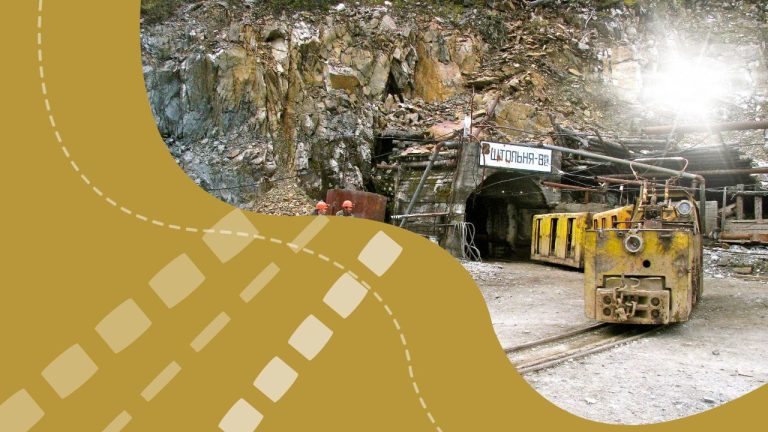
Tag: lithium project

  • Savannah Resources Highlights Barroso Community as Heart of Europe’s Energy Transition

    Savannah Resources Highlights Barroso Community as Heart of Europe’s Energy Transition

    Savannah Resources has launched a new public messaging initiative framing Portugal’s Barroso region as central to Europe’s clean-energy future, emphasising cultural heritage and community participation as the company advances its controversial lithium project.

    In the campaign titled “The EU’s Energy Independence Starts in Barroso,” the company positions the region not just as a mining location, but as a living cultural landscape shaped by generations of agricultural tradition and collective resilience. Savannah says it aims to integrate the Barroso Lithium Project into this heritage by developing it “responsibly” and ensuring local communities see tangible long-term benefits.

    The company argues that Barroso’s identity, communal strength and deep connection to the land form the foundation of what it calls “The Energy of Barroso.” This concept draws on shared values — mutual support, tradition, and the hope of retaining younger generations — which Savannah says align with Europe’s push toward a more sustainable and independent energy system.

    According to the company, lithium produced in Barroso will contribute to the EU’s ambition of reducing dependence on imported critical minerals and speeding up the green transition. Savannah stresses that the project, once operational, will supply material for millions of European electric vehicles and support regional development.

    The initiative invites the public to follow upcoming stories and updates that showcase community voices and outline how the project is intended to blend cultural preservation with modern industrial progress.

  • Savannah Resources Delays Portugal Lithium Project to 2027 Amid Government Changes

    Savannah Resources Delays Portugal Lithium Project to 2027 Amid Government Changes

    Savannah Resources, a London-based mining company, has announced a delay in the production start date of its lithium project in northern Portugal. Originally slated to begin operations in 2026, the project is now expected to commence in 2027, citing delays caused by changes in the Portuguese government. The shift occurred after Portugal’s centre-right government took power in March, following the resignation of former Socialist Prime Minister Antonio Costa amid an investigation into alleged irregularities in handling lithium and hydrogen projects.

    The company plans to establish four open-pit mines in the Barroso region, with the goal of extracting enough lithium annually to power half a million electric vehicle (EV) batteries. However, Savannah explained that the government’s transition has impacted the project’s timeline, particularly with respect to access to land. The company now expects to complete its definitive feasibility study and environmental licensing by the second half of 2025.

    In the meantime, legal proceedings have begun to grant Savannah temporary access to land that it does not yet own to carry out essential fieldwork on its 840-hectare concession area. While Savannah has purchased over 100 plots of land, data from September 2023 showed that the company had acquired or was in the process of acquiring only 93 hectares.

    The Portuguese government holds the authority to approve compulsory land acquisitions if deemed necessary, a step Savannah has indicated it may take. The project, facing strong opposition from local residents and environmentalists, is considered a critical test for the European Union’s strategy to reduce reliance on countries like China for vital raw materials.

  • SQM and Talga Group Partner to Develop Sweden’s Aero Lithium Project

    SQM and Talga Group Partner to Develop Sweden’s Aero Lithium Project

    SQM (NYSE: SQM), the world’s second largest lithium producer, has signed an earn-in agreement with Talga Group(ASX: TLG), a company specializing in battery anode and advanced materials, to jointly advance the Aero lithium project in northern Sweden. Under this agreement, the Chilean lithium miner can earn up to a 70% interest in Aero by funding up to $19 million in exploration spending over a seven-year period.

    Talga will maintain all rights and obligations over graphite minerals at Aero and will receive a management fee for each stage of the earn-in deal. Additionally, Talga will be awarded a “success fee” if a decision to mine is made. Mark Thompson, managing director of Talga, expressed that collaborating with SQM presents an opportunity to build a European lithium supply center. “As one of the few potentially large-scale lithium hard rock opportunities in Europe, Aero might be significant to the region’s battery and electric vehicle industry,” Thompson said.

    Once the earn-in period concludes, both parties must contribute to further expenditures proportionate to their ownership stakes or face dilution. SQM International Lithium division CEO, Mark Fones, stated that the deal with Talga aligns with SQM’s strategy to build a global and competitive lithium asset portfolio. “Expanding into new and promising jurisdictions, such as Sweden, has been a strategic goal for us, and partnering with Talga, who has demonstrated expertise in the region, further enhances this achievement,” Fones noted.

    SQM’s expansion efforts began about three years ago, initially targeting Australia. In July, SQM reached an earn-in deal with Tambourah Metals (ASX: TMB) for the Julimar North project in Western Australia. Subsequently, SQM acquired a 30% interest in Australia’s Pirra Lithium, with an option to increase its stake to 40%. SQM also formed a partnership with Hancock Prospecting, owned by Australia’s richest person, Gina Rinehart, for the Azure’s Andover project.

    In addition to international ventures, SQM holds a 50/50 interest with Wesfarmers in the Mt. Holland lithium mine in Western Australia, which commenced operations in March. This operation is expected to produce enough lithium hydroxide to power nearly one million new electric vehicles annually for fifty years.

    Domestically, SQM has expanded its lithium carbonate capacity, aiming to produce 210,000 tonnes this year and 240,000 tonnes by 2025, with a target of 305,000 tonnes of lithium carbonate equivalent by then. The company recently signed an agreement with copper giant Codelco, granting the state-run miner a majority share in the new partnership while extending SQM’s lease in the Atacama salt flats through 2060.

  • Dutch Miner AMG Acquires Significant Stake in Savannah Resources

    Dutch Miner AMG Acquires Significant Stake in Savannah Resources

    In a strategic move, Dutch miner AMG has acquired a 15.77% stake in London-based Savannah Resources, becoming the largest shareholder in the company. Savannah Resources is known for its development of a lithium projectin northern Portugal. This acquisition, valued at £16 million, was announced on Thursday by both companies.

    Emanuel Proenca, CEO of Savannah, highlighted the investment as a “huge de-risking step” for the company. He praised AMG as the “ideal partner” due to its established lithium business that caters to Europe’s battery and electric vehicle (EV) sector.

    The project, however, has not been without controversy. It has encountered significant opposition from local residents and environmentalists. Despite these challenges, it is seen as a crucial test for the European Union’s strategy to reduce dependency on countries like China for essential raw materials.

    Savannah plans to construct four open-pit lithium mines in the Barroso region, with an aim to produce enough lithium annually to power approximately half a million EV batteries. The company is targeting the commencement of production by 2026.

    In addition to the stake acquisition, AMG and Savannah have agreed to explore the feasibility of building a refinery in Portugal or Spain. This refinery would process spodumene into lithium carbonate.

    As part of the deal, AMG will gain a seat on Savannah’s board of directors and secure a five-year offtake agreement for 45,000 t/y of spodumene, with an option to extend this to 90,000 t over ten years.

  • Rio Tinto CEO bullish on lithium but not eyeing big acquisitions

    Rio Tinto CEO bullish on lithium but not eyeing big acquisitions

    Rio Tinto’s CEO, Jakob Stausholm, expressed optimism about the future of lithium, highlighting its continued growth driven by the increasing adoption of electric vehicles (EVs). However, he cautioned that lithium prices are expected to remain volatile.

    Despite the potential in the lithium market, Stausholm stated that Rio Tinto has no plans for significant acquisitions to expand its lithium business. Instead, the company intends to focus on enhancing lithium extraction technology.

    While other major mining firms like BHP have stayed away from investing in lithium, Rio Tinto remains committed to the mineral. Stausholm emphasized the importance of additional battery capacity not only for EVs but also for stationary batteries, which will further drive the demand for lithium.

    Rio Tinto is actively developing the Rincon project, a lithium-brine mine located in Argentina. The company aims to establish a battery-grade lithium carbonate plant with an annual capacity of 3,000 tonnes at this site, with production slated to commence by the end of 2024.

    Despite challenges such as the dispute surrounding the Jadar lithium project in Serbia, where the license was revoked in 2022 due to environmental concerns, Rio Tinto maintains its focus on lithium ventures.

    Stausholm also addressed inflation concerns, suggesting that inflation in Western countries is expected to moderate in the coming year, which could help stabilize costs for companies operating in the sector.

  • Serbia wants talks with Rio Tinto over Jadar lithium project

    Serbia wants talks with Rio Tinto over Jadar lithium project

    Serbia wants to hold further talks with Anglo-Australian miner Rio Tinto about its lithium project in the country, President Aleksandar Vucic said on Wednesday, adding that there should also be more public discussion over whether it should go ahead.

    Belgrade revoked licences for Rio’s $2.4 billion Jadar lithium project in Western Serbia in January 2022 after massive environmental protests. If completed, the project could supply 90% of Europe’s current lithium needs and help to make the company a leading lithium producer.

    Regarded as a critical material by the European Union and the United States, lithium is largely used in batteries for electric vehicles (EV) and mobile devices.

    Speaking on the sidelines of the World Economic Forum in Davos, Vucic said he had “a difficult conversation” with representatives of Rio Tinto earlier on Wednesday.

    “We are facing the question of whether the company will file a lawsuit against us or not,” Vucic told Serbian reporters. “I asked them not to take measures to protect their interests.”

    In 2021 and 2022 Serbian environmentalists collected 30,000 signatures in a petition demanding that parliament enact legislation to halt lithium exploration in the country.

    Green activists have repeatedly warned that the mining projects will cause more pollution in Serbia, already one of Europe’s most polluted countries.

    Vucic said he had sought Rio’s assurances about environmental standards and said that the next government – expected to be formed by May following December elections – should address the issue.

    “(Rio) must offer the cleanest solutions, which could be satisfactory to our people, the highest standards in the world for the nature and the people who will work there,” he said.

    In an emailed response, a Rio Tinto spokesman said: “We continue to believe the Jadar project … could act as a catalyst for the development of other industries and tens of thousands of jobs for current and future generations in Serbia.”

    The company is focused on consultation with all stakeholders to explore options related to the project’s future, the email added.

    To bolster economic growth and revenue, the Serbian government has offered mineral resources to foreign investors including China’s Zijin copper miner and Rio Tinto.

  • Swiss-Canadian lithium project in Bosnia to supply Mercedes, despite community opposition and ESG risks

    Swiss-Canadian lithium project in Bosnia to supply Mercedes, despite community opposition and ESG risks

    Swiss mining company Arcor and Canadian company Rock Tech have signed a partnership agreement that will include the distribution of lithium from Lopare in Bosnia and Herzegovina, and according to their claims supply Mercedes. Despite fierce local opposition. 

    “Lithium carbonate will be mined in an environmentally and socially responsible way at Arkor’s mine in Lopare, Bosnia and Herzegovina, and then Roc Tech will convert it into lithium hydroxide ‘Made in Germany’,” they announced, Klix.ba reported.

    Rock Tech is also building its first facility in Germany to produce lithium hydroxide for the battery and automotive industries from 2026. Among other things, the company has already signed sales contracts with the Mercedes-Benz group.

    In an exploration phase that has been ongoing since 2018, Arkor has confirmed deposits of lithium carbonate as well as boron, potassium and magnesium sulfate in a mine near Lopare. As Nicolas Trend, head of the Board of Directors of Arcor points out, the site is unique in the world in terms of its size and geological structure.

    Estimates are that in the Lopare area there are deposits of 1,5 million tons of lithium carbonate equivalent, 14 million tons of boron, 35 million tons of potassium and 94 million tons of magnesium sulfate.

    Local municipality community and public are against any mining exploration so it remains to be seen how the Swiss and Canadian developers plan to overcome this situation with fierce opposition from local citizens and start further project activities. Also remains the question on how will Mercedes shareholders react on supplier ESG issues on project location.