Tag: lithium-ion batteries

  • Uzbekistan’s Asaka Motors and Rosatom Sign Agreement on Lithium-Ion Battery Production

    Uzbekistan’s Asaka Motors and Rosatom Sign Agreement on Lithium-Ion Battery Production

    Asaka Motors International (Uzbekistan) and Rosatom’s Fuel Division (Russia) have signed a cooperation agreement to develop lithium-ion battery and energy storage system production, Rosatom announced. The deal was concluded on September 25 during World Nuclear Week in Moscow.

    The partnership will focus on launching localized production of traction batteries for electric vehicles and stationary energy storage systems in Uzbekistan. The companies plan to define assembly line capacities, design a localization program for components, identify potential customers, and explore export opportunities to Central Asia and other international markets.

    Founded in 2019, Asaka Motors International specializes in wholesale vehicle imports from the UAE, South Korea, and China, while also developing industrial and high-tech projects in Uzbekistan.

    Rosatom’s Fuel Division, managed by TVEL JSC, supplies nuclear fuel for over 70 power reactors in 15 countries, research reactors in nine states, and Russia’s nuclear fleet. Beyond nuclear fuel, the division is also expanding into new businesses in chemistry, metallurgy, energy storage technologies, 3D printing, digital solutions, and nuclear decommissioning.

  • Chinese-European Partnership to Build Lithium-Ion Battery Plant in Spain

    Chinese-European Partnership to Build Lithium-Ion Battery Plant in Spain

    Shenzhen Dynanonic Co. Ltd., a leading Chinese battery materials producer, has entered into a joint venture with ICL, a global specialty minerals company, to establish a lithium-ion battery plant in northeast Spain. The project, with an initial investment of €285 million, will be located in Sallent, Catalonia, on the site of a former potash production plant. Shenzhen Dynanonic will hold a 20% stake, while ICL will control 80%, with potential adjustments for future investments.

    The facility, spanning 100,000 square meters, will be the first in the region to produce lithium iron phosphate for electric battery cathodes—a critical component for electric vehicles. The strategic location near the Port of Barcelona and rail connections to France will facilitate efficient distribution across Europe, meeting the growing demand for lithium-ion batteries fueled by the expansion of the EV market.

    Ren Wangbao, vice president of Shenzhen Dynanonic, highlighted the venture’s alignment with the company’s mission to lead in new energy material solutions. The plant will not only strengthen Shenzhen Dynanonic’s European presence but also enhance its ability to supply core battery materials for electric vehicles and energy storage systems.

    Phil Brown, president of ICL’s Phosphate Solutions Division, emphasized the importance of lithium iron phosphate in Europe’s energy transition, describing it as a “critical solution for the future.” The Catalan regional government welcomed the initiative, with Miquel Samper, the region’s business minister, praising its potential to create quality jobs and accelerate the green transition.

  • Fortescue opens UK tech innovation center

    Fortescue opens UK tech innovation center

    ASX-listed Fortescue has cut the ribbon on its $23-million technical innovation centre in the UK.
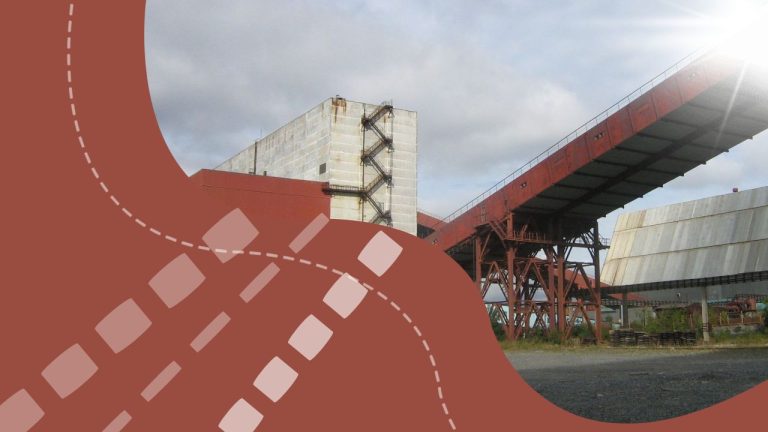
    The Kidlington facility will focus on the technical development, testing and prototype production of batteries and zero emission powertrains for a wide range of applications, including motorsports, mining haul trucks, and other off-road and automotive applications.

    The site will employ 300 highly skilled workers, with up to 50 more jobs to be created in the next year.

    The facility will exclusively develop and produce batteries for the first generation of Extreme H, a new motorsports series beginning in February 2025.

    Fortescue WAE is already the battery provider for the Extreme E Series, The Extreme H car will use a similar powertrain used in Extreme E. The chassis has been improved to address the safety requirements associated with the use of hydrogen. The key differentiating factor in Extreme H will be that a hydrogen fuel cell combined with a smaller battery will replace the larger battery as the principal means of on board energy storage (H2fuel/battery).

    “This new technical innovation centre in Kidlington will not only drive the leading edge of decarbonised motorsports, but also lead the way to decarbonising heavy industry as well,” Fortescue executive chairperson and founder Dr Andrew Forrest said.

    “Fortescue bought Britain’s best racing battery maker not only to help decarbonise our own operations, but to help other businesses to adopt zero-emission technologies as well, and cement UK as a green technology and manufacturing leader.”

    Among the first batteries produced at the Kidlington site, will be those used to power Fortescue’s prototype 240 t mining haul trucks in Australia.

    The battery system, which is currently being tested onsite in the Pilbara, is integral to Fortescue’s $6.2-billion decarbonisation strategy to help eliminate fossil fuels from its terrestrial iron-ore operations, which includes replacing its existing diesel-fuelled fleet with battery electric- and green hydrogen-powered haul trucks.

    Fortescue WAE CEO Judith Judson said the opening of the facility marked the latest milestone in the evolution of Fortescue WAE into a global zero-emission technology solutions and manufacturing company.

    “Fortescue and other companies need the battery and green technology solutions that will be manufactured here at Kidlington, to decarbonise their operations. The world can’t afford for businesses to wait, so we are showing them that moving to zero-emission solutions and away from fossil fuels is not only possible, but can be profitable as well.”

    “The knowledge we have learned from racing is applied to everything we do, including our mining haul truck battery systems and other electric powertrains. It is what sets Fortescue apart.”

    The Kidlington site is co-located on the Oxford Technology Park and will have the capacity to produce and test up to 500 prototype battery systems a year with a total production capacity of 50 MWh/y.

    The facility allows Fortescue to expand electrification capability to support the growth of the business and the drive for green tech and zero emissions.

  • By 2030, EU may rely on China’s batteries as it did Russian energy

    By 2030, EU may rely on China’s batteries as it did Russian energy

    A paper prepared for EU leaders has raised concerns about the potential dependency of the European Union on China for lithium-ion batteries and fuel cells by 2030, similar to its past dependence on Russia for energy prior to the conflict in Ukraine. This issue will be a focal point of discussions on Europe’s economic security during the EU leaders’ meeting in Granada, Spain, on October 5th.

    Given China’s increasing assertiveness and economic influence on the global stage, the leaders will evaluate the European Commission’s proposals to mitigate the risk of excessive reliance on China and explore diversification opportunities towards Africa and Latin America.

    The paper emphasizes that due to the intermittent nature of renewable energy sources such as solar or wind, Europe must develop energy storage solutions to achieve its goal of net-zero carbon dioxide emissions by 2050. As a result, the demand for lithium-ion batteries, fuel cells, and electrolyzers is expected to surge between 10 and 30 times in the coming years, according to the paper prepared by the Spanish presidency of the EU.

    While the EU holds a strong position in the intermediate and assembly stages of electrolyzer production, boasting over 50% of the global market share, it heavily relies on China for crucial components like fuel cells and lithium-ion batteries, particularly for electric vehicles.

    Without implementing robust measures, the paper warns that by 2030, the European energy ecosystem could face a different but equally concerning dependence on China, akin to the dependency on Russia before the invasion of Ukraine.

    Before the Russian invasion, the EU sourced over 40% of its total gas consumption, 27% of its oil imports, and 46% of its coal imports from Russia, according to the European Commission’s data. The abrupt cessation of energy purchases from Russia caused an energy price shock in the EU, leading to a surge in consumer inflation. This necessitated the European Central Bank to raise interest rates significantly, ultimately dampening economic growth.

    However, the vulnerability of the EU extends beyond lithium-ion batteries and fuel cells. The paper highlights the potential for a similar scenario in the digital-tech sector, as the demand for digital devices such as sensors, drones, data servers, storage equipment, and data transmission networks is projected to rise sharply in the coming decade.

    While the EU maintains a relatively strong position in certain aspects of the digital-tech sector, notable weaknesses exist in other areas, as stated in the document.

    By 2030, this foreign dependency could severely hinder the productivity gains urgently required by the European industry and service sector. Furthermore, it could impede the modernization of agricultural systems necessary to address the challenges posed by climate change, the paper concludes.

  • Vulcan fires up European lithium extraction plant

    Vulcan fires up European lithium extraction plant

    Vulcan Energy Resources has fired up its lithium extraction optimisation plant (LEOP) in Germany’s Upper Rhine Valley – a moment the company describes as a “significant milestone”.

    The budding carbon-neutral lithium developer is nudging closer to being the first company in Europe to produce the sought-after lithium hydroxide concentrate – crucial in the manufacturing of lithium-ion batteries – for the European market.

    Management has today revealed it has begun the commissioning phase for its LEOP and it is is expected to run until October, when the first bubbling-hot brine will be introduced into the plant for the lithium extraction process to begin.

    The newly-constructed LEOP is a ramped-up version of Vulcan’s pilot plant that has successfully produced lithium chloride from its producing well sites for the past two and half years.

    To extract lithium from brines, Vulcan is employing the adsorption-type direct lithium extraction (A-DLE) method, which has the added benefits of lower operating costs, greater time efficiency and a lower carbon footprint than legacy industry methods of lithium production.

    In the extraction process, the company will use its proprietary sorbent “VULSORB®”, which it has demonstrated to have a higher performance and lower water consumption for lithium extraction when compared with other commercially-available sorbents.

    From the LEOP, the lithium chloride will be refined to lithium hydroxide at Vulcan’s downstream central lithium electrolyser optimisation plant (CLEOP) in Frankfurt- Höchst and packaged up for further testing by notable offtake partners including Stellantis, Volkswagen, Renault, Umicore and LG Energy Solution.

    The commencement of the commissioning of our LEOP facility represents a significant milestone for us, as well as the entire European battery industry. By 2030, Europe is likely to face a significant lithium shortage, which could have serious implications for the European battery and automotive industries if domestic supplies are not realised. Vulcan is gearing up to be the first to produce lithium from Europe, for Europe, but also to be the first company worldwide to produce carbon-neutral lithium. The start of the commissioning of our LEOP facility is a key step toward the implementation of Phase One of our Zero Carbon Lithium Project, and in enabling a secure and independent European supply chain for lithium.

    Vulcan Energy Resources managing director and chief executive officer Cris Moreno

    With the company’s sights set firmly on a 2025 production target, it is also stepping up to help solve Europe’s looming lithium supply shortfall, with production forecast to supply up to 24,000 tonnes per annum of lithium hydroxide monohydrate.

    Located in the Upper Rhine Valley that extends across France, Germany and Switzerland, Vulcan has its foot on a 300km “graben” system that contains a sedimentary-hosted geothermal lithium reservoir that hosts 26.6 million tonnes of lithium carbonate equivalent – the biggest lithium resource in the European Union.

    Pioneering a carbon-free future, the company lays claim to the world’s first integrated renewable energy lithium extraction and lithium hydroxide project with net-zero greenhouse gas emissions, with the co-production of renewable geothermal energy on a mass scale.

    As Europe sweats through one of its hottest summers on record, discussions around climate change continue to be front and centre as the subcontinent steers towards its lofty 2050 carbon-neutral goals. With the transition to a global electric mobile fleet in full swing, Vulcan is neatly positioned to meet the unprecedented demand for the critical battery metal with its net-carbon neutral lithium.