Tag: lignite

  • Transforming a Coal Mine into Spain’s Largest Artificial Lake: The As Pontes Success Story

    Transforming a Coal Mine into Spain’s Largest Artificial Lake: The As Pontes Success Story

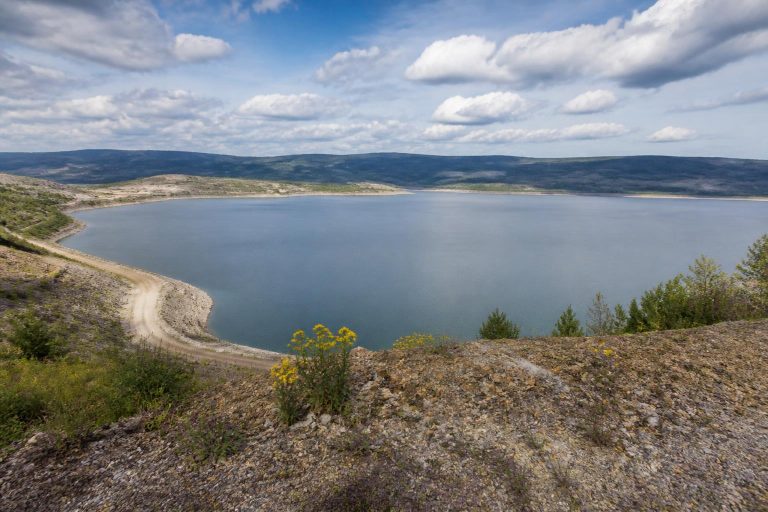
    In northwest Spain, the As Pontes coal mine has undergone a remarkable transformation from a deep pit left by nearly 60 years of lignite extraction to one of the country’s largest artificial lakes. This change began in 2008 when engineers filled the massive pit, which had reached depths of over 300 metres and covered an area equivalent to 1,600 American football fields, with approximately 547 billion litres of water. The mine, initially operated by a state-run company since the 1940s and later by Endesa, Spain’s largest coal-fired power station, extracted around 260 million tonnes of lignite before its closure in 2007 due to stricter EU air pollution regulations.

    The process of filling the pit was not straightforward; it required careful planning to determine the water sources, the rate of filling, and the chemical implications of the water settling into the pit. A study published in the journal Boletín Geológico y Minero details this engineering feat, highlighting the challenges faced and the innovative solutions developed by the research team from the University of A Coruña. The filling was completed in April 2012, and subsequent studies revealed the formation of two distinct layers within the lake: a top layer that is mildly acidic and oxygen-rich, and a deeper layer that is more acidic and devoid of oxygen, separated by a chemocline.

    Today, the As Pontes lake spans 865 hectares and features recreational facilities such as sandy beaches and nature trails. It has received Blue Flag certification, indicating high water quality and safety standards. The surrounding area has seen the emergence of diverse habitats, including meadows and woodlands, and the local economy has shifted from reliance on mining to tourism, with activities like kayaking and canoeing now popular in the area.

    The As Pontes case serves as a significant example of successful mine rehabilitation, showcasing how old mining sites can be transformed into valuable recreational spaces. This transformation is not unique to Spain; similar mining sites around the world, from Germany to the United States, face the challenge of rehabilitation. As more coal mines are closed globally, the lessons learned from As Pontes could guide future efforts to manage and repurpose former mining operations, turning environmental scars into thriving ecosystems and community assets.


  • Montenegro Extends Pljevlja Coal Mine Concession Until 2050

    Montenegro Extends Pljevlja Coal Mine Concession Until 2050

    The Government of Montenegro has granted a 24.5-year concession for coal extraction at the Pljevlja mine, extending production of lignite deposits until 2050. The agreement was formally exchanged by Minister of Energy and Mining Admir Šahmanović and Nemanja Laković, CEO of Rudnik uglja Pljevlja (RUP), during a ceremony marking Miner’s Day and the mine’s 73rd anniversary.

    According to the Ministry, the concession ensures long-term use of significant coal reserves in the Pljevlja basin, one of northern Montenegro’s most important mining regions. The mine is required to produce at least 1.65 million tons of lignite annually, with the concession fee set at 4% of the market value of the extracted reserves.

    Šahmanović stressed that the country’s goal is to develop mining responsibly and in line with international standards, while also preparing for the challenges of a just transition. The sites covered under the concession include Potrlica, Kalušići, Grevo, and Rabitlje.

    Nearly all of the mine’s output supplies the Pljevlja thermal power plant, Montenegro’s only coal-fired power station and its largest electricity producer. However, the draft National Energy and Climate Plan proposes 2041 as the provisional closure date for the plant, depending on the pace of the transition and security of energy supply.

  • Coal Production in Kazakhstan Drops by 7.8% in First Seven Months of 2024

    Coal Production in Kazakhstan Drops by 7.8% in First Seven Months of 2024

    Kazakhstan’s coal miners extracted nearly 59.6 million tons of coal from January to July 2024, marking a 7.8% decrease compared to the same period in 2023, according to the Bureau of National Statistics’ monthly report. The majority of this volume was bituminous coal, totaling 57.26 million tons, which saw an 8.6% year-on-year decline.

    The decline in lignite production was even more significant. Brown coal output fell by nearly half, with 1.37 million tonsextracted over seven months. Although July saw a slight production increase compared to June, with 80.4 thousand tonsof lignite produced, this figure remains 68.5% lower than in July 2023.

    Conversely, companies extracting bituminous coal experienced a significant boost in July, increasing production by 23%to 8.73 million tons.

    Additionally, coal enrichment plants in Kazakhstan reported increased activity since the beginning of the year. The country’s processing plants produced 2.33 million tons of coal concentrate, a 14.3% increase compared to the previous year. In July alone, production reached 651 thousand tons, up 3.2% year-on-year.

    On August 20, the Prime Minister’s website published details of a government meeting where the upcoming heating season was discussed. According to the Ministry of Energy, current stockpiles include 3.7 million tons of coal and 90 thousand tons of fuel oil. However, four power stations currently have energy resource reserves below the required level.

  • Germany to Shutdown Seven Lignite-Fired Power Plant Units Amid Energy Crisis

    Germany to Shutdown Seven Lignite-Fired Power Plant Units Amid Energy Crisis

    Germany is set to decommission seven lignite-fired power plant units with a total capacity of 3.1 gigawatts by the end of March, as reported by the news agency dpa in Süddeutsche Zeitung. Originally delayed due to the energy crisis, these closures come as part of efforts to conserve natural gas amidst supply concerns. Five units were removed from the security reserve, while two others continued operation beyond the planned shutdown date. All units were permitted to sell electricity on the wholesale market, a privilege now rescinded. The Federal Network Agency (BNetzA) assured that these shutdowns won’t jeopardize supply security, emphasizing meticulous planning to accommodate the closures in supply forecasts.

  • Bosnia suspends 700MW lignite-fired plant project

    Bosnia suspends 700MW lignite-fired plant project

    The spatial planning ministry of Bosnia and Herzegovina’s Republika Srpska entity has terminated the environmental permitting procedure for the proposed 700MW Ugljevik 3 lignite-fired power plant.

    The decision means the project is “practically suspended until further notice,” Redzib Skomorac, legal advisor to the Bosnian environmental organisation Centre for the Environment, told Argus. The halting of the permitting procedure comes shortly after a Bosnian district court annulled the planning ministry’s decision to approve the plant’s environmental permit following a lawsuit initiated by the Centre for the Environment, which highlighted “numerous procedural deficiencies” in the document.

    The recent termination of the environmental procedure came at the request of developer Comsar Energy Republika Srpska. The project’s suspension will last until the entity’s supreme court delivers a decision on the ministry’s request for a review of a previous court judgement to annul the plant’s environmental impact study in December 2022. This process will be complete “three years after the case is initiated,” Skomorac told Argus, giving a date of December 2025. The Centre for the Environment would expect “much greater scrutiny if the continuation of the permitting [procedure] occurs in the near future,” Skomorac said.

    “It is necessary to stop with the persistent approval of the project whose legality is as questionable as its economic justification,” Skomorac said in a post on the Centre for the Environment’s website. “The ministry’s decision to stop the proceedings, at least temporarily, was a necessary decision,” he added.

    If completed, Ugljevik 3 would consist of two 350MW units, which would generate a combined 4.9 TWh/yr of power. But a timeframe for building works at the plant is far from clear, with Bosnia’s recent draft National Energy and Climate Plan stating that the country has “no plan to increase the capacity of plants burning fossil fuels”.

    The spatial planning ministry of the Republika Srpska did not respond to an Argus request for comment on the suspension of Ugljevik 3 or the fate of other proposed lignite-fired plants, such as the 450MW unit 7 at Tuzla and the 300MW unit 8 at Kakanj.

    Power generation in the Republika Srpska is dominated by state-owned utility ERS, which also owns the existing 300MW Ugljevik lignite-fired power plant through its subsidiary RiTE Ugljevik. ERS relies on lignite-fired plants for 56pc of its generation, while the final 44pc comes from hydropower plants. The region has very limited non-hydropower renewable capacity installed, though ambitious projects such as the 500MW Nevesinje solar farm have progressed recently.