Tag: lead

  • Chinese Company to Extract 20 Tonnes of Silver Annually in Kazakhstan

    Chinese Company to Extract 20 Tonnes of Silver Annually in Kazakhstan

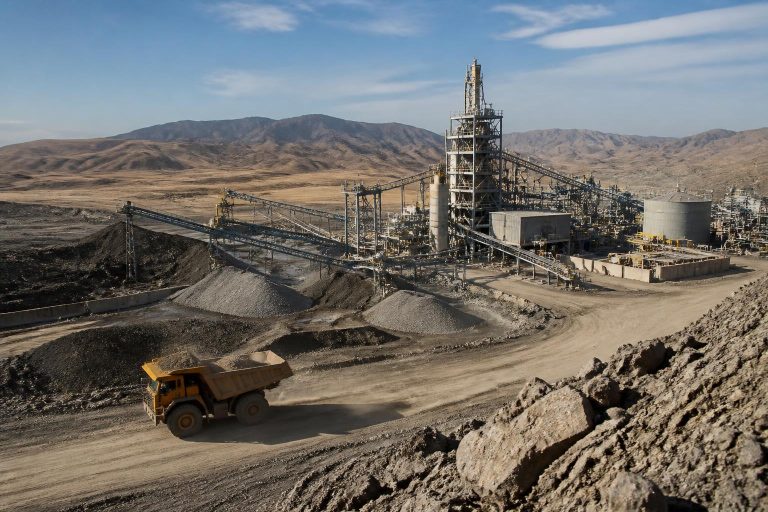
    The Liaoning Hongda Group, a Chinese mining company, has commenced the construction of the Burabay-Zhalgyzagas mining and processing plant in the Janakorgan district of Kazakhstan’s Kyzylorda region. The facility is set to produce 20 tonnes of silver and 210,000 tonnes of lead-zinc concentrate annually upon its completion in 2028. The project represents a significant investment in the region, with a total cost of 138 billion tenge, and is expected to create over 550 new jobs.

    During the groundbreaking ceremony, regional akim Murat Yergeshbayev highlighted the project’s potential to stimulate economic growth and diversify the local economy. He expressed gratitude to Liaoning Hongda Group for their commitment to such a large-scale and modern initiative. The project aligns with President Kassym-Jomart Tokayev’s directive to transition Kazakhstan to a new investment cycle, focusing on modern production and optimising regional economic potential.

    Currently, drilling works are underway to expand the mineral resource base of the site, alongside the construction of access roads and the establishment of construction sites. The project also includes plans for connecting the plant to electrical grids to ensure a reliable power supply.

    Liaoning Hongda Group has previously announced plans to invest $1.3 billion in the development of two lead and zinc deposits in the Janakorgan district, which will include two underground mines and two processing plants with a combined capacity of 8 million tonnes of ore per year, as well as a full-cycle metallurgical plant.

    Exploration activities at the deposits date back to the 1980s, with detailed surveys conducted between 2010 and 2012. The reserves are classified as C2 category, with forecast resources rated as P1. The average content of the deposits is reported at 2.01% zinc and 1.62% lead, with geologists noting the potential for resource growth at greater depths.

    Once operational, the new complex is projected to produce 420,000 tonnes of zinc and 220,000 tonnes of lead annually, which would significantly surpass the output of Kaz Zinc, making it potentially the largest producer of lead and zinc in Central Asia. The Chinese company has already invested approximately 9 billion tenge in geological exploration, utilising 15 drilling rigs during the process.


  • Hongda Group Plans Major Lead and Zinc Project in Kazakhstan

    Hongda Group Plans Major Lead and Zinc Project in Kazakhstan

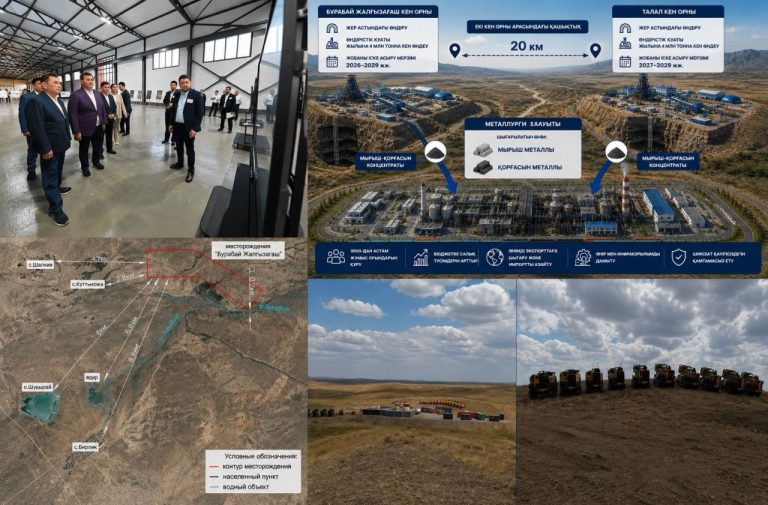
    Hongda Group is set to embark on a significant investment project in Kazakhstan, which could potentially surpass Kazcink and emerge as the largest producer of lead and zinc in Central Asia. Following a working visit by the First Deputy Prime Minister of Kazakhstan, Nurlan Naliyev, to the Kyzylorda region, attention has been drawn to this ambitious yet relatively low-profile project in the country’s mining and metallurgy sector. The project, valued at $1.3 billion, aims to establish two underground mines and two processing plants with a combined capacity of 8 million tonnes of ore per year, alongside a full-cycle metallurgical plant, creating over 3,000 jobs in the process.

    The project will focus on the Talap and Burabay-Zhalgyzagash deposits, located just 20 kilometres apart. The Burabay-Zhalgyzagash site will be developed through underground mining to a depth of 500 metres. Both deposits are part of the Akuyuk-Maidantal lead-zinc ore district in the Karatau region, which also houses the largest deposit in the area, Shalkiya. Initial exploration activities took place between 1980 and 1985, with detailed surveys conducted from 2010 to 2012. The reserves are classified under category C2, with forecasted resources rated as P1, showing an average content of 2.01% zinc and 1.62% lead, with geologists noting the potential for resource growth at greater depths.

    Investors have indicated that the metallurgical plant will have the capacity to produce 420,000 tonnes of zinc and 220,000 tonnes of lead annually, totalling 640,000 tonnes of metals. In comparison, Kazcink is projected to produce 251,800 tonnes of zinc and 76,700 tonnes of lead by 2025. Upon reaching its designed capacity, the new complex could produce 66.8% more zinc and 2.87 times more lead than Kazcink. If the project proceeds as planned, it stands to become the largest lead and zinc producer in Central Asia. Notably, the Chinese investors have already invested approximately 9 billion tenge in geological exploration, operating 15 drilling rigs simultaneously. While official reserves have yet to be disclosed, the scale of drilling and the proposed processing capacity suggest a substantial resource base. An official groundbreaking ceremony is expected later this year, reflecting a commendable approach where significant funds are first allocated for geological exploration to confirm resource viability before committing to the construction of a large-scale mining and metallurgical complex.


  • LME Introduces Streamlined Listing Process for New Metal Brands

    LME Introduces Streamlined Listing Process for New Metal Brands

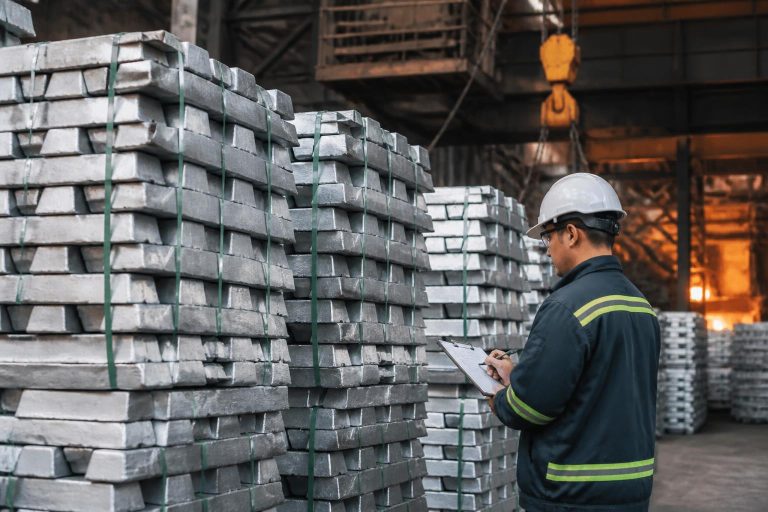
    The London Metal Exchange (LME), the world’s oldest and largest industrial metals exchange, has announced a proposal to expedite the listing process for new metal brands. This initiative aims to enhance the efficiency of the exchange and strengthen its physical market infrastructure, as outlined in a recent consultation paper. The LME is currently seeking feedback from its members regarding several key proposals, including the introduction of indelible markings for aluminum, zinc, and lead, as well as the possibility of allowing the outdoor storage of primary aluminum in Hong Kong.

    One of the most significant changes proposed is the reduction of the minimum production period required before a brand listing application can be considered. Currently set at 12 months, this period would be cut to six months for most metals, including aluminum, lead, zinc, nickel, and tin. For copper, producers would still need to demonstrate six months of production before applying, but the timeline for Stage Two testing would remain at 12 months. This adjustment is expected to facilitate quicker entry for new producers into the market, thereby increasing competition and potentially benefiting consumers.

    Additionally, the LME is considering allowing primary aluminum to be stored outdoors in Hong Kong, a move that could alleviate storage constraints that have previously hampered aluminum arbitrage between mainland China and the LME warehouse network. The exchange is also proposing that new brands and shapes of primary aluminum, lead, and zinc carry permanent production cast markings to prevent issues arising from damaged or detached labels. These proposals are part of the LME’s ongoing efforts to modernise its operations and maintain its position as a leading player in the global metals market.


  • Hongda Group Plans Major Lead and Zinc Project in Kazakhstan

    Hongda Group Plans Major Lead and Zinc Project in Kazakhstan

    Hongda Group is set to embark on a significant investment project in Kazakhstan that could surpass Kazcink, positioning itself as the largest producer of lead and zinc in Central Asia. The initiative, valued at $1.3 billion, was highlighted during a recent visit by Kazakhstan’s First Deputy Prime Minister, Nurlan Naliyev, to the Kyzylorda region. The project entails the construction of two underground mines and two processing plants in the Zhanakorgan district, with a combined capacity of 8 million tonnes of ore per year, alongside a full-cycle metallurgical plant. This development is expected to create over 3,000 jobs, contributing significantly to the local economy.

    The project will focus on the Talap and Burabay-Zhalgyzaghash deposits, located approximately 20 km apart. The Burabay-Zhalgyzaghash site will be developed using underground mining techniques to a depth of 500 meters. Both deposits are part of the Akuyuk-Maidantal lead-zinc ore district in the Karatau region, which is also home to the largest deposit in the area, Shalkiya. Initial exploration activities in this region took place between 1980 and 1985, with detailed surveys conducted from 2010 to 2012. The estimated reserves are classified as C2, with forecasted resources rated as P1. Geologists have noted an average zinc content of 2.01% and lead content of 1.62%, with potential for resource growth at depth.

    Investors have indicated that the metallurgical plant will have an annual output of 420,000 tonnes of zinc and 220,000 tonnes of lead, totalling 640,000 tonnes of metals. In comparison, Kazcink is projected to produce 251,800 tonnes of zinc and 76,700 tonnes of lead by 2025. Upon reaching full operational capacity, the new complex could produce 66.8% more zinc and nearly three times the amount of lead than Kazcink. If the project meets its outlined parameters, it stands to become the largest lead and zinc producer in Central Asia. Notably, the Chinese investors have already committed around 9 billion tenge to geological exploration, operating 15 drilling rigs simultaneously. Although official reserves have yet to be disclosed, the scale of drilling and the proposed processing capacity suggest a substantial resource base. An official groundbreaking ceremony is anticipated later this year, marking a significant step in the development of this ambitious project.


  • TETHYS and Hartree Announce Life‑of‑Mine Offtake Agreement for the Cataltepe Polymetallic Project in Türkiye

    TETHYS and Hartree Announce Life‑of‑Mine Offtake Agreement for the Cataltepe Polymetallic Project in Türkiye

    TETHYS, a Turkish-incorporated critical minerals and strategic infrastructure platform with projects across Eurasia, and Hartree Metals LLC, a subsidiary of the global commodities firm Hartree Partners LP — a leading independent commodities trading and asset management company — have entered into a life-of-mine offtake and commercial prepayment arrangement to support concentrate exports from the Cataltepe polymetallic mining project in north-western Türkiye.

    The agreement establishes a long-term commercial partnership between the two companies, anchored on the Cataltepe operation. Production from the mine is expected to be processed at the Kalkım flotation facility, generating zinc, lead, and copper concentrates for export to international smelting markets.

    Under the arrangement, Hartree Metals has provided a commercial advance payment to support the restart of operations and ongoing production activities, and will purchase and export 100% of the zinc, lead, and copper concentrates produced for the life of the operation. Production at Cataltepe is expected to commence shortly, with monthly shipments increasing progressively as operations ramp up.

    The transaction demonstrates a shared commercial understanding of the project and a mutual commitment to establishing reliable concentrate supply chains in Türkiye. For TETHYS, the agreement represents the commercial activation of its flagship Turkish operation and a significant milestone in its broader strategy to develop a multi-country portfolio of critical mineral assets across Eurasia. For Hartree Metals, it signifies a deepening of its commercial engagement with Türkiye’s expanding mining sector.

    Prof. Dr Leyla Keser, Chairperson of TETHYS Gateway Trading LLC, said: “The Cataltepe offtake agreement is a landmark transaction for TETHYS and a strong endorsement of the project’s commercial potential. We are delighted to be partnering with Hartree Metals as our long-term trading partner and look forward to building on this relationship as TETHYS continues to develop its portfolio of mineral assets across the region.”

  • Avrupa Minerals Regains Full Control of Sesmarias Project in Portugal

    Avrupa Minerals Regains Full Control of Sesmarias Project in Portugal

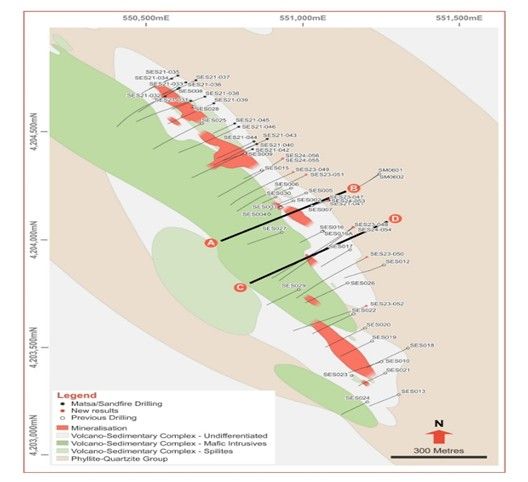
    Avrupa Minerals is reaffirming its commitment to the Sesmarias project in Portugal, even as it continues to expand its Finnish exploration portfolio. Sesmarias, the company’s flagship discovery since 2014, has seen significant progress through multiple joint ventures and self-funded efforts. Most recently, Sandfire MATSA supported exploration from 2020 to 2025, yielding impressive high-grade intercepts and expanding the project’s geological understanding.

    Despite these advancements, the project did not meet Sandfire MATSA’s internal criteria, leading to Avrupa regaining 100% ownership. With complex geology and promising mineralization—including intercepts like 26.95 meters @ 2.18% Cu and 28.60 meters @ 1.68% Cu—the company is now focused on securing a new strategic partner to advance towards a potential mining decision.

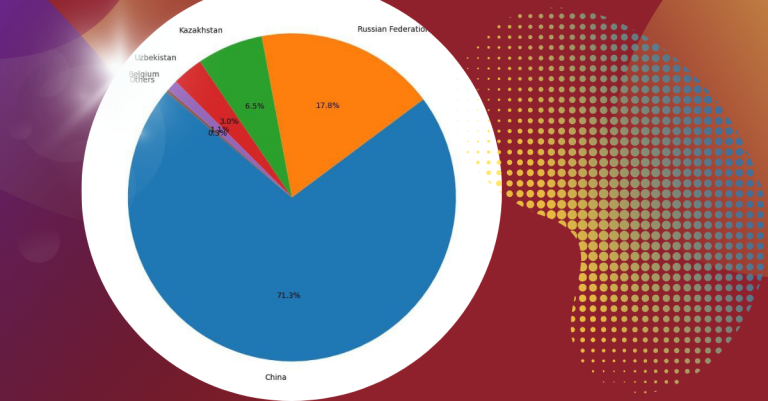
  • China Imports Up to 70% of Critical Metals from Central Asia

    China Imports Up to 70% of Critical Metals from Central Asia

    Despite the lack of official data on the export of rare earth metals by Central Asian countries, an analysis of ore, slag, and ash exports reveals interesting trends. These exports often include critical resources highly sought after by leading global powers, particularly metals such as molybdenum, titanium, and vanadium.

    According to Trademap.org data from 2019 to 2023, Central Asian countries exported a wide range of ores and concentrates, including copper, iron, precious metals, zinc, lead, molybdenum, chromium, and niche metals such as niobium and tantalum.

    In recent years, the market has also seen the introduction of products such as tin, tungsten, and titanium ores. For example, copper ore exports showed stable growth—from approximately $1.17 million in 2019 to around $3.15 million in 2023. Iron ore peaked at $1.6 million in 2021 before experiencing a decline in export volumes in subsequent years.

    One notable trend is the significant increase in molybdenum ore exports, which surged from about $4 million in 2019 to approximately $144 million in 2023. This is a clear reflection of increased global demand and investment.

    An analysis of trade with the European Union under the category “26 Ores, Slags, and Ash” shows that molybdenum stands out: its exports increased from around $11 million in 2021 to nearly $60 million in 2023. In this segment, Kazakhstan holds a dominant position, providing nearly the entire cumulative export value, while contributions from other Central Asian countries remain significantly lower.

    Central Asian countries’ export portfolios reveal a trend towards transitioning from traditional raw materials such as copper and iron to more valuable niche ores, especially molybdenum. This trend is evident both in the global market and in trade with the European Union, where Kazakhstan acts as a key supplier.

    Will the European Union be able to position itself as a key importer of critical metals from Central Asia? The future will tell.

  • Shalkiya Polymetallic Deposit to Launch by Late 2026

    Shalkiya Polymetallic Deposit to Launch by Late 2026

    The Shalkiya polymetallic deposit, located in the Kyzylorda region, is set to commence operations by the end of 2026. The site will feature a beneficiation plant capable of processing 4 million tons of ore annually. According to LS, the investor will inject 323 billion tenge into the project. The mining plan is already in place, with extraction scheduled to begin in 2025. Contracts for equipment supply for the beneficiation plant have been signed, and tenders are underway to select a contractor for the construction phase. The deposit is owned by ShalkiyaZinc, a subsidiary of Tau-Ken Samruk. The initial timeline for launching the deposit was set for 2023, but the plans have since been postponed. The Shalkiya deposit is rich in zinc and lead, with the ore containing 4.27% zinc and 1.28% lead. The reserves, categorized as B+C1+C2, are estimated at 127.5 million tons. The extraction of metals from the ore will utilize selective flotation, with zinc undergoing a fine grinding process for flotation concentrate.

  • Mining Company Plans Zinc and Lead Extraction at Shalkiya Deposit

    Mining Company Plans Zinc and Lead Extraction at Shalkiya Deposit

    In a recent announcement, “Tau-Ken Samruk,” a mining company affiliated with “Samruk-Kazyna,” revealed its intentions to commence zinc and lead extraction operations at the Shalkiya deposit in the Kyzylorda region by October of this year. The company aims to reach a production volume of 2.2 million tons of ore by 2025, as stated by the chairman of the company’s board, Bakyt Chirchikbayev, during the MINEX-2024 forum. Chirchikbayev further disclosed plans for potential tolling arrangements for ore processing while the company’s own factory is under construction. Negotiations with potential partners for the purchase of a controlling stake are underway, with details expected to be finalized post-discussions.

    Additionally, Chirchikbayev mentioned the positive outcome of the state expertise regarding the technical and economic feasibility of the North Katpar and Upper Kayrakty tungsten projects. The company received favorable feedback on the project’s feasibility study, which has been circulated among interested partners. Currently, the project is under review by several potential collaborators, with further steps aligned with project privatization regulations.

    The financing of the Shalkiya project involves the European Bank for Reconstruction and Development (EBRD), with agreements dating back to June 2017. Updates to the credit agreement were made in September 2021, extending credit lines up to $175 million. Recent disbursements from the EBRD, including a second tranche of $40.5 million in October 2022, demonstrate ongoing financial support for the project. “Samruk-Kazyna” has provided full guarantees for “Shalkiya Zinc’s” obligations to the EBRD, ensuring financial security for the venture.

  • Adriatic Metals hails precious metals finds at Rupice

    Adriatic Metals hails precious metals finds at Rupice

    (Alliance News) – Adriatic Metals PLC on Wednesday gave an update on its Rupice northwest exploration which is part of the company’s Vares silver project.

    Adriatic Metals is a precious and base metals explorer and developer that owns the Vares silver project in Bosnia & Herzegovina and the Raska zinc deposit in Serbia.

    The company said it found 2.6 grams of gold per tonne, 409 grams of silver per tonne, about 12% zinc, 8.9% lead, 1.2% copper, 9% barium sulfate and 0.2% antimony in hole BR-30-23.

    Managing Director Paul Cronin said: “Additional exploration drilling, new geology, more tonnes at higher grades to the west of the current Rupice Northwest resource are adding significantly to the growth of Rupice. Faulting and folding have thickened and bent mineralization to vertical, with silver-gold-copper grades increasing in proximity to the deformation. Drilling will continue to define the western extent of RNW for a further resource update at the end of 2023.”

    Adriatic Metals rose 2.9% to 192.00 pence each on Wednesday morning in London.