Tag: Laziz Kudratov

  • EU and international partners agree to expand cooperation on critical raw materials

    EU and international partners agree to expand cooperation on critical raw materials

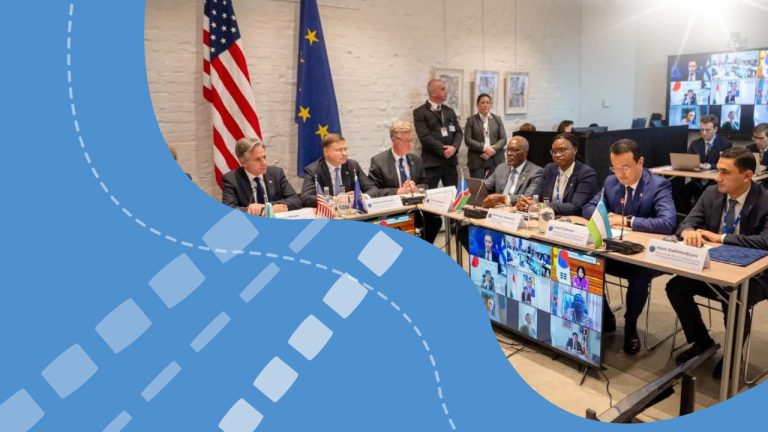
    On 5 April 2024 Secretary of State Antony J. Blinken, accompanied by Under Secretary Fernandez, hosted an event with the European Commission Executive Vice President and Trade Commissioner Valdis Dombrovskis to formally launch the Minerals Security Partnership (MSP) Forum in Leuven, Belgium.  Ministers from MSP partner economies and minerals-producing countries were invited to participate virtually and in person. Additional in-person attendees included Thomas Alweendo, Minister for Mines and Energy of Namibia, Volodymyr Kuzio, Deputy Minister of Economy of Ukraine, Kanat Sharlapaev, Minister of Industry and Construction of Kazakhstan, and Laziz Kudratov, Minister of Investment, Industry, and Trade of Uzbekistan.

    MSP partners first announced the creation of the MSP Forum in March on the margins of the Prospectors and Developers Association of Canada (PDAC) Convention in Toronto.  The MSP Forum cements the MSP’s partnership with minerals-producing countries committed to advancing and accelerating individual projects with high environmental, social, and governance (ESG) standards. The MSP Forum provides a platform for MSP partners and Forum members to consider and advance both projects and policies. Together, they will promote diverse and resilient supply chains while supporting local industry and capacity.

    The Project component of the MSP Forum, led by the United States, may include project information sharing among MSP partners, Forum members, and the private sector; presentations on critical minerals opportunities, technical collaboration, and more. The Policy Dialogue component of the MSP Forum, led by the EU, may include topics such as policies to boost sustainable production and local capacities; discussions on regulatory cooperation to foster fair competition and transparency; policies to foster the application of high ESG standards; and policies to promote and facilitate effective recycling.

    Background

    The MSP Forum builds on the EU’s Critical Raw Materials Package adopted in March 2023, which emphasised the need for more diverse and more sustainable CRM supply chains through new, mutually supportive international partnerships, such as the CRM Club. The EU has previously established raw materials partnerships with Canada (2021), Ukraine (2021), Kazakhstan (2022), Namibia (2022), Chile (2023), Argentina (2023), Zambia (2023), the Democratic Republic of Congo (2023) and the Autonomous Territory of Greenland (2023).

    CRMs are indispensable for a wide set of technologies needed for EU strategic sectors such as the net-zero industry, digital, space and defence. While the demand for such critical raw materials has never been higher, it is expected to continue to grow driven by the green and digital transitions. For instance, EU demand for lithium used in electric-vehicles batteries and energy storage is expected to increase twelve-fold by 2030. Meanwhile, the supply of CRMs is confronted with rising geopolitical, environmental, and social risks and challenges.

    Learn more about the MSP at:

    https://www.state.gov/minerals-security-partnership/

    https://ec.europa.eu/commission/presscorner/detail/fen/ip_24_1807

    Photo@ European Commission

  • EU and Uzbekistan ink strategic partnership to secure critical raw materials

    EU and Uzbekistan ink strategic partnership to secure critical raw materials

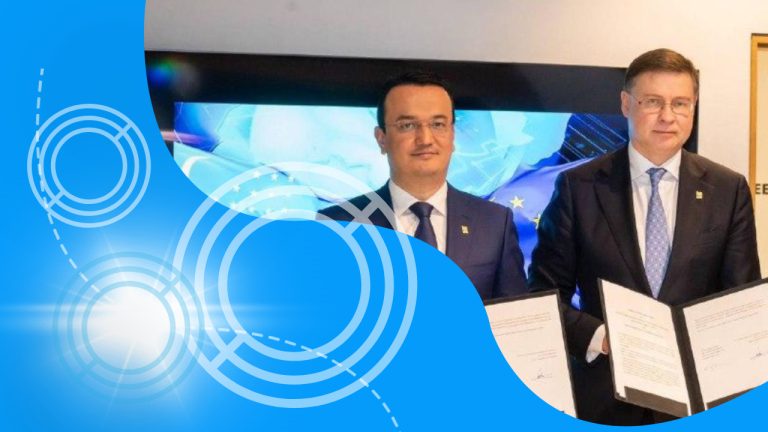
    The MoU, inked by European Commission Executive Vice-President Valdis Dombrovskis and Uzbekistan’s Minister of Investment, Industry, and Trade Laziz Kudratov, underscores a mutual commitment to bolster cooperation in the realm of CRMs.

    The strategic partnership delineates several key areas of collaboration:

    • Integration of Sustainable CRM Value Chains: This entails networking, project proposal selection, joint project development, and trade and investment facilitation along the entire value chain.
    • Enhancing Resilience of CRM Supply Chains: Both parties will engage in dialogue to bolster transparency regarding investments, operations, and exports.
    • Mobilization of Funding: Efforts will be directed towards funding projects arising from the partnership, alongside the development of necessary infrastructure, such as clean energy supply.
    • Promoting Sustainable and Responsible Production: The partnership aims to ensure sustainable and ethical production and sourcing of CRMs.
    • Research and Innovation Collaboration: Both entities will share knowledge and technologies related to sustainable exploration, extraction, processing, and recycling of CRMs.
    • Capacity Building: Cooperation will extend to enforcing relevant rules, alongside training and skill development initiatives.

    Moving forward, subsequent to the MoU’s endorsement, the EU and Uzbekistan will collaboratively formulate an operational roadmap comprising concrete implementation actions.

    It will be important to improve the resilience of CRM supply chains and establish a dialogue to enhance the transparency of measures related to investments, operations and exports. Funding needs to be mobilised for projects resulting from the EU-Uzbekistan partnership and for the development of infrastructure, such as the development of clean energy supply.

    Next steps include agreeing on an operational roadmap with concrete steps towards its implementation, as part of the EU’s commitment to establishing mutually beneficial CRM value chain partnerships with resource-rich countries. Uzbekistan has the second-largest reserves of CRMs in Central Asia, boasting significant deposits of various minerals such as copper, molybdenum, and gold. The country’s mining strategy aligns with its ambitions to increase the processing of CRMs for both domestic and international industries, particularly in automotive and consumer electronics.

    In a broader context, this partnership resonates with the objectives articulated in the 2020 Action Plan for Critical Raw Materials and the EU’s external energy engagement strategy. It underscores the EU’s commitment to fostering mutually beneficial CRM value chain partnerships with resource-endowed nations.

    Uzbekistan, boasting the second-largest reserves of CRMs in Central Asia, possesses important deposits of minerals such as copper, molybdenum, and gold. The country’s mining strategy aligns with its aspirations to enhance CRM processing for both domestic utilization and international industries, notably the automotive and consumer electronics sectors.

    This strategic alliance aligns seamlessly with the EU’s Global Gateway strategy, a flagship initiative earmarked for sustainable and high-quality investments worldwide. The strategy aims to address the needs of partner countries, ensuring enduring benefits for local communities. As part of this initiative, the EU aims to mobilize up to €300bn in investments by 2027.

    The EU has already forged raw materials partnerships with several nations, including Canada, Ukraine, Kazakhstan, Namibia, Chile, Argentina, Zambia, the Democratic Republic of Congo, and the Autonomous Territory of Greenland, underscoring its proactive approach to securing critical resources and fostering global partnerships.


    Photo © EUROPEAN COMMISSION