Tag: Kazatomprom National Atomic Company

  • Kazatomprom aims to Strengthen Position in Uranium Joint Ventures

    Kazatomprom aims to Strengthen Position in Uranium Joint Ventures

    Kazakhstan’s national atomic company Kazatomprom is seeking to increase its stake in joint uranium mining ventures as existing contracts come up for renewal.

    A representative from Kazatomprom presented proposed amendments to Kazakhstan’s Subsoil and Subsoil Use Code to members of parliament this week. The changes would require the state-owned company to obtain at least a 90% share when extending contracts for uranium mining projects.

    “Currently our stake in various projects ranges from 50% and higher. However, many contracts were signed in the late 1990s and early 2000s under fixed terms. We believe it is necessary to revise these parameters,” the Kazatomprom official stated.

    If approved, the amendments could impact agreements with Kazatomprom’s major foreign partners, including companies from China, Canada, France and Japan.

    The company argues the changes will allow Kazakhstan to maximize benefits from its uranium resources as global demand for nuclear fuel grows. However, some analysts caution it may deter future foreign investment in the country’s mining sector.

    Kazatomprom is the world’s largest uranium producer, accounting for around 24% of global primary uranium production. The company operates 26 deposits grouped into 14 uranium mining assets, with foreign partners holding stakes in many key projects.

    The proposed legislation will now be debated in parliament before potentially being signed into law. Kazatomprom says it is open to negotiations with existing partners to ensure a smooth transition if the changes are enacted.

  • Kazakhstan’s Kazatomprom Signs Uranium Supply Deal with Swiss Power Giant

    Kazakhstan’s Kazatomprom Signs Uranium Supply Deal with Swiss Power Giant

    Almaty, Kazakhstan, 17 February 2025 – Kazatomprom, the world’s largest uranium producer and a subsidiary of Samruk-Kazyna, has signed its first contract to supply uranium to Swiss nuclear power plants. The agreement was signed with Axpo Power AG, a major Swiss energy company, in collaboration with Kernkraftwerk Leibstadt AG (KKL AG), the operator of the Leibstadt nuclear power plant.

    The signing ceremony took place at Axpo Power AG’s headquarters in Switzerland during a visit by a Kazatomprom delegation. While the volume of the supply deal has not been disclosed, the agreement marks a significant step in Kazatomprom’s strategy to diversify its uranium sales channels and expand its global market reach.

    “We are proud that this first commercial contract between Kazatomprom and Axpo opens the way for important cooperation between our companies,” said Vladislav Bayguzin, Chief Commercial Officer of Kazatomprom. “Expanding our sales geography underscores Kazatomprom’s recognition as a reliable uranium supplier in the global market. This contract is a crucial step in our strategy to diversify our sales channels.”

    Bayguzin emphasised that the agreement plays a key role in ensuring energy security and decarbonisation, strengthening the partnership between the two companies and guaranteeing long-term supplies of natural uranium for Switzerland’s nuclear energy sector.

    Bruno Zimmermann, Head of Nuclear Fuel at Axpo Power AG, echoed this sentiment, stating, “This agreement with Kazatomprom, the world’s leading uranium producer, is strategically significant for Axpo and KKL AG as we continue to diversify and secure our fuel supplies. Nuclear energy is a key element of our country’s low-carbon energy strategy, so reliable fuel supplies are crucial. Including Kazatomprom among our suppliers strengthens our ability to ensure stable energy supply in Switzerland and contribute to global decarbonisation efforts.”

    This contract represents a new chapter in Kazatomprom’s collaboration with European nuclear power plant operators and reinforces its position as a leading player in the global uranium market. Notably, Axpo Power AG is also Switzerland’s largest producer of renewable energy, including solar and wind power.

    Kazatomprom’s performance in 2024 saw growth in production of U3O8, reaching 23,270 tonnes, a 10% increase compared to 2023. However, sales volume declined to 16,670 tonnes, an 8% decrease from 2023. Despite this, the average sales price per pound of U3O8 reached $69.72 in 2024, a 27% increase from 2023’s $55.09 per pound. Spot prices averaged $85.24, a 36% increase compared to 2023’s $62.51.

    Looking ahead, Kazatomprom anticipates producing between 25,000 and 26,500 tonnes of uranium in 2025, an increase of 7.4% to 13.9% compared to 2024. The company also projects a 20% allowable deviation in uranium production across its group of enterprises in 2025.
  • Kazakhstan Set to Join Nuclear Club: Nation Builds First Power Plant

    Kazakhstan Set to Join Nuclear Club: Nation Builds First Power Plant

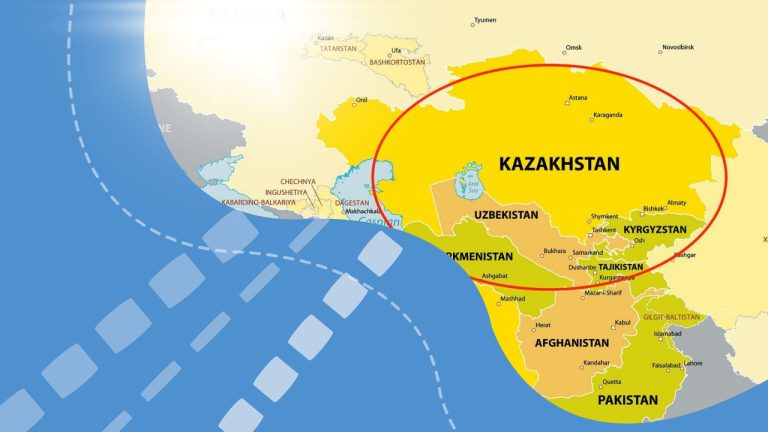
    Kazakhstan, a key ally of Russia and responsible for 43% of global uranium production in 2022, is embarking on a significant step towards nuclear power generation. Possessing 12% of the world’s uranium resources and previously operating a now-decommissioned Russian-built reactor, the nation is now actively pursuing its first nuclear power plant (NPP). This development, as reported by the World Nuclear Association, signals a potential shift in the global nuclear landscape.

    Currently, Kazakhstan focuses on producing nuclear fuel pellets, adding value to its uranium output. A new fuel fabrication plant, with 49% Chinese investment, is also under construction. In 2023, uranium production reached 21,112 tonnes, with projections of 21,000-22,500 tonnes for 2024. Kazatomprom, the national atomic company, manages 13 uranium mining projects, some in joint ventures with foreign entities.

    President Kassym-Jumart Tokayev recently emphasised the urgent need for the NPP, citing growing energy shortages and the country’s development goals. He instructed the government to create long-term plans for the nuclear industry and identify suitable locations for future plants, prioritising modern, safe technologies. The Almaty region is likely to host the first NPP, according to Kazakh news outlet Vlast.kz, quoting Prime Minister Olzhas Bektenov. President Tokayev reiterated the commitment to carbon neutrality, but with a more “rational” approach.

    The government aims for complete energy self-sufficiency and reserves of 15-20%, targeting an additional three gigawatts of energy capacity within two years. Strengthening the Western Zone’s electrical networks by 2027 is also planned.

    While Kazakhstan has considered nuclear power for decades, the legacy of Chernobyl and the Semipalatinsk nuclear test site has bred public scepticism. Concerns about nuclear safety, corruption, and dependence on foreign infrastructure remain. A recent referendum, however, reportedly saw 70% of voters support the construction of NPPs.

    Choosing a reactor vendor presents a geopolitical challenge. Russia, France, China, and South Korea are all potential suppliers, and balancing technical and commercial factors with international relations will be complex. Financing and localising the projects are also critical. Some fear Russian influence via Rosatom, but Kazakhstan’s growing capabilities, including fuel assembly production with French technology and Chinese investment, offer more options. Carnegie Politika suggests that Kazakhstan’s sovereign wealth fund and increasing availability of foreign loans can address financial needs.

    This move could mark the beginning of Kazakhstan’s nuclear era. While nuclear energy for civilian use is accepted in theory, its potential for dual use raises concerns. Kazakhstan’s development will make it the first Central Asian nation with a nuclear power programme, impacting the entire region. With both China and Russia having vested interests in Central Asia, particularly Kazakhstan, it is vital that this resource-rich region, seen as a bridge between East and West, does not become a stage for superpower rivalry.


    Prof. KN Pandita (Padma Shri) is the former director of the Center of Central Asian Studies at Kashmir University. This article reflects the author’s personal views and not necessarily those of EurAsian Times. He can be contacted at knp627 (at) gmail.com.

  • Kazatomprom Plans Up to 14% Increase in Uranium Production for 2025

    Kazatomprom Plans Up to 14% Increase in Uranium Production for 2025

    Kazatomprom, Kazakhstan’s national atomic company, announced plans to produce between 25,000 and 26,500 tons of uranium in 2025, according to a statement issued on Monday. This represents an increase of 7 to 14 percent over its 2024 output of 23,270 tons.

    The company anticipates that uranium production from most mining operations will see varying percentage declines compared to targets set under existing subsoil use contracts, with these reductions expected to stay within an acceptable deviation of up to 20 percent.

    Additionally, Kazatomprom reported a 10 percent rise in uranium production for 2024, reaching 23,270 tons, compared to the previous year.

    Further details on the company’s financial performance for 2024 will be provided on March 19.

    Kazatomprom serves as the national operator for the export of uranium, rare metals, nuclear fuel, and related technologies.

  • Orano Mining and Kazatomprom to Launch Uranium Processing Complex in Kazakhstan

    Orano Mining and Kazatomprom to Launch Uranium Processing Complex in Kazakhstan

    A joint venture between French company Orano Mining (51%) and Kazakhstan’s Kazatomprom (49%), known as “KATKO,” is set to begin construction on a new uranium processing complex in the South Kazakhstan’s Turkestan region. The project, located in the Syzak district, is expected to be operational by mid-2025.

    The complex will process productive solutions from the South Tortkuduk section of the Moyinkum deposit to produce a uranium desorbate, an intermediate product, which will be further processed into uranium concentrate. With an expected annual production of 2,045 tons of uranium, the plant will help the joint venture reach its target of 4,000 tons of uranium extraction annually.

    The location is close to key infrastructure, including a 90-kilometer railway line connecting the region to the Zhanatas station. The plant will occupy 39.6 hectares, and its construction will employ a shift work schedule, with two 12-hour shifts.

    KATKO’s revenue for 2023 increased slightly to 147.4 billion KZT, although net profit dropped to 66 billion KZT, reflecting rising production costs. The venture is also planning a significant expansion of its uranium production, with a new mine, “South Tortkuduk,” expected to reach full capacity within the next 15 years.

    This project represents a key development in Kazakhstan’s expanding uranium industry and highlights the country’s growing role in the global nuclear fuel market.
     

  • Kazatomprom, the National Atomic Company of Kazakhstan, disclosed its consolidated financial outcomes for the year 2023

    Kazatomprom, the National Atomic Company of Kazakhstan, disclosed its consolidated financial outcomes for the year 2023

    Kazatomprom’s 2023 financial results reflect the significant improvement in the uranium market and the company’s strong position as the largest seller and lowest-cost producer globally.

    Kazatomprom demonstrated exceptional financial resilience, reflecting its strategic market positioning and robust operational efficiency. Despite significant volatility in the global uranium market due to geopolitical tensions and clean energy transition, the demand for nuclear power increased significantly. With Kazakhstan accounting for 40% of annual world uranium production, at least every third of nuclear reactors worldwide relies on Kazakh uranium. Meirzhan Yussupov, CEO of Kazatomprom, emphasized the Company’s role in energy security and readiness to secure utilities’ needs amidst market bifurcation discussions.

    Kazatomprom achieved impressive financial results in 2023, despite a modest increase in average annual uranium prices. Group consolidated revenue grew by 43%, reaching 1.4 trillion tenge, while gross and operating profits demonstrated almost 50% year-on-year increases. These achievements were made possible by the considerable improvement in the uranium market over the past year and Kazatomprom’s position as the largest seller and lowest-cost producer globally. The efforts of the Company’s 20,000 dedicated professionals contributed significantly to these positive outcomes.

    In 2023, Kazatomprom launched exploration programs and strengthened assessments of territories to ensure reserve replenishment for future generations and meet growing market needs. The Company continues to focus on cost optimization to maintain operational efficiency and sustainability. Despite plans to restart idled capacity and launch new production in the mid-2020s, Kazatomprom acknowledges that another supply source similar in size will be needed post-2030 to cover future market needs, especially considering geopolitical uncertainties, inflationary pressures, and supply chain challenges worldwide.

    Key financial metrics for 2023 include:

    • Consolidated revenue: KZT 1,435 billion (USD 3.1 billion), a 43% increase compared to 2022
    • Operating profit: KZT 681 billion (USD 1.5 billion), a 49% increase compared to 2022
    • Net profit: KZT 580 billion (USD 1.3 billion), a 23% increase compared to 2022
    • Adjusted EBITDA: KZT 829 billion (USD 1.8 billion), a 31% increase compared to 2022
    • Attributable EBITDA: KZT 639 billion (USD 1.4 billion), a 29% increase compared to 2022
    • Cash flow from operating activities: KZT 432 billion (USD 960 million), a 52% increase compared to 2022

    The Operating and Financial Review and Audited Consolidated Financial Statements provide detailed explanations of Kazatomprom’s results for the year ended 31 December 2023, as compared to the same period in 2022, and the Company’s guidance for 2024. These documents are available at www.kazatomprom.kz.

  • Kazakhstan’s Plans for Uranium Sector Development

    Kazakhstan’s Plans for Uranium Sector Development

    The main players in this field are Russia, Germany, the Netherlands, the United Kingdom, the United States, France, and China. The establishment of enrichment facilities is under the control of the IAEA and the global community.

    “The Ministry of Energy, together with Kazatomprom and other interested organizations, is working on the development of the nuclear fuel cycle in the atomic industry,” explained the ministry.

    In turn, Kazatomprom reported that through the Russian-Kazakh Uranium Enrichment Center, they have access to enrichment services of up to 2.5 million SWU* per year until 2043 based on long-term contracts.

    “This option is used to ensure the production of Ulba-TVS fuel with a designed capacity of 200 tons of uranium per year in the form of fuel assemblies. The plant was launched in 2021 and, according to Kazatomprom, fully satisfies the enriched element requirements for the implementation of this fuel project for the entire duration.”

    The national company also holds a 10% stake in the International Uranium Enrichment Center, a joint venture with Russia, Ukraine, and Armenia. The center was established to strengthen the non-proliferation regime of nuclear weapons. Shareholders of the center have access to enrichment services based on their guaranteed SWU quota proportionate to their share in the center for the production of fuel for their own nuclear energy needs. The national company noted that this covers the demand for low-enriched uranium.

    It is worth mentioning that President Kassym-Jomart Tokayev previously instructed to focus on several areas, including uranium enrichment.

    *SWU: Separative Work Unit

  • Kazakhstan Becomes Leader in Uranium Production in 2022

    Kazakhstan Becomes Leader in Uranium Production in 2022

    Samruk Kazyna Chairman Nurlan Zhakupov instructed to increase investment in exploration as he visited the Khorasan-U and Baiken-U companies of Kazatomprom.

    He discussed current reserves with colleagues and urged them to invest in further exploration of deposits.

    “We have reserves that need to be developed,” he wrote on his Twitter account.

    Kazatomprom is the world’s largest uranium producer, with its subsidiaries, affiliates, and joint ventures developing 26 deposits united into 14 uranium mining enterprises.

  • Kazakhstan to hold referendum on first nuclear plant

    Kazakhstan to hold referendum on first nuclear plant

    The energy-rich Central Asian nation’s government has long discussed the idea, citing the need for diversification of the power generation capacity, and even identified a planned location for the facility in the southeastern Almary region and mentioned Russia’s Rosatom as a potential partner.

    But some activists oppose the project because of safety concerns and Kazakhstan’s history as home to the Soviet-operated Semipalatinsk nuclear weapons testing ground.

    “On the one hand, Kazakhstan, as the world’s biggest uranium producer, should have its own nuclear power capacity,” Tokayev said. “On the other hand, many citizens and some experts have concerns about the safety of nuclear power plants.”

    Aidarbek Khojanazarov, chairman of the Respublica Party and one of the six parties in the Mazhilis, emphasized the importance of an extensive public awareness campaign prior to the referendum. He insisted the public should be well-informed about what they will be voting for.

    “To address this issue adequately, one needs expertise. This isn’t a question to be answered emotionally; it requires expert consideration,” Khojanazarov said, as quoted by Kazinform.

    According to Tokayev, further public hearings are needed. The most recent one took place on 22 August in Ulken village in the Almaty Region, a location previously considered “optimal” for a future plant by the government. The hearing, however, was fraught with disputes between local supporters and opposing civic activists.

    Leader in uranium production

    Kazakhstan became the absolute leader in uranium mining, accounting for 42% of global production, with the share of Kazatomprom National Atomic Company constituting 22%, the Samruk Kazyna Sovereign Wealth Fund reported on 29 August.

    Kazatomprom is the world’s largest uranium producer, with its subsidiaries, affiliates, and joint ventures developing 26 deposits united into 14 uranium mining enterprises.