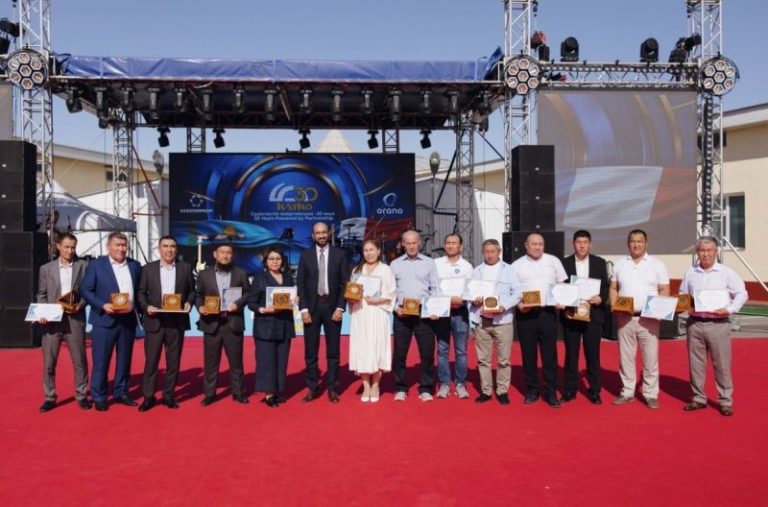
On 2 September, the Kazakhstan-France joint venture celebrated its 30th anniversary at the Shanyrak basecamp in Sozak District, Turkestan Region. The event was attended by key figures including Zulfukhar Zholdassov, First Deputy Akim of Turkestan Region, and Sylvain Guiaugue, the French Ambassador to Kazakhstan, alongside various stakeholders from the mining industry. The ceremony highlighted the significant milestones achieved by KATCO, which has transformed from a site with minimal infrastructure to a leading uranium producer, reaching a production capacity of 4,000 tonnes per year by 2026.
Since its inception, KATCO has made substantial contributions to the national economy, paying KZT 460 billion into the budget and placing KZT 836 billion in orders with local suppliers. The company has also invested KZT 8.2 billion in over 500 social projects within the Turkestan Region and Sozak District, showcasing its commitment to community development. The workforce, comprising 1,363 employees—99% of whom are Kazakh citizens—has maintained an impressive safety record, working over two years without a lost-time injury.
During the anniversary celebration, long-serving employees were recognised with state and regional awards, alongside KATCO Certificates of Honour. The event concluded with a screening of an anniversary film and a gathering of teams working on-site, reflecting on the journey of the company and the partnerships that have been crucial to its success since 1996. The ceremony served not only as a commemoration of past achievements but also as a reaffirmation of KATCO’s ongoing commitment to safety, community engagement, and sustainable mining practices.
The global uranium market is experiencing what industry leaders describe as a “second uranium renaissance” or, as Cameco’s Sean Quinn prefers to call it, a “rejuvenation.” This revival is marked by robust demand, structural supply shortfalls, and growing support for nuclear energy from both political entities and financial institutions.
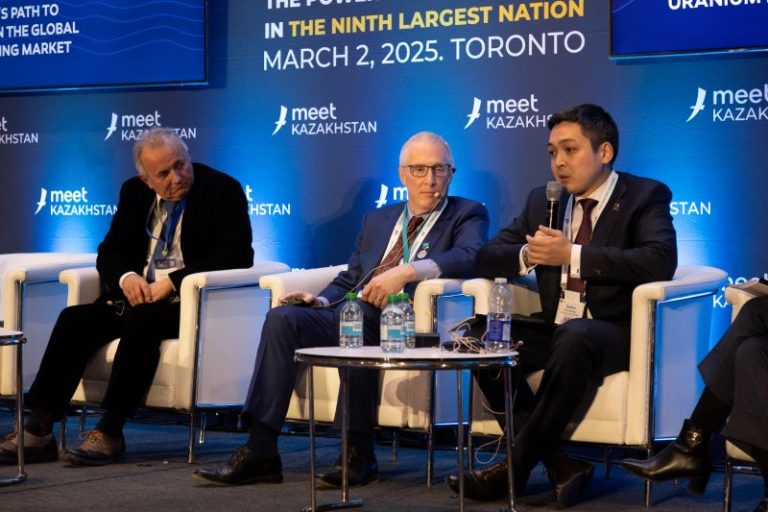
During a panel discussion at the MeetKazakhstan conference held on 2 March 2025 at the 93rd PDAC‘2025 Convention in Toronto, key players from Kazatomprom, Cameco, and Orano shared insights into Kazakhstan’s remarkable journey to becoming the world’s leading uranium producer and discussed the future landscape of the industry.
Kazatomprom: Strategic Vision and Market Discipline
Dastan Kosherbayev, Chief Director for Strategy and International Development at Kazatomprom, emphasized the company’s multi-vector policy that mirrors Kazakhstan’s broader approach to international relations. “We pursue no geopolitical ambition and we’re driven strictly by business or commercial interests,” Kosherbayev stated, highlighting the company’s long-standing partnerships with major industry players.
Kazatomprom became the world’s number one uranium producer in 2011 and the top seller in 2018, maintaining what Kosherbayev described as an “impeccable record” of delivering on all obligations since the company’s establishment in 1997.
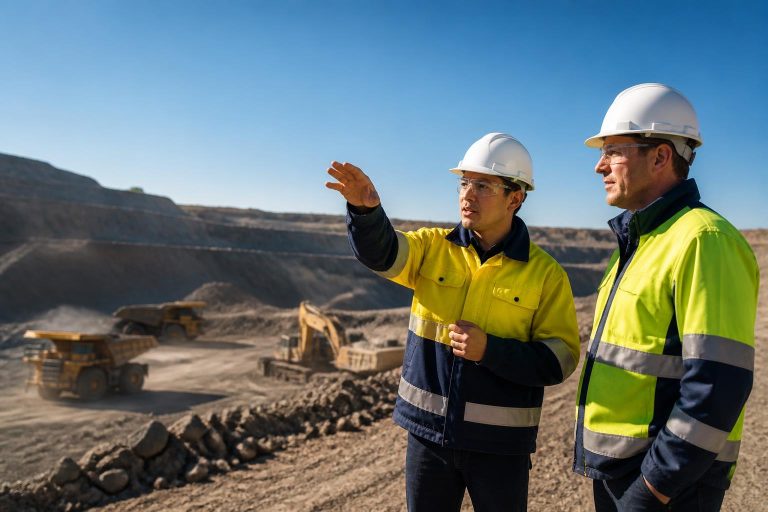
The company’s competitive advantage lies in its geology and mining methods. Kazakhstan’s uranium deposits allow for cost-efficient extraction using in-situ recovery (ISR), which Kosherbayev noted is “the most environmentally friendly method that enables us to produce uranium without disrupting any other activities.”
Market Discipline and Global Presence
A key factor in the uranium market’s recovery has been Kazatomprom’s commitment to market discipline. Since 2017, the company has implemented production cuts that removed 48,000 tons of uranium from the market, helping eliminate surplus and revitalize the industry.
Kazatomprom maintains a diverse sales portfolio, with transportation routes through both the Northern route via St. Petersburg and the Trans-Caspian International Transport Route, providing logistical flexibility for deliveries to Western markets.
Updated Strategic Direction
Kosherbayev revealed that Kazatomprom has recently updated its long-term strategy, focusing on five major strategic goals:
Replenishing the resource base to address the upcoming structural uranium deficit expected at the beginning of the next decade
Exploring potential opportunities in conversion and enrichment, though “not at any cost”
Investigating possible expansion into rare earth metals, leveraging existing capabilities at their Ulba Metallurgical Plant
Enhancing trading functions through Kazatomprom’s Swiss trading facility
Continuing commitment to ESG principles
When asked about international expansion, Kosherbayev indicated that Kazatomprom is open to opportunities but prioritizes securing guaranteed demand. “A lot of behind-the-scenes work is carried out currently, and should something arise, we’re going to notify the general public in due course,” he explained.
Partnerships: Keys to Success in Kazakhstan
Cameco’s Long-Term Perspective
Sean Quinn, Senior Vice-President and Chief Legal Officer at Cameco, shared insights from his company’s nearly three-decade involvement in Kazakhstan. Cameco’s interest dates back to 1992, shortly after Kazakhstan declared independence, with JV Inkai being formed in 1998 and beginning production in 2008.
Quinn attributed their success to several factors: “We’ve taken a very long-term view… geographical diversity is important to Cameco… and we’ve had a patient, long-term focus.” He added that having significant operating assets in different jurisdictions, particularly in Northern Saskatchewan, has allowed the company to weather industry ups and downs.
Orano’s Evolution from Exploration to Innovation
Christian Polak, Senior Advisor for Strategy and Partnership at Orano Mining, traced his company’s journey in Kazakhstan back to the 1990s. “In 1996, we signed an agreement with Kazatomprom. We set up the company KATCO where Orano is 51% and Kazatomprom is 49%,” Polak explained.
He emphasized the importance of the initial decade spent building relationships and understanding the country before beginning production in 2006. KATCO now employs approximately 1,200 people.
The partnership has evolved beyond commercial relationships to include scientific collaboration. In 2022, Orano signed a memorandum of understanding with Kazatomprom during the Kazakh president’s visit to France, establishing around 20 scientific projects focused on geology, processing, mining, and environment.
Sustainable Development and Future Outlook
Polak highlighted Orano’s commitment to sustainable mining practices in Kazakhstan. “Even as we continue to produce, we have to think about the future of the country and the future of deposits,” he stated. Orano works closely with Kazatomprom to develop technologies that predict environmental conditions after production ends.
Building positive relationships with local communities is equally important: “We have to share very closely with the populations… to restitute what we found before we arrived.”
Looking ahead, all three companies see opportunities for growth as nuclear energy gains renewed support globally. Quinn mentioned Cameco’s investments in Westinghouse and other fuel cycle opportunities like Global Laser Enrichment (GLE) as providing “even greater exposure to some of that untapped demand.”
Kosherbayev noted that while uranium accounts for 90% of Kazatomprom’s revenue, the company is exploring opportunities to extract valuable by-products such as rare earth elements, beryllium, tantalum, and niobium from its mining operations.
A United Industry
Despite being competitors, the panel emphasized the collaborative nature of the uranium industry. As Kosherbayev concluded, “We may have our differences, but we are like a family… siblings may have their own differences internally, but externally we all come as a big family.”
This spirit of cooperation, combined with strategic vision and sustainable practices, positions Kazakhstan and its international partners to continue leading the global uranium market as nuclear energy plays an increasingly important role in the world’s energy transition.
A joint venture between French company Orano Mining (51%) and Kazakhstan’s Kazatomprom (49%), known as “KATKO,” is set to begin construction on a new uranium processing complex in the South Kazakhstan’s Turkestan region. The project, located in the Syzak district, is expected to be operational by mid-2025.
The complex will process productive solutions from the South Tortkuduk section of the Moyinkum deposit to produce a uranium desorbate, an intermediate product, which will be further processed into uranium concentrate. With an expected annual production of 2,045 tons of uranium, the plant will help the joint venture reach its target of 4,000 tons of uranium extraction annually.
The location is close to key infrastructure, including a 90-kilometer railway line connecting the region to the Zhanatas station. The plant will occupy 39.6 hectares, and its construction will employ a shift work schedule, with two 12-hour shifts.
KATKO’s revenue for 2023 increased slightly to 147.4 billion KZT, although net profit dropped to 66 billion KZT, reflecting rising production costs. The venture is also planning a significant expansion of its uranium production, with a new mine, “South Tortkuduk,” expected to reach full capacity within the next 15 years.
This project represents a key development in Kazakhstan’s expanding uranium industry and highlights the country’s growing role in the global nuclear fuel market.
The joint venture between Orano Mining, a French company holding 51% of the shares, and Kazakhstani company Kazatomprom, holding 49% of the shares, known as KATCO, has announced its plans to commence operations at the South Tortkuduk uranium deposit in Kazakhstan by the end of 2023.
According to Gwenaël Thomas, the spokesperson for the company, this information was shared on Wednesday and reported by Trend. He stated that the agreement for this development was reflected in an amendment to the existing subsoil use contract in August 2022. The commencement of operations at the South Tortkuduk deposit is expected to secure uranium extraction for KATCO for a period of approximately fifteen years.
Thomas further highlighted additional agreements that have been reached between Kazakhstan and Orano. He mentioned that in November 2022, during the visit of Kazakhstan’s President Kassym-Jomart Tokayev to France, Orano and Kazatomprom signed a memorandum of cooperation. Through this memorandum, the two companies express their intention to support and strengthen their collaboration in the uranium mining industry, building upon their existing successful partnership.
Thomas explained that the memorandum includes various collaborative initiatives, such as the implementation of a joint roadmap for technical research and development, exploring solutions to address carbon emissions resulting from the companies’ activities, and laying the foundation for discussions on the long-term development of their partnership.
Established in 1996, KATCO was formed to develop and operate uranium deposits in Muynakum and Tortkuduk, located in the Turkestan region, approximately 300 kilometers north of Shymkent. Currently, the company employs around 1,200 individuals and operates an In-Situ Recovery (ISR) mine with an annual capacity of approximately 4,000 tons of uranium. Over the past 20 years, the operation of these two deposits has enabled KATCO to extract over 40,000 tons of uranium.