Tag: Kassym-Jomart Tokayev

  • Kazakhstan Confirms Central Asia–U.S. Summit in Washington on November 6

    Kazakhstan Confirms Central Asia–U.S. Summit in Washington on November 6

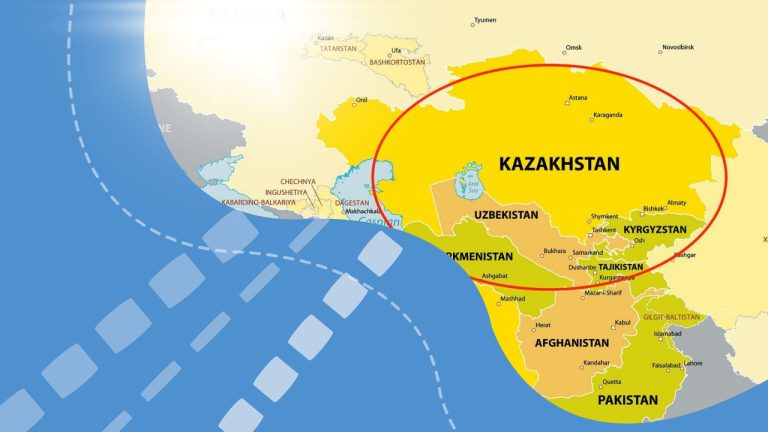
    Kazakhstan’s presidency has confirmed that a Central Asia–United States summit will take place in Washington, D.C., on November 6, bringing together the leaders of the C5+1 format — the United States and the five Central Asian nations: Kazakhstan, Kyrgyzstan, Tajikistan, Turkmenistan, and Uzbekistan.

    According to the press office of President Kassym-Jomart Tokayev, the Kazakh leader sent a letter of gratitude to U.S. President Donald Trump for the invitation to participate in the summit. Tokayev described the initiative as both “timely and important,” emphasizing that he shares Trump’s key domestic and foreign policy principles, including the promotion of traditional values, common sense, and global peace and security.

    The upcoming gathering will coincide with the tenth anniversary of the C5+1 diplomatic platform, launched in 2015 to strengthen regional cooperation and deepen U.S.–Central Asia engagement in areas such as energy security, trade, counterterrorism, and sustainable development.

    Regional media have confirmed participation from other Central Asian heads of state. Uzbek outlet Gazeta.uz reported that President Shavkat Mirziyoyev has received an invitation, while Kyrgyz media stated that President Sadyr Japarov will also attend. Invitations have reportedly been extended to all five Central Asian leaders, according to Azattyq.

    The announcement follows recent visits to Kazakhstan and Uzbekistan by U.S. Special Envoy for South and Central Asia Sergio Gor and Deputy Secretary of State Christopher Landau, underscoring Washington’s renewed diplomatic focus on the region.

    President Trump met both Tokayev and Mirziyoyev during the U.N. General Assembly last month in New York, where several multi-billion-dollar business deals were announced. Analysts suggest the upcoming summit aims to counterbalance the influence of Russia and China in Central Asia amid heightened global competition for access to the region’s critical minerals and strategic trade routes.

    In an October 20 letter, members of the U.S. House Foreign Affairs Committee urged President Trump to host the C5+1 summit before the end of the year. The letter highlighted U.S. strategic interests in developing regional critical mineral supply chains—notably tungsten, antimony, lithium, and rare earth elements—as well as advancing trade liberalization through the repeal of the Jackson-Vanik amendment and bolstering counterterrorism cooperation against the regional branch of the Islamic State group.

    The Washington summit is expected to mark a major step in U.S. efforts to strengthen political and economic ties with Central Asia, promote regional resilience, and enhance collaboration in energy, defense, and raw materials security.

  • President Tokayev Outlines Kazakhstan’s Energy Strategy at Turkic States Summit

    President Tokayev Outlines Kazakhstan’s Energy Strategy at Turkic States Summit

    Kazakhstan’s President Kassym-Jomart Tokayev outlined the foundations of his country’s energy strategy during his address at the 12th Summit of the Organization of Turkic States (OTS), emphasizing the central role of the energy sector in Kazakhstan’s economic and strategic development.

    Tokayev highlighted that energy remains “the backbone of the economy and a vital element of our strategic partnerships,” stressing the need for greater regional cooperation on infrastructure and transport routes for energy resources.

    “We are implementing joint infrastructure projects and forming secure and efficient routes for the transportation of energy resources,” he said. “A great example of fruitful cooperation in this area is the Green Energy Corridor project, being developed by Kazakhstan, Azerbaijan, and Uzbekistan.”

    The president called for a stronger focus on renewable energy, particularly solar power, proposing the establishment of a Council of Best Practices on Energy Efficiency under the framework of the OTS.

    At the same time, Tokayev reaffirmed that the development and efficient use of oil, gas, uranium, coal, and rare earth minerals remain the cornerstone of Kazakhstan’s long-term energy policy.

    The initiative reflects Kazakhstan’s broader efforts to balance traditional resource extraction with a gradual transition to clean energy.

    Earlier, President Tokayev arrived in Gabala to take part in the OTS summit, where he was welcomed by Azerbaijani President Ilham Aliyev.

  • Tokayev Begins UN Visit with Talks on Uranium Cooperation with Cameco

    Tokayev Begins UN Visit with Talks on Uranium Cooperation with Cameco

    Kazakh President Kassym-Jomart Tokayev has arrived in New York to take part in the 80th session of the UN General Assembly, beginning his working visit with a meeting with Tim Gitzel, president of multinational corporation Cameco, the Akorda press service reported.

    The two sides discussed prospects for cooperation in the uranium sector. Tokayev stressed that Cameco has long been a reliable partner of Kazatomprom, having invested more than $500 million in Kazakhstan since entering the market and contributing to technology transfer.

    The president noted that Kazakhstan is entering a new stage in its energy development, which includes plans to build three nuclear power plants. He said the country is interested in adopting innovative methods in the nuclear industry.

    Gitzel provided an update on the operations of the Inkai joint venture, which has been developing the Inkai deposit in Turkestan Region for more than 25 years.

    During his stay in New York, Tokayev will deliver remarks at the General Debate of the UNGA’s landmark 80th session, hold talks with world leaders and heads of international organisations, and take part in a roundtable with representatives of multinational companies to present Kazakhstan’s investment opportunities.

  • Kazakhstan to Open Internationally Accredited Rare-Earth Laboratory

    Kazakhstan to Open Internationally Accredited Rare-Earth Laboratory

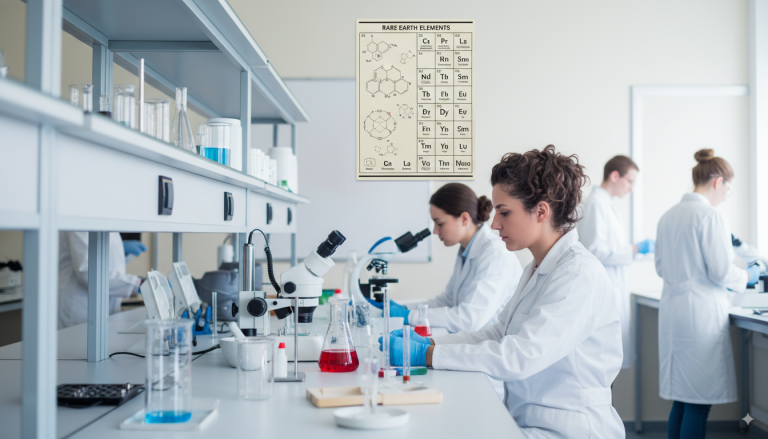
    Kazakhstan is set to establish an internationally accredited geo-analytical laboratory in Astana to support its growing role in global supply chains for rare-earth metals (REEs).

    Minister of Industry and Construction Yersayin Nagaspayev confirmed that agreements have been reached with global laboratory brands RCI Inspection and PARAGON to certify the new geo-analytical center, which is scheduled to open by mid-2026 under the National Geological Service. The laboratory will house core storage and archival repositories, providing transparent and reliable data to researchers and potential investors.

    The initiative follows President Tokayev’s 8 September address to Parliament, in which he stressed the strategic significance of rare-earth elements for Kazakhstan’s long-term economic future. He directed the government to launch at least three high-tech production facilities for rare-earth metals within the next three years, underscoring their growing importance in global technology and trade.

    The government’s plan outlines four strategic priorities for domestic processing: producing battery materials, recycling, manufacturing heat-resistant alloys for jet turbines, and producing semiconductor materials. To achieve these goals, Kazakhstan is actively forging partnerships with the European Union, the United States, Japan, South Korea, and China.

    Planned projects include a gallium plant, the production of high-purity manganese sulfate and graphite for batteries, and the manufacturing of nickel-based superalloys. Additionally, pilot programs for recycling permanent magnets are set to begin next year, in collaboration with European partners, marking a concrete step towards a more sustainable and value-added rare-earth industry.

  • Kazakhstan Eyes Russian Participation in First Nuclear Power Plant Project

    Kazakhstan Eyes Russian Participation in First Nuclear Power Plant Project

    Kazakhstan’s Foreign Minister Murat Nurtleu has expressed hope that Russia will participate in building the country’s first nuclear power plant (NPP). The statement was made during his meeting with Russian Foreign Minister Sergey Lavrov, according to TASS.

    “We already have over 170 joint projects with Russian businesses, and the NPP construction is among the most strategic. I hope our respective ministries will move forward with the necessary work,” Nurtleu noted.

    The project has strong public support — a referendum held on October 6, 2024, showed 71.12% of Kazakhstani voters are in favor of building a nuclear power plant. Four international companies are currently under consideration to supply technology and lead construction:

    • Rosatom (Russia)

    • CNNC (China)

    • KHNP (South Korea)

    • EDF (France)

    According to Deputy Minister of Energy Sungat Yessimkhanov, the contractor selection will be completed by June 2025. President Kassym-Jomart Tokayev has previously confirmed that the NPP will be developed through an international consortium, should the public support it.

    The first NPP will be located in the village of Ulken, Almaty region. Preparatory work has already begun, with plans to create an industrial zone, social infrastructure, and to modernize local roads and water supply systems to support NPP operations.

    Speaking at the recent National Kurultai, a major national forum, President Tokayev revealed even more ambitious plans:

    “Kazakhstan will not stop at one NPP. We are preparing to establish three nuclear power plants, alongside the formation of a dedicated Nuclear Energy Agency.”

    The push for nuclear energy comes amid Kazakhstan’s broader strategy to diversify its energy mix, reduce emissions, and strengthen energy security in the region.

  • President Tokayev Reviews Industrial Progress and Sets New Goals for Kazakhstan’s Development

    President Tokayev Reviews Industrial Progress and Sets New Goals for Kazakhstan’s Development

    President Kassym-Jomart Tokayev met with Minister of Industry and Construction Yersain Nagaspayev on April 2, 2025, to discuss the ministry’s achievements in 2024 and outline key priorities for the coming period.

    Minister Nagaspayev reported significant growth in industrial investments and exports of processed goods last year, with plans to further boost production volumes in 2025. He also highlighted progress in geology and digitalization, including the launch of a Unified Subsoil Use Platform, digitized urban planning projects, and plans to introduce a single utility bill system even in rural areas. Additionally, the ministry is developing an AI-powered geological database to enhance resource exploration.

    Following the report, President Tokayev assigned several urgent tasks. These include increasing high-value industrial output, creating a national registry of domestic manufacturers, and improving investor engagement. The President also stressed the importance of meeting housing construction targets, expanding water supply coverage, and further digitizing construction and utility services.

    Furthermore, the ministry must ensure the timely commissioning of industrial facilities and implement subsoil use reforms efficiently. Tokayev emphasized strict oversight in supporting local manufacturers to strengthen Kazakhstan’s economic resilience.

  • Kazakhstan and China Discuss Nuclear Energy Cooperation

    Kazakhstan and China Discuss Nuclear Energy Cooperation

    Kazakhstani President Kassym-Jomart Tokayev met with Shen Yanfeng, General Director of China National Nuclear Corporation (CNNC), to explore opportunities for collaboration in nuclear energy.

    During the discussion, Tokayev outlined Kazakhstan’s strategic plans for the sector, highlighting the recent establishment of the Nuclear Energy Agency to oversee the industry’s systematic development. He expressed interest in CNNC’s extensive expertise as a leading force in China’s nuclear sector.

    Shen Yanfeng, in turn, provided an overview of CNNC’s projects both within China and internationally. The meeting also covered potential cooperation in advancing peaceful nuclear technologies and training Kazakhstani specialists.

    CNNC, founded in 1999, is China’s largest state-owned enterprise dedicated to nuclear energy development, technological innovation, and research.

  • Kazakhstan’s Investment Strategy Amid Geopolitical Shifts: Challenges and Opportunities

    Kazakhstan’s Investment Strategy Amid Geopolitical Shifts: Challenges and Opportunities

    Amid the ongoing war in Ukraine and geopolitical tensions, Kazakhstan is positioning itself to attract $150 billion in foreign direct investment (FDI) by 2029. The conflict has provided Central Asian nations, including Kazakhstan, opportunities to strengthen economic ties with the West. In 2022-2023, the Netherlands emerged as the leading investor, contributing over $12 billion to Kazakhstan’s economy, followed by the US and Switzerland.

    However, despite its ambitious goals, Kazakhstan faces challenges. In 2023, FDI inflows dropped by 32.3%, reflecting a lack of comprehensive development strategies for industries and regions. To counteract this, the government has introduced initiatives inspired by British and UAE models, notably through the Astana International Financial Center, which is modeled after Dubai’s financial hub. These measures aim to attract global investors by offering tax breaks, reduced bureaucracy, and a regulatory framework based on British Common Law principles.

    Kazakhstan is also focusing on long-term agreements with foreign companies, particularly in its oil and gas sector. President Kassym-Jomart Tokayev acknowledged that renegotiating production-sharing agreements on favorable terms is essential for securing large investments. However, some companies view these moves as signs of “resource nationalism.”

    Further strategies include initiatives like the Digital Nomad visa to attract remote workers and businesses relocating from Russia. Kazakhstan has already attracted 41 foreign companies worth over $1.5 billion and is in talks with Chinese firms such as Xiaomi and TCL to move production facilities.

    The geopolitical realignment caused by sanctions on Russia has also funneled trade through Central Asia, benefiting Kazakhstan’s economy. The government is investing in developing the Trans-Caspian International Transport Route to strengthen its trade links with Europe and Asia.

    Despite inflation and economic stability challenges, Kazakhstan’s prospects remain strong. The country is now ranked among the world’s top 35 most competitive nations, with the Asian Development Bank projecting 5.1% economic growth by 2025. Kazakhstan’s strategic location, trade agreements, and ongoing reforms position it well to become a regional economic leader.

  • President Calls for Bold Decisions to Accelerate Kazakhstan’s Development

    President Calls for Bold Decisions to Accelerate Kazakhstan’s Development

    President Kassym-Jomart Tokayev urged government members to take decisive actions for impactful socio-economic progress. He emphasized the importance of tracking the implementation of his directives, particularly through a newly established center to enhance reform efficiency, coordinated by First Deputy Chief of Staff Darhan Satybaldy.

    The President highlighted key strategic priorities, including large-scale infrastructure projects, digitization, artificial intelligence, and nuclear energy. He stressed the urgency of building two or three nuclear power plants to establish Kazakhstan as a leader in advanced nuclear energy and digital technology.

  • Tokayev Pushes for Faster Nuclear Power Plant Construction in Kazakhstan

    Tokayev Pushes for Faster Nuclear Power Plant Construction in Kazakhstan

    Kazakh President Kassym-Jomart Tokayev has called for the acceleration of nuclear power plant construction in Kazakhstan. According to Tokayev, the country may build two or three large nuclear stations to advance its nuclear energy sector.

    “We are currently focused on major infrastructure projects, digitalization, artificial intelligence, and nuclear energy. These are the key strategic areas for the development of our country. The government must prioritize these critical issues in its work,” the president emphasized.

    Tokayev also discussed the future of nuclear energy in Kazakhstan, noting the need for faster progress.

    “Regarding the construction of nuclear power plants — we need to speed up. As I mentioned in an interview, we plan to build two large plants, possibly three. We must transform Kazakhstan into a country with a developed nuclear energy sector, a nation where artificial intelligence functions and digitalization is fully implemented,” he concluded.

    On October 6, 2023, Kazakhstan held a referendum on the construction of nuclear power plants in the Almaty region. Tokayev had stated that, should the public approve, the construction would be undertaken by an international consortium of companies.

    The referendum results showed that 71.12% of Kazakh citizens voted in favor of nuclear plant construction. The Ministry of National Economy announced that the state would not fund the project. Instead, the government is considering project financing, with funds potentially provided by a consortium of international financial institutions. The state would repay this loan not from the national budget, but from the revenue generated by the nuclear plants.

    Kazakhstan is currently considering four companies as potential suppliers of nuclear technology: CNNC (China), Rosatom (Russia), KHNP (South Korea), and EDF (France).