Tag: Jingye Group

  • China Warns Britain Over British Steel Nationalisation Plans, Threatening “Strong Measures” to Protect Chinese Companies

    China Warns Britain Over British Steel Nationalisation Plans, Threatening “Strong Measures” to Protect Chinese Companies

    China has issued a formal warning to the British government over its plans to nationalise British Steel, urging London to “make decisions prudently” and threatening to take action to protect the interests of Chinese companies if the process moves forward.

    Beijing’s commerce ministry said China would “closely follow developments” and take “strong measures to safeguard the legitimate rights of Chinese companies,” after Prime Minister Keir Starmer announced on Monday that Britain could bring British Steel into full public ownership. The Chinese statement called on the UK government to “respect the wishes of firms and market principles, and avoid the abuse of administrative coercive measures.”

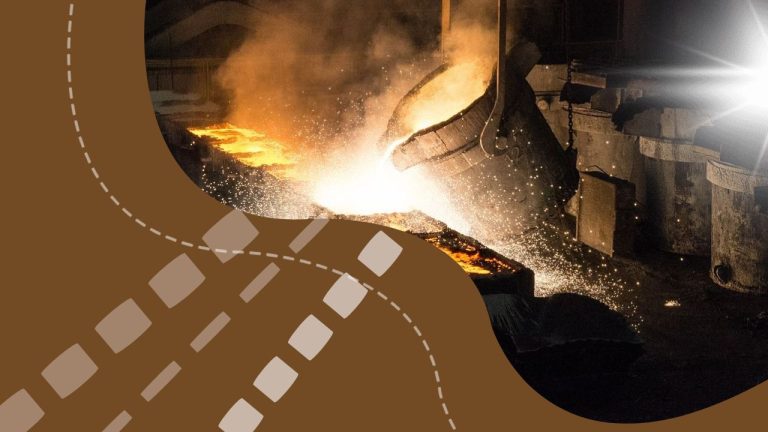
    The British government seized operational control of British Steel from its Chinese owners, Jingye Group, in April 2025 after the company failed to secure the raw materials needed to keep the Scunthorpe blast furnaces operating. New legislation giving the government the power to bring the steelmaker into public ownership has since been passed. A government spokesperson said the powers would only be used “where the public interest test has been met” and that the administration remained committed to respecting the rights of businesses.

    The dispute adds a fresh dimension to an already complex period in UK-China relations, as London attempts to balance economic engagement with Beijing against domestic industrial policy imperatives and growing pressure to protect strategically important manufacturing assets.

  • UK Government in Urgent Talks with Chinese Owner of British Steel to Avert Plant Closures

    UK Government in Urgent Talks with Chinese Owner of British Steel to Avert Plant Closures

    The UK government is engaged in high-level discussions with the Chinese owners of British Steel to prevent the closure of the company’s plants, which would jeopardize around 2,000 jobs. A substantial financial support package, drawn from the Labour government’s £2.5 billion “green steel” fund, is being considered to keep the Scunthorpe site operational.

    Last week, Business Secretary Jonathan Reynolds met with Li Huiming, CEO of Jingye Group, which has owned British Steel for the past four years. Jingye is now considering shutting down the company’s UK operations, including the last two blast furnaces in the country, a move that would put thousands of jobs at risk.

    The UK government has earmarked £2.5 billion for the transition of steel producers to greener methods of manufacturing, particularly focusing on the development of electric arc furnaces (EAFs) that produce steel using scrap metal and clean energy. Sources suggest that up to £2 billion of this fund could be directed towards British Steel, though the exact figure will depend on the terms of any deal.

    In 2023, British Steel announced plans to close its two blast furnaces at Scunthorpe, while investing £1.25 billion in constructing two EAFs in Scunthorpe and Teesside. At the time, ministers offered a £300 million support package, but British Steel insisted on the same £500 million support that was given to Tata Steel. The company initially committed to keeping its loss-making operations open while the EAFs were being built, but by September, Jingye revised its plans and proposed advancing the closure of the blast furnaces—potentially before Christmas.

    In response, UK ministers have been negotiating with Jingye in a bid to secure a more favorable deal, potentially including subsidies to keep the blast furnaces running until the electric arc furnaces are ready for use. One government figure described the £2 billion figure as a “theoretical upper limit,” though it remains a key option under consideration.

    Despite the significant financial offer, talks have stalled, leaving some stakeholders puzzled as to why the deal has not yet been finalized. One individual involved in the discussions suggested that “geopolitical issues” might be complicating the process, pointing out that Reynolds had made an offer that was “fair and reasonable.”

    Another topic under discussion is ensuring that British Steel can continue to meet the needs of critical customers, including the UK’s rail network. Whitehall officials have also floated the idea of establishing a national plant for producing “direct reduced iron” (DRI) using green hydrogen in the future, a project that would require collaboration among multiple steel companies.

    Electric arc furnaces, which rely on scrap steel and renewable energy, are seen as a cleaner alternative to blast furnaces that still use coal. However, they employ fewer workers, and the shift to greener production methods could lead to job losses in the industry. British Steel reported significant financial losses, with pre-tax losses rising eightfold in 2022 to £408 million, continuing into 2023 and 2024.

    The Labour Party has promised a £7.3 billion “national wealth fund” in its manifesto, designed to support energy-intensive industries like steel in their transition to net-zero emissions. Of this, £2.5 billion is specifically earmarked for the steel sector, in addition to the £500 million already allocated to Tata Steel for its plant in Port Talbot, South Wales.

    There is growing concern that the relatively smaller support package for Tata Steel may leave workers in Wales feeling underfunded compared to those in Scunthorpe. Any deal with British Steel is also likely to involve some level of job losses, further complicating the situation.

    Reynolds has expressed frustration with the previous Conservative government, which failed to support British Steel’s efforts to establish a carbon capture and storage project at Scunthorpe—an initiative he believes could have ensured the plant’s long-term viability.

    A government spokesperson reaffirmed the UK’s commitment to maintaining a steel industry, stating that ministers are working closely with trade unions and businesses, including British Steel, to secure a “green steel transition” that both supports the workforce and ensures the industry’s future in Britain.

    For its part, British Steel confirmed that it is still in “active discussions” with the government, adding that it has recently secured the raw materials necessary to continue operations into the new year.