Tag: Jadar mine

  • The right mine, at the wrong time at the wrong place?

    The right mine, at the wrong time at the wrong place?

    The controversial video “Not In My Country: Serbia’s Lithium Dilemma” in now live on the YouTube channel Journeyman Pictures: https://lnkd.in/ejacPysy

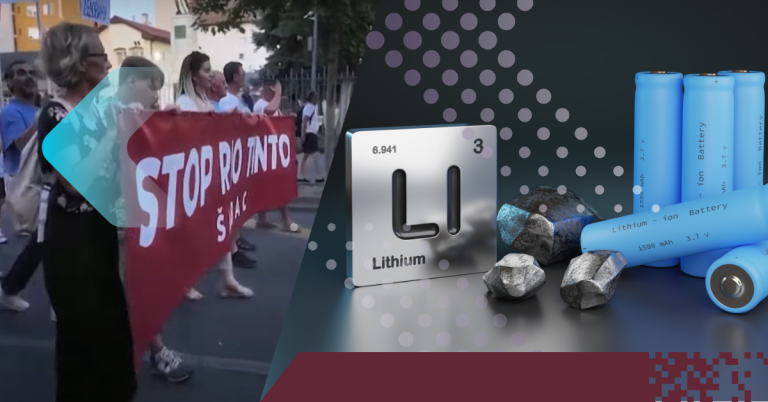
    Belgrade, Serbia – August 2024: Massive protests have erupted in Serbia over the proposed lithium mine in the Jadar Valley, spearheaded by British-Australian mining giant Rio Tinto. Approximately 25,000 people took to the streets of Belgrade, expressing their fury over the project’s potential environmental impact and raising concerns about the nation’s future.

    The controversy stems from the Serbian government’s reversal of a 2022 decision to halt the project, reinstating it two years later. This move has ignited widespread public outrage, with many fearing the mine will devastate local agriculture and natural habitats.

    Environmental and Political Concerns Fuel Opposition

    Climate expert Dr. Peter Tom Jones, director of the KU Leuven Institute for Sustainable Metals and Minerals, traveled to Serbia to investigate the strong opposition. He notes the paradox of Serbia, home to Europe’s largest lithium deposit, resisting a project vital for the continent’s transition to electric vehicles and renewable energy storage.

    Rio Tinto plans to invest $2.4 billion in the Jadar mine, potentially making Serbia a leading lithium producer. However, the project has faced fierce resistance from local groups like NAD Jadar, who cite fears of pollution and environmental destruction.

    Marijanti Babic, Rio Tinto’s country head in Serbia, claims the mine will be an “invisible mine,” operating primarily underground with minimal surface impact. She emphasises the company’s commitment to preserving local farming and utilising modern, electronically controlled operations.

    However, resistance groups allege intimidation and threats, claiming they will “defend this with their lives.” The project has become deeply politicised, with allegations of disinformation campaigns and distrust of both Rio Tinto and the Serbian government.

    Disinformation and Distrust Plague the Project

    Anthropologist Jena Vasilovich from the University of Belgrade points to a lack of transparency and democratic process as key drivers of public distrust. She also highlights past grievances with similar projects and a general dissatisfaction with the current political regime under President Vučić.

    Rio Tinto has established an information center and a “fake news wall” to combat what they claim is an organised disinformation campaign. They deny allegations of radioactivity, excessive acid use, and the existence of a large aquifer beneath the mine.

    The company has engaged in extensive community outreach, holding over 150 events in the Jadar Valley to address local concerns. They emphasize their commitment to environmental, social, and governance (ESG) standards and highlight the project’s potential economic benefits, including the creation of 20,000 jobs in the battery value chain.

    Economic Potential vs. Environmental Risks

    Companies like battery manufacturer 11 ES see the Jadar mine as a crucial step towards establishing a European lithium battery supply chain, reducing reliance on China. They highlight the project’s potential to drive economic growth and support the transition to climate neutrality.

    However, environmental groups remain skeptical, citing past mining industry practices and the potential for long-term environmental damage. They call for stricter regulations and greater transparency.

    The European Union sees the Jadar mine as a strategic asset, aiming to secure its lithium supply and reduce dependence on external sources. However, the project has become entangled with Serbia’s EU membership aspirations, adding another layer of complexity to the debate.

    A Nation Divided

    The Jadar lithium mine has divided Serbia, pitting economic potential against environmental risks and fueling political tensions. As the global demand for lithium surges, Serbia faces a critical decision that will shape its economic and environmental future.

  • Mercedes-Benz and Stellantis in Talks with Serbia for Lithium Processing and EV Battery Production

    Mercedes-Benz and Stellantis in Talks with Serbia for Lithium Processing and EV Battery Production

    Mercedes-Benz Group AG and Stellantis NV are in discussions with the Serbian government to invest in lithium-processing and EV battery production, potentially supporting what could become Europe’s largest lithium mine. These carmakers, already partners in a battery joint venture, are considering following Rio Tinto Group‘s investment in the proposed $2.4 billion mine in Serbia by developing processing and EV battery output, according to sources familiar with the situation.

    These discussions mark a significant step in reviving Rio’s Jadar mine, which was blocked two years ago following mass protests that brought Serbian cities to a standstill. Spokespeople for Mercedes and Stellantis declined to comment. The Serbian government has insisted on creating a broader lithium industry rather than merely exporting the raw material, aiming to capture more value from its natural resources.

    Approval of the mine would be a substantial boost for Rio Tinto, Serbia’s economy, and Europe’s efforts to secure essential raw materials for the energy transition. The European Union relies heavily on imports for battery production and has been striving to develop its own EV supply chain to reduce dependency on Asian imports. However, delays in the EV transition have resulted in several battery projects being postponed.

    Mercedes and Stellantis, for instance, have paused two of their three planned European battery plants due to lower-than-expected vehicle demand. Despite efforts to cultivate European battery champions, the industry remains dependent on a raw materials supply chain dominated by China.

    On Friday, Serbia will sign a framework agreement with the EU on mineral raw materials, President Aleksandar Vucicannounced. This agreement aims to establish a processing industry and battery manufacturing sector, ensuring materials and EVs produced in Serbia qualify for sale in the EU without incurring levies.

    Executives from the car companies are expected in Serbia on Friday during German Chancellor Olaf Scholz‘s visit, possibly to sign letters of intent to develop Serbia’s industry. Executives from Rio Tinto are also anticipated to attend. Rio’s project seemed doomed in early 2022 when the government moved to block it. The company announced the project in 2021 without securing all necessary licenses, leading to widespread protests.

    Despite setbacks, Rio Tinto continued engaging with local communities to address environmental concerns and sought support from Europe’s top carmakers. Vucic, a dominant political figure in Serbia, has repeatedly expressed regret over halting the project, viewing it as a missed economic opportunity. Recently, he indicated that authorities might allow Rio Tinto to resume preparations to open the mine by 2028. This effort gained momentum last week when Serbia’s constitutional court overturned the 2022 government decree blocking the project.

    The resumption of the project would be a significant victory for Rio CEO Jakob Stausholm, who had sanctioned the mine early in his tenure.