Tag: investment projects

  • Kazakh PM Orders New Measures to Accelerate Metallurgical Sector Growth

    Kazakh PM Orders New Measures to Accelerate Metallurgical Sector Growth

    Prime Minister Olzhas Bektenov has directed Kazakhstan’s Ministry of Industry and Construction to formulate additional stimulus measures for the country’s metallurgical sector within the next month, signaling a renewed push to boost industrial output and investment. The directive was announced during a government meeting reviewing Kazakhstan’s socio-economic performance in the first half of 2026. Bektenov tasked the ministry, alongside state mining company Tau-Ken Samruk, with ensuring full utilization of non-ferrous metallurgical enterprises, including by supplying imported gold for domestic refining. In the ferrous metallurgy segment, the Prime Minister highlighted the need for Qarmet, under its modernization program, to expand its product range to include items most in demand in both domestic and international markets. Bektenov stressed that the pace of growth in the manufacturing sector depends on the timely implementation of investment projects. He instructed the ministry and regional administrations to review all investment projects within one week to identify challenges and outline specific remedial measures. Additionally, the Prime Minister ordered the submission of draft amendments within one month to introduce new mechanisms aimed at improving the efficiency of Kazakhstan’s special economic zones. Bektenov also emphasized the importance of maintaining current construction activity levels, calling for continuous monitoring of housing commissioning and swift resolution of emerging issues. He recalled President Kassym-Jomart Tokayev’s directive to begin a large-scale program for building social and infrastructure facilities, with a particular focus on modern healthcare institutions. The announcement follows earlier reports that Kazakhstan plans to launch eight non-ferrous metallurgy projects in 2026, expected to create over 1,500 jobs, underscoring the government’s commitment to expanding the mining and metals sector as a key driver of economic growth.

  • Kazakhstan’s Karaganda Region Bets on Digital Upgrades and New Investment to Revive Its Mining Heartland

    Kazakhstan’s Karaganda Region Bets on Digital Upgrades and New Investment to Revive Its Mining Heartland

    Karaganda Region, long the industrial backbone of Kazakhstan, is pushing to modernise its mining sector through digital technology and a wave of new investment projects, even as the industry grapples with volatile commodity prices, ageing infrastructure and a growing shortage of skilled workers.

    Speaking to news agency NewTimes.kz, Alibek Moldakarimov, deputy head of the Region’s Department of Entrepreneurship and Industry, said the extractive sector remains a cornerstone of the regional economy, employing more than 40,000 people across 109 enterprises. The sector produced goods worth 81.1 billion tenge in January alone — up 2% on the same period last year — with total output forecast to reach 850 billion tenge for the year.

    The region’s resource base spans coal, copper, iron, manganese, lead and zinc, and the mining and metallurgical complex accounts for approximately 70% of all industrial output in the area. Sixteen mining projects have been included in Kazakhstan’s national investment pipeline, with the potential to create nearly 2,000 new jobs. Two additional copper extraction and processing projects are also expected to launch this year.

    Several major enterprises are already active in the region, including Qarmet, Kazakhmys, Altynalmas, Asia FerroAlloys, Shubarkol Komir and Nova Zinc. Companies are increasingly turning to digital solutions to improve both efficiency and workplace safety. Qarmet has deployed an electronic system that automates occupational health and safety processes and monitors worker welfare in real time. Altynalmas, meanwhile, has introduced a fleet management system to oversee mining transport operations, alongside a seismograph — the Zetl 7156 — to monitor blasting activity, and an automated pre-shift medical screening system called ESMA that checks workers’ physical condition before they begin work.

    On the investment front, a new open-pit coal mine operated by Saryozen Komir has been launched in the Nurinsky District, with planned annual output of around 300,000 tonnes. Eurasian Land has also commissioned a manganese ore extraction project with capacity of approximately 80,000 tonnes per year. Later in 2025, a copper extraction and processing operation at the Tesiktassk deposit in the Aktogai District is expected to come online.

    Despite the optimism, Moldakarimov acknowledged that the sector faces significant structural challenges. Global commodity price instability and intensifying international competition are pressing concerns, as is the need for energy-efficient and environmentally sustainable technology upgrades. Most acutely, the industry is confronting a critical shortage of qualified personnel and young specialists — a problem companies are attempting to address through closer partnerships with educational institutions and dedicated training programmes.

  • President Tokayev Reviews Qarmet’s 2025 Results and Supports Further Development Plans

    President Tokayev Reviews Qarmet’s 2025 Results and Supports Further Development Plans

    Kazakhstan’s President Kassym-Jomart Tokayev has been presented with Qarmet’s preliminary operating results for 2025 and the key priorities of its investment program. The company reported strong positive dynamics, with steel production increasing by 22 percent over two years, coal concentrate output rising by 26 percent, and iron ore concentrate production growing by 32 percent. Over the same period, production costs were reduced by 28 percent, while the number of steel grades produced expanded from 260 to 350.

    Qarmet Chairman Andrey Lavrentyev reported on the implementation of nine major investment projects aimed at forming the country’s “steel framework” and reducing dependence on imported rolled metal products. The company is also expanding the production of new premium steel grades, including specialized products intended for the construction of nuclear power plants.

    The president was briefed on development programs for Qarmet’s coal and mining divisions, with particular emphasis placed on occupational safety and social initiatives. The company is upgrading its own medical and educational facilities, and a new collective labor agreement has been signed with trade unions. The agreement provides enhanced social guarantees for Qarmet’s workforce of 35000 employees.

    Tokayev was also informed about the creation of a large metallurgical cluster around Qarmet, enabling small and medium-sized enterprises to engage in deeper processing of raw materials. This initiative was launched jointly with the National Investment Holding Baiterek. In addition, Qarmet is carrying out systematic cooperation with machine-building plants to increase the use of domestically produced steel in manufacturing.

    Following the meeting, the president gave a positive assessment of the company’s performance and endorsed Qarmet’s proposed development plan. He stressed the importance of continuing comprehensive modernization efforts, addressing social issues, improving the environmental situation, and further expanding machine-building production.

  • Kyrgyzstan Unveils Critical Minerals Strategy at MINEX Eurasia Conference in London

    Kyrgyzstan Unveils Critical Minerals Strategy at MINEX Eurasia Conference in London

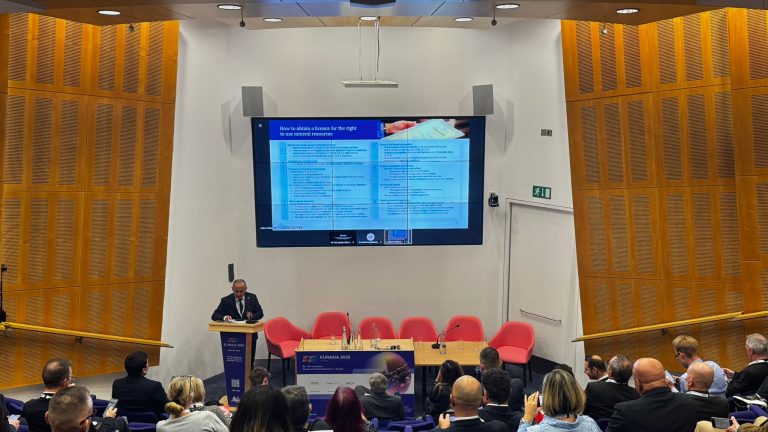
    London, 1 December 2025 – The MINEX Eurasia conference in London hosted a keynote address by H.E. Meder Mashiev, Minister of Natural Resources, Ecology, and Technical Supervision of Kyrgyzstan, outlining the country’s strategic vision for its critical minerals sector.

    Kyrgyzstan’s Strategic Minerals Vision

    The Minister outlined Kyrgyzstan’s methodical approach to prioritising and developing its critical minerals sector, identifying 21 key minerals based on global demand, local deposits, and resource concentrations. Kyrgyzstan’s analysis resulted in the selection of 4 priority projects, 5 promising deposits, and 16 prospective areas for further study and development. These assets, spread across antimony, beryllium, rare earths, molybdenum, bismuth, zinc, silver, and others, offer significant commercial and strategic potential for investors and end-users in energy, electronics, and high-value manufacturing.

    Investment and Development Framework

    State companies, notably Kyrgyzgeology, are driving exploration and project development, supported by government incentives and openness to international partnership. Strategic sites are being actively promoted for joint ventures or direct investment. Major domestic and international firms manage several large sites, while more than 100 mining enterprises operate in the country—spanning gold, copper, and polymetallic ores.

    Tax and Licensing Regime

    The session detailed Kyrgyzstan’s tax policy, which includes a mix of one-time bonuses for mining rights, royalties, profit tax, and VAT. The overall effective tax burden stands between 25–30%, complemented by social and environmental levies such as waste disposal, emissions, and water usage fees. Procedures for subsoil use licensing are harmonized with those in neighbouring countries, with initiatives being considered to simplify the processes and make it more transparent.

    ESG, Transparency, and Sustainable Mining

    Kyrgyzstan’s evolving strategy strongly emphasizes environmental, social, and governance (ESG) standards, aiming to foster responsible mineral development, minimize ecological impact, ensure transparency, and maximize benefits for local communities. The new strategy promotes the deployment of advanced technologies, environmental sustainability, and transparent investment processes, aligning with best practices to attract reliable, long-term partners.

    Opportunities for International Partnership

    Kyrgyzstan welcomes active collaboration with global investors and mining enterprises, seeking to leverage modern mining technologies, improve environmental outcomes, and maximize economic benefits. The country’s critical mineral strategy is closely linked to green growth targets and broader Eurasian supply chain integration.

  • New Support Measures for Kazakhstan’s Mining and Metallurgy Industry Under Consideration

    New Support Measures for Kazakhstan’s Mining and Metallurgy Industry Under Consideration

    In a recent meeting, the Committee of Geological, Mining, Coal, and Metallurgical Industries of the Presidium of Kazakhstan’s National Chamber of Entrepreneurs discussed new support measures for the mining and metallurgy industry. The proposed measures aim to attract additional investments to the sector.

    One key proposal is to reduce the mineral extraction tax by 10 times for companies engaged in extracting metals from technogenic mineral formations. Additionally, projects for processing mineral raw materials could be granted the same benefits as priority investment projects listed in Kazakhstan’s Entrepreneurial Code.

    Furthermore, the committee considered fully deducting expenses for geological exploration and proposed a five-year exemption from the mineral extraction tax for subsoil users developing low-grade and capital-intensive deposits (with an internal rate of return not exceeding 15%). Such mechanisms are already in place in the oil and gas sector.

    In 2025, Kazakhstan’s national railway holding, NC “KTZh”, plans to increase price limits on export transportation tariffs. Last year, railway transportation showed negative dynamics: coal transportation decreased by 7%, iron ore by 10%, and non-ferrous metals by 5%.

    To prevent mining and metallurgical enterprises from losing export markets, parties are trying to agree on a special methodology for decision-making on tariff reductions. One of the main criteria for setting prices will be the financial condition of the producers.

  • The future of the plant. How AGMK is implementing a major investment project to increase copper production

    The future of the plant. How AGMK is implementing a major investment project to increase copper production

    Environmental trends create potential demand for copper, which is one of the main components of all these innovations. Today, the “new economy” already consumes 1.6 million tons of this metal. Against the backdrop of energy crises and the rising cost of energy resources, analysts argue that the demand, and consequently the prices for copper, will only continue to rise. They forecast that by 2030 the world will need 40% more copper than is mined today. All this adds up to an excellent opportunity for copper mining companies. Global leaders in this industry are actively modernizing their production, introducing advanced technologies that allow working with poor ores and copper slag to meet this growing demand with supply. The domestic copper producer, the Almalyk Mining and Metallurgical Combine, also has grand plans. Today, four investment projects are successfully being implemented here. One of the key projects is the development of the “Yoshlik” deposit worth almost $5 billion. The project involves the implementation of a whole complex of measures that will enable the enterprise to produce 400,000 tons of cathode copper per year by 2030 and become one of the world’s leading producers of this metal. This will not only secure the company’s future but also provide a powerful impetus for the development of the domestic economy: new production facilities will provide jobs for tens of thousands of people, increase tax revenues to the budget, while the combine already ranks as the second-largest taxpayer in the republic. As part of the investment project, the construction of three new copper beneficiation plants, a copper smelting complex, modernization of existing facilities, and the consolidation of two deposits of the combine – “Kalmakyr” and “Yoshlik” are planned. This project is considered one of the top 10 largest global projects in the metallurgy sector. Intensive open-pit mining operations are currently underway at the “Yoshlik” deposit. To reach the ore layer and prepare the quarry for further mining, around 180 million cubic meters of rock mass have been removed from here. To carry out massive mining works, new mining equipment has been acquired, and some transportation has also been outsourced. “We recently received two new locally assembled dump trucks with a payload of over 220 tons. In total, under the contract with a domestic company, the delivery of five such machines is expected, the rest will be delivered by March. We will use them for open-pit mining operations, and then for ore mining,” said Kamoliddinjon Marahimov, deputy chief engineer for mining operations. In addition, the combine is introducing a new cyclic-flow technology (CFT) for transportation. Several crushing-conveyor complexes will be built on the quarry site. In particular, two will be involved in transporting empty rock to the dumps, and two more – in shipping ore to the concentrator plants No. 3 and 4. It is worth reminding that in November of last year, the combine already launched one of the crushing and loading nodes for the third factory in test mode. Crushing units and 4-kilometer conveyors from Denmark, which have repeatedly proven their reliability and efficiency at numerous enterprises around the world, are installed here. These technologies will be used for primary crushing and transporting ore via conveyors instead of railway transport to ore warehouses. Overall, this solution will triple transportation costs and operational expenses. The third in line The investment project involves the construction of three copper beneficiation plants (CBP). Since 2021, active work has been underway to erect CBP-3. Today, this truly grandiose facility is at the stage of final construction and installation works. It is worth noting that Wood (Italy) and UZLITI Engineering (Uzbekistan) were involved in the design of CBP-3, Technip Energies (France) conducted the technical evaluation and acceptance of the basic project documentation, and Worley (UK) is supervising the construction. To ensure the timely launch of the factory, today, on the construction site of CBP-3 with a total area of 196 thousand square meters, more than 1000 pieces of equipment are involved, and a 15-thousand-strong international team of the general contractor Enter Engineering is working daily. The new facility will be equipped with the most modern equipment from leading manufacturers of mining and beneficiation equipment, such as AUMUND (Germany), Thyssenkrupp (Germany), Weir Minerals (UK), Sepro Minerals-Falcon (Canada), Metso (Finland), and others. In particular, for the first time at AGMK, the HPGR (High-Pressure Grinding Rolls) technology of semi-autogenous mills will be applied. This will reduce operating costs by 30% and achieve the minimum payback period for the introduced technology. Most of the large-sized equipment has already been installed and is ready for commissioning. The remaining part is at the stage of completing installation works. The activity of the factory will be fully automated, which will reduce the impact of the human factor on production processes, increase the quality of the products, and reduce emergency situations. The automation of the technological process will be based on modern software and hardware used in the practice of global manufacturers like ABB (Switzerland) and Siemens (Germany). The technological process at CBP-3 will be controlled from a centralized dispatch center, the construction of which is currently being completed. 1200 automation cabinets will be installed in the factory’s units. According to Alexander Kuznetsov, the head of the production facilities of the CBP-3 project, the first production lines of the factory will start operating soon. “We are making every effort to commission the facility on time. The commissioning of the facility will be carried out step by step. By the end of the year, we plan to obtain the first commercial concentrate. When reaching the full design capacity, the factory will process 60 million tons of ore annually,” he noted. It is worth noting that today the combine processes more than 40 million tons of ore annually. Thus, the capacities of the enterprise will soon increase to 100 million tons of processed rock. And this is just in a few years – it took decades to achieve the current level! And there are still the fourth and fifth copper beneficiation plants in the pipeline. Also, with the commissioning of the new facility, about 3.5 thousand new jobs will be created. Thus, this huge modern factory will become a strategically important object, having great significance for the socio-economic development of our country, for our youth, and for future generations. Copper Smelting Complex With the acquisition of additional volumes of concentrated ores, the capacities of the current copper smelting plant, which currently produces 148 thousand tons of cathode copper annually, will be insufficient. “At the first stage, we face the task of producing 300 thousand tons of copper per year. To accomplish this, a decision has been made to expand the capacities of the copper smelting plant to a metallurgical complex. Studying the experience of other countries, we decided to purchase flash smelting and flash converting furnaces for it, as well as modern sulfuric acid plant technologies from the leading company Metso. The contract will be signed shortly,” shared the chief engineer of the smelting plant, Zhasur Ergashev. This is practically fully automated equipment and the most optimal solution, both financially and environmentally. For example, the new furnace will be able to process several times more concentrate than other similar analogs allow. This provides greater production efficiency, reduces processing time, and consequently, the payback period of the equipment. And the closed gas discharge system from the copper production will reduce emissions and establish production with a capacity of 1.8 million tons of sulfuric acid per year. A slag beneficiation plant will also be built at the copper smelting complex, which will process by-products at a capacity of over 1.5 million tons per year. The project includes the construction of a department for slow cooling of slags, which will allow for maximum waste-free production. “Previously, the slags were taken to dumps, where they cooled naturally. Now, after undergoing the slow cooling process, they will be sent to the slag beneficiation plant for further processing. This way, we can increase copper recovery from 93% to 98%. Thus, less valuable material will go to waste. This is a fairly good indicator,” explained the director of the future complex department, Alisher Shanasirov. Currently, the basic engineering of the project is being completed, preliminary site preparation for construction is underway, and infrastructure relocation is ongoing. It is expected that specific actions will begin by the end of this year. It should be noted that to transport the finished concentrate, cyclic-flow technology will also be used. A tubular conveyor, 4.7 kilometers long, will be stretched from CBP-3 to the copper smelting complex. Its construction is scheduled to start in the summer and be completed by the beginning of 2027. Technical services and infrastructure In addition, work is actively underway on the construction and development of infrastructure. For example, at the CBP-3 base, technical water supply complexes are being built for the factory’s own needs, with a capacity of 23.5 thousand cubic meters per hour. The growing production will also require more electricity. Therefore, to meet the needs of the new facilities in electricity, AGMK has built a new technological substation with a capacity of 650 megawatts and is completing the construction of two transformer substations. They will provide electricity to the “Yoshlik” deposit, CBP-3, and the cyclic-flow technology. It is worth noting that this will be the first substation in the CIS with full digital control. The construction of an explosive materials plant is nearing completion. It will produce 90 thousand tons of explosives per year. Also, a new laboratory will be built for the needs of the quarry, which will be engaged in sample analysis. The expanding production complex will require more technical service capabilities. Therefore, expanding and modernizing the Central Repair and Mechanical Plant (CRMP) is one of the key tasks within this investment project. The CRMP is being supplemented with new equipment, production of new products is being established to ensure that there are no problems with servicing and supplying spare parts for new units at new facilities. In parallel, construction of assembly areas is underway, where maintenance and technical servicing of large-scale automotive equipment will take place. Thus, if today AGMK produces 148 thousand tons of copper, by 2025 the above measures will allow the production of 300 thousand tons of metal annually. By increasing production, by 2030 the enterprise plans to extract 400 thousand tons of copper from the deposit. In addition, the combine is not only focused on increasing the volume of copper production but also actively works to increase the volume of production of high value-added products and export not just raw materials but finished products. This will increase the company’s revenue to 8 billion dollars. International recognition In implementing such a large investment project, AGMK, in particular, relies on the experience of leading international companies. The project is financed from the funds of the combine itself, as well as loans from domestic and foreign banks. German and French financial institutions show great interest in it. “If before we independently sought financing for our projects, now banks, both local and foreign, are themselves at our doors, offering more convenient lending terms,” noted the director of the project office for the implementation of the “Yoshlik” investment project, Zokirkhuja Ishankhojaev. This interest can be explained by the fact that the combine has great development prospects. The large British company SRK Consulting confirmed the presence of 45 million tons of copper reserves and more than 5 thousand tons of gold at the “Yoshlik” deposit. According to the director of the consulting company, Mike Beer, today no state in the world can boast of such reserves. “Data on the reserves of the Almalyk deposit were published according to the JORC code, which is recognized at the international level. This is truly the future of our enterprise,” concluded the AGMK representative.

  • The Uzbek Almalyk Mining and Metallurgical Complex (AGMK) will attract $2.6 billion for the construction of a new copper smelting complex

    The Uzbek Almalyk Mining and Metallurgical Complex (AGMK) will attract $2.6 billion for the construction of a new copper smelting complex

    Uzbekistan’s Almalyk Mining and Metallurgical Complex (AGMK) has announced its plans to secure a significant investment of $2.6 billion for the purpose of constructing a state-of-the-art copper smelting complex. This ambitious project aims to further enhance the complex’s capabilities and solidify its position as a leading player in the mining and metallurgical industry. The substantial investment will undoubtedly contribute to the growth and development of AGMK, allowing it to leverage advanced technology and modern infrastructure in its copper smelting operations. This significant financial commitment demonstrates the confidence and belief in AGMK’s potential to thrive in the ever-evolving global market.

  • The distinguished head of state of Kazakhstan had the honor of receiving Jacob Stausholm, the Chief Executive Officer of Rio Tinto

    The distinguished head of state of Kazakhstan had the honor of receiving Jacob Stausholm, the Chief Executive Officer of Rio Tinto

    The meeting provided an opportunity to discuss the implementation of joint investment projects within the realms of geological exploration, mining, and metallurgical industries.

    During the fruitful exchange, Kassym-Jomart Tokayev was apprised of Rio Tinto’s plans to expand its operations in Kazakhstan. Jacob Stausholm also provided an update on the progress of projects related to the exploration of copper deposits in the Kostanay and Karaganda regions.

    The President acknowledged Kazakhstan’s substantial reserves of vital minerals and raw materials that are currently in high demand for the advancement of cutting-edge technologies. Kazakhstan is actively undertaking measures to expand the scope of geological exploration work while embracing globally recognized best practices that contribute to significant geological discoveries.

    Rio Tinto, with a market capitalization of $99 billion USD, stands as the largest Anglo-Australian mining and metallurgical company. Its diverse portfolio encompasses assets primarily located in Australia (35%), Canada (34%), Europe (13%), and the United States (11%). The company’s business segments encompass various commodities, including iron ore, aluminum, copper, bauxite, diamonds, uranium, and industrial minerals.

    This meeting between the head of state of Kazakhstan and the Chief Executive Officer of Rio Tinto underscores the mutual interest in fostering fruitful partnerships and capitalizing on the vast potential of Kazakhstan’s mineral resources. It sets the stage for further collaboration and the realization of shared objectives in the realm of sustainable economic development.