Tag: international cooperation

  • International Conference Addresses Water Deficit in Central Asia

    International Conference Addresses Water Deficit in Central Asia

    The city of Bishkek hosted an international conference titled “Water Deficit in Central Asia: Ways to Address Water Issues at Regional and International Levels.” Participants delved into pressing issues surrounding water scarcity in the region and explored prospects for resolution through interstate cooperation. Marat Imankulov, Secretary of the Security Council of the Kyrgyz Republic, highlighted the grim consensus among experts and international organizations, projecting a global water scarcity crisis within the next 25-30 years. By 2050, the planet may possess adequate hydro resources to sustain a population of nine billion, but their distribution will be uneven. Excessive environmental degradation and climate change will diminish water availability in many developing nations. According to UN reports, failure to conserve water resources promptly could leave over 5 billion people water insecure by 2050. World Bank analysts predict that by 2050, amidst a population surge in Central Asia to 90 million, water deficit may reach 25-30%. Moreover, the demand for water resources in agriculture could surge by 30% by 2030. Currently, Kyrgyzstan grapples with key challenges, including the reduction of accessible clean drinking water, significant wear and tear of water infrastructure, transboundary water management issues, and incomplete reforms in water governance.

  • Kazakhstan’s President Emphasizes Potential of Rare Earth Minerals Mining

    Kazakhstan’s President Emphasizes Potential of Rare Earth Minerals Mining

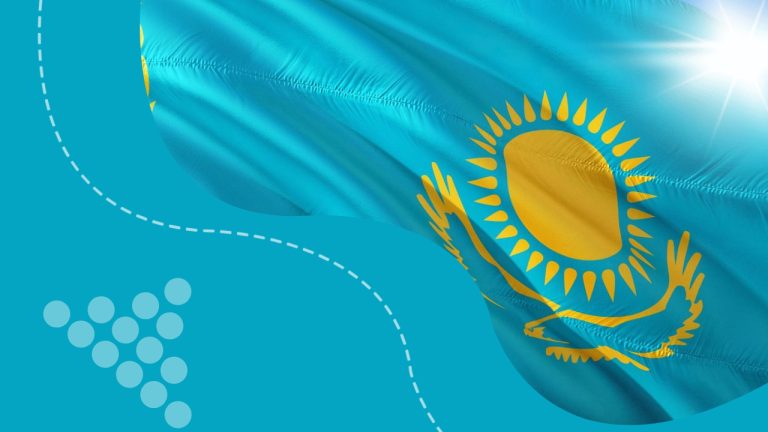
    President Kassym-Jomart Tokayev of Kazakhstan views the extraction of critical raw materials as a promising area for cooperation, as reported by the state leader’s press service.

    “Rare earth metals have become a crucial component for a wide range of technologies. They are essential for achieving net-zero emissions and are vital in strategic sectors such as industry, digital technologies, space, and defense. We continue to work with international partners on the most effective ways to develop our large deposits of uranium, lithium, titanium, and other rare earth elements,” quoted the press service Tokayev’s remarks on Thursday at the plenary session of the Boao Asian Forum (BAF).

    Earlier, it was reported that exploration work on the potential of lithium was planned to commence in three regions of Kazakhstan. In particular, during the partnership forum between the European Union and Kazakhstan in Belgium, Erlan Galiev, Chairman of the Board of JSC “National Geological Survey,” stated that “as part of state geological exploration, work is planned to begin on studying the potential of lithium in three regions of Kazakhstan.”

    “If indigenous lithium deposits are projected in the eastern and southeastern parts, then the mineralized brines of the Aral sedimentary basin, according to preliminary data, are very favorable for lithium. Its geological conditions are similar to the Salar de Atacama salt flat in Chile, which holds about 30% of the world’s lithium reserves,” Galiev said.

    According to the Chairman of the Board, as of 2023, six deposits where lithium may be present are listed on the state balance sheet in Kazakhstan: Jubilee, Verkhne-Baimurzinskoye, Bakenoye, Akhmetkino, Medvedka, and Akhmirovskoye.

    “Significant lithium and REM (rare earth metals) reserves are concentrated in the tailings and ‘tail sand’ of beneficiation plants and deposits in central and southern Kazakhstan, as well as rare metal deposits in eastern Kazakhstan,” he said.

    Galiev assured that JSC “National Geological Survey” is ready to partner with foreign companies and invited interested parties to familiarize themselves with the projects, promising to take all necessary measures to ensure favorable conditions for investors.

    Later, it became known that German companies Knauf Gruppe, GP Gunter Papenburg AG, Roxtec, and the German Lithium Institute (ITEL) formed a consortium for the development and production of lithium, using Kazakhstan’s deposits as a basis.

  • Uzbekistan Explores Collaboration with China for Black Shale Uranium Mining

    Uzbekistan Explores Collaboration with China for Black Shale Uranium Mining

    Uzbekistan is considering collaboration with China Nuclear Uranium Co., as reported by Navoiyuran’s press service, to develop black shale uranium mines. Rustam Ergashev, head of the investment projects department at Navoiyuran, underscores the increasing significance of atomic energy, which currently fulfills 11% of global electricity demand.

    “This figure reaches 70% in France, 50% in Hungary, and 20% in the USA,” notes Ergashev. Nations like China, India, and countries across the Middle East, Africa, and South America are expanding their nuclear power programs in response to this trend.

    For Navoiyuran, a company focused solely on exports, this presents new opportunities for collaboration in the nuclear raw materials market. The visit of a delegation from China Nuclear Uranium Co. (CNUC), a subsidiary of the China National Nuclear Corporation (CNNC), signals a significant step toward enhancing collaboration in this field.

    “China Nuclear Uranium Co. is a prominent player in China’s nuclear energy sector, involved in uranium exploration, mining, and processing,” explains Ergashev. The company operates uranium mines domestically and engages in joint ventures in countries like Namibia and Kazakhstan.

    During the visit led by Yang Runsheng, the company’s chief engineer, experts from China Nuclear Uranium Co. explored black shale uranium mining fields in Uzbekistan, visiting the “Ma’danli” and “Koscheka” fields to study mining operations and technological samples for uranium and rare element extraction from ore compositions.

    The meeting between Chinese experts and Navoiyuran’s General Director, J. Fayzullaev, focused on developing technologies for black shale uranium mining and exploring prospects for future cooperation. Collaboration between Uzbekistan and China holds promise for advancing the nuclear energy sector in both countries.

    In July 2023, President Shavkat Mirziyoyev endorsed initiatives to boost uranium mining and processing in Uzbekistan, aiming to double production by 2030. In November 2023, Navoiyuran entered a strategic cooperation memorandum with China National Nuclear Corporation (CNNC) in the uranium sector.

    Since 2016, Uzbekistan has consistently held the position of the fifth-largest uranium producer worldwide, with uranium reserves exceeding 100,000 tons. The Navoi Mining and Metallurgical Combine (NMMC), Uzbekistan’s primary uranium mining company, predominantly exports uranium products, constituting 99.5% of its export portfolio.

    French President Macron’s visit to Uzbekistan in November 2023 signals France’s strategic interest in Central Asia and Europe, aiming to diversify energy sources and reduce dependence on China for critical minerals.

  • Estonia Joins Minerals Security Partnership to Enhance Supply Chain Resilience

    Estonia Joins Minerals Security Partnership to Enhance Supply Chain Resilience

    Estonia has recently announced its participation in the Minerals Security Partnership (MSP), an initiative led by the United States aimed at bolstering the security of critical raw materials. This move is part of Estonia’s strategy to expand its network and attract new industries to the country in the coming years.

    The Ministry of Foreign Affairs underscored the significance of joining the MSP, emphasizing the importance of international cooperation in securing the supply of critical raw materials. With the presence of Europe’s largest rare earth elements processing plant in Estonia, membership in the MSP is seen as pivotal for the development of this sector.

    Jüri Seilenthal, the Director General of the Department for External Economic Policy and International Economic Organisations at the Ministry of Foreign Affairs, stressed the need for Estonia to reduce reliance on external sources, especially in the face of global conflicts. He stated that participation in the MSP is aligned with Estonia’s goal of ensuring access to critical raw materials.

    Ene Jürjens, the Director General of the Natural Resources Department at the Climate Ministry, highlighted Estonia’s expertise in processing rare earth elements, positioning the country uniquely in the global supply chain.