Tag: industrial cooperation

  • UK-Kazakhstan Strategic Partnership: A New Era of Economic Cooperation

    UK-Kazakhstan Strategic Partnership: A New Era of Economic Cooperation

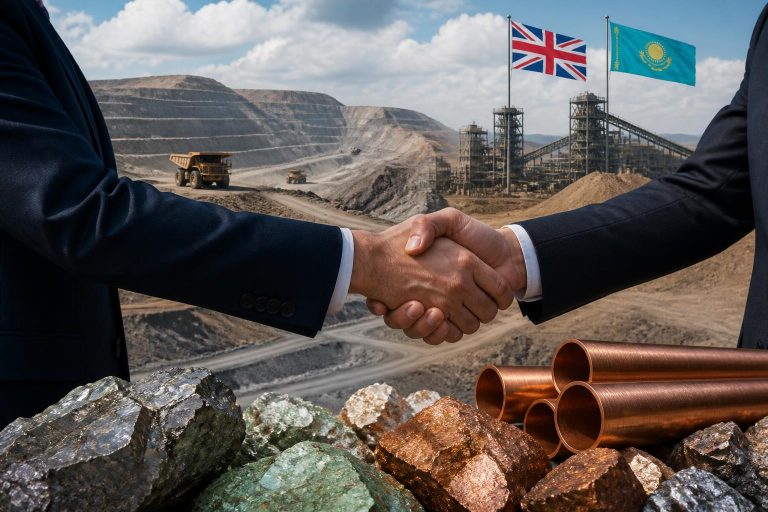
    The recent entry into force of the Strategic Partnership and Cooperation Agreement (SPCA) between the United Kingdom and Kazakhstan marks a significant evolution in their bilateral relationship. This agreement, which was formalised in July 2026, is not merely a diplomatic formality but rather a strategic framework designed to enhance collaboration across various sectors, including critical minerals, energy, education, and technology. British Ambassador to Kazakhstan, Sally Axworthy, emphasised that the SPCA is a ‘signal of intent’ that positions the UK as a proactive partner ready to engage in meaningful investments and initiatives in Kazakhstan.

    Kazakhstan’s rich mineral resources and its growing role in Eurasian connectivity make it a focal point in the global race for critical minerals. The SPCA aims to transition the dialogue from mere resource extraction to value creation, highlighting the importance of processing and technological advancement. Recent projects, such as a $107 million agreement for rhenium recycling, illustrate this shift towards industrial cooperation, where both countries can leverage their strengths to create higher-value products rather than simply exporting raw materials.

    Moreover, the partnership extends beyond economic dimensions, with education playing a crucial role in fostering long-term ties. The Bolashak Scholarship programme has facilitated the education of thousands of Kazakh students in the UK, and British universities are increasingly establishing campuses in Kazakhstan. This educational exchange not only builds human capital but also aligns with the broader economic strategy of enhancing skills and technology transfer. As both nations look to solidify their partnership, the SPCA could serve as a pivotal foundation for a more mature and resilient economic relationship, contingent on the successful implementation of collaborative projects and initiatives.


  • Uzbekistan–Turkey Business Forum: A Key Opportunity for MINEX Forum Partners

    Uzbekistan–Turkey Business Forum: A Key Opportunity for MINEX Forum Partners

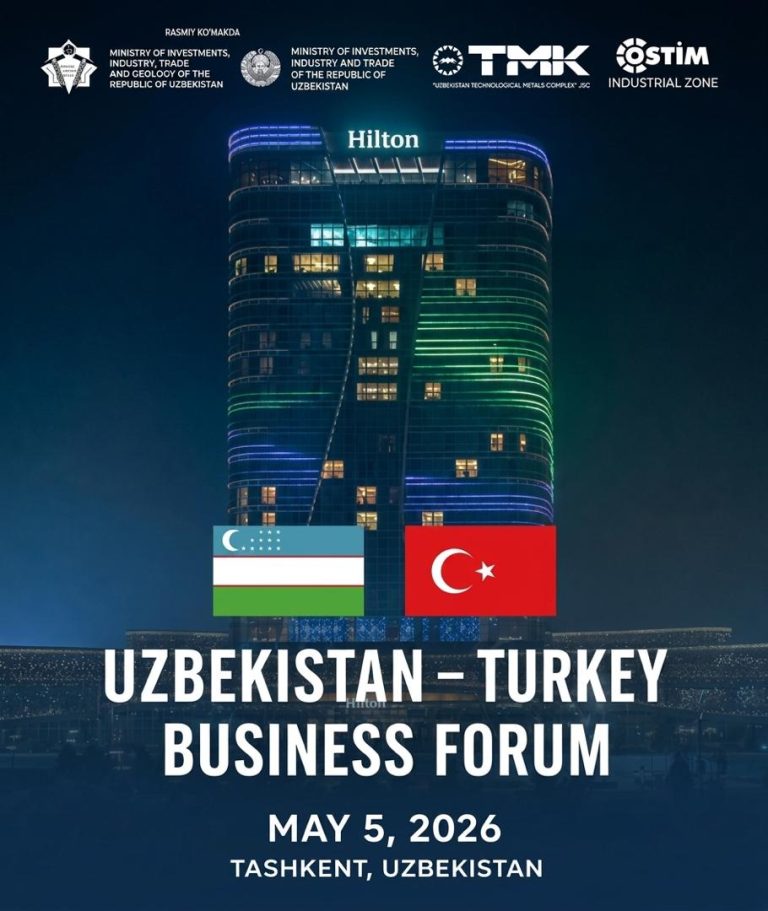
    The MINEX Forum team is delighted to participate in the upcoming Uzbekistan–Turkey Business Forum on 5 May at the Hilton Hotel. This event serves as a vital precursor to our broader regional discussions, focusing on concrete industrial proposals and joint investment ventures.

    The forum is a collaborative effort between OSTIM, the Ministry of Mining Industry and Geology of Uzbekistan, and TMK. It offers a deep dive into Uzbekistan’s ambitious industrial roadmap, specifically focusing on critical minerals and deep processing.

    Key highlights include presentations on:

    • The R&D Park for critical minerals.

    • Technopark initiatives for high-value metal processing.

    • Graphtech’s latest mining developments.

    Our representatives will be on the ground to discuss how these initiatives align with the broader goals of value creation and regional connectivity that we champion at MINEX. We invite our colleagues and partners to join us for a day of high-level networking and strategic planning.

  • TMK Expands Industrial Cooperation with Kazakhstan’s Ulba Metallurgical Plant

    TMK Expands Industrial Cooperation with Kazakhstan’s Ulba Metallurgical Plant

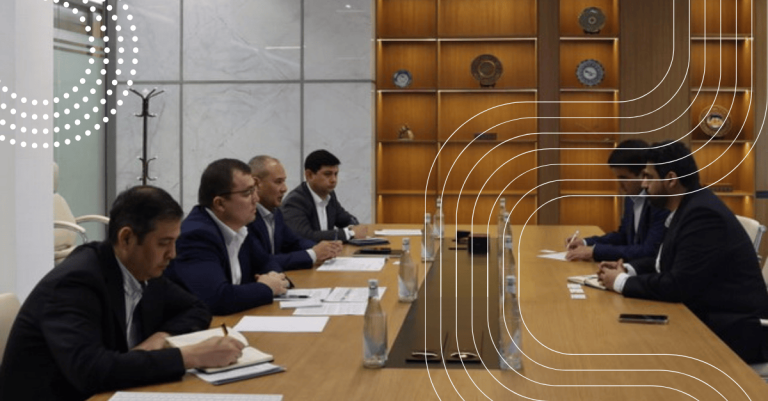
    TMK has held high-level talks with representatives of Ulba Metallurgical Plant to expand industrial and technological cooperation in Central Asia. The meeting, which took place at TMK’s head office, focused on strengthening bilateral partnerships and exploring opportunities for joint projects in both Uzbekistan and Kazakhstan.

    Discussions centred on advancing deeper processing of critical raw materials, increasing production of high value-added products, and enhancing the integration of regional industrial value chains. Both sides emphasized the strategic importance of developing downstream capabilities in critical minerals to improve competitiveness and reinforce regional supply chain resilience.

    Ulba Metallurgical Plant is a key industrial enterprise in Kazakhstan, specializing in the production of uranium, beryllium, tantalum and niobium, as well as finished products based on these metals. The potential collaboration is expected to contribute to broader industrial development across Central Asia.

  • Kazakhstan Embassy in Czech Republic deepens industrial cooperation with leading Czech companies

    Kazakhstan Embassy in Czech Republic deepens industrial cooperation with leading Czech companies

    Kazakhstan is stepping up efforts to strengthen industrial cooperation with the Czech Republic as part of its broader economic diplomacy agenda aimed at attracting foreign investment and advanced technologies.

    According to DKNews.kz, Kazakhstan’s Ambassador to the Czech Republic, Kairat Abdrakhmanov, has held a series of meetings with representatives of leading Czech industrial companies during his first official engagements with the country’s business community. The discussions involved major manufacturers including vehicle and machinery producers TATRA and ZETOR, mining equipment supplier FERRIT, industrial engineering firm ZVVZ Engineering, and glass industry equipment producer SKLOSTROJ.

    Czech business leaders expressed satisfaction with their existing partnerships in Kazakhstan and confirmed their interest in expanding cooperation. They were briefed on recent reforms aimed at improving Kazakhstan’s investment climate, introduced under the country’s ongoing modernization program led by President Kassym-Jomart Tokayev.

    The Czech side highlighted Kazakhstan’s continued attractiveness as a long-term industrial market, particularly for projects involving manufacturing, engineering, and technology transfer.

    Talks also focused on opportunities to localize production and establish joint manufacturing facilities in various regions of Kazakhstan. Kazakh diplomats were presented with updates on current projects and potential areas for deeper collaboration, with particular emphasis on advanced industrial and mining technologies designed to improve efficiency, operational reliability, and workplace safety.

    Following the meetings, the parties agreed to organize site visits to Czech production facilities, begin preparations for joint business forums, and maintain regular information exchanges on prospective investment and cooperation opportunities.

    Observers note that these engagements reinforce Kazakhstan–Czech industrial relations and lay the groundwork for new joint initiatives across manufacturing, technology, and investment sectors.

  • Tajikistan and South Korea to Create Joint Tungsten Supply Chain

    Tajikistan and South Korea to Create Joint Tungsten Supply Chain

    A memorandum of understanding (MoU) was signed in Dushanbe between Tajikistan’s Ministry of Industry and New Technologies and South Korean company GB Innovation (GBI) to establish a joint tungsten supply chain — a strategically important mineral for high-tech industries. The document provides for the joint development of the Maikhura tungsten deposit and the creation of a full production cycle, from raw material extraction to finished products. The signing took place during the Dushanbe Investment Forum, in a ceremony overseen by Tajik President Emomali Rahmon.

    Minister of Industry and New Technologies Sherali Kabir stated that the Maikhura project would become a model of mutually beneficial cooperation, promoting Tajikistan’s industrialization and strengthening economic ties with South Korea. Under the agreement, GB Innovation and the state-owned company TALCO plan to reach an annual output of 4,000 tons of tungsten concentrate within three to four years. The concentrate will be processed locally into tungsten oxide and tungsten carbide for use in domestic industries.

    Tungsten is a key component in high-tech sectors such as semiconductor production, defense, rechargeable batteries, automotive manufacturing, and aerospace. Establishing a stable tungsten supply chain is of strategic importance to South Korea, which aims to secure self-sufficiency in this critical mineral. The Maikhura mine stands out for its high tungsten content—1.0%, five times the global average of 0.2%. Combined with production from South Korea’s Uljin Ssangjeon mine, the total output will reach about 5,000 tons per year, nearly covering South Korea’s annual domestic demand of 3,400 tons.

    GB Innovation President Kim Young-woo emphasized the importance of stable supply chains for strategic minerals and expressed readiness to expand cooperation to other resources, including rare earth elements and lithium. Minister Kabir highlighted that the Maikhura project represents a key step toward Tajikistan’s industrialization and the establishment of sustainable supply chains for strategic resources.

    Investment Commissioner Rahim Joda announced that the government would provide over 200 investment and tax incentives to ensure the project’s success. The initiative aims to build a full-cycle local value chain—from mining to processing and production—within Central Asia, enhancing competitiveness and ensuring supply stability in the global market.

    Tajikistan currently accounts for around 20% of global antimony production and possesses significant reserves of rare earth elements and lithium, solidifying its role as an emerging resource hub in Central Asia.

  • Uzbekistan and Saudi Arabia Explore Deeper Cooperation in Mining Sector Reforms

    Uzbekistan and Saudi Arabia Explore Deeper Cooperation in Mining Sector Reforms

    Officials from Uzbekistan and Saudi Arabia held high-level talks this week to discuss expanding cooperation in the mining sector, with a focus on reform, localization, and industrial collaboration.

    On 23 April, Uzbekistan’s Ministry of Mining Industry and Geology hosted a delegation led by Nasser Albakran, Director at Saudi Arabia’s Ministry of Energy. The meeting in Tashkent was attended by First Deputy Minister Oybek Nasritdinkhodjaev, Deputy Minister Ulugbek Yusupov, and other Uzbek mining officials, including Director Mirabdulla Ilkhamov of the State Scientific-Practical Center for Localization and Industrial Cooperation Development.

    The discussions centered on Uzbekistan’s ongoing reforms in mining and geology, and the country’s aim to enhance local content in investment projects. Both sides expressed interest in strengthening bilateral ties and sharing experience in industrial localization and cooperation.

    The talks underscore growing regional interest in Uzbekistan’s mineral wealth and its strategy to attract foreign partners for technology transfer, sustainable development, and local industry growth.

  • Meeting of Kanat Shralapayev with the leadership of the Kazakhstan-American Business Council at the US Chamber of Commerce

    Meeting of Kanat Shralapayev with the leadership of the Kazakhstan-American Business Council at the US Chamber of Commerce

    As part of strengthening the multifaceted partnership between Kazakhstan and the United States, Minister of Industry and Infrastructure Development of the Republic of Kazakhstan Kanat Shralapayev participated in a roundtable with members of the Kazakhstan-American Business Council (USKZBC) and representatives of American companies. The event took place at the US Chamber of Commerce, where key representatives of the business community gathered, such as Bechtel, BHP, Brownstein Hyatt Farber Schreck, Chevron, Morgan Stanley, Turkish Airlines, the U.S. Chamber of Commerce, as well as USKZBC.

    The US Chamber of Commerce, the leading business association in the country, represents the interests of over 3 million companies, advocating for the American business community at national and international levels. Acting within the framework of the Chamber of Commerce, USKZBC promotes the development of trade and investment relations between Kazakhstan and the United States, opening up new opportunities for both countries.

    During the roundtable, Kanat Shralapayev emphasized the importance of the longstanding and successful partnership between Kazakhstan and the United States, focusing on the strategic potential of cooperation in the field of rare earth metals extraction, as well as industrial cooperation development. The Minister highlighted key areas for investment and technological cooperation, emphasizing the significance of creating a cluster in Kazakhstan for battery raw materials production, including nickel, cobalt, manganese, and lithium. Particularly noting the key reforms in the field of subsoil use aimed at attracting investments, the Minister invited US mining companies to participate in upcoming auctions for subsoil use and emphasized the key role of the Investment Council under the chairmanship of the First Deputy Prime Minister of the Republic of Kazakhstan as a guarantee for project support.

    This event opened a new chapter in the history of bilateral relations, confirming both sides’ readiness for deep and fruitful cooperation. The roundtable served as a vivid testimony to mutual interest in further expanding industrial and trade ties, contributing to the strengthening of economic partnership between Kazakhstan and the United States.