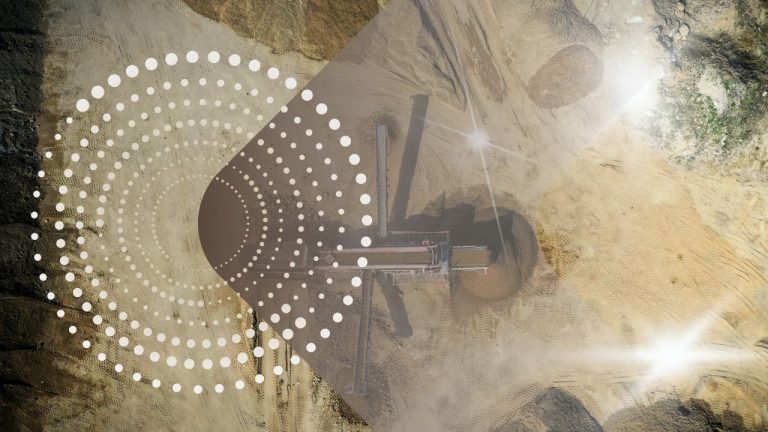
Kazakhstani geological exploration company Aurora Minerals has disclosed that illegal artisanal miners are actively extracting gold from its Altyn project in northern Pribalkhashe — a problem the company’s chief geologist Ulan Nurkhannuly colourfully framed as “pirates” operating within their licence area, in a presentation at the Geoscience and Exploration Central Asia forum in Astana.
Nurkhannuly told the forum’s session on junior company challenges that the Altyn project sits on the boundary of a gold ore field, making it geologically prospective for new discoveries. The project currently covers 80 square kilometres, though Aurora Minerals has identified scope to expand the licence area to between 355 and 360 square kilometres, with the application process already underway. The company has named its priority exploration targets within the project El Dorado, Captain Morgan and Port Royal — a nod, Nurkhannuly explained, to the pirate theme necessitated by the uninvited activity on site. Illegal miners are reportedly extracting both hard rock and alluvial gold at three separate locations within the licence area, effectively running their own informal junior mining operation. They have even installed a water extraction borehole — infrastructure that may prove useful to Aurora given existing water supply challenges in the region.
A sample taken by Aurora’s team at one of the illegal mining sites returned an exceptional grade of 500 grams of gold per tonne. Historic data generated in the 1980s suggests the broader project area may contain approximately 360,000 ounces, or over 11 tonnes of gold. Further study has identified additional zones warranting exploration.
Beyond Altyn, Aurora Minerals is pursuing what could prove to be a significantly larger opportunity at its Teniz project, located on the tripoint border of Akmola, Kostanai and Karaganda regions. The company believes the area represents an extension of the Chu-Sarysu sedimentary basin — a geological setting comparable to the giant Zhezkazgan copper deposit. Surface copper showings are sparse, consistent with that analogy. The United States Geological Survey has forecast that the Teniz basin could host up to nine copper deposits with combined resources of as much as nine million tonnes of copper. On the basis of historical data and the US geological forecast, Aurora has identified priority targets across the region and secured licences covering up to 2,000 square kilometres, with the potential to add three further licences and expand the surveyed area to 4,500 square kilometres. Licensing negotiations with state authorities took considerable time due to the presence of a Russian rocket impact zone within the Teniz depression.
Authorities in Kosovo have arrested six individuals during an operation targeting illegal coal mining activities in the Mitrovica region.
The action was carried out by the Basic Prosecution Office in Mitrovica in coordination with Kosovo Police across three locations in the municipality of Vushtrri. The operation focused on suspected illegal mining activities in the villages of Bivolak, Zhilivodë and Stroc.
According to prosecutors, the six suspects were detained on suspicion of committing criminal offenses including “Pollution, degradation or destruction of the environment” and “Causing general danger.” The individuals will be interviewed by police as part of the ongoing investigation.
During the operation, authorities also seized equipment believed to have been used in illegal coal extraction. Confiscated machinery included three excavators, six trucks and a tractor.
The Basic Prosecution Office in Mitrovica said the action reflects ongoing efforts by law enforcement to combat environmental crimes and protect natural resources.
Officials emphasised that institutions remain committed to prosecuting activities that damage the environment or threaten public safety.
Kazakh authorities have uncovered an illegal gold mining operation in the Sozak district of the Turkestan Region, where a group of individuals was found to be unlawfully exploiting gold-bearing sites.
According to investigators, 12 people carried out mining activities without the required permits, in violation of environmental regulations and industrial safety standards. As a result of the illegal operations, the group is believed to have extracted around 451 grams of gold.
A pre-trial investigation has been launched under Parts 1 and 3 of Article 295-1 of the Criminal Code of the Republic of Kazakhstan, which covers offences related to the illegal extraction of mineral resources. Law enforcement agencies have conducted the necessary investigative procedures, and five of the suspects have been placed under house arrest as a preventive measure.
Prosecutors stressed that unlawful mining poses a serious threat to the environment, undermines the country’s economic security, and carries criminal liability. Authorities said enforcement efforts will continue to deter illegal exploitation of mineral resources.
Reports of arrests of so-called illegal gold prospectors have become more frequent as gold prices hover near record highs. Despite legislative changes intended to legalize artisanal mining, many prospectors continue to operate outside the formal system. In an interview with inbusiness.kz, veteran geologist Bolat Kabaziev outlined why legalization has proven far more difficult in practice than on paper.
According to Kabaziev, the 2018 Subsoil Code was expected to unlock large-scale legal artisanal mining on designated plots approved by regional authorities and the Ministry of Industry. In reality, progress has been slow. He said artisanal gold mining remains constrained by environmental and water protection rules, as well as technical limits on production volumes, mining depth and allowable equipment.
While the law formally introduced artisanal mining licences, Kabaziev noted that bureaucracy remains a major barrier. Lengthy approvals at regional administrations have made the process complex and time-consuming. “On paper it was legalized, but in practice obtaining a licence has become difficult and slow,” he said.
Kabaziev also addressed the blurred line between informal prospectors and outright illegal miners. While some prospectors argue that subsoil resources belong to the people, he stressed that unauthorized mining is still a criminal offense under existing laws on subsoil use and precious metals. A deeper issue, he said, is the lack of clear oversight mechanisms once licences are issued. For example, the law caps artisanal gold production at 50 kg per year, but there is no effective system to monitor actual output or the movement of mined gold.
Additional obstacles include long approval timelines, multiple administrative clearances, technical constraints and, in some cases, resistance from local communities. Environmental and water permits are particularly hard to obtain, especially when gold-bearing placers are located in riverbeds, where approvals are often impossible.
Kabaziev cautioned that artisanal placer gold mining is also a high-risk business. Even on officially designated plots, prospectors must study historical geological data and consult experts before investing. “Statistics show that only a few actually earn money, but this is rarely discussed,” he said.
He also raised concerns about weak reporting requirements. Despite dozens of artisanal licences being issued in recent years, little gold is officially surrendered or recorded. Kabaziev believes most gold is sold through informal buyers, forming a shadow market, with uncertain downstream destinations. While estimates suggest illegal artisanal mining could amount to 10–15 tonnes of gold per year, he said much of this gold likely remains within Kazakhstan, entering jewellery production or, in some cases, refineries.
With gold prices recently exceeding $5,000 per ounce, Kabaziev acknowledged a renewed “gold rush” mentality. However, he said the phenomenon remains poorly studied. He argued that true legalization would require open dialogue between authorities, law enforcement, industry experts and the prospectors themselves to address regulatory gaps, environmental concerns and market transparency.
Authorities in one of Kazakhstan’s regions have uncovered widespread illegal extraction of mineral resources following satellite monitoring by the national space operator Қазақстан Ғарыш сапары, according to the regional environmental prosecutor’s office.
Remote sensing data identified 53 zones of suspected unauthorized subsoil use. Subsequent inspections confirmed violations, leading to the opening of two criminal cases for illegal mining. Investigations resulted in criminal liability for those responsible. Environmental damage amounting to 51 million tenge has already been recovered, while an additional 136 million tenge remains subject to collection.
The prosecutor’s office noted that under Kazakhstan’s Land Code, the detection and prevention of illegal extraction of minerals falls under the responsibility of city and district authorities. However, checks revealed that in several cases local administrations failed to act. Following a formal submission by prosecutors, regional authorities instructed officials to strengthen oversight of subsoil use, and a number of civil servants were disciplined.
Kazakhstan has used remote monitoring to detect illegal mining since 2021. Data from satellite surveillance is transmitted to the General Prosecutor’s Office. In November 2025, Deputy Minister of Digital Development and Artificial Intelligence Малик Олжабеков said that in 2025 alone, space-based monitoring of 46 major settlements identified 1,845 sites of shadow subsoil use, including 72 newly discovered areas, 109 previously identified sites with changes in size, and 1,664 locations with no change.
Kazakhstan’s Ministry of Internal Affairs (MIA) and National Security Committee (KNB), coordinated by the General Prosecutor’s Office, have shut down the operations of five companies involved in illegal mining and processing of gold-bearing materials in the Abai, Zhetysu, East Kazakhstan, and Turkestan regions, according to inbusiness.kz citing Polisia.kz.
Authorities found that the companies held licenses only for geological exploration but were in fact conducting large-scale illegal extraction of gold-bearing ore using specialized equipment and machinery. During the raids, over 6,700 tons of gold-bearing ore, 300 tons of ore slurry, 120 tons of ammonium nitrate, explosives, and detonators were seized. In addition, 45 pieces of specialized equipment were confiscated on-site.
A total of 62 individuals, including directors and founders of several limited liability partnerships (LLPs), were detained. Five criminal cases have been registered related to the illegal circulation of precious metals and raw materials containing precious metals. The damage to the state has been assessed as particularly large.
Kuanlyk Alpis, a representative of the MIA’s Department for Combating Organized Crime, emphasized the importance of the operation in protecting the country’s natural resources and fighting organized crime in the precious metals sector.
Authorities in Kostanay Region’s Zhitikara District have halted an illegal precious metal mining operation on agricultural land, according to inbusiness.kz, citing Kazakhstan’s Ministry of Agriculture.
Investigations revealed that a local LLP had acquired the land rights under the designation “for agricultural production.” However, instead of farming, the company illegally extracted precious metals by washing soil.
Regulatory and law enforcement agencies discovered prospectors, along with specialized machinery, metal detectors, and other mining tools, actively engaged in the unauthorized extraction of minerals.
Additionally, authorities recorded the destruction of fertile soil layers. As a result, the Department for Land Resources Management of Kostanay Region imposed a fine of 2.6 million tenge on the violators. The company has also been ordered to restore the damaged soil caused by its illegal activities.
Ferrexpo’s shares experienced a sharp decline, falling by as much as 51%, after the company announced that its Ukrainian subsidiary, Ferrexpo Poltava Mining (FPM), is facing a 157 billion Ukrainian hryvnias ($3.8 billion) civil claim in Ukraine. The claim was made due to allegations of illegal mining and the sale of subsoil, which has purportedly caused environmental damage.
Ferrexpo, a Swiss-based iron ore producer listed in London, faced its most significant intraday drop on record, before recovering some losses to 23%. Previously, in mid-January, Ferrexpo responded to allegations made by the Prosecutor General’s Office of Ukraine against four senior managers of FPM, which concerned suspicions of illegal mining and sale of waste products.
According to Ferrexpo, these minerals cannot be classified as a separate mineral resource. Furthermore, the company has stated that waste products have been sold for several years, and all activities were consistently inspected by the state. FPM plans to rigorously defend itself in the Ukrainian courts.
Ferrexpo’s Poltava operation, their largest iron ore mine, is located in central Ukraine. Prior to the Russian invasion of Ukraine in 2022, Ferrexpo PLC was the world’s third-largest exporter of iron ore pellets. This is not the first time Ferrexpo has faced controversy related to its Ukrainian operations, further highlighting the delicate nature of the situation and the potential challenges to overcome.
The US Treasury Department has announced sanctions against GeoProMining for its involvement in illegal gold mining operations in the Kalbajar region of Azerbaijan during the Armenian occupation, according to a statement by the department. The mining company, which exploited mineral resources in Azerbaijani territories occupied by Armenia, has now faced repercussions under US anti-Russian sanctions.
During the occupation, Armenian forces extensively exploited mineral deposits in Azerbaijani territories, including Karabakh and Eastern Zangezur. Notably, the largest gold mining zone in the region, situated in Kalbajar, has been under the operation of Russian company GPM Gold, a subsidiary of GeoProMining, since 2007.
Despite its license permitting mining activities solely in the Armenian part of the mine, evidence suggests that operations extended into occupied Kalbajar, corroborated by satellite imagery. Furthermore, during the Second Karabakh War, GeoProMining reportedly bolstered its defenses in the mine by amassing weapons and deploying mercenaries to confront the Azerbaijani military.
Additionally, Vartan Sirmakes, a Swiss entrepreneur and jeweler of Armenian descent, allegedly played a role in the exploitation of the Kalbajar mine. Gold extracted from Kalbajar and Zangilan was purportedly auctioned in Switzerland and stored in Swiss banks, implicating Sirmakes in the illicit trade.
China’s massive metals industry can only maintain its size using imported minerals, frequently from limited suppliers. As part of its Belt and Road Initiative, the country has actively invested in mining assets in Africa and Latin America, and is beginning to engage in overseas refining and downstream facilities.
Many countries have welcomed this with open arms. Africa’s mining and mineral extraction industries, especially in countries like Nigeria, Namibia and Ghana, have attracted billions of dollars from China, one of the continent’s biggest participants. The vast reserves of cobalt, lithium, copper, and other minerals essential to modern technology production have attracted investment and operations in several African countries.
But recently, some African countries and China have reportedly experienced tensions in the mining industry. China has been accused of operating illegal mining activities and funding militant groups, disrupting the otherwise stable bond built on mining investment.
Is China funding Nigerian militant groups?
British newspaper The Times reported in April that some Chinese mining firms had funded Nigerian militant groups to get access to the country’s mineral reserves. This raises the prospect of China indirectly funding terror in Nigeria, causing societal disruption for its own gain.
According to The Times, Chinese firms working in certain regions of Nigeria where crime incidents are common have been “striking security deals with insurgents”. Attacks against Chinese citizens, estimated to number between 100,000 and 200,000 in Nigeria, have been widespread as a result of this.
Researchers discovered that interactions with militants are so strong in regions of Zamfara that some miners operate as spies for Chinese businesses that control gold-mining sites across Nigeria, it said.
The Chinese Embassy in Nigeria objected to The Times’ report at the time, calling it “unverified, unclear and unproven information”. The statement also noted the bilateral cooperation between China and Nigeria, which has brought “tangible” benefits to both countries. Nigeria has banned the export of raw materials, aiming to keep processing industries within the country, and on the surface, China seems happy to comply.
“The Chinese government was not, and would never be, involved in any form of funding terrorism. The allegations in the report were irresponsible and unethical, and the intention of the report is seriously questioned,” the Chinese government said in a statement.
Arrests for illegal mining activities in Nigeria
In September, ahead of Nigerian President Bola Tinubu’s visit to India for the G20 summit, Nigeria’s Foreign Affairs Ministry told the Chinese Embassy in Abuja that it would take action against companies if they did not obey the law.
People familiar with the matter said illegal Chinese companies were operating in some Nigerian states, including Niger, Zamfara and Edo, India’s Economic Times (ET)reported.
In July, Nigeria’s Economic and Financial Crimes Commission (EFCC) arrested 13 Chinese workers. Authorities alleged that the miners from W Mining Global Service were involved in illegal mining activities in the Kwara state, in the western part of the country. The suspects were arrested for illegal mining and non-payment of royalties to the Federal Government as required by law, according to the EFCC.
The EFCC discovered that the firm had utilised illegally mined granite to manufacture marble for local sale in Nigeria. The findings also showed that several suspects in the company did not have a work permit and entered Nigeria on a visitor’s visa.
In the span of eight months, the EFCC’s Ilorin Zonal Command arrested 80 unlicensed operators and impounded 24 truckloads of assorted minerals.
Chinese licenses revoked in Namibia
Another Chinese company, Sinuo Xiyan Nigeria, has been pursued by the EFCC and political powers. On 10 September 2022, the EFCC’s Ilorin Zonal Command arrested a Chinese national, Dang Deng, managing director of lithium miner Sinuo Xinyang Nigeria. He was charged with possessing 25 tonnes of assorted crude minerals and convicted on 19 October.
Namibia’s Minister of Mines, Tom Alweendo, revoked the company’s mining licence in April this year and ordered it to cease operations by the end of May. The minister alleged that the company used an improper application process to get the permit.
However, Xinfeng appealed the minister’s claims in the Namibian High Court, claiming Alweendo lacked the authority to reverse his prior decision to grant the mining licence. On 27 July, a judge ruled that this was the case.
In June, Namibia prohibited the export of raw lithium and other vital minerals to boost domestic processing and capitalise on the rising demand for metals used in clean energy technology worldwide. Four months later, the government ordered police to ban Xinfeng Investments from shipping or exporting lithium ore, accusing the Chinese miner of ignoring this restriction.
Nigerian Executive trade official Sikongo Haihambo at an event hosted by the Chinese Embassy earlier this year. Credit: Chinese Embassy in Namibia.
In a letter seen by Reuters, Namibia’s Mining Commissioner asked the country’s police chief to stop any trucks bringing raw lithium ore from Xinfeng’s Kohero mine, roughly 250km northwest of Windhoek, Namibia.
However, Namibian officials remain happy to promote the role of China in diplomatic relations. In a China-Namibia business networking event hosted by the Chinese Embassy, the country’s Executive Director of the Ministry of Industrialization and Trade spoke highly of China and its role in creating jobs for people in Namibia, according to the Embassy’s statement.
Pushing against exploitation
In addition to mining issues in Nigeria and Namibia, the Democratic Republic of Congo has banned six Chinese businesses operating in South Kivu for illegally extracting gold and other minerals. Before this, according to the ET, 33 Chinese nationals were detained in Ghana in 2019 for engaging in illegal gold mining activities.
Tom Sheehy, a distinguished fellow at the US Institute of Peace’s Africa Center, described the situation: “This isn’t just an issue of economic development, not just an issue of geopolitical competition. Sadly, the history of Africa has all too many cases of natural resources being exploited and fueling conflict,” he said.
In July this year, the Nigerian Ministry of Mines and Steel Development pushed for the cooperation of the federal and state governments to eliminate illegal mining activities.
Nigerian Minister of Solid Minerals Development Dele Alake claimed that the tenacity of President Tinubu’s administration will end the risk of illegal mining, which damages the country and costs it significant income.
“Africa has historically suffered exploitation by different global powers. China is only the newest comer to this ‘party’. What should bother us is the role African leaders play in the exploitation of Africans. If African leaders lead in the interest of their people rather than the selfish interest of the leaders, then Africa stands a chance to redefine its engagement with the rest of the world.”
“So long as the focus remains on who is the present or next exploiter, we perpetuate the narrative of victimhood, which serves the interest of bad leaders in Africa,” Leonard Otuonye Ugbajah, executive director at the Centre for Trade and Business Environment Advocacy, told the ET.
Ultimately, many African countries have taken measures to tackle illegal mining and exploitation, but China’s response remains uncertain.