Tag: Greenland

  • Energy Transition Minerals Claims Greenland Expropriated Kvanefjeld Rare Earth Project Through Uranium Ban

    Energy Transition Minerals Claims Greenland Expropriated Kvanefjeld Rare Earth Project Through Uranium Ban

    Energy Transition Minerals (ASX: ETM) has accused Greenland of effectively seizing one of the world’s largest rare earth deposits outside China by blocking development of the Kvanefjeld project and refusing to renew its exploration licence.

    The Australian-listed company has invested approximately $150 million in the project since 2013, advancing it through resource definition, environmental studies, and public consultation before submitting a mining licence application in late 2020. However, Greenland’s coalition government subsequently enacted Act 20, legislation banning projects with uranium concentrations exceeding 100 parts per million, effectively halting Kvanefjeld’s application. Managing director Daniel Mamadou contends the legislation was specifically designed to stop the project after the government campaigned against its development. The dispute has escalated into a legal battle spanning more than three years of arbitration and court proceedings, with the central question being whether Act 20 applies retroactively to Kvanefjeld and whether such application constitutes expropriation. ETM argues that exploration results from 2025 identify rare earth mineralization with uranium levels well below the legal limit in unexplored areas, and proposes separating uranium from rare earth concentrate and permanently returning it underground. Kvanefjeld hosts critical rare earth elements including neodymium, praseodymium, dysprosium, and terbium, essential for permanent magnets used in electric vehicles, wind turbines, and defence technologies.

    ETM previously estimated the project could supply up to 15% of global rare earth production, potentially providing Europe with a significant non-Chinese source of critical minerals. While pursuing Kvanefjeld through legal channels, ETM has diversified by acquiring the Penouta brownfield project in Spain, aiming to restart Europe’s only producing tantalum mine.


  • US Energy Secretary Says Greenland Interest Driven by Security, Not Mining

    US Energy Secretary Says Greenland Interest Driven by Security, Not Mining

    The Trump administration’s primary interest in Greenland is rooted in national security rather than the development of its rare earth or energy resources, US Energy Secretary Chris Wright said at a conference in Paris hosted by the French Institute of International Relations.

    President Donald Trump has repeatedly expressed interest in expanding US influence in Greenland and has explored potential mineral supply agreements as part of a broader strategy to reduce reliance on China for critical raw materials. However, Wright clarified that mineral development is secondary to security considerations, particularly in the context of expanding the US military presence on the Arctic island.

    “We’ve got all sorts of places to mine rare earth metals and produce oil and gas,” Wright said, adding that while resource development might benefit Greenland economically, the United States’ core objective is strategic security.

    Rare earth elements have been central to Washington’s geopolitical strategy, as the US seeks to challenge China’s dominance in the supply of critical minerals used in technologies ranging from smartphones and renewable energy systems to advanced defence applications.

    During the early months of his second term, Trump pursued mineral supply discussions with Greenland and Ukraine. More recently, however, the administration has shifted focus toward downstream processing, widely regarded as the key bottleneck in building alternative supply chains outside China.

    Wright also downplayed the scarcity narrative surrounding rare earth elements, noting that the materials are geographically widespread and that more commercially attractive mining jurisdictions exist elsewhere.

  • EU to Offer US Critical Minerals Partnership to Counter China’s Dominance

    EU to Offer US Critical Minerals Partnership to Counter China’s Dominance

    The European Union is set to offer the United States a critical minerals partnership designed to curb China’s influence over global supply chains, according to people familiar with the matter.

    Brussels is preparing a memorandum of understanding to create a “Strategic Partnership Roadmap” within three months, which would guide joint efforts to source and refine essential materials for modern technologies—ranging from batteries to semiconductors—without heavy reliance on Beijing.

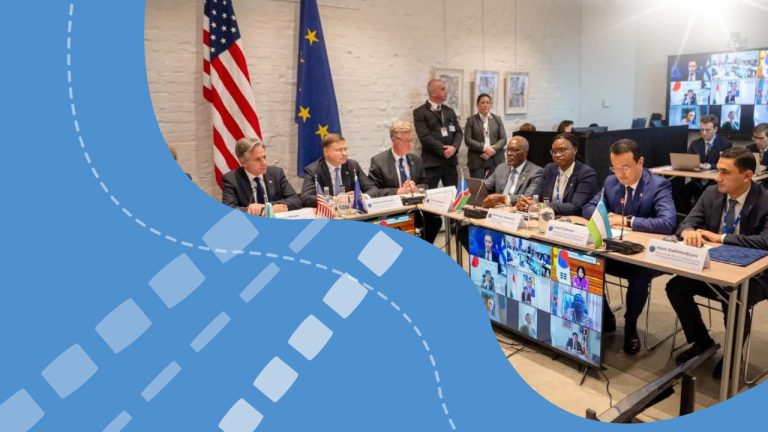
    The proposal includes initiatives such as joint mineral projects, price support mechanisms, and safeguards against market manipulation. It also encourages building reciprocal supply chains between the two economies while maintaining mutual respect for territorial integrity—a pointed reference after tensions rose when U.S. President Donald Trump signaled interest in purchasing Greenland, an autonomous territory of Denmark.

    The renewed cooperation effort comes ahead of a major U.S.-led meeting of foreign ministers and senior officials this week aimed at forming global alliances to reduce Chinese mineral dominance. Washington’s sense of urgency follows Beijing’s export restrictions on rare earth elements last year, temporarily eased under a deal between Trump and Chinese President Xi Jinping.

    Underlining its seriousness, the Trump administration this week launched a $12 billion national critical mineral stockpile. The EU’s draft mirrors this approach, suggesting both sides could coordinate stockpiling and rapid response measures to supply disruptions.

    Key pillars of the EU proposal include cooperation on securing supply chains, developing international premium markets, and sharing information to boost market transparency. It also envisions exemptions from mutual export restrictions, collaboration on innovation and research, and the creation of a joint EU-U.S. response group to manage potential shortages.

    Despite concerns over the pace of negotiations, EU officials called the talks “vital to diversify our supplies away from any single country,” indicating that the transatlantic allies are increasingly aligned in reshaping critical mineral dependencies.

  • Critical Metals shares jump on Tanbreez upgrades and renewed US focus on Greenland

    Critical Metals shares jump on Tanbreez upgrades and renewed US focus on Greenland

    Shares of Critical Metals surged to their highest level in nearly three months after the company announced further upgrades to its flagship Tanbreez rare earth project in southern Greenland, amid renewed geopolitical attention on the Arctic territory from the United States.

    Earlier this week, the Nasdaq-listed company said it will acquire a fully integrated, mobile assay laboratory to support its Tanbreez project, which hosts one of the world’s largest known rare earth deposits. The laboratory, developed by mining solutions provider Bromet, will enable real-time, on-site geochemical analysis of drill core and pilot plant samples, strengthening data collection and accelerating decision-making as the project advances toward pilot-scale operations.

    Critical Metals CEO Tony Sage described the acquisition as a transformative step in moving Tanbreez from exploration into pre-mining development. The company is expected to pay around $1 million for the mobile laboratory. The move follows a recent decision to construct an Arctic-grade storage and pilot facility in Qaqortoq, scheduled for completion by mid-2026, and comes alongside potential logistics improvements linked to the planned opening of a new international airport near the project site.

    The upgrades are part of a modular, turnkey development strategy aimed at fast-tracking Tanbreez into production as early as this year. A preliminary economic assessment released last year outlined an initial production target of approximately 85,000 tonnes of rare earth oxides per year, with potential expansion to 425,000 tonnes annually. The assessment estimated a pre-tax net present value of about $3 billion and an internal rate of return of 180%, based on resources of at least 45 million tonnes within the largely underexplored kakortokite unit.

    Investor interest has also been boosted by rising geopolitical tensions surrounding Greenland. US President Donald Trump reiterated his desire for US control of Greenland this week, citing national security concerns, and senior US, Danish and Greenlandic officials held discussions in Washington on the issue. Analysts view Greenland’s vast untapped mineral resources, including rare earths, as a key driver behind Washington’s intensified interest.

    Following the announcements and geopolitical developments, shares of Critical Metals jumped as much as 35% in New York trading, lifting the company’s market capitalization to around $2.1 billion.

  • Greenland’s Kvanefjeld rare earth project highlights Europe’s late scramble for strategic minerals

    Greenland’s Kvanefjeld rare earth project highlights Europe’s late scramble for strategic minerals

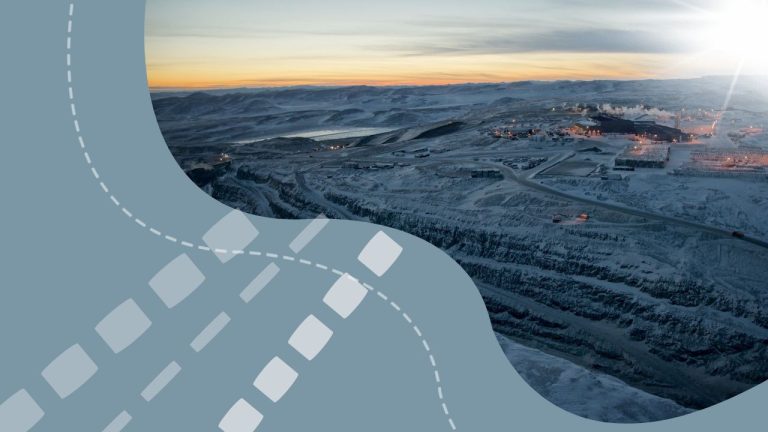
    On Greenland’s southern tip, the Kvanefjeld mining project has become a symbol of both vast opportunity and prolonged paralysis. Beneath its icy terrain lies one of the world’s most significant deposits of neodymium and praseodymium, rare earth elements essential for wind turbines, electric vehicles and advanced military technologies. If developed, Greenland, a semi-autonomous territory within the Kingdom of Denmark, would become the first European source of these critical materials.

    The project is led by Energy Transition Minerals, which has long signaled readiness to move into production. However, progress stalled after the Greenlandic government imposed a ban on uranium mining in 2021, citing environmental and public health concerns. Because rare earths at Kvanefjeld are geologically associated with uranium, the ban effectively froze the project, triggering legal disputes that continue to delay development.

    Former Danish foreign minister Jeppe Kofod, now a strategic adviser to Energy Transition Minerals, said the case illustrates how regulatory uncertainty, geopolitics and high capital requirements can obstruct even strategically vital projects. Despite Greenland holding rare earth resources estimated to cover up to a quarter of global demand, alongside substantial oil, gas and other mineral potential, only two small mines are currently operating on the island.

    European interest has increased only recently. In 2023, the European Union signed a memorandum of understanding with Greenland to cooperate on mining projects, followed by the adoption of the EU Critical Raw Materials Act, which explicitly recognizes Greenland’s strategic importance. The European Commission has since committed funding to Greenland’s Malmbjerg molybdenum project to support defense-related supply chains.

    Analysts warn, however, that Europe may have moved too slowly. With the United States and China intensifying their focus on Greenland’s resources and U.S. President Donald Trump openly signaling aggressive ambitions toward the island, European policymakers risk being sidelined. Greenland’s harsh climate, limited infrastructure, small population and strict environmental rules further complicate development, even as climate change gradually improves access to previously icebound regions.

    While Brussels maintains that the future of Greenland’s resources rests solely with its people and elected authorities, growing geopolitical pressure suggests that external powers may play an increasingly decisive role in shaping the island’s mining future.

  • Critical Metals approves Arctic pilot facility to advance Tanbreez rare earth project in Greenland

    Critical Metals approves Arctic pilot facility to advance Tanbreez rare earth project in Greenland

    Rare earth developer Critical Metals has approved the construction of a multi-use storage and pilot facility in Qaqortoq, Greenland, a move that sent its shares sharply higher on Wednesday. The new infrastructure is intended to support the company’s flagship Tanbreez project as it moves toward development.

    The company said the facility will be delivered under a full turnkey contract covering engineering, permitting, logistics, construction and commissioning. Designed specifically for Arctic conditions, the site is expected to be completed and operational by May 2026. In parallel, Critical Metals has acquired a residential property in Qaqortoq, which will be converted into a permanent local office and operational base.

    Chief executive Tony Sage said the project provides a clear and structured pathway to deploy pilot-scale infrastructure in a challenging Arctic environment, while also demonstrating the company’s commitment to responsible local operations.

    Investors reacted positively to the announcement, with Critical Metals’ stock rising as much as 16% to its highest level in more than two months, lifting the company’s market capitalization to around $1.5 billion.

    The Tanbreez project is regarded as one of the world’s largest rare earth deposits, hosting at least 45 million tonnes of resources within a largely underexplored kakortokite unit. Earlier this year, Critical Metals published a preliminary economic assessment outlining a phased development plan, with initial annual production of about 85,000 tonnes of rare earth oxides, potentially scaling up to 425,000 tonnes following modular expansion. The company has already secured offtake agreements covering roughly three-quarters of expected output and aims to finalize the remainder in the near term.

  • GreenRoc Wins 30-Year Licence to Develop High-Grade Amitsoq Graphite Mine in Greenland

    GreenRoc Wins 30-Year Licence to Develop High-Grade Amitsoq Graphite Mine in Greenland

    GreenRoc Mining Plc has secured a 30-year exploitation licence for its Amitsoq graphite project in southern Greenland, clearing a major hurdle on the path to production. The approval, signed by Greenland’s Minister for Business and Mineral Resources Naaja Nathanielsen, marks the third long-term mining permit issued by the territory this year as it seeks to attract responsible investment while managing environmental and community concerns.

    CEO Stefan Bernstein called the licence a “very important milestone” for the company, underscoring the strategic role of graphite in the global energy transition and Europe’s need to establish secure supply chains. GreenRoc’s shares surged as much as 19% on the news, giving the explorer a market value of about £7.5 million.

    Amitsoq, located in the Nanortalik region, hosts one of the world’s highest-grade graphite deposits with a JORC resource of 23 million tonnes at 20.41% graphitic carbon, containing an estimated 4.71 million tonnes of graphite. The site includes a historic mine last operated in 1922. GreenRoc plans to fast-track development and expects annual production of about 80 000 tonnes of graphite concentrate once the mine is operational.

    Earlier this year, the project received “strategic” designation from the European Union for its potential to become a key supplier of graphite, now recognised as a critical raw material. Greenland’s mining sector, long constrained by strict regulations and limited financing, has seen momentum building amid renewed US and European interest in the Arctic territory’s natural resources. In October, GreenRoc secured a €5.2-million loan from Denmark’s export credit agency to support Amitsoq’s advancement.

    Alongside the graphite project, the company also holds ilmenite and iron assets in Greenland, positioning it as a growing player in the region’s critical minerals landscape.

  • GreenRoc Wins 30-Year Licence to Develop High-Grade Amitsoq Graphite Mine in Greenland

    GreenRoc Wins 30-Year Licence to Develop High-Grade Amitsoq Graphite Mine in Greenland

    GreenRoc Mining Plc has secured a 30-year exploitation licence for its Amitsoq graphite project in southern Greenland, clearing a major hurdle on the path to production. The approval, signed by Greenland’s Minister for Business and Mineral Resources Naaja Nathanielsen, marks the third long-term mining permit issued by the territory this year as it seeks to attract responsible investment while managing environmental and community concerns.

    CEO Stefan Bernstein called the licence a “very important milestone” for the company, underscoring the strategic role of graphite in the global energy transition and Europe’s need to establish secure supply chains. GreenRoc’s shares surged as much as 19% on the news, giving the explorer a market value of about £7.5 million.

    Amitsoq, located in the Nanortalik region, hosts one of the world’s highest-grade graphite deposits with a JORC resource of 23 million tonnes at 20.41% graphitic carbon, containing an estimated 4.71 million tonnes of graphite. The site includes a historic mine last operated in 1922. GreenRoc plans to fast-track development and expects annual production of about 80 000 tonnes of graphite concentrate once the mine is operational.

    Earlier this year, the project received “strategic” designation from the European Union for its potential to become a key supplier of graphite, now recognised as a critical raw material. Greenland’s mining sector, long constrained by strict regulations and limited financing, has seen momentum building amid renewed US and European interest in the Arctic territory’s natural resources. In October, GreenRoc secured a €5.2-million loan from Denmark’s export credit agency to support Amitsoq’s advancement.

    Alongside the graphite project, the company also holds ilmenite and iron assets in Greenland, positioning it as a growing player in the region’s critical minerals landscape.

  • Critical Metals Secures Key Environmental Approvals for Tanbreez Rare Earth Project in Greenland

    Critical Metals Secures Key Environmental Approvals for Tanbreez Rare Earth Project in Greenland

    U.S.-based Critical Metals Corp. (Nasdaq: CRML) has received key environmental approvals for its Tanbreez rare earth project in southern Greenland, marking a major step toward the start of mining operations at one of the world’s largest rare earth deposits.

    The company announced on Tuesday that the Environment Agency for Mineral Resource Activities (EAMRA) has approved the geochemical test work and mine closure plan for the Hill area of the project. The reports, submitted in late September, were prepared by Danish engineering firm NIRAS, a leading environmental consultancy in the Nordic region.

    “The fast approval of these test reports, which can be credited to Greenland authorities as well as the professional work by NIRAS, is a key milestone for Critical Metals Corp towards commencing the mining process at Tanbreez,” said Tony Sage, CEO and Executive Chairman of Critical Metals.

    According to the company, only a few approvals remain — including the final parts of the mine and closure plan and plans for specific activities at the site.

    Following the announcement, Critical Metals’ shares rose nearly 3% to $11.26, giving the company a market capitalization of approximately $1.33 billion.

    A World-Class Rare Earth Deposit

    The Tanbreez project is among the largest rare earth deposits globally, with an estimated 45 million tonnes of resources spread across two main zones — Hill and Fjord. Roughly one-third of this total comprises heavy rare earth elements (HREEs), critical for clean energy technologies, advanced electronics, and defense applications. This makes Tanbreez the largest known heavy rare earth deposit worldwide.

    A preliminary economic assessment (PEA) released earlier this year estimated the project’s net present value (NPV) at $2.8–3.6 billion (depending on discount rates of 15% or 12.5%) and an internal rate of return (IRR) of 180%. The company plans an initial production phase of around 85,000 tonnes of rare earth oxides per year, scaling up to 425,000 tonnes annually following modular expansion.

    The orebody spans an area of 8 km by 5 km, but represents just 1% of the larger 4.7-billion-tonne host rock, suggesting strong potential for future expansion. Exploration work is ongoing at both deposit zones to support a forthcoming bankable feasibility study.

  • Trump Administration Weighs $50 Million Equity Stake in Greenland Rare Earths Developer Critical Metals

    Trump Administration Weighs $50 Million Equity Stake in Greenland Rare Earths Developer Critical Metals

    The Trump administration is in talks to acquire an equity stake in Critical Metals Corp, giving Washington a direct interest in Greenland’s Tanbreez rare earth project — one of the world’s largest undeveloped deposits, four people familiar with the matter told Reuters.

    If completed, the deal would mark a significant political and strategic move for the United States, deepening its role in Greenland’s mineral sector — the same Arctic territory former President Donald Trump once proposed purchasing outright.

    Critical Metals, a New York–based company, acquired the Tanbreez project in 2024 for $5 million in cash and $211 million in stock, after the Biden administration successfully pushed for the sale to a Western buyer rather than a Chinese firm.

    The company has since applied for a $50 million grant under the Defense Production Act, a Cold War-era program that supports domestic production of materials essential for national security. According to three sources, the administration has begun discussions about converting that grant into an equity stake worth roughly 8%, although negotiations remain preliminary.

    A senior Trump administration official told Reuters that “hundreds of companies” had approached Washington seeking investment, and that “there is absolutely nothing close with this company at this time.”

    Critical Metals did not respond to requests for comment. Greenland, while self-governing, remains part of Denmark, whose embassy in Washington also declined to comment.

    The Tanbreez deposit, located in southern Greenland, is considered a cornerstone for Western efforts to diversify rare earth supply chains away from China, which currently dominates more than 80% of global production and processing. The project also hosts valuable gallium and tantalum, both of which are under Chinese export restrictions.

    Bringing the mine to commercial operation is expected to cost $290 million, with production forecast at 85,000 tonnes of rare earth concentrate per year by 2026. The U.S. Export-Import Bank (EXIM) is separately considering a $120 million loan to support mine development, according to sources.

    The potential U.S. investment follows other government-backed moves in the sector, including stakes in Lithium Americas and MP Materials, underscoring Washington’s strategy to secure critical minerals for electric vehicles, defense systems, and renewable technologies.

    Even before Trump’s renewed engagement with Greenland, the U.S. had maintained a longstanding presence on the island — including one of its largest Air Force bases — and successive administrations have sought to increase economic and strategic cooperation.

    Analysts note that the harsh Arctic environment and Greenland’s slow regulatory processes remain challenges to large-scale mining. However, the project could play a central role in the West’s efforts to counter China’s dominance in the rare earth supply chain.