Tag: green energy

  • Pipelines and Rare Elements: How Central Asia Became America’s New Geo-economic Frontier

    Pipelines and Rare Elements: How Central Asia Became America’s New Geo-economic Frontier

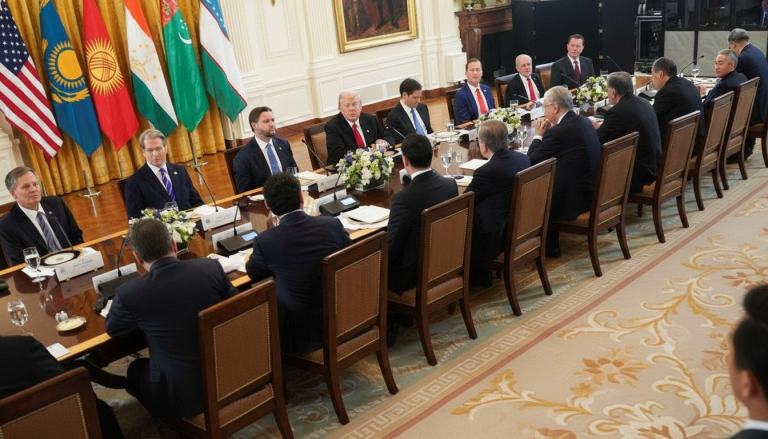
    The C5+1 summit held in Washington on November 6, 2025, marks a new chapter in U.S.–Central Asia relations, shifting the focus from energy pipelines to strategic mineral resources. Rare earth elements are now central to Washington’s strategy against China, which dominates mining and processing globally.

    Recent agreements—highlighted by substantial investments in Kazakhstan’s tungsten mines and commitments to Uzbekistan—illustrate a strategy that blends economic aims with national security, defense modernization, and leadership in green technologies. By partnering with Kazakhstan, Uzbekistan, and Turkmenistan, the U.S. seeks to counter China’s and Russia’s longstanding influence, establishing a “new resource-centered” framework for engagement. Rare earths are becoming tools of strategic power, supplanting traditional energy diplomacy and strengthening supply chains for renewable energy.

    This shift extends beyond resource access; mining investments are shaping political, economic, and diplomatic orientations across Central Asia, challenging China’s Belt and Road Initiative through economic means. The U.S. approach converts energy diplomacy into “mining diplomacy,” turning Central Asia into a global geo-economic crossroads.

    America’s renewed focus reflects a broader repositioning—building “strategic balancing” structures rather than pursuing mere economic or military dominance. The C5+1 format has become the central mechanism for promoting a model of regional integration that excludes Russia and China, offering a “third way” rooted in soft power, sustainable development, and technological partnerships.

    Strengthening transport routes like the Trans-Caspian corridor aims to liberate Central Asia from Russia’s logistical grip and curtail China’s influence over the Middle Corridor. Moscow and Beijing view these moves as containment strategies, intensifying geopolitical competition while granting Central Asian states greater autonomy through multilateral diplomacy.

    Ultimately, America’s strategy is about establishing a new Eurasian power architecture. Its success will depend on delivering sustainable investments and on Central Asian states maintaining independent balancing acts amid great-power competition.

  • Estonia Opens First Rare Earth Magnet Plan

    Estonia Opens First Rare Earth Magnet Plan

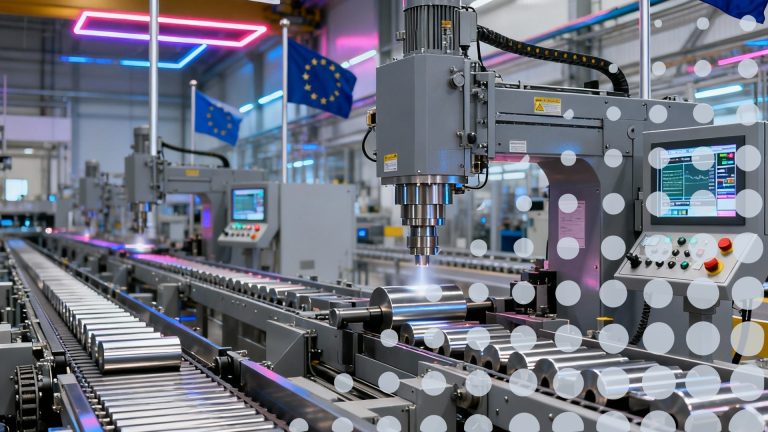
    Europe’s first large-scale rare earth magnet production plant has opened in Estonia, marking a watershed moment in the EU’s efforts to secure supply chains for critical raw materials. The facility, developed by Canadian group Neo Performance Materials at an investment of $75 million, is more than just a factory—it represents Europe’s growing determination to reduce its reliance on China in the race toward renewable energy and electric mobility.

    Why Rare Earth Magnets Matter

    Rare earth magnets are a cornerstone of the energy transition. They power electric motors in vehicles, enable the operation of wind turbines, and play a role in advanced electronics. Without them, scaling up clean technology becomes almost impossible. The challenge is that China has long dominated both the processing and production chains, supplying over 90 percent of the world’s rare earth magnets and an estimated 98 percent of Europe’s demand. This dominance has left industries on the continent vulnerable.

    When Beijing tightened export controls on certain rare earth materials earlier this year, European manufacturers reported severe delays in securing supplies. Such disruptions risk derailing the EU’s aggressive targets for decarbonisation and the expansion of electric vehicle production. As Neo’s chief executive Rahim Suleman put it, “Customer motivations are incredibly high to diversify their supply base and to have localized supply chains.”

    A Strategic Investment for Europe

    The new Estonian plant will initially produce 2,000 tonnes of rare earth magnets annually, with plans to scale up to 5,000 tonnes. While this is still only a fraction of projected European demand—forecast to rise from roughly 22,000 tonnes today to 60,000 tonnes within the next decade—it represents a critical first step toward supply diversification.The facility’s operations are closely linked with Neo’s nearby separation plant, creating an integrated processing hub inside the EU. Raw materials will be sourced from Australia and Malaysia, regions that Europe considers more geopolitically reliable than China.

    Beyond private investment, the project has enjoyed notable public support: a €18.7 million grant from the EU’s Just Transition Fund and a $50 million line of credit from Export Development Canada.European Commission president Ursula von der Leyen underscored the significance, stating that the magnets produced in Estonia are “indispensable to growth and innovation.” Her comments align with the EU’s strategic goal of processing at least 40 percent of its critical raw materials domestically, part of a broader strategy to insulate the bloc from geopolitical shocks.

    Industrial Demand and Auto Sector Stakes

    The automotive sector stands at the heart of the rare earth magnet debate. German auto suppliers Bosch and Schaeffler have already signed contracts with Neo, highlighting the desperation among manufacturers to lock in alternative supply lines. Electric vehicles rely heavily on permanent magnets for motors, making uninterrupted access critical to Europe’s industrial competitiveness.At the same time, Europe faces a delicate balancing act. Producing magnets outside China comes at a cost premium, driven by higher environmental standards, energy costs, and raw material logistics. But as Suleman pointed out, the magnet within an electric vehicle motor represents only a small fraction of the total cost. For carmakers increasingly judged by their ability to produce cleaner vehicles, paying a premium for secure, non-Chinese inputs may soon be seen as a necessary trade-off.

    Europe vs. U.S.: Diverging Paths

    The EU is not the only region scrambling to insulate itself from China’s grip on rare earths. The United States has moved aggressively, fueled by larger federal subsidies and sharper geopolitical confrontation with Beijing.

    Washington has poured billions into rare earth mining and processing projects, while Europe has leaned more heavily on public–private partnerships and industry demand.

    Suleman contrasted the two approaches bluntly: “In the U.S., they’re chasing government money, and in Europe we’re chasing customers—or customers are chasing us.” Europe’s model may take longer to scale, but some argue it will prove more resilient, given that it is anchored in long-term demand rather than temporary government incentives.

    The Limits of Diversification

    Despite bold moves like the Estonian plant, Europe cannot entirely sever ties with China in the near future. Analysts suggest that at best, 30 percent of global rare earth magnet production could shift outside Chinese borders in the next decade, leaving Beijing with enduring dominance. France has spearheaded several projects to challenge this control, but insufficient mining and processing capacity across the continent means Europe will remain dependent on imports.

    Furthermore, the global raw material supply chain itself has bottlenecks. While Australia is emerging as a reliable supplier, and southeast Asia provides alternatives, scaling these sources to cover growing demand will take time, investment, and political stability.

    A Turning Point for Europe’s Green Transition

    The Estonian facility is ultimately a symbol of Europe’s intent to claim greater agency in a strategically vital industry. As electric vehicle adoption accelerates and renewable power scales, the demand for rare earth magnets will only intensify. Neo Performance Materials’ new plant will not solve Europe’s dependency overnight. But by anchoring at least part of the value chain closer to home, it signals to both industry and policymakers that strategic autonomy in essential raw materials is not only desirable but possible.

    For Europe, Estonia is just the beginning. The continent will need more facilities, stronger alliances with trusted suppliers, and coordinated industrial policies to reduce its rare earths vulnerability. The magnet plant may be a modest contribution in terms of tonnage, but geopolitically, it is a giant leap forward.

  • Eurasian Resources Group Launches Major Wind Farm in Kazakhstan

    Eurasian Resources Group Launches Major Wind Farm in Kazakhstan

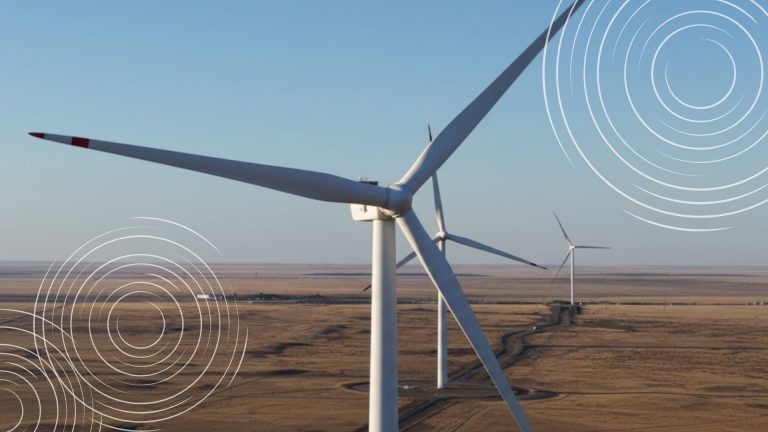
    Eurasian Resources Group (ERG), a global metals and mining company headquartered in Luxembourg, has opened the Khromtau wind farm in Kazakhstan with a capacity of 150 megawatts of green energy. The project is one of the largest renewable energy facilities in Kazakhstan and Central Asia and required an investment of more than US$142 million. The wind farm is located in the Aktobe Region and includes 24 turbines. The facility will generate more than 500 million kilowatt hours of green energy annually. All in all, the facility will help reduce up to 440,000 tonnes of carbon dioxide emissions and save more than 300,000 tonnes of coal each year. The project has been implemented by ERG Capital Projects, a Group subsidiary, with financial support from the Development Bank of Kazakhstan.

    During the opening ceremony of this critical green energy project, Shukhrat Ibragimov, CEO and Chairman of the Board of Directors of ERG, said: “With its Khromtau wind power project, the Group makes a major contribution towards achieving Kazakhstan’s national goal of increasing the share of renewable energy sources. ERG is committed to ESG principles, and the new Khromtau wind power farm is a logical and very ambitious next step while implementing this. ERG’s first wind power project has already become a symbol of our transition to green energy.”

    The ESG Agenda is part of the company’s Strategy. The Group’s medium-term goal is to reduce the carbon footprint of its core products (aluminium, ferroalloys and iron ore pellets) by 30%. To achieve this, ERG is implementing projects with cumulative investments totalling US$300 million. In addition to wind power, these projects include switching the Kacharsky heating centre to gas in the Iron Ore Division, reducing steam consumption and improving the alumina production process in the Aluminium Division, and building a ferroalloy gas recycling power facility at the Aktobe Ferroalloys Plant to convert secondary energy resources into electricity.

  • Europe Eyes Low-Risk Rare Earth Deposits to Strengthen Green Energy Supply Chain

    Europe Eyes Low-Risk Rare Earth Deposits to Strengthen Green Energy Supply Chain

    Europe’s push toward a greener future is facing a critical supply chain dilemma: the continent’s heavy dependence on imported Rare Earth Elements (REEs). These materials are essential for technologies like electric vehicles and wind turbines, yet the global REE market remains largely controlled by China — a geopolitical and economic risk that has sparked alarm across the EU.

    To mitigate this, the EU-funded REEsilience project is charting a new course. Launched in 2022, the initiative has mapped 149 global REE deposits, evaluating them for both geological quality and ESG (Environmental, Social, Governance) risks. Its goal: to help Europe identify secure and sustainable alternatives to Chinese supply.

    “Just a handful of deposits, if chosen wisely, could secure the EU’s rare earth supply,” said Prof. Dr. Carlo Burkhardt, REEsilience coordinator. Norway’s Fen complex and Greenland’s REE resources were flagged as top prospects, offering strong political ties and low ESG risk alongside high-quality ore. Other low-risk candidates include Sweden, Finland, Canada, and Australia.

    By contrast, REE sources in parts of Southeast Asia, Central Africa, and Brazil were found to carry high environmental or social risk — making them less viable options for Europe’s sustainability ambitions.

    Beyond mining, the REEsilience project is also modelling future supply chain scenarios, factoring in price volatility, recycling efforts, and digitalisation. TU Delft’s Dr.ir. Willem Auping explained that simulation modelling is being used to explore “strategic resilience measures” such as recycling and extending product lifecycles.

    The initiative also focuses on localising production — including magnet manufacturing automation and ICT integration — and building a skilled workforce to drive innovation. With final results expected by June 2026, the project aims to pave the way for a robust, circular rare earth supply chain that aligns with Europe’s climate and security goals.

  • Uzbekistan and EU Discuss Deeper Economic Cooperation Under Global Gateway Strategy

    Uzbekistan and EU Discuss Deeper Economic Cooperation Under Global Gateway Strategy

    The Ministry of Investment, Industry, and Trade of Uzbekistan hosted a high-level meeting with a European Commission delegation led by Pēteris Ustubs, Director for International Partnerships for the Middle East, Asia, and the Pacific. The talks focused on advancing joint initiatives and reinforcing bilateral cooperation under the EU’s Global Gateway strategy for 2017–2027, Trend reports.

    Key areas of discussion included joint projects in digital transformation, transport and logistics, and green energy development in Uzbekistan. Both sides reaffirmed their commitment to enhancing economic collaboration through strategic, sustainable investments.

    The meeting also addressed logistical and organizational preparations for two major upcoming events: the Third European Union – Central Asia Economic Forum and the Tashkent International Investment Forum. These forums, to be hosted in Uzbekistan later this year, will gather participants from countries along the Trans-Caspian Corridor and aim to boost regional economic integration and development.

  • Greenland Grants 30-Year Mining Permit for Climate-Friendly Aluminium Alternative

    Greenland Grants 30-Year Mining Permit for Climate-Friendly Aluminium Alternative

    Greenland has issued a 30-year mining license to Greenland Anorthosite Mining (GAM), a Danish-French mining group, to extract anorthosite—an unusual white rock that could play a key role in climate-friendly aluminium production. The permit covers a project site in western Greenland and marks a significant step toward the island’s ambitions to become a major player in the global green minerals market.

    GAM, backed by the French investment firm Jean Boulle Group and state investment funds from both Denmark and Greenland, aims to begin mining operations within five years. The company plans to export crushed anorthosite to the fiberglass industry, where it could serve as a more sustainable replacement for kaolin. Longer-term, it may replace bauxite in aluminium production, reducing the carbon footprint of a metal critical to the aerospace, automotive, and defense industries.

    Anorthosite is geologically similar to material brought back from the Moon by NASA’s Apollo missions, and its unique composition—aluminium, micro silica, and calcium—offers promising industrial applications.

    Despite the global spotlight on Greenland’s natural resources, Mineral Resources Minister Naaja Nathanielsen stated that heightened U.S. interest in the Arctic island—especially following former President Donald Trump’s 2019 proposal to purchase it—has not yet resulted in direct American investment.

    “Right now, all the fuss has not resulted in increased appetite for investment directly in Greenland,” Nathanielsen told Reuters. While U.S. business delegations have visited the island, formal talks with the U.S. government remain on hold.

    In contrast, Nathanielsen noted smoother progress with European Union and Danish partners, citing years of intensified cooperation.

    Although Greenland is rich in minerals, oil, and gas, its mining sector remains underdeveloped due to investor caution, regulatory hurdles, and environmental concerns. At present, only two small mines are operational on the island.

  • Vulcan Energy Finalizes Acquisition of Geox, Expands Lithium and Renewable Energy Footprint in Germany

    Vulcan Energy Finalizes Acquisition of Geox, Expands Lithium and Renewable Energy Footprint in Germany

    Vulcan Energy has successfully completed the acquisition of Geox GmbH, securing 100% ownership of its geothermal wells, renewable energy generation assets, and a geothermal and lithium licence in the Landau region of Germany. This strategic move consolidates Vulcan’s upstream Phase One assets and replaces the former Joint Venture and brine offtake agreements with Geox.

    The Landau site is also home to Vulcan’s Lithium Extraction Optimisation Plant (LEOP) and the future Geothermal and Lithium Extraction Plant (G-LEP), which are central to the company’s Phase One Lionheart Project. The project aims to produce battery-grade lithium for European offtake partners and deliver renewable energy and heating to local consumers.

    As part of its development plans, Vulcan will dismantle the existing geothermal power plant at the Geox site, ramp up brine production, and begin supplying baseload renewable heating to the City of Landau. The renewable heating portion of the project has already secured a €100 million grant from the German Federal Government.

    Vulcan estimates that 20% of its Phase One upstream brine production will come from the newly acquired licence area, reinforcing its mission to deliver zero-carbon lithium alongside sustainable energy.

    Managing Director and CEO Cris Moreno stated:

    “The completion of the acquisition of Geox is the final step in consolidating our upstream renewable energy assets for Phase One, streamlining operations, and an important pre-requisite to finalising our Phase One financing package. We are at an important juncture in the history of Vulcan and look forward to sharing more developments as we transition to the construction and production phase of the project.”

  • Chinese-Owned PTL Cancels Major Green Energy Investment in Sweden

    Chinese-Owned PTL Cancels Major Green Energy Investment in Sweden

    In a significant blow to Sweden’s green energy ambitions, Chinese-owned PTL has scrapped its planned SEK 13 billion investment in a state-of-the-art anode factory in Timrå. The project, which aimed to produce battery anodes for the growing electric vehicle market, would have created 1,900 jobs and positioned PTL as a key supplier to Northvolt, Sweden’s leading battery manufacturer. However, stringent security policy requirements imposed by the Swedish Inspectorate for Strategic Products (ISP) ultimately led to the project’s cancellation.

    The ISP’s conditions included restrictions on PTL’s ownership, mandating that the company could not hold a majority stake in the factory. Additionally, the CEO, board chairman, and a majority of board members had to be Swedish citizens. PTL, unable to meet these demands within the required timeframe, appealed to the Swedish government but ultimately decided to withdraw from the venture.

    On Thursday, PTL announced the termination of its land contract for the industrial site in Torsboda, effectively ending the project. Dr. Yu Han, PTL’s chief representative in Europe, expressed regret over the decision, stating, “The anode factory in Timrå would have played a key role in a future Swedish battery industry and contributed to the green transition. However, the delays mean that we have to call it a day. The business case for the investment no longer exists.”

    Despite the setback, PTL has agreed to assist Torsboda Industrial Park in exploring opportunities to continue the project with another operator. The cancellation underscores the challenges of balancing foreign investment with national security concerns, particularly in strategic industries like battery manufacturing.

  • Russia’s Seizure of Ukraine’s Lithium Reserves Raises Global Concerns

    Russia’s Seizure of Ukraine’s Lithium Reserves Raises Global Concerns

    Russia’s ongoing conflict in Ukraine has extended to the control of critical resources, with two of Ukraine’s four lithium deposits now under Russian control. Among them is a major reserve located in Shevchenko, a settlement in the Donetsk region. These deposits are part of Ukraine’s estimated 500,000 tons of untapped lithium reserves, considered among the largest in Europe. Known as “white gold,” lithium is crucial for producing batteries used in smartphones, electric vehicles, and renewable energy storage systems.

    Experts argue that while capturing lithium may not have been a primary objective of Russia’s invasion, Ukraine’s mineral wealth is a significant strategic interest. The Ukrainian Shield, a geologically rich region spanning much of central and southern Ukraine, contains not only lithium but also iron and rare earth metals.

    The European Union has been actively seeking local sources of critical minerals like lithium to reduce its dependence on imports from countries such as China. Ukraine, with its proximity and substantial reserves, was seen as a promising partner. The war, however, has stalled any efforts to leverage these resources, jeopardizing Europe’s green energy initiatives and energy independence goals.

    Rod Schoonover, founder of the U.S.-based Ecological Futures Group, noted that the invasion has disrupted Ukraine’s ability to utilize its resources but highlighted their potential significance if stability is restored. “These resources could become a cornerstone of Europe’s strategic autonomy in critical minerals,” he said. The situation underscores how vital resource control has become in modern geopolitical conflicts.

  • UK and Saudi Arabia Strengthen Collaboration in Mining for Critical Minerals

    UK and Saudi Arabia Strengthen Collaboration in Mining for Critical Minerals

    Saudi Arabia and the UK have formalized a partnership to address growing global demand for critical minerals essential for AI, green energy, and advanced technologies. The agreement, signed during the Future Minerals Forum, emphasizes sustainable mining, technology transfer, and joint investments.

    UK Industry Minister Sarah Jones highlighted Britain’s expertise in mining finance and research, positioning it as a key partner. Both nations are exploring projects in Africa and initiatives in the UK, such as Cornwall’s lithium and tin mining. Efforts focus on ethical and sustainable practices to meet mineral demands while addressing environmental and societal concerns.

    This collaboration reflects a proactive UK strategy under Prime Minister Keir Starmer, prioritizing supply chain security and global cooperation to support industries critical to the green transition and technological progress.