Tag: Greece

  • Skouries Project: A Landmark Copper-Gold Mine Set to Transform Greece’s Mining Landscape

    Skouries Project: A Landmark Copper-Gold Mine Set to Transform Greece’s Mining Landscape

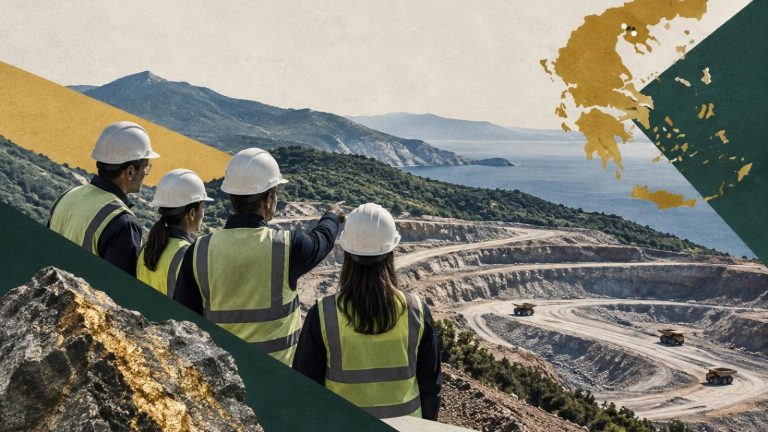
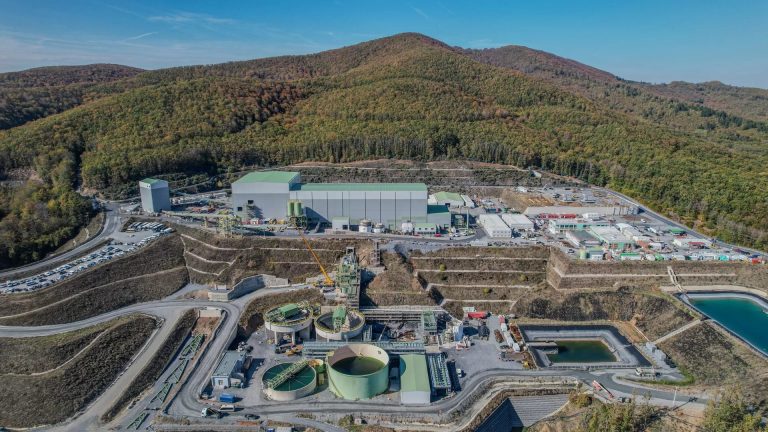
    Hellas Gold S.A. has announced that the Skouries project, located in northeastern Halkidiki, Greece, is entering its final stages of development. This state-of-the-art copper-gold mine is not only significant on a national level but also holds considerable importance for Europe as a whole. The Skouries project is being developed with advanced technologies and adheres to the principles of responsible mining, ensuring that environmental and social considerations are at the forefront of its operations.

    The Skouries mine is expected to play a pivotal role in enhancing Greece’s position on the European mining map. It is projected to create numerous job opportunities, bolster exports, and contribute significantly to state income. Moreover, the mine will provide a new source of copper, a metal that is increasingly essential for the energy transition, renewable energy initiatives, electric mobility, and future technological advancements.

    With the first production of copper-gold concentrate anticipated in the third quarter of 2026 and commercial production expected to commence by the fourth quarter of the same year, the Skouries project is transitioning from the construction phase to a focus on long-term value creation. This development is expected to have a lasting impact on the local economy and the broader European mining sector, positioning Greece as a key player in the supply of critical minerals necessary for the green economy.

    As the project progresses, stakeholders are optimistic about the potential benefits that Skouries will bring, not only in terms of economic growth but also in establishing a model for sustainable mining practices in the region. The successful implementation of this project could set a precedent for future mining ventures in Greece and beyond, highlighting the importance of balancing resource extraction with environmental stewardship.

  • Eldorado Gold Reports Progress on Skouries Project and Q2 2026 Financial Results

    Eldorado Gold Reports Progress on Skouries Project and Q2 2026 Financial Results

    Eldorado Gold Corporation has announced that its Skouries Project in Greece has reached 97% completion and is on track to commence production of copper-gold concentrate in the third quarter of 2026, with full commercial production expected by the fourth quarter. The project is anticipated to contribute significantly to the company’s growth, with projections for 2026 indicating gold production between 60,000 to 100,000 ounces and copper production of 20 to 40 million pounds. This development is part of Eldorado’s broader strategy to enhance its operational portfolio and cash flow generation.

    In its second quarter financial results for 2026, Eldorado reported gold production of 104,616 ounces and revenues of $487.5 million, reflecting a favourable gold price environment despite a decrease in production compared to the previous year. The company’s total cash costs per ounce sold increased to $1,432, influenced by higher production costs and lower sales volumes. Eldorado’s net earnings attributable to shareholders rose to $172.8 million, or $0.69 per share, signalling a strong performance amid ongoing investments in growth projects.

    The Skouries Project, part of the Kassandra Mines Complex, is expected to play a pivotal role in Eldorado’s future operations, with a feasibility study indicating a 20-year mine life and average annual production of 140,000 ounces of gold and 67 million pounds of copper. The company has secured concentrate sales agreements for the expected production volumes in 2026 and is actively working on finalising additional agreements to cover production through 2029. With significant capital investments planned, Eldorado is well-positioned for a successful ramp-up to commercial production, supported by a robust operational framework and strategic partnerships.


  • Eldorado Gold Achieves First Ore Crushing Milestone at Skouries Project

    Eldorado Gold Achieves First Ore Crushing Milestone at Skouries Project

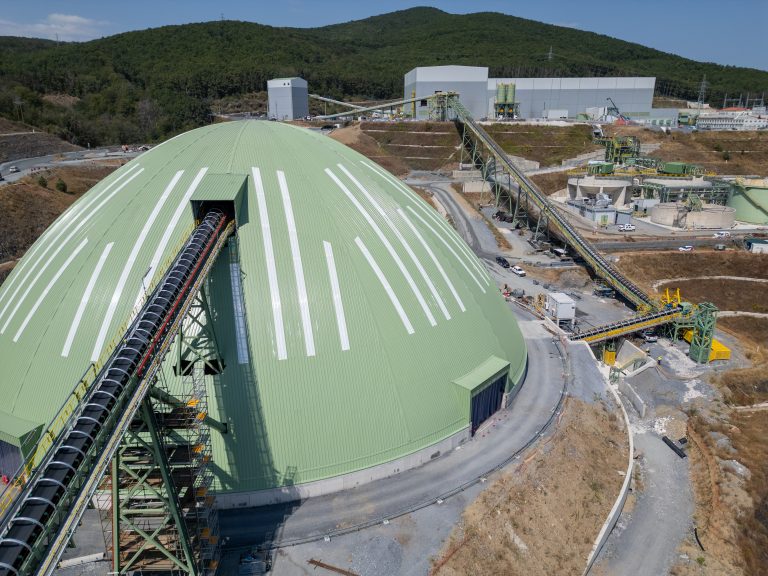
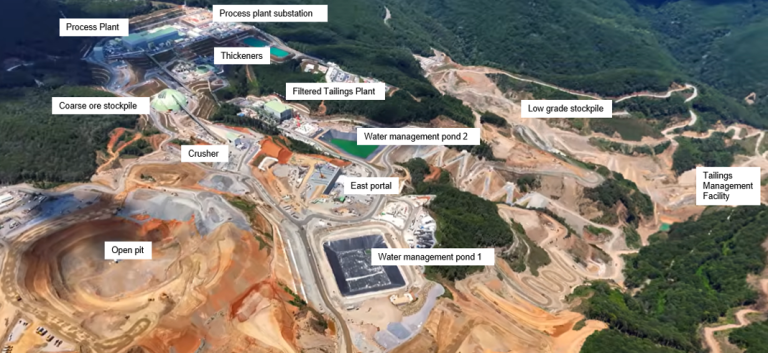
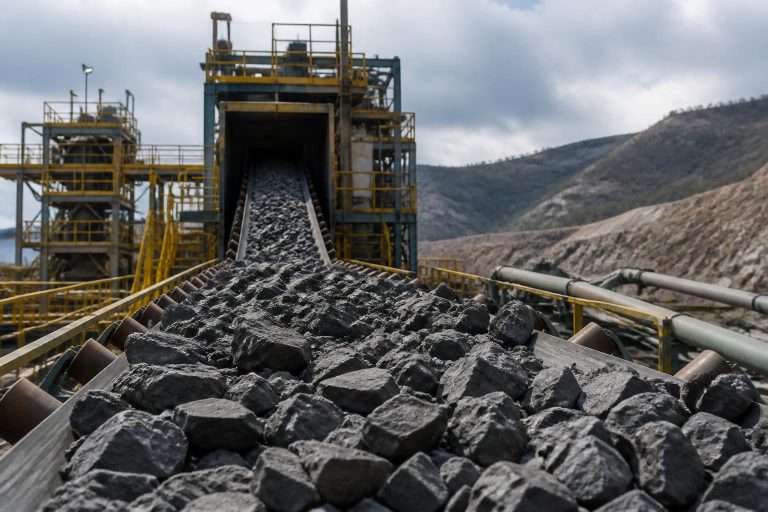
    Eldorado Gold Corporation has announced a significant milestone at its Skouries copper-gold project located in Northern Greece, with the first ore successfully processed through the newly commissioned crushing circuit. This development marks the transition of the project into the commissioning phase, which is a crucial step towards full production. The company is targeting the production of copper-gold concentrate in the third quarter of 2026, with plans for commercial production to commence in the fourth quarter of the same year, contingent on the completion of final site energization and commissioning activities.

    The successful crushing of the first ore is a testament to the effective operation of the front-end processing systems at Skouries. The company has reported that commissioning activities are progressing across various operational areas, including crushing, grinding, flotation, and concentrate handling. Eldorado Gold has also taken proactive measures to ensure that commissioning readiness is maintained, including the addition of supplemental generators to provide interim power while awaiting final site energization from the Greek power authority.

    With an ore stockpile of approximately 3.9 million tonnes, the open pit mining operations at Skouries are running ahead of schedule, allowing for a steady ramp-up of the processing plant. This stockpile is expected to support the commissioning and first year of production, reducing risks associated with the initial operational phase. Eldorado Gold’s CEO, George Burns, expressed confidence in the project’s progress, highlighting the team’s commitment to completing the remaining steps safely and methodically as they work towards the first concentrate production.


  • Eldorado Gold Uncovers Multiple High-Grade Zones and Eyes Expansion at Key Assets

    Eldorado Gold Uncovers Multiple High-Grade Zones and Eyes Expansion at Key Assets

    Eldorado Gold Corporation has reported a series of significant high-grade discoveries across its exploration portfolio, reinforcing the potential for mine life extensions and future production growth in Canada and Greece. The company also confirmed it has launched studies to assess a possible expansion of processing capacity at its Lamaque Complex in Quebec.

    At Lamaque, recent drilling identified four new high-grade zones around the Ormaque deposit and the historic Lamaque Mine. These include the newly defined Ormaque South-East zone, extensions to the west of Ormaque, the Garnet Zone north of the deposit, and additional mineralization at Lamaque South. The results confirm the presence of multiple stacked and laterally continuous vein systems located close to existing infrastructure, strengthening the case for low-risk, capital-efficient growth. On the back of these results, Eldorado has begun studies to increase throughput at the Sigma mill from around 2,500 tonnes per day toward its fully permitted capacity of 5,000 tonnes per day.

    In Greece, exploration at the Olympias mine outlined a new North West zone with high gold, silver, lead and zinc grades located within 200 metres of current underground workings. Drilling at the West Flats area also intercepted thick massive sulphide mineralization beyond the existing resource, pointing to further expansion potential. In parallel, Eldorado confirmed the discovery of a gold-copper skarn system along the Stratoni Fault, near historic mining operations, adding a new target style to the Kassandra district.

    The company said these discoveries highlight strong upside across its portfolio and support continued investment in exploration. Eldorado plans a substantially expanded drilling programme in 2026 across Quebec, Greece and Turkiye, with total exploration spending expected to rise to between $75 million and $85 million as it targets both resource growth near existing mines and earlier-stage discovery opportunities.

  • Dismay after EU rejects ‘Green Pool’ for industrial energy users in Greece

    Dismay after EU rejects ‘Green Pool’ for industrial energy users in Greece

    The Green Pool scheme was initially floated by the Greek government in July 2022 as part of moves to lower the cost of electricity, which went through the roof last year after Russia invaded Ukraine.

    It was designed to help large industrial consumers of electricity like aluminium, steel, glass, or cement, to jointly sign up to corporate power purchasing agreements (PPAs) for renewable electricity, under the supervision of a public body acting as a single buyer and seller for participating companies.

    The scheme was aimed at mitigating the costs of re-shaping industrial production to match the variable nature of renewable electricity generation coming from wind and solar power installations – so-called firming or shaping costs.

    These costs were identified by the European Commission as a key obstacle preventing industrial consumers of electricity from signing up to Renewable Energy Power Purchase Agreements (PPAs), which Brussels is now promoting as part of its proposed electricity market reform.

    However, the scheme was turned down on Friday (6 October) by the European Commission’s competition directorate, according to Mytilineos, the Greek aluminium and energy company.

    The main reason put forward by the Commission, according to the Greek company, is that renewable PPAs could not be regarded as “decarbonisation” activities from electro-intensive industries because they are not part of so-called scope 1 emissions – those that producers are directly responsible for.

    The underlying rationale communicated to the Greek authorities, they added, was that the Commission does not want energy-intensive industries to benefit from subsidised electricity prices.

    The World Bank has identified aluminium as a “high-impact” and “cross-cutting” metal for green energy technologies ranging from electric vehicles to solar photovoltaics and geothermal.

    But in Europe, the industry has declined steadily over the years with production dropping from over 4.5 million metric tons 15 years ago to 2.7 million currently.

    Contacted by Euractiv, the European Commission did not return emails and phone calls asking for comment. The Greek permanent representation in Brussels also declined comment.

    Metal industry dismayed

    On the industry side, trade association Eurometaux reacted with dismay.

    “We’re surprised and disappointed that the European Commission rejected Greece’s ‘Green Pool’ proposal,” said Guy Thiran, the director general of Eurometaux, which represents non-ferrous metals producers and recyclers.

    For Thiran, the Greek scheme “ticked all the boxes” in terms of decarbonisation, competitiveness, and renewables deployment. “It was a crucial model that would also help the metal and power sector’s wider decarbonisation in other EU member states,” he said in emailed comments to Euractiv.

    According to him, the scheme would have been instrumental in keeping aluminium manufacturing within the EU’s border at a time when bauxite, alumina and aluminium were added to the EU’s list of critical raw materials.

    “Electricity-intensive metals producers are still on their knees from the energy crisis” caused by the war in Ukraine, Thiran said. “If Europe is serious about keeping its strategic metals production ‘Made in Europe’, we urgently need real solutions like the Green Pool,” he added.

    Paul Voss, director general of European Aluminium, a trade association, was equally upset.

    “We are deeply troubled and genuinely shocked by the rejection of this innovative initiative,” Voss told Euractiv in emailed comments.

    “Not only does this decision dangerously undermine the case for investment in solar and wind in Greece, it sends a clear message that energy-intensive industry, even when it’s powered by renewables, simply isn’t wanted in Europe anymore”.

    According to Mytilineos, the Green Pool would have led directly to 4 GW of new wind and solar investments in Greece while securing affordable electricity prices for energy-intensive industries.

    Moreover, the scheme could have easily been replicated in other countries, which is why it was supported by other EU trade associations like BusinessEurope and WindEurope.

    For the aluminium industry, the frustration is made even greater by all the recent EU talk about “strategic autonomy” in the raw materials and energy sector.

    In December last year, EU Commission President Ursula von der Leyen promised a “new assertive industrial policy” with streamlined EU state aid rules in response to the US massive green subsidy programme, the Inflation Reduction Act.

    Last month, the Commission chief announced that the European Green Deal was entering a new phase focused on industrial policy, starting with the launch of a series of Clean Transition Dialogues with individual sectors of industry.

    “The future of our cleantech industry has to be made in Europe,” von der Leyen declared in her annual state of the Union speech to the European Parliament.

    However, the Commission’s decision on the Green Pool scheme appears to contradict those declarations, according to European Aluminium.

    “How can we possibly reconcile this approach with all the recent discussion about strategic autonomy and sustainable industry?” Voss asked. “Outsourcing heavy industry to other, more carbon-intensive regions might look like an easy way to save energy and reduce emissions in Europe, but its ultimate impact will be to fatally compromise our economy, our security and our environment.”

    “This cannot be the way forward,” he added.