Tag: graphite mining

  • Romania Renews Licence for Country’s Only Graphite Deposit at Baia de Fier

    Romania Renews Licence for Country’s Only Graphite Deposit at Baia de Fier

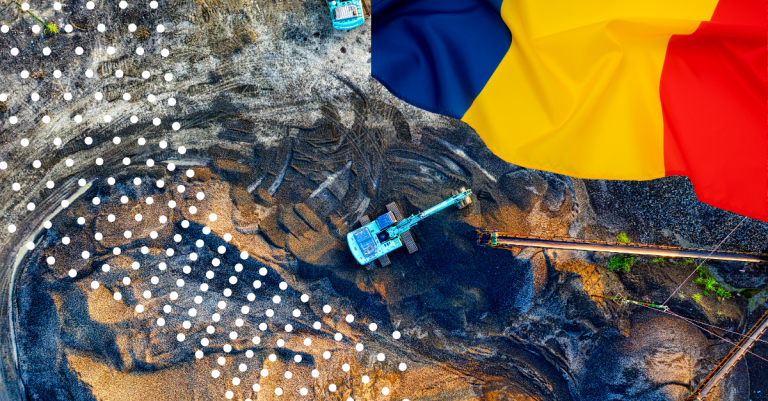
    Romania’s government has officially renewed the exploitation licence for the nation’s sole graphite deposit, located in Baia de Fier, Gorj County. The decision, signed by Minister of Economy Radu Miruță, grants state-owned Salrom the right to resume mining operations at the site.

    Graphite, a critical raw material used in conductors, mobile phone components, and the nuclear industry, has experienced surging demand globally. Minister Miruță said the licence renewal ensures the resource “remains the property of Romania” while delivering economic value domestically.

    “Today I signed the government decision by which Romania receives the exploitation licence for graphite from Baia de Fier. An extremely valuable mineral, sought after throughout the world, remains the property of Romania and will produce value for our economy,” Miruță said, adding that securing the licence was one of his key priorities.

    Although Salrom previously held the licence, mining activity had stopped. With operations now set to restart, Miruță stressed that the first steps will involve securing the mining perimeter and preparing for production. He noted that the project will create jobs, drive local economic growth, and stand as “a source of pride for Romanians.”

    The move forms part of a broader government strategy to safeguard and develop Romania’s strategic mineral resources in the national interest.

  • Talga’s Swedish Graphite Mine Gets Final Green Light, Bolstering EU’s Battery Supply Chain

    Talga’s Swedish Graphite Mine Gets Final Green Light, Bolstering EU’s Battery Supply Chain

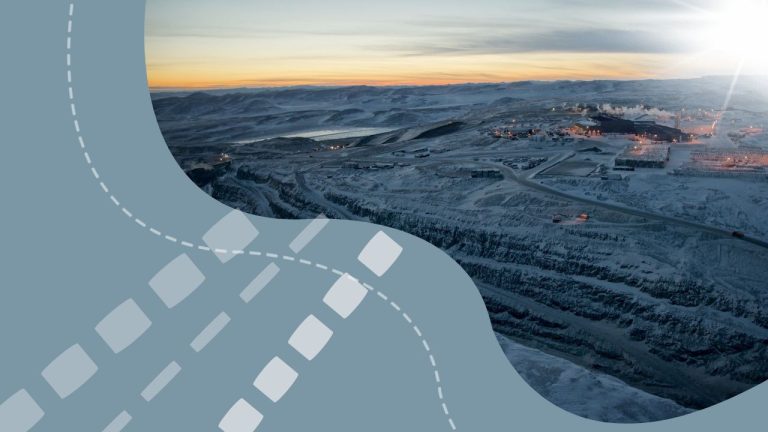
    Australia’s Talga Group (ASX: TLG) has secured full regulatory approval to begin development of its Nunasvaara South graphite mine in northern Sweden, after the country’s government officially dismissed all remaining appeals against the exploitation concession.

    The decision marks the end of a long and turbulent permitting process, unlocking Talga’s broader Vittangi anode project, which integrates the newly approved mine with its previously permitted Luleå anode refinery. Together, these form one of Europe’s most advanced vertically integrated graphite projects.

    “Today validates years of dedication,” said Talga founder and managing director Mark Thompson, calling the milestone a major step in the company’s ambitions to supply Europe’s growing battery market.

    Sweden’s Energy, Business and Industry Minister Ebba Busch also welcomed the news, stating: “The graphite that Talga is planning to produce is a key material in battery manufacturing and the green transition to a fossil-fuel free society.”

    The announcement triggered a strong market reaction, sending Talga shares up 20% on Thursday to A48 cents, and lifting its market capitalization to A$216 million (approx. $140 million).

    A rough permitting journey
    The path to approval was far from smooth. After obtaining environmental and Natura 2000 permits in April 2023, Talga faced a string of legal challenges from environmental groups. While Sweden’s Land and Environment Court of Appeal upheld the permits, opponents took the case to the Supreme Court, which declined to hear it in October 2024.

    A final appeal against the exploitation concession was filed in December 2024, delaying the project again. This week’s rejection of that challenge by Sweden’s Ministry of Climate and Enterprise officially clears the way for development.

    Strategic timing for Europe
    Talga’s mine arrives just as European battery gigafactory capacity is surging, with demand for graphite anodes projected to rise from 30,000 tonnes in 2023 to over 500,000 tonnes annually by 2030. Currently, China controls 84% of global graphite processing, and Talga’s project is seen as a key move to reduce the bloc’s dependency on foreign supply.

    The EU has recognized the strategic importance of Talga’s project, awarding it a €70 million grant via the Innovation Fund, and naming it a strategic initiative under both the Critical Raw Materials Act and the Net-Zero Industry Act.

    Each 10,000 tonnes of locally produced graphite is expected to reduce the EU’s foreign mineral dependency by 7%, making this not just a commercial success for Talga, but a major geopolitical win for Europe’s green transition.

  • Romania Revives Europe’s Largest Graphite Deposit with €200 Million Investment

    Romania Revives Europe’s Largest Graphite Deposit with €200 Million Investment

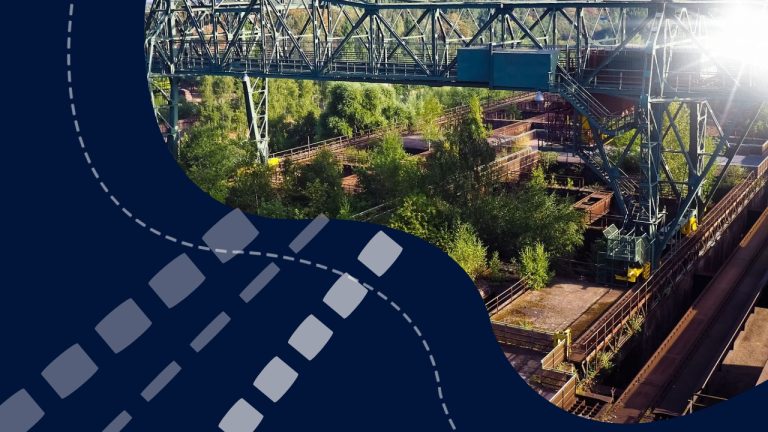
    Romania is set to breathe new life into Europe’s largest graphite deposit, located in Baia de Fier, 235 kilometers west of Bucharest, after 21 years of dormancy. Once a bustling site employing 500 workers, the area now stands as a landscape of decaying metal structures and rusted machinery. However, thanks to nearly €200 million ($227 million) in funding from the European Commission, the Romanian Salt Company is preparing to restart operations. This initiative is part of a broader strategy to reduce Europe’s reliance on critical materials from China, reflecting shifting global geopolitical dynamics.

    The European Commission has designated the Baia de Fier site as one of three strategic mining projects in Romania. The country will receive a total of €615 million ($698 million) from Brussels, with graphite extraction prioritized for its applications in electric vehicle batteries, energy storage systems, electronics, and machine manufacturing, according to Andreea Nestian, Financial Director at A3Build, a consulting firm specializing in mining.

    Two other projects highlighted by the EU include metallic magnesium extraction in Budureasa and copper mining in Rovina, both also located in western Romania. “Magnesium is crucial for producing lightweight alloys used in the automotive, aerospace, and defense industries,” Nestian said, underscoring Europe’s heavy dependency on imports. Meanwhile, the Rovina copper deposit is recognized as the second-largest in Europe, although its development has faced legal challenges from environmentalists.

    In a bid to attract further financial support, Romanian authorities have informed Brussels about additional mineral reserves, including titanium, boron, quartz, phosphorus, germanium, tungsten, gallium, and rare earth elements. Romanian Minister of Economy Bogdan Ivan highlighted their significance across diverse sectors, such as aerospace, medical equipment, solar technologies, and defense.

    Despite the optimism surrounding the revival of Baia de Fier, the project faces significant hurdles. Many of the former workers have retired or emigrated, and Romania’s sole faculty of mining is struggling to attract students due to waning interest in the industry. Experts stress that substantial external investment and a skilled workforce will be crucial for the mine’s successful reactivation.

    The Romanian government plans to submit the project proposal to the European Commission in the third quarter of this year, although a start date for mining operations remains undecided.

  • Ukraine’s Zavallivsky Graphite Mine Eyes Expansion Amid Investment Challenges

    Ukraine’s Zavallivsky Graphite Mine Eyes Expansion Amid Investment Challenges

    At the 90-year-old Zavallivsky graphite mine in central Ukraine, CEO Ostap Kostyuk envisions producing graphite pure enough for lithium batteries—a task he compares to building a Rolls-Royce in a garage due to chronic underinvestment.

    With U.S. President Donald Trump pushing for a major deal on Ukraine’s rare earths and critical minerals in exchange for continued Washington support, operators like Kostyuk see an opportunity. However, they acknowledge that profits will take time for any American investors.

    “It’s a long-term investment,” said Kostyuk, as he led a Reuters team through the sprawling Kirovohrad facility, where aging Soviet-era machinery still runs amid a fine layer of graphite dust.

    As part of a strategic proposal to Trump, Ukrainian President Volodymyr Zelenskiy highlighted a map of Ukraine’s mineral wealth, including lithium, graphite, titanium, and rare earths—critical for high-performance magnets, electric motors, and consumer electronics. He emphasized that less than 20% of these resources were under Russian control, stressing the need to safeguard the rest.

    Despite trillions of dollars in untapped mineral wealth, experts warn that it could take years for investors to see significant returns due to war-related disruptions and chronic underfunding. Ksenia Orynchak, head of Kyiv’s National Extractive Industries Association, noted that Ukraine’s mining sector has faced a decade of stagnationdue to a lack of financial inflows and outdated mineral classification systems.

    The Zavallivsky mine, last modernized in 1965, illustrates the scale of the challenge. Despite being far from the front lines, it has struggled since Russia’s 2022 invasion caused an Australian partner to withdraw financing. Many of Kostyuk’s workers have also either joined the military or lost their lives in the war.

    Still, the facility is already producing graphite pure enough to be refined into battery-grade spherical graphite (SPG). Ukraine holds 20% of the world’s graphite reserves, a crucial component for electric vehicle batteries and nuclear reactors. While new mining projects could take five to seven years to become operational, Kostyuk remains optimistic.

    “We are ready for this technology,” he said, adding that his goal is to eventually produce SPG in-house. In the meantime, Ukraine is prepared to supply U.S. markets with natural flake graphite, establishing a Ukrainian presence in the global supply chain.

    “Our factory needs upgrades, but our workforce has the expertise to advance if given the resources,” Kostyuk said. “I believe in this factory. I believe in these people. Everyone here wants to work.