Tag: government strategy

  • Kyrgyzstan Unveils Critical Minerals Strategy at MINEX Eurasia Conference in London

    Kyrgyzstan Unveils Critical Minerals Strategy at MINEX Eurasia Conference in London

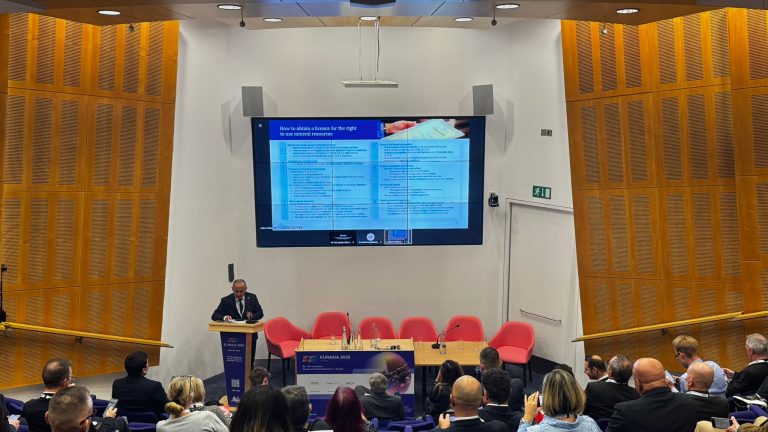
    London, 1 December 2025 – The MINEX Eurasia conference in London hosted a keynote address by H.E. Meder Mashiev, Minister of Natural Resources, Ecology, and Technical Supervision of Kyrgyzstan, outlining the country’s strategic vision for its critical minerals sector.

    Kyrgyzstan’s Strategic Minerals Vision

    The Minister outlined Kyrgyzstan’s methodical approach to prioritising and developing its critical minerals sector, identifying 21 key minerals based on global demand, local deposits, and resource concentrations. Kyrgyzstan’s analysis resulted in the selection of 4 priority projects, 5 promising deposits, and 16 prospective areas for further study and development. These assets, spread across antimony, beryllium, rare earths, molybdenum, bismuth, zinc, silver, and others, offer significant commercial and strategic potential for investors and end-users in energy, electronics, and high-value manufacturing.

    Investment and Development Framework

    State companies, notably Kyrgyzgeology, are driving exploration and project development, supported by government incentives and openness to international partnership. Strategic sites are being actively promoted for joint ventures or direct investment. Major domestic and international firms manage several large sites, while more than 100 mining enterprises operate in the country—spanning gold, copper, and polymetallic ores.

    Tax and Licensing Regime

    The session detailed Kyrgyzstan’s tax policy, which includes a mix of one-time bonuses for mining rights, royalties, profit tax, and VAT. The overall effective tax burden stands between 25–30%, complemented by social and environmental levies such as waste disposal, emissions, and water usage fees. Procedures for subsoil use licensing are harmonized with those in neighbouring countries, with initiatives being considered to simplify the processes and make it more transparent.

    ESG, Transparency, and Sustainable Mining

    Kyrgyzstan’s evolving strategy strongly emphasizes environmental, social, and governance (ESG) standards, aiming to foster responsible mineral development, minimize ecological impact, ensure transparency, and maximize benefits for local communities. The new strategy promotes the deployment of advanced technologies, environmental sustainability, and transparent investment processes, aligning with best practices to attract reliable, long-term partners.

    Opportunities for International Partnership

    Kyrgyzstan welcomes active collaboration with global investors and mining enterprises, seeking to leverage modern mining technologies, improve environmental outcomes, and maximize economic benefits. The country’s critical mineral strategy is closely linked to green growth targets and broader Eurasian supply chain integration.

  • Poland Shifts Strategy, Mulls Merging Coal-Fired Power Plants with Mines

    Poland Shifts Strategy, Mulls Merging Coal-Fired Power Plants with Mines

    The Polish government has announced a departure from its initial plan to segregate coal-fired power plants into a distinct entity, opting instead to explore the possibility of merging them with coal mines. Industry Minister Marzena Czarnecka revealed this shift in strategy in an interview published by Rzeczpospolita daily on Wednesday. The prior administration had proposed the formation of a single large state-owned company, NABE, to consolidate the assets of coal-based power plants. However, Minister Czarnecka expressed reservations about this approach, citing concerns over transferring the burden of coal assets onto taxpayers. She asserted that the NABE project would not proceed as envisioned. Exploring alternatives, Czarnecka indicated that discussions are underway to link coal-fired power plants directly with mines. The ministry plans to engage with financial institutions to devise an optimal model that facilitates financing for the green transformation of energy groups. Emphasizing the necessity of aligning specific power plants with corresponding mines, Czarnecka outlined a timeline for the proposed plan, aiming to finalize arrangements by the end of the year.