Tag: gold project

  • Exploring the Future of Mineral Discovery in Kazakhstan’s Sayak District

    Exploring the Future of Mineral Discovery in Kazakhstan’s Sayak District

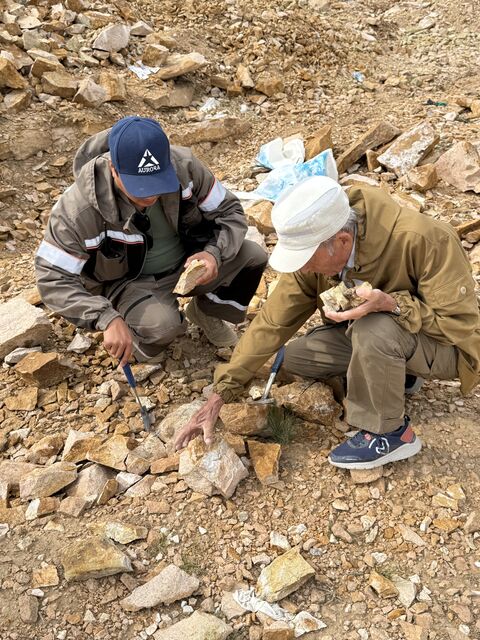
    In a recent visit to the Globmine Resources gold project located in the Sayak district of Northern Balkhash, a team of geologists, including two of Kazakhstan’s most esteemed exploration experts, Yerlan Nabiev and Daulet Muratbekov, highlighted the importance of experience and innovation in mineral exploration. Major mineral discoveries are seldom the result of luck; they stem from decades of accumulated knowledge, disciplined exploration, and a synergy between experience, capital, and cutting-edge technology.

    Yerlan Nabiev, a veteran geologist with over fifty years of experience in the Sayak region, has played a pivotal role in the discovery and evaluation of numerous mineral deposits. His extensive knowledge has earned him recognition as a ‘Discoverer of Mineral Deposits’ in Kazakhstan. Alongside him, Daulet Muratbekov brings decades of field experience across Northern Balkhash, contributing to a rich understanding of the area’s geology.

    During the site visit, the team engaged in discussions about mineralisation, structural controls, and future exploration phases. A notable remark from Nabiev resonated with the team: ‘I have worked in this region for fifty years. At best, we have explored only about thirty percent of it. There are still many discoveries waiting to be made.’ This statement underscores the vast potential that remains untapped in the region, serving as a roadmap for future exploration efforts.

    Aurora, the company behind the project, is committed to building a world-class exploration enterprise by preserving and transferring geological knowledge across generations. This commitment goes beyond traditional methods of documentation; it involves hands-on engagement in the field with seasoned geologists who have significantly contributed to Kazakhstan’s mineral discovery landscape.

    By integrating the expertise of local geologists with modern techniques such as geophysics, remote sensing, 3D modelling, and adherence to CRIRSCO reporting standards, Aurora aims to enhance its exploration capabilities. The Sayak copper-gold district has already yielded some of Kazakhstan’s most significant mineral discoveries, and Aurora believes that this is just the beginning of a new chapter in the region’s geological narrative. With a focus on innovation and collaboration, the company is poised to uncover further valuable resources in the Sayak district.


  • Military Metals Targets Strategic Antimony-Gold Potential in Slovakia’s Tiennesgrund Project

    Military Metals Targets Strategic Antimony-Gold Potential in Slovakia’s Tiennesgrund Project

    Military Metals (CSE: MILI) says its Tiennesgrund Antimony-Gold Project in eastern Slovakia could play a key role in bolstering Europe’s strategic resource independence. Following a preliminary field inspection and historical data review, CEO Scott Eldridge highlighted the project’s potential to strengthen domestic supply chains for critical minerals under the European Union’s Critical Raw Materials Act.

    “Antimony is listed as a critical raw material under the EU’s CRMA, and our project has potential to support the continent’s ambition to secure domestic supply chains for essential minerals,” Eldridge said. “We’re proud of the possibility that we may contribute to Europe’s resilience in the face of global resource volatility and will seek to help power the technologies that drive the green and defence sectors.”

    The 13 km-long, 0.8–1.4 km-wide property hosts numerous historical adits, where mineralised material remains visible in waste dumps. Historical sampling indicates antimony grades between 2.5% and 39.4%, and gold grades from 0.07 g/t to 9.6 g/t.

    A field campaign is planned for October 2025 to study structural controls of mineralisation and define drill targets. The program will include trenching, sampling, and mapping, with drill testing to follow where results indicate significant concentrations of antimony and gold.

    Military Metals, based in British Columbia, focuses on acquiring and advancing mineral projects with a particular emphasis on antimony, a metal critical to batteries, renewable energy systems, flame retardants, and advanced technologies such as liquid metal batteries and solar panels.

    Antimony prices have remained stable since July, with Shanghai Metals Market data showing No.1 ingot prices between ¥185,000 and ¥188,000 ($39,456–$40,092) per tonne.

  • Military Metals Targets Strategic Antimony-Gold Potential in Slovakia’s Tiennesgrund Project

    Military Metals Targets Strategic Antimony-Gold Potential in Slovakia’s Tiennesgrund Project

    Military Metals (CSE: MILI) says its Tiennesgrund Antimony-Gold Project in eastern Slovakia could play a key role in bolstering Europe’s strategic resource independence. Following a preliminary field inspection and historical data review, CEO Scott Eldridge highlighted the project’s potential to strengthen domestic supply chains for critical minerals under the European Union’s Critical Raw Materials Act.

    “Antimony is listed as a critical raw material under the EU’s CRMA, and our project has potential to support the continent’s ambition to secure domestic supply chains for essential minerals,” Eldridge said. “We’re proud of the possibility that we may contribute to Europe’s resilience in the face of global resource volatility and will seek to help power the technologies that drive the green and defence sectors.”

    The 13 km-long, 0.8–1.4 km-wide property hosts numerous historical adits, where mineralised material remains visible in waste dumps. Historical sampling indicates antimony grades between 2.5% and 39.4%, and gold grades from 0.07 g/t to 9.6 g/t.

    A field campaign is planned for October 2025 to study structural controls of mineralisation and define drill targets. The program will include trenching, sampling, and mapping, with drill testing to follow where results indicate significant concentrations of antimony and gold.

    Military Metals, based in British Columbia, focuses on acquiring and advancing mineral projects with a particular emphasis on antimony, a metal critical to batteries, renewable energy systems, flame retardants, and advanced technologies such as liquid metal batteries and solar panels.

    Antimony prices have remained stable since July, with Shanghai Metals Market data showing No.1 ingot prices between ¥185,000 and ¥188,000 ($39,456–$40,092) per tonne.