Tag: geothermal energy

  • Vulcan Energy Completes Preliminary Feasibility Study for Project Ludwig in Germany

    Vulcan Energy Completes Preliminary Feasibility Study for Project Ludwig in Germany

    Vulcan Energy (ASX: VUL, FSE: VUL) has announced the completion of its Preliminary Feasibility Study (PFS) for Project Ludwig, marking a significant advancement in its lithium and geothermal energy production strategy in the Ludwigshafen region of Germany. This project is set to build on the successes and learnings from Vulcan’s first phase, Project Lionheart, and aims to establish an integrated lithium chemical and renewable heat production facility within the Upper Rhine Valley Brine Field (URVBF).

    The PFS highlights robust economic metrics, projecting a pre-tax net present value (NPV8) of €2.6 billion and an internal rate of return (IRR) of 25.0% over a planned 30-year operational life. Notably, Project Ludwig is expected to produce 21,100 tonnes per annum (tpa) of battery-grade lithium carbonate (Li2CO3) while also generating 3,125 GWh per annum of renewable heat for both internal use and external sales. The capital expenditure (CAPEX) for the project is estimated at €1.26 billion, reflecting a 15% reduction in capital intensity compared to Project Lionheart, showcasing Vulcan’s commitment to capital efficiency and sustainable production practices.

    The study indicates a significant increase in mineral resources, with indicated lithium resources rising from 655 kt LCE to 1,251 kt LCE, and inferred resources increasing from 2,128 kt LCE to 2,230 kt LCE. Additionally, a maiden geothermal resource estimate of 193 PJ has been established, further solidifying the project’s potential.

    Vulcan’s Managing Director and CEO, Cris Moreno, expressed optimism about Project Ludwig, stating that it represents a strategic next step in the company’s phased development approach. The project aims to leverage Vulcan’s existing infrastructure and expertise gained from Lionheart, applying a proven integrated geothermal-lithium development model to enhance shareholder value and contribute to Europe’s critical raw materials supply chain.

    The PFS was conducted with support from Worley and JordProxa, ensuring a comprehensive evaluation of the project’s technical and economic viability. As Vulcan prepares for a Final Investment Decision (FID) post-Lionheart production commencement, it is also pursuing an asset-level financing strategy to advance Project Ludwig, with strategic partner selection processes already underway. The project aligns with the European Union’s focus on securing sustainable domestic supply chains for critical raw materials, particularly lithium, as the demand for electric vehicles and battery storage continues to rise.

    Project Ludwig not only aims to enhance Vulcan’s lithium production capabilities but also integrates renewable geothermal heat generation, positioning the company as a key player in the transition to a sustainable energy future in Europe.


  • Cornish Lithium Secures £7.2 Million Government Funding for Geothermal Lithium Project

    Cornish Lithium Secures £7.2 Million Government Funding for Geothermal Lithium Project

    Cornish Lithium has announced that it will receive £7.2 million in government funding as part of a £14.5 million drilling and testing programme aimed at advancing the Cross Lanes Geothermal Lithium project in Cornwall. This funding, part of the DRIVE 35 initiative, is intended to enhance the technical and economic viability of commercial lithium production from geothermal sources. The project aligns with the UK Government’s Industrial Strategy and Growth Sector strategies, particularly in light of the increasing importance of lithium in the energy transition.

    The funding will facilitate the drilling of two production wells, each reaching depths of 2,000 metres, and the operation of a Direct Lithium Extraction demonstration plant at the Cross Lanes site. Additionally, an appraisal well will be drilled at the nearby Baldhu site to confirm the presence of further lithium resources. Exploration drilling conducted in 2023 has already established the existence of lithium-enriched geothermal waters circulating through the underlying rock formations at the project site, near Chacewater.

    Cornish Lithium received planning consent for the development of the site in 2025, which includes further phases of testing and evaluation. The company aims to contribute to the UK’s domestic lithium production target of 50,000 tonnes per year by 2035, recognising lithium’s critical role in the transition to sustainable energy. The full planning application and associated documents can be accessed on the Cornwall Council planning register under PA24/06661.

    This initiative not only supports local economic growth but also positions the UK as a key player in the global lithium market, which is essential for the production of batteries used in electric vehicles and renewable energy storage solutions. As the demand for lithium continues to rise, projects like Cornish Lithium’s are crucial for ensuring a sustainable supply chain within the UK.


  • BGS Enhances International Collaboration with Icelandic Research Institutions

    BGS Enhances International Collaboration with Icelandic Research Institutions

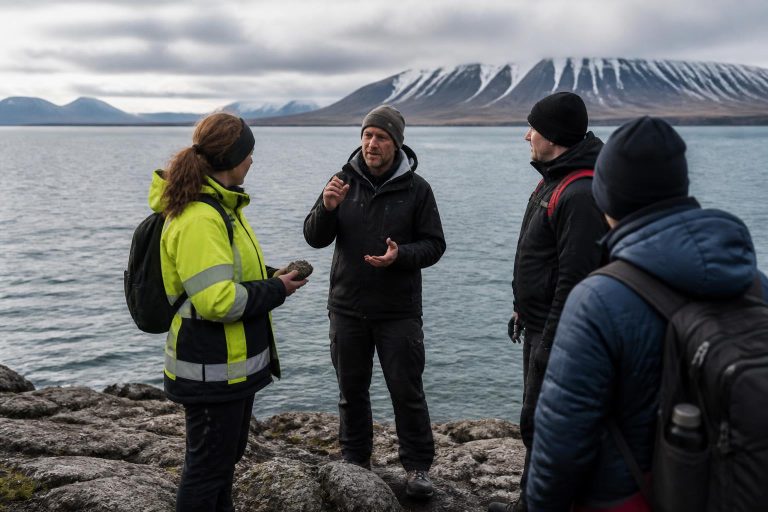
    Researchers from the British Geological Survey (BGS) recently embarked on a three-day visit to Iceland, aimed at fostering international partnerships and exploring future collaborative research opportunities under the Research and Innovation Scotland (RIS) initiative. The visit brought together experts from various fields, including marine geoscience, volcanology, geological hazards, geothermal energy, carbon storage, and offshore infrastructure, collaborating with prominent Icelandic organisations such as Iceland GeoSurvey (ÍSOR), the Icelandic Meteorological Office (IMO), and the University of Iceland.

    The initiative stemmed from discussions between BGS scientists at the Lyell Centre and Professor Eric Bréard from the University of Edinburgh, focusing on leveraging Iceland’s unique geological features and its renowned expertise in active volcanic and geothermal systems. A primary goal of the RIS-funded project was to strengthen connections between Scottish researchers and their Icelandic counterparts, facilitating knowledge exchange and the identification of future research collaborations.

    During the visit, participants engaged in workshops, field visits, and technical discussions, which provided a platform for developing new relationships and sharing insights. A workshop hosted by ÍSOR featured presentations on marine geophysical surveying, geological hazards, volcanology, and carbon storage, highlighting the potential for combining Icelandic marine geophysical capabilities with BGS’s expertise in geological interpretation and hazard assessment.

    Field trips to the Reykjanes Peninsula allowed researchers to observe recent volcanic activity and discuss how geological data can enhance understanding of hazards affecting local communities and infrastructure. Additionally, the delegation visited Carbfix facilities to learn about Iceland’s innovative carbon mineralisation technology, discussing future opportunities for collaboration in carbon storage and subsurface characterisation relevant to developments in Scotland and the UK.

    The visit culminated in the identification of several collaborative opportunities across various domains, including marine geoscience, offshore hazard mapping, and geological characterisation of the Icelandic shelf. This project was facilitated by BGS’s membership in the Scottish Alliance for Geoscience, Environment and Society (SAGES), which promotes collaboration across environmental sciences and supports the development of international partnerships.

    Overall, the visit underscored the importance of international collaboration, highlighting how Iceland’s strengths in geological sciences can complement BGS’s experience in offshore mapping and decision-support products to address shared scientific and societal challenges.


  • Exploring the Rhine Valley’s Potential for Lithium and Rubidium Extraction

    Exploring the Rhine Valley’s Potential for Lithium and Rubidium Extraction

    The Rhine Graben, a geological formation located between France and Germany, is emerging as a significant potential source of strategic metals, specifically lithium and rubidium. A recent study highlights the region’s promising resources, which are found in the hot, saline waters of its geothermal systems. As Europe seeks to reduce its reliance on external sources, particularly China, for these critical elements, the Rhine Valley could play a pivotal role in meeting the growing demand, especially for lithium used in electric vehicle batteries.

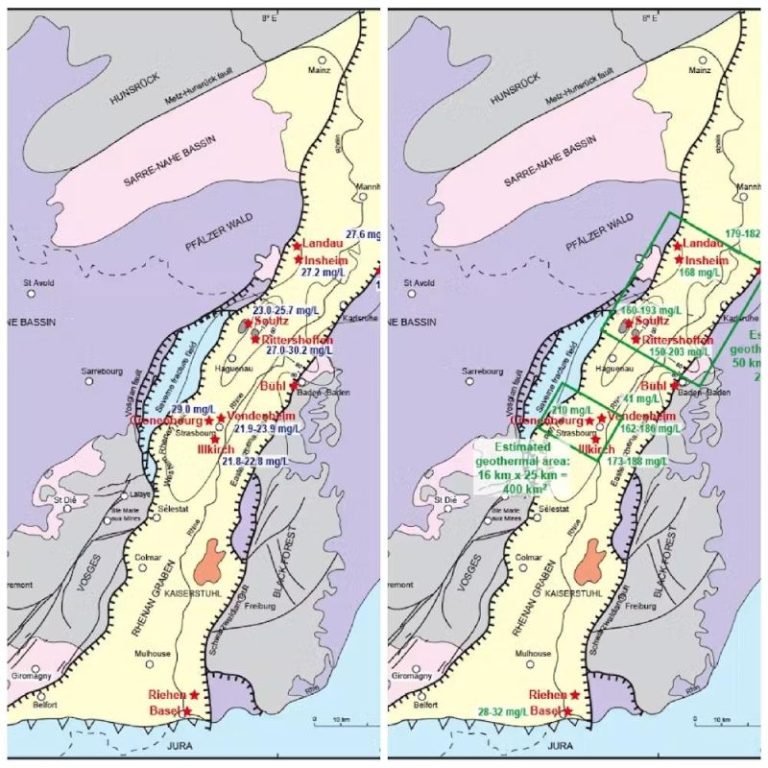
    Lithium demand is surging due to its essential role in the production of electric vehicle batteries, while rubidium, though less known, is vital for advanced technologies including optics and atomic clocks. The study suggests that the geothermal brines in the Rhine Graben, which are already being harnessed for energy production, could also be tapped for their rich lithium and rubidium content. The brines contain approximately 174 mg/L of lithium and 25 mg/L of rubidium, making them among the richest sources globally.

    The research updates previous estimates of lithium reserves in the Rhine Graben, now suggesting they could range from 1 million to 16 million tonnes, with an average estimate of 6.2 million tonnes. This is a significant increase from earlier figures, indicating the region’s potential to contribute substantially to Europe’s lithium supply, especially as global production is projected to rise.

    Rubidium resources are also noteworthy, estimated between 150,000 and 2.3 million tonnes, which could incentivize further exploration and extraction efforts. The study proposes that integrating lithium and rubidium extraction into existing geothermal energy operations could be a sustainable approach, potentially producing 3,000 to 9,000 tonnes of lithium annually, meeting a considerable portion of France’s projected needs by 2035.

    However, several challenges remain before these resources can be fully exploited. Technical hurdles include identifying the most productive areas within the complex geological formations and improving extraction technologies. Additionally, environmental concerns, particularly the risk of induced seismicity associated with deep geothermal energy, must be addressed to gain public support.

    Initial pilot projects in the region are already underway, with ambitions to establish Alsace as a hub for low-carbon lithium production. As the exploration and extraction of these strategic metals progress, the Rhine Graben could soon become a key player in Europe’s quest for energy independence and sustainability.


  • Vulcan Energy Secures Approval to Build Commercial Lithium Extraction Plant in Germany

    Vulcan Energy Secures Approval to Build Commercial Lithium Extraction Plant in Germany

    Vulcan Energy Resources, the German-Australian company pioneering geothermal lithium production in Europe, has received construction approval for its commercial Lithium Extraction Plant (LEP) in Landau, Germany, marking a key milestone toward establishing Europe’s first carbon-neutral lithium supply chain.

    The City of Landau granted the permit for the facility in the D12 industrial zone, complementing previously approved construction permits for the site’s ORC geothermal power plant and 110/20 kV substation. According to Vulcan, it now holds all necessary permits to construct its combined geothermal and lithium extraction plant (G-LEP) in Landau.

    In the project’s first phase, Vulcan plans to produce several thousand tonnes of lithium chloride, which will be transported to Frankfurt-Höchst for further conversion into battery-grade lithium hydroxide monohydrate (LHM). Once fully operational, annual production is expected to reach 24,000 tonnes of LHM — enough to supply approximately 500,000 electric vehicles per year.

    The company’s lithium extraction process uses geothermal brine from the Upper Rhine Valley, home to Europe’s largest combined geothermal and lithium resource. Vulcan’s technology captures geothermal heat for district heating and renewable electricity generation, while extracting lithium chloride from cooled brine before reinjecting it underground. The company notes that the entire operation will be “carbon neutral and fossil fuel-free over its life cycle.”

    Vulcan has already tested the process at pilot scale in Landau and Höchst. In April 2024, the company’s Lithium Extraction Optimisation Plant (LEOP) successfully produced the first lithium chloride from geothermal brine, later refined into battery-grade lithium hydroxide at the Central Lithium Electrolysis Optimisation Plant (CLEOP) in Höchst.

    The upcoming commercial-scale LEP will be built later this year, contingent on the completion of the €690 million financing package for both Landau and Höchst facilities. The German federal government and the states of Rhineland-Palatinate and Hesse have pledged €103.6 million in funding through the EU’s Temporary Crisis and Transition Framework (TCTF) under the “Resilience and Sustainability of the Battery Cell Manufacturing Ecosystem” program.

    In March 2025, the European Union designated Vulcan’s Landau facility as one of 47 strategic projects under the Critical Raw Materials Act (CRMA).

    To secure final financing, Vulcan is leveraging offtake agreements with several major customers. Its latest supply deal, signed with Glencore, covers 36,000–44,000 tonnes of LHM over eight years. The company has also revised earlier agreements with Umicore (23,000 tonnes over six years), LG Energy Solution (31,000 tonnes over six years), and Stellantis (128,000 tonnes over ten years).

    While construction will begin soon, deliveries are now expected later than initially planned. Once operational, Vulcan’s German facilities will play a central role in Europe’s battery supply chain, reducing dependence on imported lithium and advancing the EU’s green industrial strategy.

  • Vulcan Energy’s Mannheim Project Delivers 76% Lithium Resource Boost, Reinforces Europe’s Clean Tech Supply Chain

    Vulcan Energy’s Mannheim Project Delivers 76% Lithium Resource Boost, Reinforces Europe’s Clean Tech Supply Chain

    Vulcan Energy Resources has reported a 76% increase in lithium resources at its flagship Mannheim project in Germany, cementing its role in Europe’s quest for sustainable and domestic battery materials. The resource estimate now stands at 3.2 million tonnes of lithium carbonate equivalent (LCE), up from 1.83 million tonnes, following successful 3D seismic survey results.

    Located in the Upper Rhine Valley Brine Field (URVBF), the Mannheim project uniquely combines geothermal energy generation with direct lithium extraction (DLE) from underground brine. This world-first dual-resource approach aims to deliver carbon-neutral lithium, a key ingredient for electric vehicle batteries and Europe’s green transition.

    Vulcan also revealed its first-ever geothermal resource estimate, with recoverable energy of 548 petajoules, creating operational synergies such as shared drilling, reduced fossil fuel use, and district heating partnerships — notably with Germany’s MVV Energie AG.

    CEO Cris Moreno framed the project as a “strategic decarbonisation engine”, noting its role in boosting Europe’s lithium autonomy while slashing the carbon footprint of battery production. He called it a “significant asset for Europe’s energy and critical raw materials security.”

    The company is now preparing a scoping study that will guide commercial development timelines. The phased buildout strategy allows Vulcan to generate early cash flow, scale production, and supply up to half a million EV batteries annually — without relying on imports from geopolitically sensitive regions.

    In contrast to traditional hard rock or evaporative lithium mining, Vulcan’s DLE method minimizes water use, emissions, and land disturbance, offering a compelling ESG case and potential pricing premium in the market.

    The expansion also aligns with EU Critical Raw Materials Act priorities and opens the door for long-term partnerships with carmakers, battery producers, and clean energy utilities across Europe.

  • Germany Bets on Ion Pump Technology to Extract Lithium Sustainably from Geothermal Brine

    Germany Bets on Ion Pump Technology to Extract Lithium Sustainably from Geothermal Brine

    Germany is taking a bold step toward energy independence and environmental sustainability with the launch of the “Thermion” project, aimed at extracting lithium from geothermal brine using an innovative ion pump technology. Spearheaded by the Fraunhofer Institute for Solar Energy Systems ISE and supported by the Federal Ministry for Economic Affairs and Climate Protection, the project targets lithium-rich geothermal sources in the Upper Rhine Graben—a region considered highly promising for such extraction.

    Unlike conventional lithium mining from hard rock or salt flats—which causes significant CO₂ emissions, consumes large amounts of water, and damages local ecosystems—this method offers a clean alternative. The ion pump selectively captures lithium from thermal water extracted from depths of 3 to 5 kilometers, with the brine subsequently returned to its source almost unchanged. This closed-loop process not only conserves resources but also avoids chemical contamination and landscape disruption.

    The Thermion project will focus on both scientific evaluation of regional lithium reserves and the development of a scalable, efficient extraction process. Operating at 15 to 20 bar and 70°C within existing geothermal power systems, the ion pump enhances economic viability by utilizing dual infrastructure for both energy and lithium production.

    Backed by €2.6 million in government funding, the three-year initiative also envisions the future extraction of other valuable minerals such as cesium, rubidium, and cobalt. If successful, it could significantly reduce Germany’s dependence on lithium imports from countries like Australia and China, strengthen its battery production sector, and help meet growing demand for this critical mineral—expected to rise six-fold by 2030.

    However, challenges remain. To make geothermal lithium extraction a competitive and scalable solution, quicker project approvals and improved cost efficiency are essential. Public support will also be crucial, necessitating transparent communication and community engagement. With legislative support like the proposed Geothermal Acceleration Act, Germany could set a global example for clean, local resource extraction integrated with renewable energy.

  • Vulcan Energy Finalizes Acquisition of Geox, Expands Lithium and Renewable Energy Footprint in Germany

    Vulcan Energy Finalizes Acquisition of Geox, Expands Lithium and Renewable Energy Footprint in Germany

    Vulcan Energy has successfully completed the acquisition of Geox GmbH, securing 100% ownership of its geothermal wells, renewable energy generation assets, and a geothermal and lithium licence in the Landau region of Germany. This strategic move consolidates Vulcan’s upstream Phase One assets and replaces the former Joint Venture and brine offtake agreements with Geox.

    The Landau site is also home to Vulcan’s Lithium Extraction Optimisation Plant (LEOP) and the future Geothermal and Lithium Extraction Plant (G-LEP), which are central to the company’s Phase One Lionheart Project. The project aims to produce battery-grade lithium for European offtake partners and deliver renewable energy and heating to local consumers.

    As part of its development plans, Vulcan will dismantle the existing geothermal power plant at the Geox site, ramp up brine production, and begin supplying baseload renewable heating to the City of Landau. The renewable heating portion of the project has already secured a €100 million grant from the German Federal Government.

    Vulcan estimates that 20% of its Phase One upstream brine production will come from the newly acquired licence area, reinforcing its mission to deliver zero-carbon lithium alongside sustainable energy.

    Managing Director and CEO Cris Moreno stated:

    “The completion of the acquisition of Geox is the final step in consolidating our upstream renewable energy assets for Phase One, streamlining operations, and an important pre-requisite to finalising our Phase One financing package. We are at an important juncture in the history of Vulcan and look forward to sharing more developments as we transition to the construction and production phase of the project.”

  • BASF and Vulcan Partner to Harness Geothermal Energy and Produce Green Lithium

    BASF and Vulcan Partner to Harness Geothermal Energy and Produce Green Lithium

    BASF and Vulcan Energie Ressourcen GmbH have signed a Memorandum of Understanding (MoU) to explore the use of geothermal energy at BASF’s Ludwigshafen site, aiming to provide CO2-free steam and support energy transformation efforts in the Rhine-Neckar Metropolitan Region. The agreement was signed in the presence of Daniela Schmitt, Rhineland-Palatinate’s Minister of Economic Affairs, Transport, Agriculture, and Viniculture.

    The project will tap into deep geothermal energy from the Upper Rhine Graben, which has significant potential for renewable energy. If successful, it could produce up to 300 MW of thermal energy, generating 4 million tons of steam annually and cutting 800,000 tons of CO2 emissions at BASF’s largest site. This renewable heat could also benefit nearby urban centers, such as Ludwigshafen and Frankenthal, for district heating.

    Additionally, Vulcan plans to build a lithium extraction plant at Ludwigshafen, leveraging the geothermal brine to produce sustainable lithium-ion batteries for industries like automotive and electronics. The collaboration highlights innovative integration of renewable energy and resource extraction technologies.

    “This project showcases the transformative potential of deep geothermal energy for industrial sites, cities, and entire regions,” said Uwe Liebelt, President of European Verbund Sites at BASF. He emphasized the importance of partnerships between the public and private sectors to drive the energy transition. Vulcan’s Thorsten Weimann and Cris Morenoechoed the environmental and economic benefits of combining geothermal energy with lithium production.

    Exploratory seismic surveys in the Upper Rhine Graben are set to begin in early 2025, led by Vulcan, to assess geothermal conditions and refine technical plans.

  • Kalisz Set to Begin Geothermal Drilling Project with Major Funding Support

    Kalisz Set to Begin Geothermal Drilling Project with Major Funding Support

    Kalisz, a city in Poland, is preparing to launch exploratory drilling for geothermal resources by early 2025. This project aims to harness thermal water to provide heating for both municipal and residential buildings and supply recreational facilities in the area.

    The initiative has gained momentum following the signing of funding agreements with the National Fund for Environmental Protection and Water Management (NFOSiGW) and six other municipalities. Through this funding, Kalisz will receive PLN 15 million (around USD 3.72 million) to support the geothermal drilling efforts.

    The exploratory well in Kalisz will be drilled as a vertical borehole near Sportowa Street, Wal Jagiellonski, and the Swedrnia River, reaching a depth of 1,700 meters. Following the drilling, the project will conduct hydrogeological, geophysical, and laboratory tests to confirm the site’s viability, with full hydrogeological documentation anticipated by 2026.

    Experts suggest that Kalisz‘s geothermal resources may offer higher temperatures compared to Uniejow and Poddebice, cities where geothermal heating has successfully operated for several years. Mayor Krystian Kinastowski highlighted the potential of this clean energy source, stating, “Geothermal energy offers affordable heating solutions for Kalisz residents and will benefit both current and future housing developments.”

    The geothermal project is expected to provide not only cost-effective energy but also to stimulate economic growth, contributing significantly to Kalisz’s development.