Tag: foreign direct investment

  • Kazakhstan’s Mining Sector: Navigating Investment Challenges Amidst Mineral Wealth

    Kazakhstan’s Mining Sector: Navigating Investment Challenges Amidst Mineral Wealth

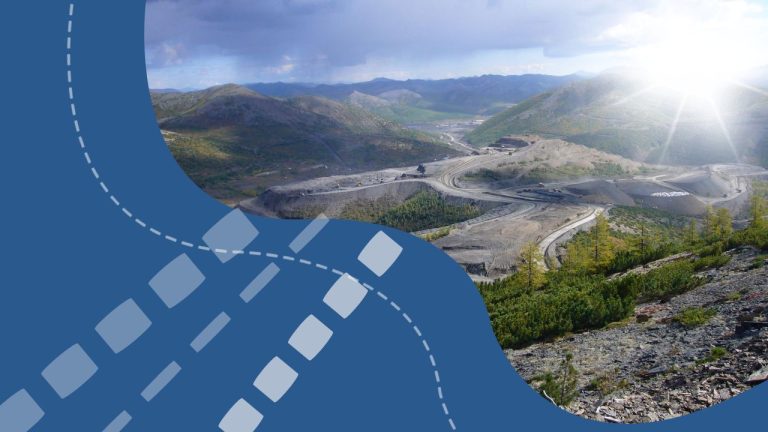
    Kazakhstan’s mining sector is at a crossroads, possessing some of the world’s most strategically important mineral reserves yet struggling to attract the necessary capital for exploration and development. Despite holding significant reserves of copper, gold, chromium, and rare earth elements, and being the largest producer of uranium globally, the country faces a paradox where geological potential is overshadowed by investment challenges. Approximately 65% of Kazakhstan’s territory remains geologically underexplored, with around 3,000 exploration licenses issued, but the development of these licenses hinges on attracting investment. A recent report by the Astana International Financial Centre (AIFC) highlights that the mining sector contributed 12.1% to the GDP, amounting to 16.1 trillion tenge (US$34.1 billion) in 2024, and accounted for about 33% of total exports, underscoring its vital role in the economy.

    The report indicates that while foreign direct investment (FDI) in the mining sector has doubled compared to 2019, reaching approximately $3 billion, challenges remain due to the lack of standardized frameworks for reporting mineral reserves. International investors typically rely on systems like the JORC Code for assessing exploration results, but many reserves in Kazakhstan are still classified under outdated systems, creating a structural bottleneck. This lack of alignment with international standards complicates risk assessment and diminishes investor confidence, particularly at the early stages of exploration where junior mining companies, responsible for 60-70% of global mineral discoveries, face significant funding challenges.

    The mining sector’s fragmentation further exacerbates these issues, with many projects operating in isolation and lacking visibility. As Tim Barry, CEO of Arras Minerals Corporation, noted, the industry is experiencing a shortage of new discoveries due to a decade of underinvestment in exploration. The need for increased investment in exploration is critical, especially as global demand for critical minerals continues to rise.

    In response to these challenges, the AIFC has launched a Junior Mining Platform aimed at improving access to capital for early-stage exploration projects. This initiative seeks to create a structured pipeline of projects, enhance transparency, and facilitate connections between investors and junior mining companies. By incorporating financing instruments commonly used in international markets, the platform aims to address the sector’s main challenge: the lack of structured access to capital at the early stages of development.

    Despite these efforts, Kazakhstan’s mining sector must navigate a complex landscape. While the country is well-positioned geographically to become a key player in global critical mineral supply chains, it must also overcome legacy reserve classification issues and enhance regulatory clarity to attract sustained investment. The global capital demand in extractive industries is projected to reach $2.1 trillion by 2050, driven by the energy transition, making Kazakhstan’s ability to meet investor expectations crucial for its mining sector’s future.


  • China’s East Hope Group Advances $12.6 Billion Aluminium Megaproject in Kazakhstan

    China’s East Hope Group Advances $12.6 Billion Aluminium Megaproject in Kazakhstan

    China’s East Hope Group, one of the world’s largest producers of electrolytic aluminium and alumina, is progressing plans for a colossal $12.6 billion investment in Kazakhstan’s aluminium sector, according to the country’s Ministry of Industry and Construction.

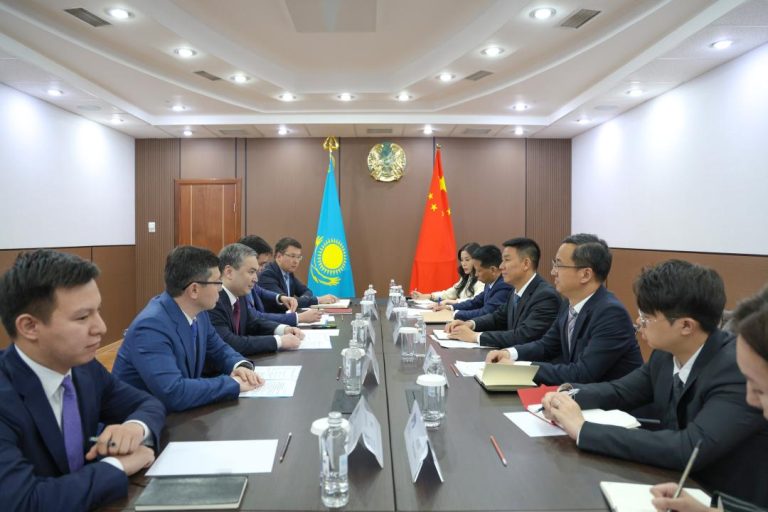
    Kazakhstan’s Industry and Construction Minister Yersayin Nagaspayev held discussions with Chen Lei, East Hope Group’s Director for Strategic Investments. The two sides discussed establishing a full-cycle aluminium cluster within Kazakhstan, spanning the entire process from bauxite extraction through to primary aluminium output.

    Nagaspayev emphasised that full-cycle production projects are in keeping with Kazakhstan’s state industrial policy, which is geared towards deeper processing and the manufacture of high-value-added goods.

    The talks also covered the project’s current status, the formation of a raw materials base, and the development of production capacity and industrial cooperation. The company is currently undertaking geological exploration across multiple blocks in the Aktobe and Kostanay regions. The broader vision encompasses the development of 11 bauxite and coal deposits across the Kostanay and Aktobe regions, with the project expected to generate approximately 10,000 jobs once fully operational. KursivThe Times Of Central Asia

    The initiative has been gathering momentum since February 2025, when East Hope registered a subsidiary in Kazakhstan to serve as the project’s principal operational centre. An investment framework agreement was subsequently signed between East Hope and the Kazakh government. The Times Of Central AsiaMysteel

    As part of the scheme, East Hope Group intends to construct a 1-gigawatt coal-fired power station in the Kostanay region, whilst also exploring potential renewable energy ventures. The project is designed around circular economy principles, with the aim of creating a complete production cycle for green aluminium products. Qazaqgreen

    Both parties reaffirmed their commitment to advancing the project and strengthening investment cooperation.

  • EU Reaches Provisional Deal to Strengthen Foreign Investment Screening Rules

    EU Reaches Provisional Deal to Strengthen Foreign Investment Screening Rules

    The Council of the European Union and representatives of the European Parliament have reached a provisional political agreement to revise the EU’s foreign direct investment (FDI) screening regulation, reinforcing the bloc’s ability to identify and mitigate security and public-order risks linked to foreign investments.

    The updated framework builds on the existing FDI screening system introduced in 2020 and responds to growing geopolitical, technological and supply-chain vulnerabilities. Under the agreement, all EU member states will be required to operate national screening mechanisms with a common minimum scope, ensuring that sensitive investments are assessed consistently across the bloc. Foreign investments made through EU-based subsidiaries will also fall within scope.

    The revised rules target a clearly defined set of sensitive sectors, including dual-use and military items, artificial intelligence, quantum technologies, semiconductors, critical raw materials, energy, transport and digital infrastructure, as well as key elements of electoral and financial market infrastructure. The aim is to harmonise approaches, reduce fragmentation between national regimes and lower administrative burdens for investors, while safeguarding cross-border security interests.

    While cooperation between member states and the European Commission will be strengthened, final decisions on whether to approve, condition or block an investment will remain the exclusive responsibility of the host member state. Where comments or opinions are issued by other member states or the Commission, the host country will be required to explain how these were taken into account.

    Operational improvements include plans for a shared EU database to prevent circumvention of screening rules, an optional single electronic filing portal for investors if requested by at least nine member states, and clearer risk assessment criteria.

    Denmark’s Minister for Industry, Business and Financial Affairs Morten Bødskov said the agreement strikes a balance between security and openness, focusing on the most sensitive technologies and infrastructure while keeping Europe attractive to global investors.

    The provisional deal now requires formal endorsement by both the Council and the European Parliament. Once adopted, the revised regulation will apply 18 months after its entry into force.

  • Mining & Metals Analytical Report Highlights Kazakhstan’s Potential as a Mineral Investment Hub

    Mining & Metals Analytical Report Highlights Kazakhstan’s Potential as a Mineral Investment Hub

    A new analytical report produced by AIFC highlights Kazakhstan’s significant potential to become a leading hub for mineral investment, positioning the country as a crucial player in the global energy transition. The report, which includes what is believed to be the first-ever comparative benchmark of Kazakhstan against major mining jurisdictions like Canada, Chile, Australia, and Indonesia, concludes that while the nation has vast untapped potential, it must take specific steps to fully capitalize on it.

    The report identifies several key actions necessary to support this ambition. These include a strategic focus on active investment in junior mining companies, which are vital for early-stage exploration. The country also needs to provide a stable legal and regulatory framework to attract and retain foreign investment. Finally, Kazakhstan must align its development strategy with its mineral strengths and global trends, focusing on the materials most in demand for clean energy technologies.

    The report’s findings are underpinned by compelling data points that showcase Kazakhstan’s existing role and future prospects in the mining and metals sector. In 2024, the industry attracted $3 billion in gross foreign direct investment, accounting for 17% of the national total. Mining and metals also made up a substantial 12.1% of the country’s GDP last year. Despite its established importance, a staggering 65% of Kazakhstan’s geological area remains unexplored, presenting a monumental opportunity for new discoveries. These domestic figures are set against the backdrop of a global context where an estimated $2.1 trillion in mining investment will be needed by 2050 to meet the demands of a net-zero world.