Tag: Eurasian Resources Group

  • Eurasian Resources Group Launches Major Wind Farm in Kazakhstan

    Eurasian Resources Group Launches Major Wind Farm in Kazakhstan

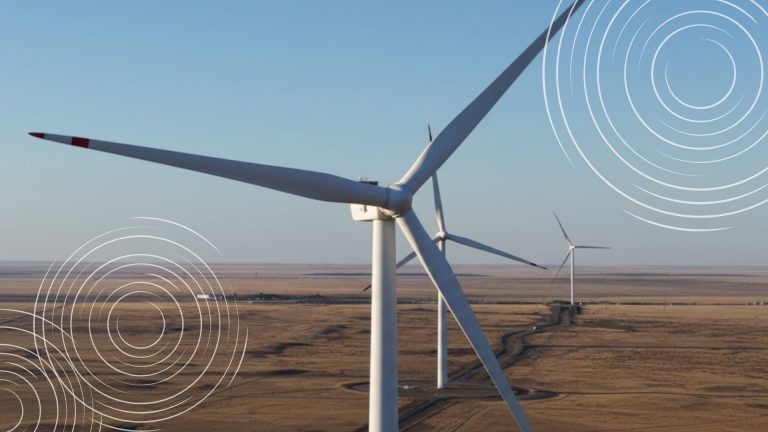
    Eurasian Resources Group (ERG), a global metals and mining company headquartered in Luxembourg, has opened the Khromtau wind farm in Kazakhstan with a capacity of 150 megawatts of green energy. The project is one of the largest renewable energy facilities in Kazakhstan and Central Asia and required an investment of more than US$142 million. The wind farm is located in the Aktobe Region and includes 24 turbines. The facility will generate more than 500 million kilowatt hours of green energy annually. All in all, the facility will help reduce up to 440,000 tonnes of carbon dioxide emissions and save more than 300,000 tonnes of coal each year. The project has been implemented by ERG Capital Projects, a Group subsidiary, with financial support from the Development Bank of Kazakhstan.

    During the opening ceremony of this critical green energy project, Shukhrat Ibragimov, CEO and Chairman of the Board of Directors of ERG, said: “With its Khromtau wind power project, the Group makes a major contribution towards achieving Kazakhstan’s national goal of increasing the share of renewable energy sources. ERG is committed to ESG principles, and the new Khromtau wind power farm is a logical and very ambitious next step while implementing this. ERG’s first wind power project has already become a symbol of our transition to green energy.”

    The ESG Agenda is part of the company’s Strategy. The Group’s medium-term goal is to reduce the carbon footprint of its core products (aluminium, ferroalloys and iron ore pellets) by 30%. To achieve this, ERG is implementing projects with cumulative investments totalling US$300 million. In addition to wind power, these projects include switching the Kacharsky heating centre to gas in the Iron Ore Division, reducing steam consumption and improving the alumina production process in the Aluminium Division, and building a ferroalloy gas recycling power facility at the Aktobe Ferroalloys Plant to convert secondary energy resources into electricity.

  • Kazakhstan Lifts Export Duty on Gallium to Boost Strategic Metal Production

    Kazakhstan Lifts Export Duty on Gallium to Boost Strategic Metal Production

    Kazakhstan’s government has officially lifted a 10% export duty on gallium, a strategic move aimed at boosting domestic production and strengthening the country’s role in the global supply chain for high-tech metals. The decision was confirmed by the Prime Minister’s press service following a meeting of the interdepartmental commission on foreign trade policy, chaired by Deputy Prime Minister Serik Zhumangarin.

    Officials highlighted that although Kazakhstan has not recently produced gallium, the global demand remains steady due to its essential role in electronics, semiconductors, and defense industries. Eurasian Resources Group (ERG) plans to capitalize on this opportunity, with exports to Europe expected to begin in 2026.

    ERG’s production will be sourced from red mud waste at the Pavlodar Aluminum Plant. The company initially targets 12 tons of gallium per year, with plans to scale up to 15 tons annually — positioning ERG as the world’s second-largest gallium producer behind China.

    In parallel, Kazakhstan has imposed a temporary export ban on non-ferrous metal blanks and ingots, including raw copper, aluminum billets, and lead ingots, effective until December 31, 2025. This measure is designed to support domestic processing and ensure strategic raw materials remain within the country.

    Gallium prices currently hover around $237 per kilogram, meaning 12 tons of exports could generate roughly $2.8 million. The government believes the policy shift will enhance Kazakhstan’s economic diversification and export revenues, while supporting critical minerals cooperation with partners such as the United States.

  • Kazakhstan to Become World’s Second-Largest Gallium Producer as ERG Commits $20M Investment

    Kazakhstan to Become World’s Second-Largest Gallium Producer as ERG Commits $20M Investment

    Eurasian Resources Group (ERG) announced plans to invest $20 million into facilities for producing gallium in Kazakhstan, marking the country’s entry into the global gallium supply chain. Starting in 2026, ERG will begin extracting the critical mineral from bauxite ore processed for alumina, with initial production targets set at up to 15 metric tons per year.

    Gallium, essential in the production of semiconductors, radar systems, and missile guidance technologies, is listed as a critical mineral by both the United States and the European Union. ERG’s initiative comes at a time of growing concern over China’s dominance in the gallium market, which currently accounts for the vast majority of the world’s 760-ton annual output, according to the US Geological Survey.

    “ERG plans to become a significant player in the global market for gallium, starting production in 2026 to supply OECD countries,” said ERG CEO Shukhrat Ibragimov. The move could make Kazakhstan the world’s second-largest gallium producer, directly challenging China’s supply monopoly.

    China imposed a ban on gallium exports to the U.S. in December 2024, following a broader crackdown by Washington on Beijing’s chip industry. This followed a series of tighter export controls and licensing regimes applied to gallium, germanium, and antimony over the prior 18 months, raising alarm bells among Western nations dependent on Chinese supply.

    ERG’s investment also reflects Kazakhstan’s rising profile as a key critical mineral supplier. With its bauxite-processing infrastructure already in place, the country is well positioned to enter strategic supply chains for electronics, defence, and advanced manufacturing across Europe and North America.

  • US Investor James Cameron Offers $5B to Acquire Eurasian Resources Group Amid Kazakhstan’s Rare Earth Push

    US Investor James Cameron Offers $5B to Acquire Eurasian Resources Group Amid Kazakhstan’s Rare Earth Push

    US businessman James Cameron has made a $5 billion offer to acquire Eurasian Resources Group (ERG), according to a letter sent to the company’s board, as the Kazakh mining giant prepares to play a central role in Kazakhstan’s rare earths expansion.

    ERG, headquartered in Luxembourg and 40% owned by the Kazakh government, is a key global producer of copper, cobalt, aluminum, and iron ore. Last year, the company launched a task force to explore Kazakhstan’s reserves of rare earth and rare metals—a strategic move gaining momentum amid geopolitical tensions and a global race to secure critical minerals.

    Talks between ERG and Cameron—not related to the film director of the same name—have reportedly been ongoing since late 2024, according to sources familiar with the matter. Cameron previously served as chairman of FTSE 250 mining firm Petropavlovsk.

    While ERG, the Kazakh government, and Cameron have not publicly commented, the letter seen by Reuters states that Goldman Sachs is in early discussions to advise on the potential acquisition. Financing would be secured through a mix of Cameron’s own capital and equity from investors in the US, Australia, and the Middle East.

    The move comes at a critical time, as Kazakhstan announced a rare earth discovery exceeding 20 million metric tons—a find that could position the country among the top three rare earth holders globally, behind China and Brazil. Prime Minister Olzhas Bektenov has confirmed that previously classified Soviet-era geological data is being declassified to support exploration and investment.

    ERG is poised to play a pivotal role in the country’s plan to increase rare earth production by 40% by 2028. The group once produced one-fifth of the world’s gallium, a strategic metal in semiconductor production, until Chinese output caused a price collapse in 2012. China has since banned gallium exports to the US, further driving American interest in alternative sources.

    The deal could mark a new chapter for ERG, following the death of board chairman and co-founder Alexander Mashkevich last month. With only Patokh Chodiev remaining from the original founding trio, Cameron’s bid could reshape the company’s leadership and strategic direction.

  • Eurasian Resources Group to Invest in Social Projects in Pavlodar Region

    Eurasian Resources Group to Invest in Social Projects in Pavlodar Region

    According to the press service of the regional akim, this year Eurasian Resources Group will allocate 2.9 billion tenge for the implementation of socially significant projects in the Pavlodar region.

    The cooperation agreement was signed by the shareholder and chairman of the supervisory board of Eurasian Group, Shuhrat Ibragimov, and the akim of the Pavlodar region, Asain Baykhanov.

    Traditionally, the funds will be allocated for projects aimed at maintaining stability and development in the region. They are selected by ERG and the regional akimat based on the comprehensive needs of the region. The projects cover areas such as healthcare, housing and communal services, landscaping, greening, and several other important directions.

    According to the press service of the akim of the Pavlodar region, this year 18 projects totaling 11.4 billion tenge are planned to be implemented from the budget. They will focus on landscaping and road repairs in cities and districts of the region, the renovation of Lermontov Street in the regional center, the construction of an ice arena in Aksu, the reconstruction of the “Shakhter” park in Ekibastuz, and others.

  • ERG has entered into a five-year agreement for the supply of cobalt with EVelution Energy.

    ERG has entered into a five-year agreement for the supply of cobalt with EVelution Energy.

    Eurasian Resources Group (ERG), a leading diversified group in the extraction and processing of natural resources, has entered into a preliminary five-year agreement with EVelution Energy (EVelution), an American company specializing in battery material processing for electric vehicles. The agreement entails the supply of cobalt hydroxide produced by ERG to EVelution’s cobalt processing plant in the United States, which the company plans to begin constructing in 2024. ERG’s cobalt will satisfy nearly half of EVelution’s annual raw material requirements.

    The announcement of the agreement was made during the London Metal Week, an annual conference attended by representatives of the global metallurgical industry. The collaboration between ERG and EVelution will provide an impetus for the development of the mineral production industry in the United States. It will also contribute to sustainable development goals by creating new jobs in the manufacturing sector and supporting global climate change mitigation efforts.

    Furthermore, the partnership between the two companies marks a significant milestone in the development of cobalt processing capabilities in the United States. Currently, there are no industrial-scale cobalt processing facilities in the country, while over 70% of global cobalt sulfate production is concentrated in China.

    Benedikt Sobotka, CEO of ERG, emphasized, “We are pleased to reach this agreement for the supply of cobalt hydroxide with EVelution Energy. This collaboration supports the transition to clean energy and will help meet the pressing needs of the American market in developing cobalt processing capacity.”

    Navaid Alam, President and CEO of EVelution Energy, stated, “We are delighted to establish a long-term partnership with ERG for the supply of cobalt hydroxide. This agreement, along with potential partnerships we are exploring with other suppliers, will ensure a sustainable cobalt hydroxide supply to meet the growing demand of our customers in North America for domestically produced zero-carbon cobalt sulfate, in compliance with the Inflation Reduction Act (IRA).” Cobalt sulfate is a material required for the production of electric vehicle batteries.

    The cobalt hydroxide will be supplied from ERG’s flagship facility, Metalkol, located in the Democratic Republic of Congo, which is one of the world’s leading cobalt producers.

    The EVelution plant is scheduled to commence operations by 2026. The company has announced plans to install its own solar battery-based power source at the facility, with surplus clean electricity being supplied to local farmers. Additionally, the plant will reuse approximately 70% of the water it consumes.

  • How does the environmental agenda affect Kazakhstan’s industry?

    How does the environmental agenda affect Kazakhstan’s industry?

    The adoption of ESG principles, encompassing environmental, social, and corporate governance aspects, is gaining momentum worldwide, and Kazakhstan is no exception. According to inbusiness.kz, major manufacturing companies in the country are actively modernizing their facilities, implementing measures to reduce emissions, and promoting waste recycling practices.

    By incorporating ESG principles into their operations, companies can not only improve their environmental impact but also enhance their social and managerial aspects, ultimately leading to improved financial and economic performance. Natalya Lim, a partner at PwC, emphasizes the urgent need for a global and unified approach to address critical issues such as climate change, poverty, inequality, and water scarcity.

    Lim believes that the corporate sector plays a decisive role in overcoming these challenges, and organizations in Kazakhstan are demonstrating their readiness to take responsibility and drive positive changes. In the industrial sector, companies like “KazMunaiGaz” are leading the way by adopting their own “Low Carbon Development Program for 2022-2031.” The objective of this program is to reduce greenhouse gas emissions by 15% by 2031 compared to the baseline year of 2019.

    Moreover, “KazMunaiGaz” is actively collaborating with partners to develop renewable energy projects with a total capacity of at least 1 gigawatt, along with an energy storage system of 300/600 megawatts. These efforts reflect the commitment of Kazakhstani companies to sustainable development and their contribution to mitigating environmental challenges while driving economic growth.
    Another industrial giant, Eurasian Resources Group, is actively working on reducing emissions at its facilities and minimizing their environmental impact. For instance, on August 10th, they showcased a unique ore processing plant for handling the tailings of the Donskoy Mining and Processing Plant to the Prime Minister of Kazakhstan, Alihan Smailov. This plant was built by the multinational company “Kazchrome” (a subsidiary of ERG) in the city of Khromtau, Aktobe region.

    Why is this project important? The Donskoy Mining and Processing Plant was founded in 1938 in Khromtau and is the world’s second-largest deposit of confirmed chromium reserves. The ore extracted here is used for the production of ferroalloys in metallurgy, the manufacturing of refractories, and in the chemical industry for producing chromium compounds.

    Every year, in the process of crushing and grinding chromium ore at the plant, around 900,000 tons of tailings waste are generated. Currently, there are already 14.5 million tons of accumulated tailings containing up to 35% chromium oxide. “Kazchrome” decided to address this issue by constructing the ERG Green ore processing plant.

    This plant will enable the extraction of chromium oxide from the tailings through gravity-based enrichment, and the resulting commercial concentrate can be used in metallurgy for further processing.

    The new facility will allow for the processing of approximately 1.7 million tons of tailings annually, both the existing waste and the continuously generated new waste. Consequently, this will not only improve the environmental conditions in the Aktobe region but also enhance the economic efficiency of the plant itself.

    “The most important thing is that after processing, the tailings must be properly reclaimed in accordance with all environmental standards to minimize the impact on the environment and public health,” commented Alihan Smailov during his visit to the factory.

    In parallel with this, by the end of 2024, as part of the program for processing accumulated tailings, three more initiatives are planned to be implemented. As a result, ERG will ensure the production of 200,000 tons of ferrochrome, leading to an additional revenue of approximately 10 billion tenge in tax receipts annually for the state.

    “Following the company’s mission and ESG principles, management must ensure high environmental standards. Therefore, the group has developed an Environmental Strategy as part of our comprehensive ‘Green Metallurgy’ program. Within the environmental strategy until 2030, we plan to invest 228 billion tenge,” noted Shuhrat Ibragimov, Chairman of the Supervisory Board and member of the Board of Directors of ERG, during the project presentation.

    Investors are involved in the process
    Initiatives like these require substantial investments, and modernizing existing facilities or building new ones is difficult without the assistance of investors.

    For example, the total investment in the ERG Green plant project amounted to 96 billion tenge. Part of the funding was provided by the Development Bank of Kazakhstan, which, according to the project list, has actively begun working in the ESG direction.

    “We consider supporting projects that adhere to the principles of sustainable development to be important. This project aligns with the Environmental Code’s principles of sustainable development – the preservation of natural resources for current and future generations, as well as the principle of integration – the balance between environmental tasks and economic development,” commented Marat Yelibaev, Deputy Chairman of the Board of BRK.

    Like other development institutions, the Development Bank of Kazakhstan is focusing on projects that incorporate ESG principles into their operations. For instance, earlier this year, the bank issued its first “green” bonds, and the proceeds from the bond issuance were directed towards a project by the KEGOC company for modernizing the power grids in Western Kazakhstan.

    In the summer, a credit agreement was signed with the “Almaty Power Plants” to convert TEC-2 in Almaty to natural gas. This project will be financed jointly with the European Bank for Reconstruction and Development and the Asian Development Bank.

    From the example of BRK and other financial institutions, a clear trend is emerging: ESG initiatives of businesses are of interest to investors. This signals that in the near future, many more environmental projects will be implemented by industrial and infrastructure companies.

  • ERG’s subsidiary will engage in geological exploration in the Karaganda Region

    ERG’s subsidiary will engage in geological exploration in the Karaganda Region

    The ERG Exploration Company (a subsidiary of ERG) will be engaged in geological exploration on 2,800 hectares in the Aktogay District of the Karaganda Region.

    “The Akimat (local government) of the Aktogay District resolves: 1. To establish a public servitude (limited right to use someone else’s land) until August 23, 2029, without expropriating the land from the owners and land users of the limited liability company ‘ERG Exploration’ for a land plot with a total area of 2,813.7667 hectares for mineral exploration, as specified in the annex to this resolution,” states the draft resolution of the Aktogay District Akimat in the Karaganda Region, posted for public discussion.

    The majority of the land is part of the district’s land fund – 1,232.5 hectares, while the remaining lands belong to the “Dauletbek” farm – 712.3 hectares and the “Beksultan” farm – 868.9 hectares.

    The General Director of ERG Exploration, Azamat Shalabayev, informed journalists at a geologists’ congress about plans for exploring new areas in the republic.

    “We have a large program for digitizing geological material archives. We have created separate groups for specific directions, which are separately searching for our profile metals – searching for chrome, manganese, and there are groups dealing with other metals, including copper, polymetals, as well as RM (rare metals) and REM (rare earth metals). So, we will be searching in this direction, and the management sets us the task of finding new metals that are not typical for our group,” he said.

    Shalabayev reminded that on August 1, the company won the right to explore a copper area in Northern Pri-Balkhash at an auction, paying more than 420 million tenge. Geological research was carried out there during the Soviet era, and later jointly by Rio Tinto and “Kazgeology.” The area was studied to a depth of 200 meters. The study showed estimated resources of up to 200,000 tons of copper, but with a low metal content in the ore – 0.2-0.3%. ERG plans to study the area to a depth of 700 meters in hopes of finding valuable minerals.

    The British-Australian company Rio Tinto conducted geological exploration, searching for copper in the Korgantas and Balkhash-Saryshagan areas in the Karaganda Region since 2015. However, the geological exploration of Korgantas did not yield significant results, so the subsoil use contract was terminated.

    ERG’s ultimate owners are the Ministry of Finance – 40%, Alexander Machkevitch and the Ibragimov family – 20.7% each, and Patokh Shodiev – 18.6%. Alexander Machkevitch, Patokh Shodiev, and the family of the late Alijan Ibragimov (the spouse of Mukadas Khan Ibragimov and four sons, Dostan, Davron, Shukhrat, and Furkhat) became the first dollar billionaires in Kazakhstan according to Forbes in 2005 with a capital of $1 billion each. Later, Alexander Machkevitch and Patokh Shodiev changed their citizenship from Kazakhstani to Israeli and Belgian, respectively. The Chairman of the Board of Directors and a major shareholder of Eurasian Resources Group, Alexander Machkevitch, was ranked sixth among the richest Israelis with $3.7 billion in Forbes’ rating last year.

  • For the first time at SSGPO, new equipment has been produced for the factory complex

    For the first time at SSGPO, new equipment has been produced for the factory complex

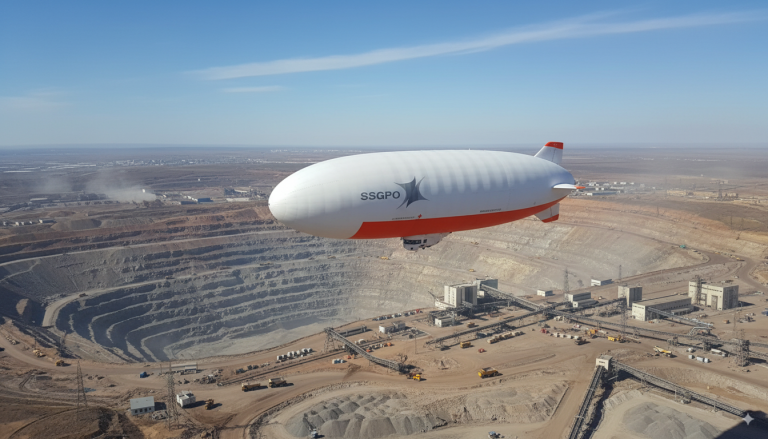
    “For the first time at the Sokolov-Sarbaysk Mining and Enrichment Production Association (SSGPO), a subsidiary of ERG (Eurasian Resources Group), the employees of the repair-mechanical metallurgical plant have manufactured a bath for a magnetic separator. This bath is a crucial component in the enrichment of strongly magnetic ores through the wet separation method. Producing this equipment in-house will lead to a reduction in the cost of the final product.

    Within the ore enrichment section of the SSGPO factory complex, 280 separators of various types and sizes are installed. The majority of these are the PBM-P-120/300 separators, which play a role in enriching ore and materials with a size of 3 mm, dividing them into two products: magnetic and non-magnetic.

    These mechanisms consist of a magnetic drum and a counter-flow bath. The wear of the latter impacts the loss of produced iron ore concentrate, which goes to tailings and is disposed of in tailings storage.

    To address this situation, the question of producing counter-flow baths within the conditions of the repair-mechanical metallurgical plant (RMMZ) was thoroughly examined. The first trial bath for the PBM-P-120/300 separator has been manufactured.

    “Employees of the factory approached us with a proposal to create equipment necessary for the technological production chain,” explains Denis Shein, the master of the metallurgical constructions section at RMMZ. “We used stainless steel for manufacturing, a material we hadn’t worked with before. We modernized and reconfigured our own equipment. Four repair fitters and three electric gas welders, led by a master, completed the task within a month. Currently, we have produced one frame and a magnetic separator bath in a trial version. In the future, we will reach the planned production rates.

    Achieving the optimal operating mode for the modern equipment will occur in the near future. The production process for the baths will be put into full operation afterwards. According to preliminary data, 80 units of the new equipment are needed.

    “The proposed systemic work will not only make the production process more flexible and reduce dependence on external suppliers but will also expand the possibilities of the enterprises,” says Alexey Shtal, the head of the mechanics department in the Industrial Complex. “We can now replace old separator mechanisms with new ones and outline a joint action plan. The bath is manufactured at the plant and sent to the factory before planned preventive work on the technological section. During maintenance work, equipment modernization is conducted.

    This proposed system will reduce the need for repairs, prevent the loss of iron ore concentrate, and decrease the cost of the final product.”