Tag: EU funding

  • Europe Advances in Circular Advanced Materials with New Funding Initiatives

    Europe Advances in Circular Advanced Materials with New Funding Initiatives

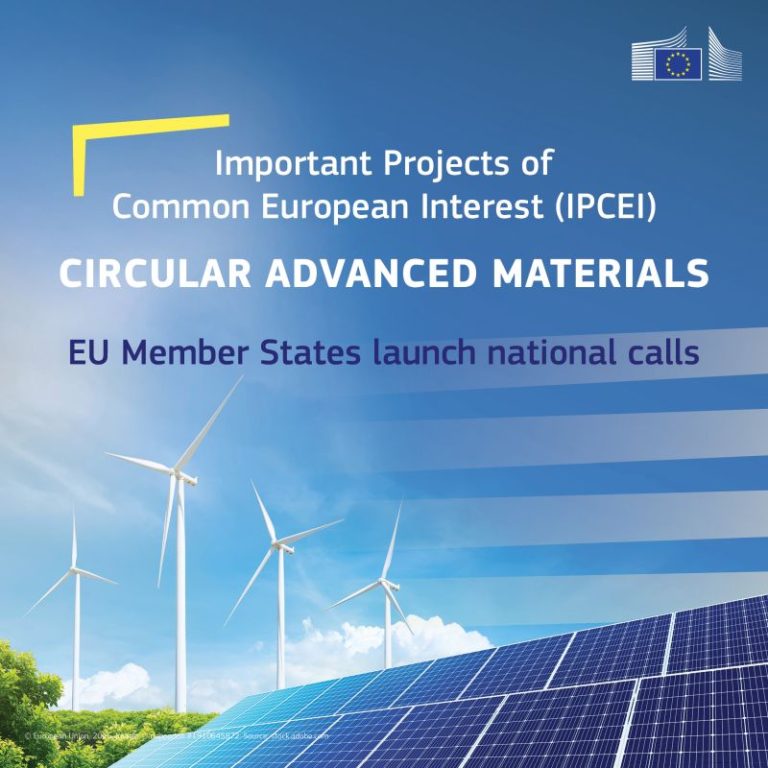
    In a move to enhance its leadership in advanced materials, Europe has initiated several national calls for expressions of interest as part of the Important Projects of Common European Interest (IPCEI) on Circular Advanced Materials. This initiative, launched by multiple EU Member States, aims to foster innovation, sustainability, and circularity across strategic industrial value chains, thereby strengthening European industrial ecosystems. The announcement follows the 2024 EU Strategy on Advanced Materials for Industrial Leadership, which seeks to bolster the continent’s competitiveness and strategic autonomy in the global market.

    The calls for expressions of interest are designed to prepare for the future IPCEI, which will be submitted for notification to the European Commission. Currently, national calls are open in several countries, including Italy, Austria, Spain, and Poland Additionally, Belgium and Slovenia have also launched calls, signalling a broad commitment across the region to enhance capabilities in advanced materials.

    This initiative is expected to play a crucial role in the development of advanced materials that are not only innovative but also sustainable, aligning with the EU’s broader goals of environmental responsibility and economic resilience. By encouraging collaboration among nations and industries, the IPCEI aims to create a robust framework for advancing technology and materials that can meet the demands of a rapidly changing industrial landscape.

    As Europe continues to position itself at the forefront of advanced materials technology, these funding opportunities represent a pivotal step towards achieving a more sustainable and circular economy. Stakeholders in the mining and materials sectors are encouraged to engage with these initiatives to leverage potential funding and collaboration opportunities that can drive innovation and growth in their respective fields.


  • European Metals submits full EIA for Cinovec lithium project in Czech Republic

    European Metals submits full EIA for Cinovec lithium project in Czech Republic

    European Metals Holdings has submitted the full environmental impact assessment (EIA) for its Cinovec lithium project to the Czech Ministry of the Environment, marking a key regulatory milestone and meeting an important condition tied to EU funding. The EIA was formally lodged on 31 December, completing the two-stage environmental assessment process that began with an initial screening submission earlier in the year.

    The filing covers the entire Cinovec development and aligns with the recently completed definitive feasibility study, which outlined a mine life exceeding 26 years and forecast annual production of about 37,500 tonnes of battery-grade lithium carbonate. The ministry will now begin its formal review, with public consultations and hearings expected later in the quarter.

    The submission also satisfies a core requirement of the EU Just Transition Fund grant awarded to the project. In April, Czech authorities approved CZK 800 million, around $36 million at the time, subject to the EIA being filed by the end of 2025 and approved by mid-2026. European Metals said the project remains on track to meet the full timetable.

  • JSW Launches €25.6M METH2GEN Project to Turn Methane Emissions into Clean Hydrogen with EU Support

    JSW Launches €25.6M METH2GEN Project to Turn Methane Emissions into Clean Hydrogen with EU Support

    Jastrzębska Spółka Węglowa (JSW), the EU’s largest coking coal producer, has launched the METH2GEN project—an innovative €25.6 million initiative aimed at curbing methane emissions from mining operations and converting the captured gas into low-cost hydrogen. Over €20 million of the total funding is provided by JSW itself, with additional support from the European Union.

    The project features two primary components. First, it introduces directional drilling technology to improve methane capture from underground geological formations. This is expected to raise methane recovery efficiency to as much as 70% in mining areas like the Budryk mine. JSW highlights that the new technique will not only reduce emissions but also enhance mine safety and lower operational costs.

    “This is an important step towards modern, safe, and environmentally friendly mining,” said Adam Rosmus, JSW’s VP of Technical and Operational Affairs.

    The second part of the project will see the construction of a hydrogen production facility using Steam Methane Reforming (SMR) technology. Captured methane will be converted into hydrogen, and the resulting CO₂ will be reused in fire prevention systems. According to JSW, this method allows for 100% utilization of methane from degassing stations and offers a cheaper alternative to hydrogen produced via electrolysis.

    “This is a breakthrough solution… particularly important in view of the new European methane standards,” said Artur Badylak, Director of JSW’s Degassing and Methane Policy Office.

    Geological surveys are underway to determine the best location for the hydrogen plant, and drilling equipment is already being procured.

    METH2GEN is one of four major EU-supported environmental initiatives undertaken by JSW, with a combined budget of over €63.8 million. Methane currently accounts for 73% of the company’s total carbon footprint, making its reduction central to JSW’s green transition strategy.

    Despite facing geological and operational challenges, JSW remains committed to its environmental goals. In 2024, it reduced coal production by 9.3% and coke output by 8.6% compared to the previous year. However, the company still reported a net loss of PLN 7.3 billion in 2023.

  • Bulgaria’s Industrial Sectors Need Comprehensive Strategy to Overcome Challenges

    Bulgaria’s Industrial Sectors Need Comprehensive Strategy to Overcome Challenges

    Bulgaria’s manufacturing and mining sectors are currently facing serious challenges due to global economic shifts and rising competition. High energy consumption and largely outdated equipment make these sectors particularly vulnerable. A comprehensive National Industrial Strategy is necessary, aligning with European Union priorities such as the European Green Deal and the Net-Zero Industry Act, to increase sustainability, competitiveness, and innovation.

    According to Petar Murginski, the manufacturing and mining sectors are vital to Bulgaria’s economy, significantly contributing to industrial production and employment. However, high energy consumption, outdated equipment, and a heavy reliance on fossil fuels pose significant challenges. The 2023 European Semester Country Report for Bulgaria shows that 63% of the country’s energy mix comes from fossil fuels, while renewables only account for 15%. Additionally, Bulgaria has one of the lowest circular economy rates in Europe, with only 4.8% material reuse compared to an EU average of 11.5%, according to the 2022 Eurostat Circular Economy Report.

    Despite these challenges, Bulgaria holds significant potential in critical raw materials and green technology adoption. The country’s strategic position in the European supply chain is underutilized, and there are substantial regional disparities in productivity and infrastructure. The Sofia Capital region alone generates 41% of the national GDP, according to 2022 National Statistical Institute GDP Data. To address these issues, a comprehensive National Industrial Strategy focusing on reducing carbon emissions, enhancing energy efficiency, and promoting the circular economy is essential.

    The strategy’s primary objective should be to facilitate Bulgaria’s transition towards greener, more innovative, and technologically advanced industries. It aims to increase competitiveness by promoting resource efficiency, digitization, and circular economy practices. Aligning Bulgaria’s industrial growth with EU policies, such as the Critical Raw Materials Act, and setting clear policy objectives to empower the Bulgarian Ministry of Economy and Industry are crucial for implementing reforms that enhance productivity, attract investment, and secure strategic autonomy.

    Key Findings reveal that both the mining and manufacturing sectors face significant technological gaps and supply chain vulnerabilities. High energy consumption per unit of production and outdated equipment make these industries particularly vulnerable. Modernizing equipment and processes is essential to increase efficiency and reduce carbon emissions. Investment in new technologies and infrastructure is crucial for overcoming these challenges. Supply chain disruptions, especially of critical raw materials, also present significant risks to industrial stability.

    Despite these challenges, there is considerable potential for green technology adoption. Bulgaria’s strategic position and rich mineral resources offer opportunities for sustainable development. Enabling zero-emission technologies and promoting the circular economy are critical. Investing in renewable energy sources and improving energy storage solutions can significantly enhance the sustainability of these sectors.

    The strategy recommends several measures for modernization and sustainability, including modernizing existing infrastructure, adopting new technologies to improve energy efficiency, and reducing emissions. Implementing circular economy practices, encouraging innovation through investment in research and development, and supporting companies in the green technology sector are vital for sustainable growth.

    Policy recommendations include providing incentives for the adoption of zero-emission technologies, supporting projects that contribute to carbon neutrality, encouraging the circular use of critical raw materials, and supporting recycling initiatives. Developing industrial parks as hubs for innovation and sustainable growth is also emphasized, with a focus on upgrading infrastructure, creating favorable conditions for attracting strategic investors, and addressing regional disparities.

    The strategy outlines a clear roadmap for implementation, including engaging with key stakeholders, establishing a monitoring and evaluation framework, and maintaining flexibility to adapt based on ongoing feedback and changing conditions.

    Expected outcomes include enhanced competitiveness, sustainable growth, increased adoption of sustainable practices, and reduced regional disparities. Linking the strategy to EU funding opportunities, such as the Critical Raw Materials Act, Innovation Fund, and LIFE Programme, is crucial for its successful implementation and achieving sustainable growth.