Tag: EU critical raw materials

  • Turkey’s Onur Group Secures Ukraine’s Top Mineral Sites Amid EU Strategic Push

    Turkey’s Onur Group Secures Ukraine’s Top Mineral Sites Amid EU Strategic Push

    Ukraine has granted Turkish conglomerate Onur Group exclusive access to exploit some of its most prized mineral reserves—including graphite, kaolin, and gold—marking a significant step in international investment amid regional conflict and economic uncertainty. The company is expected to launch operations in 2026, starting with what may be Ukraine’s largest graphite deposit in the Khmelnytsky region.

    According to reports from Czech outlet Body Guru, Onur Group currently holds five special mining permits. These include one gold deposit in the Dnipropetrovsk region, three kaolin sites spread across Kirovograd and Dnipropetrovsk, and the massive Gorodnyavskoye graphite deposit. The latter boasts 143 million tonnes of approved ore with an average graphite carbon content of 5.14%, promising up to 130 years of extraction potential.

    The graphite project has been recognized by the European Union as strategically important, reinforcing its role in securing Europe’s supply of critical raw materials essential for electronics, electric vehicles, and green technologies.

    Despite initial optimism, Onur Group has walked away from the gold deposit after discovering far lower-than-expected mineral grades—just 1.4 grams of gold per tonne, compared to the projected 4.5 grams. This economic mismatch rendered the project unfeasible.

    While four of the five mining sites remain in preparation stages due to logistical and security challenges near conflict zones, Onur’s efforts represent more than just a commercial venture—they also illustrate Turkey’s strategic push to increase influence over key mineral supply chains.

    As global competition intensifies over rare earth elements and industrial minerals, Ukraine’s openness to foreign investors may offer both risks and rewards. For some, the move raises concerns over sovereignty and long-term control of national resources. For others, it signals a pragmatic path toward economic recovery and integration with Western supply chains.

  • Rio Tinto’s Jadar Lithium Project in Serbia Gains EU Strategic Status Amid Fierce Environmental Opposition

    Rio Tinto’s Jadar Lithium Project in Serbia Gains EU Strategic Status Amid Fierce Environmental Opposition

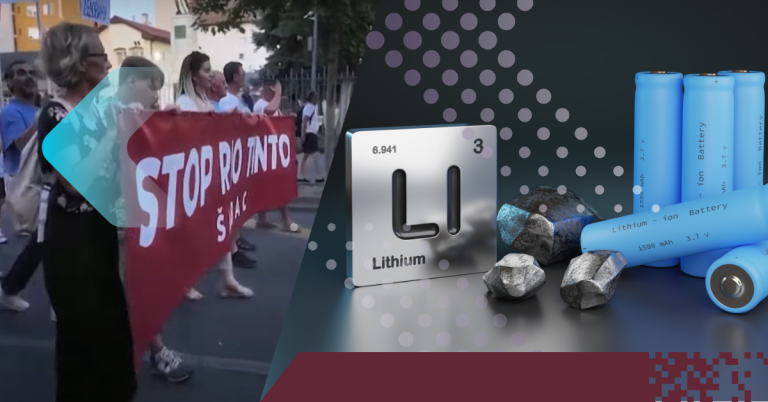
    The controversial lithium and boron mining project in Serbia’s Jadar Valley, spearheaded by Anglo-Australian mining giant Rio Tinto, has been designated as one of 13 strategic projects outside the EU under the European Commission’s Critical Raw Materials Act (CRMA). The move aims to secure long-term access to critical raw materials vital for Europe’s green transition.

    Located in western Serbia, the Jadar Valley is believed to host Europe’s largest lithium reserves and one of the most significant global deposits. The lithium extracted from the site is considered crucial for manufacturing electric vehicle (EV) batteries, an industry central to the EU’s climate and industrial strategies.

    Despite its strategic importance, the Jadar project has sparked intense opposition within Serbia. Environmentalists have organized mass protests since 2021, arguing the mine threatens local ecosystems, water sources, and agriculture. Public pressure led the Serbian government to revoke Rio Tinto’s licenses in 2022—a decision later overturned by the Constitutional Court in 2023.

    The European Commission’s endorsement reflects growing concern over the EU’s dependence on Chinese-dominated supply chains for critical minerals. By supporting the Jadar project, Brussels aims to bolster domestic resilience and reduce geopolitical vulnerability.

    However, local opposition remains firm. Environmental groups warn of renewed protests and blockades if the mine proceeds, arguing that no economic benefit can outweigh the environmental cost.

    Rio Tinto has pledged to meet the EU’s environmental and human rights standards as part of the project’s strategic designation. “The project will undergo multiple stages of scrutiny and public consultation,” said Chad Blewitt, Managing Director of the Jadar project. “It positions Serbia at the forefront of the green and digital revolution.”