Tag: ESG

  • Navoi Mining Secures ESG Rating, Reinforcing Sustainability Commitment

    Navoi Mining Secures ESG Rating, Reinforcing Sustainability Commitment

    Navoi Mining & Metallurgical Company (NMMC), the world’s fourth-largest gold producer, has received its first Environmental, Social, and Governance (ESG) Entity rating from Sustainable Fitch. The company was assigned a rating of ‘3’ on a five-point scale, where ‘1’ indicates low risk and ‘5’ represents high risk, with an overall entity score of 51 out of 100.

    The rating reflects an in-depth evaluation of NMMC’s sustainability initiatives, corporate governance standards, and environmental and social performance. The company’s environmental and social metrics earned a rating of ‘3,’ acknowledging strong internal policies on emissions and water management, an absence of major environmental incidents, and a low gender pay gap. Its corporate governance received a rating of ‘2,’ highlighting adherence to international financial reporting standards, robust internal audits, and a structured risk management framework.

    NMMC’s ESG rating aligns with global mining industry standards, considering the sector’s environmental footprint, high resource consumption, and waste generation. Notably, NMMC is the first mining company in Uzbekistan to secure a public ESG rating, reinforcing its leadership in sustainability and transparency.

    Eugene Antonov, First Deputy CEO and Head of Transformation at NMMC, emphasized the company’s commitment to ESG principles as part of its ongoing transformation program. He also noted that Uzbekistan’s designation of 2025 as the “Year of Environmental Protection and the Green Economy” aligns with NMMC’s sustainability goals under the national “Uzbekistan-2030” strategy.

    Boris Samoylenko, Head of ESG at NMMC, stated that the rating validates the company’s efforts to integrate sustainable practices while setting a benchmark for future improvements in ESG performance.

  • ERG Goes Green with New Wind Farm

    ERG Goes Green with New Wind Farm

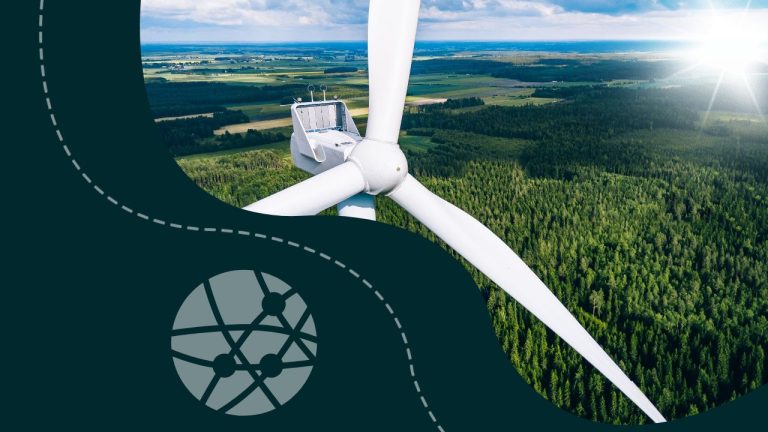
    Eurasian Resources Group (ERG) has begun generating green electricity at its new wind farm in Chromtau, Kazakhstan. The two turbines, the most powerful in the country at 6.25 MW each, mark a significant step in ERG’s decarbonisation strategy.

    This $142 million project will eventually include a 150 MW wind farm powering ERG’s Donskoy GOK ferrochrome plant with 460 million kWh of green electricity annually. This will reduce CO2 emissions by 440,000 tons and prevent the release of over 4,000 tons of other pollutants.

    ERG CEO Shukhrat Ibragimov highlighted the project’s alignment with Kazakhstan’s commitment to carbon neutrality by 2060. He emphasized the company’s dedication to ESG principles and the modernization of Kazakhstan’s industry.

    ERG is also involved in plans for a 200 MW wind farm near Ekibastuz in partnership with Chinese and Kazakh companies, with construction potentially completed by the end of 2026.

  • ALTYNALMAS entered the TOP 3 of the PWC rating for ESG disclosure among mining and metallurgical companies

    ALTYNALMAS entered the TOP 3 of the PWC rating for ESG disclosure among mining and metallurgical companies

    The study was conducted by the auditing company PwC Kazakhstan among 96 organizations. Experts assessed the quality and availability of ESG information in annual reports and sustainability reports. Experts analyzed almost all non-financial reports published in Kazakhstan based on the results of 2022. The report on sustainable development of the gold mining company Altynalmas took 8th place among the best practices for disclosing information in the field of sustainable development, and among mining and metallurgical companies it took 2nd place.
    The assessment methodology included 129 criteria, each position was scored from 1 to 10 points. The criteria included such disclosure blocks as sustainable development strategy, corporate governance, society, ecology, and reporting practices. Additional points were also awarded for clarity, timeliness and quality of presentation of information.

    Emphasizing the status and importance of the principles of sustainable development, Altynalmas has identified 11 priority Sustainable Development Goals, where it can make the greatest contribution. In 2022, AK Altynalmas JSC joined the UN Global Compact and released the first report on Sustainable Development. The company also became a co-founder of the national ESG club, where proposals are being formulated to stimulate ESG activities within the Republic of Kazakhstan.
    “The basis for the Company’s long-term sustainable development is the growth of operational and financial performance in tandem with progress in the social and environmental spheres. Our priorities remain safety with the introduction of the best global practices, innovation and automation of production, support for local communities in the regions where we operate, equal career opportunities, as well as high standards of corporate governance,” noted Balamir, CEO of the Altynalmas Group of Companies, in his address in the SD report MAKHANOV.

    Let us recall that last year the Altynalmas company also took 8th place in the PWC rating for ESG information disclosure among Kazakh companies.

    The top ten ranking includes companies that have demonstrated a high level of disclosure of ESG information at the level of international standards, as noted in the PwC Kazakhstan report.

  • Miners see value in EU focus on ESG but face red tape hurdles

    Miners see value in EU focus on ESG but face red tape hurdles

    Miners welcome the positive impact of Europe’s focus on environment, social and governance issues (ESG) although the process can be riddled with red tape causing delays in achieving their green ambitions, company executives said.

    Mining is crucial for the supply of critical raw materials including copper and aluminium needed for electric vehicles and renewable technologies such as solar power, but miners are also responsible for up to 7% of greenhouse-gas (GHG) global emissions as most in the sector race to hit net zero by 2050.

    Compliance with ESG standards are increasingly important to keep commitments from institutional investors such as pension funds and insurance firms and for bank loans.

    Christel Bories, CEO at miner Eramet told Reuters documentation proving the company’s ESG credentials for bank loans ran into thousands of pages and that the whole process from start to finish could take up to 18 months.

    “We have no problem supplying the evidence… but it does slow down the project,” Bories said.

    One initiative welcomed by metal producers is the EU’s Carbon Border Adjustment Mechanism (CBAM). From October 1, EU firms have to report the GHG embedded during production of imported volumes of some goods including iron and steel, aluminium and electricity.

    CO2 emission charges will not be imposed until 2026.

    “We like it because it gives us a level playing field with other countries,” said Boliden CEO Mikael Staffas, but he added there were issues.

    “One example is if you import copper, turn it into tube and export it, you should get some credit back. This will be an administrative nightmare,” Staffas said referring to the paperwork that would be required.

    Investors want to see mining companies account for and report their emissions consistently and mine in a socially responsible way.

    “There is a concern that there has been a proliferation (of standards) but let’s not forget a lot of these standards have evolved because things in the sector have not been so good in the past,” said Adam Matthews, chief responsible investment officer for the Church of England Pensions Board, which invests in mining companies.

    Boliden’s Staffas cited zero fatalities due to focus on ESG compared with roughly two per annum at some of the largest miners. “We are 15 years fatality free.”

    EU lawmakers are also pushing for far greater recycling of waste in a new law to ensure the bloc has raw materials such as lithium, nickel and cobalt required for its green transition, and traditional recycling companies and newcomers are investing in capacity to produce battery materials.

    Eramet’s joint venture with water company Suez to be located in France’s Dunkirk region is one example.

    The partners are aiming to build a plant to dismantle electric vehicle batteries, followed by a second unit to separate and refine metals for reuse with a low carbon hydrometallurgy process.

  • How does the environmental agenda affect Kazakhstan’s industry?

    How does the environmental agenda affect Kazakhstan’s industry?

    The adoption of ESG principles, encompassing environmental, social, and corporate governance aspects, is gaining momentum worldwide, and Kazakhstan is no exception. According to inbusiness.kz, major manufacturing companies in the country are actively modernizing their facilities, implementing measures to reduce emissions, and promoting waste recycling practices.

    By incorporating ESG principles into their operations, companies can not only improve their environmental impact but also enhance their social and managerial aspects, ultimately leading to improved financial and economic performance. Natalya Lim, a partner at PwC, emphasizes the urgent need for a global and unified approach to address critical issues such as climate change, poverty, inequality, and water scarcity.

    Lim believes that the corporate sector plays a decisive role in overcoming these challenges, and organizations in Kazakhstan are demonstrating their readiness to take responsibility and drive positive changes. In the industrial sector, companies like “KazMunaiGaz” are leading the way by adopting their own “Low Carbon Development Program for 2022-2031.” The objective of this program is to reduce greenhouse gas emissions by 15% by 2031 compared to the baseline year of 2019.

    Moreover, “KazMunaiGaz” is actively collaborating with partners to develop renewable energy projects with a total capacity of at least 1 gigawatt, along with an energy storage system of 300/600 megawatts. These efforts reflect the commitment of Kazakhstani companies to sustainable development and their contribution to mitigating environmental challenges while driving economic growth.
    Another industrial giant, Eurasian Resources Group, is actively working on reducing emissions at its facilities and minimizing their environmental impact. For instance, on August 10th, they showcased a unique ore processing plant for handling the tailings of the Donskoy Mining and Processing Plant to the Prime Minister of Kazakhstan, Alihan Smailov. This plant was built by the multinational company “Kazchrome” (a subsidiary of ERG) in the city of Khromtau, Aktobe region.

    Why is this project important? The Donskoy Mining and Processing Plant was founded in 1938 in Khromtau and is the world’s second-largest deposit of confirmed chromium reserves. The ore extracted here is used for the production of ferroalloys in metallurgy, the manufacturing of refractories, and in the chemical industry for producing chromium compounds.

    Every year, in the process of crushing and grinding chromium ore at the plant, around 900,000 tons of tailings waste are generated. Currently, there are already 14.5 million tons of accumulated tailings containing up to 35% chromium oxide. “Kazchrome” decided to address this issue by constructing the ERG Green ore processing plant.

    This plant will enable the extraction of chromium oxide from the tailings through gravity-based enrichment, and the resulting commercial concentrate can be used in metallurgy for further processing.

    The new facility will allow for the processing of approximately 1.7 million tons of tailings annually, both the existing waste and the continuously generated new waste. Consequently, this will not only improve the environmental conditions in the Aktobe region but also enhance the economic efficiency of the plant itself.

    “The most important thing is that after processing, the tailings must be properly reclaimed in accordance with all environmental standards to minimize the impact on the environment and public health,” commented Alihan Smailov during his visit to the factory.

    In parallel with this, by the end of 2024, as part of the program for processing accumulated tailings, three more initiatives are planned to be implemented. As a result, ERG will ensure the production of 200,000 tons of ferrochrome, leading to an additional revenue of approximately 10 billion tenge in tax receipts annually for the state.

    “Following the company’s mission and ESG principles, management must ensure high environmental standards. Therefore, the group has developed an Environmental Strategy as part of our comprehensive ‘Green Metallurgy’ program. Within the environmental strategy until 2030, we plan to invest 228 billion tenge,” noted Shuhrat Ibragimov, Chairman of the Supervisory Board and member of the Board of Directors of ERG, during the project presentation.

    Investors are involved in the process
    Initiatives like these require substantial investments, and modernizing existing facilities or building new ones is difficult without the assistance of investors.

    For example, the total investment in the ERG Green plant project amounted to 96 billion tenge. Part of the funding was provided by the Development Bank of Kazakhstan, which, according to the project list, has actively begun working in the ESG direction.

    “We consider supporting projects that adhere to the principles of sustainable development to be important. This project aligns with the Environmental Code’s principles of sustainable development – the preservation of natural resources for current and future generations, as well as the principle of integration – the balance between environmental tasks and economic development,” commented Marat Yelibaev, Deputy Chairman of the Board of BRK.

    Like other development institutions, the Development Bank of Kazakhstan is focusing on projects that incorporate ESG principles into their operations. For instance, earlier this year, the bank issued its first “green” bonds, and the proceeds from the bond issuance were directed towards a project by the KEGOC company for modernizing the power grids in Western Kazakhstan.

    In the summer, a credit agreement was signed with the “Almaty Power Plants” to convert TEC-2 in Almaty to natural gas. This project will be financed jointly with the European Bank for Reconstruction and Development and the Asian Development Bank.

    From the example of BRK and other financial institutions, a clear trend is emerging: ESG initiatives of businesses are of interest to investors. This signals that in the near future, many more environmental projects will be implemented by industrial and infrastructure companies.

  • For critical minerals supply we need investment standards, BHP boss warns

    For critical minerals supply we need investment standards, BHP boss warns

    Speaking at the International Energy Agency’s inaugural critical minerals conference in Paris, Henry called for a “small set of common standards” covering environmental, social and governance to underpin access to the capital required for investment the sector.

    Critical minerals, essential for a range of clean and renewable energy technologies, have risen in the policy and business agenda, but a combination of volatile price movements, supply chain bottlenecks and geopolitical concerns have created a potent mix of risks for secure and rapid energy transitions. This has triggered a scramble across the world to enhance the diversity and reliability of critical mineral supplies.

    The head of the Australian multinational mining and metals public company, based in Melbourne, said urbanisation, industrialisation and population growth were driving demand for minerals such as copper, nickel and lithium and steel-making raw materials, along with a push to decarbonise economies.

    “Governments must provide predictability and stability to attract capital at the lowest possible cost and as quickly as possible,” he said.

    “This means stable fiscal settings, streamlined planning and permitting processes and harmonised standards. Too often we see short-termism in government policy, or policies which seek to meet near term political objectives, but which show limited understanding of what drives investment.”

    Australia is the world’s leading producer of unprocessed lithium, the world’s third-largest cobalt exporter and the fourth-largest exporter of rare earths, which are in increased demand from Europe. Australia is also the fourth-largest exporter of mined copper and nickel and a significant producer of aluminium.

    Using copper as a case study, BHP estimated that about $250-billion in growth capital to 2030, in addition to sustaining capital, was needed to support the climate decarbonisation required for a “plausible 1.5 degrees scenario”.

    Addressing the meeting in Paris were several government ministers, including US Energy Secretary Jennifer Granholm, who cautioned about the potential for critical minerals supplies to be “weaponised”.

    Henry called for a global convergence of environmental, social, and governance (ESG) standards.

    “We need a small set of common standards, upheld by all, and where performance against those standards is a greater and increasing determinant of access to capital,” he said.

    Miners, Henry added, should be granted access to resources based on the value they create, including for host communities and First Nations peoples.

    “Opening a mine, done well, creates sustainable wealth and jobs… But of course, this must be done with least possible impact to the environment,” he said.

    In remarks likely aimed at China, Granholm said the world was up against a dominant supplier of critical minerals that “was willing to exploit its market power for political gain”, and warned that energy security would become increasingly complex due to the transition to cleaner power.

    “But our global energy crisis has taken on a new dimension, which is the urgency of this clean energy transition,” she said.

    IEA executive director Fatih Birol said locking in secure and sustainable supplies of critical minerals for the clean energy transition had quickly become a top priority for governments, companies and investors around the world.

    “When we look at both the production and the refining, processing of the critical minerals we see a very high level of concentration,” he said in opening remarks to the conference.

    “Looking at the history of energy in the last 100 years, when there was major concentration of one single country, one single company, one single route, there’s always a challenge.”

    In a recent report, the IEA highlighted the current concentration of supply, with the Democratic Republic of Congo dominating cobalt stocks, China holding half of planned lithium chemical plants and Indonesia representing nearly 90 per cent of planned nickel refining facilities.

  • Steppe Gold Issues Inaugural ESG Report

    Steppe Gold Issues Inaugural ESG Report

    Steppe Gold Ltd. (TSX: STGO) (OTCQX: STPGF) (FSE: 2J9) (“Steppe Gold” or the “Company“) is pleased to announce the release of its inaugural Environmental, Social and Governance (“ESG“) Report. The report is the Company’s first annual disclosure of its approach and performance on a range of material ESG topics as well as the Company’s plans and priorities for 2023 and beyond. The report is available on Steppe Gold’s website at www.steppegold.com under Sustainability. The Company has also shared a corporate video highlighting its ESG efforts: Steppe Gold – Embracing Sustainable Mining in Mongolia.

    Steppe Gold’s 2022 ESG Report summarizes its strategy, efforts, and actions for responsible and sustainable operations since 2018. The Report provides enhanced transparency regarding the Company’s ESG efforts and approach to managing ESG factors that have the greatest potential to impact Steppe’s value and success. Building on the Company’s commitment to ongoing transparency and disclosure, the ESG Report has been prepared in alignment with the Sustainability Accounting Standards Board (SASB) Metals & Mining Sustainability Accounting Standard.

    Steppe Gold Chairman and CEO, Mr. Bataa Tumur-Ochir, noted, “I am delighted to present our inaugural ESG report, encompassing the period from 2018 to 2022. As our vision is to create long-lasting value for all stakeholders, promote social and economic development in our local community, and responsibly manage our impact on the environment, I am proud to say that Steppe Gold has been committed to social responsibility to ensure our mines and communities are sustainable and profitable for many years to come.”