Tag: Environmental standards

  • Kazakhmys and CNCEC Consortium to Construct New Sulfuric Acid Plant at Zhezkazgan Smelter

    Kazakhmys and CNCEC Consortium to Construct New Sulfuric Acid Plant at Zhezkazgan Smelter

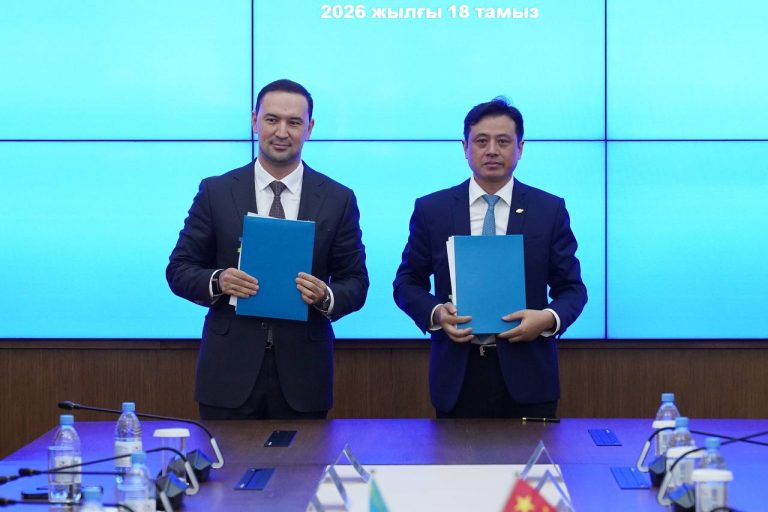
    Kazakhmys, a leading player in the mining and metallurgy sector, has announced a significant development in its operations with the signing of an agreement with a consortium from the China National Chemical Engineering Company (CNCEC) to construct a new sulfuric acid plant at its Zhezkazgan copper smelter in Kazakhstan. The engineering, procurement, and construction (EPC) contract is valued at approximately $213.76 million, marking a substantial investment in the modernization of the facility.

    The decision to build the new sulfuric acid plant is part of a broader initiative aimed at modernizing the Zhezkazgan copper smelter and aligning it with contemporary environmental standards. The existing metallurgical gas utilization infrastructure, which dates back to the 1970s, is in dire need of technological upgrades. The project will not only involve the construction of the new production facility but also the modernization of the process gas capture and purification system, which will include the installation of advanced equipment such as converter enclosures, cooling towers, and electrostatic precipitators.

    One of the key goals of this project is to enhance the efficiency of gas capture, with expectations that the new system will achieve a capture rate of 99%. Furthermore, the residual sulfur dioxide concentration in the treated gases will meet the stringent requirements outlined in the international Best Available Techniques Reference Documents (BREF), significantly reducing SO₂ emissions and the overall environmental impact of the Zhezkazgan smelter.

    The new sulfuric acid plant is designed to have a production capacity of 350,000 tons per year and will be capable of processing up to 300,000 normal cubic meters of process gases per hour. The commissioning of the plant is tentatively scheduled for 2028, with full-scale mobilization and preparatory work expected to commence by the end of 2026. The construction and installation phase is projected to take around 29 months.

    This initiative is a crucial part of Kazakhmys’ long-term modernization program for the Zhezkazgan copper smelter, aimed at improving the reliability of the gas purification system and ensuring compliance with modern environmental regulations. Kazakhmys Group, known for its vertically integrated operations in mining and non-ferrous metallurgy, ranks among the top producers globally, holding the 20th position in copper-in-concentrate production and 12th in blister and cathode copper production, according to the company’s website.


  • Armenia’s Prime Minister Calls for Transparency and Higher Standards in Mining at Tsaghkadzor Forum

    Armenia’s Prime Minister Calls for Transparency and Higher Standards in Mining at Tsaghkadzor Forum

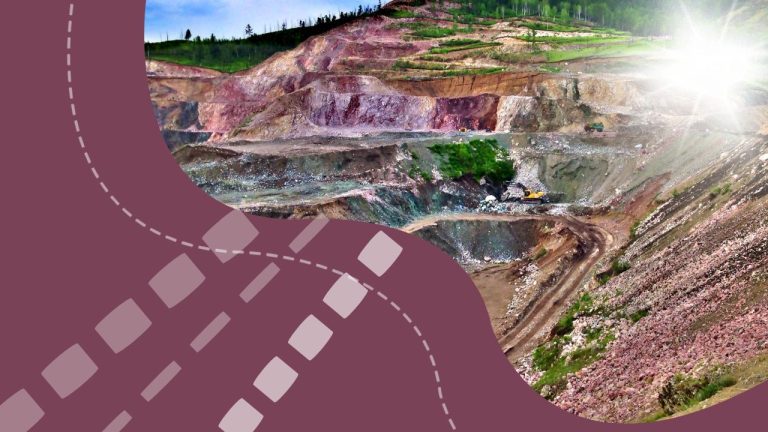
    The Mining Armenia Forum 2025 opened on Friday in the resort town of Tsaghkadzor, bringing together government officials, industry leaders, and experts to discuss opportunities and challenges facing Armenia’s mining sector.

    Prime Minister Nikol Pashinyan, delivering opening remarks, underscored the importance of transparency, professionalism, and education in the industry. He acknowledged the sector’s negative public perception and emphasized the need to rebuild trust.

    “We must recognize that the subsoil belongs to the people and the state, and it is essential for citizens to feel this is true,” Pashinyan stated. Highlighting state participation in the Zangezur Copper-Molybdenum Combine and the Amulsar mine, he noted that these projects symbolize shared national ownership.

    According to Pashinyan, the Zangezur Copper-Molybdenum Combine paid 148% more in taxes between 2018 and 2025 compared with the previous seven years. “What matters is not only the revenue growth for the state budget, but the fact that these funds translate into roads, schools, kindergartens, and security,” he said.

    The Prime Minister also stressed Armenia’s efforts to align its mining practices with leading international environmental standards, particularly as the country prepares to host the COP17 Biodiversity Conference in 2026. “Changing traditions is not easy, but care for the environment is a priority,” he said.

    He further emphasized mining as a knowledge-based industry requiring highly qualified professionals across multiple fields, noting its role in driving education, business development, and career opportunities for Armenians. “The more we raise our standards, the more highly skilled professionals we will produce,” he added.

  • EU Urged to Prioritise ESG in Central Asia’s Raw Materials Push

    EU Urged to Prioritise ESG in Central Asia’s Raw Materials Push

    The EU must prioritize Environmental, Social, and Governance (ESG) principles in its dealings with Central Asia to secure its access to crucial raw materials, commentators warn.

    The bloc arrived in Samarkand this April with a hefty €13.2 billion Global Gateway package, signaling a desire to move beyond merely buying raw materials from the region. A significant portion, €2.5 billion, is earmarked for new mining and processing projects in Kazakhstan, Uzbekistan, and beyond. This drive is born out of necessity: the EU still relies entirely on China for its heavy rare-earth imports and faces the growing risk of vulnerability.

    While geographically late to the game, Europe has a unique advantage: a reputation for robust ESG practices. Local executives cite European partners as “a sign of quality” due to their unwavering adherence to these standards, something often lacking in Chinese or Russian counterparts. However, this edge relies on Brussels consistently embedding ESG into every euro invested. This means robust monitoring and auditing of remediation plans, transparent royalty structures, and genuine upfront consultation with local communities.

    The EU’s Critical Raw Materials Act (CRMA) sets ambitious goals: attaining 10 percent mining, 40 percent processing, and 25 percent recycling of Europe’s annual CRM demand domestically or in trusted partner states by 2030.

    Realising these goals in Central Asia necessitates investment in sustainable technologies. This includes financing water-efficient processing plants, closed-loop waste systems, and solar-powered smelters, rather than simply opening more exploitative mines.

    The EU’s efforts are beginning to take shape, with the spotlight falling on graphite. Kazakhstan’s Sarytogan deposit has been placed on the EU Commission’s list of “strategic projects” eligible for expedited permits and loan guarantees under the CRMA. Meanwhile, the European Bank for Reconstruction and Development has taken a significant stake in the mine operator, marking a direct investment in the region’s CRM sector. The EU is now actively seeking downstream investors to refine indigenous graphite into anode-grade product, capturing added value that historically flowed to Chinese refiners.

    Lithium development is following a similar trajectory. A partnership between HMS Bergbau and Kazakhstan’s Creada Corporation aims to unlock the potential of Kazakh spodumene through extraction, processing, and refining into battery-ready lithium hydroxide. This would be a direct response to the EU’s new battery-passport regulations, which require materials of a certain purity.

    However, Europe faces a formidable competitor: China. The PRC Mineral Resources Law mandates environmental remediation planning before mining commences, setting a new baseline for responsible resource extraction. While welcomed, the application details remain vague, lacking guarantees on local community engagement and enforcement mechanisms, potentially creating loopholes for exploitation.

    Adding to the pressure, Chinese capital is expanding downstream. East Hope Group’s landmark $12 billion investment in Kazakh non-ferrous metals signifies a vertical integration approach—from mining and smelting to fabrication and renewable power generation. This $12 billion vertical integration project in Kazakhstan showcases China’s willingness to build a fully controllable supply chain.

    Europe must act strategically to counter these challenges.

    Firstly, financial aid should be contingent on stringent ESG benchmarks. EU financing must go hand-in-hand with clear, enforceable standards – ISO-compliant tailings dams, methane monitoring, gender-balanced workforce plans, and robust penalties for non-compliance.

    Secondly, the EU should focus on fostering value-adding industries beyond mining. This means investing in processing plants and recycling facilities, not just mines. By creating domestic processing hubs for cathode powders or rare-earth magnets, the CRMA’s 40 percent processing target can be achieved, generating jobs, technology transfer, and increased tax revenue for beneficiary countries.

    Finally, the EU must simplify visa requirements for Central Asian technical personnel. A targeted visa-facilitation agreement could allow them to train in Europe and return, strengthening the region’s skilled workforce.

    Securing a stable and sustainable supply of raw materials is a critical challenge for the EU. While China’s economic clout is undeniable, Europe has the opportunity to win this race by leveraging its commitment to ESG principles and building a truly sustainable, transparent, and trust-based partnership with Central Asia.

    Time is of the essence. The next 18 months, before China’s revised mining law takes full effect and East Hope’s megaproject begins construction, provide a crucial window for the EU to demonstrate its commitment to ESG beyond rhetoric. The stakes are high, as the fate of Europe’s essential raw materials supply hangs in the balance.

  • EU’s Pro-Business Roadmap Emphasises Mining Amid Economic Shift

    EU’s Pro-Business Roadmap Emphasises Mining Amid Economic Shift

    On Wednesday  29 January 2025, the European Union introduced a pivotal roadmap aimed at making Europe more business-friendly after years of prioritising green goals. With US President Trump’s aggressive trade policies and China’s technological advancements, the EU seeks to bolster growth by alleviating corporate burdens.

    “We need to reignite Europe’s innovation engine,” EU chief Ursula von der Leyen told a news conference to present the “competitiveness compass” — the first major initiative of her second mandate.

    Specific measures proposed:

      • Creating a new legal regime for innovative companies across the EU
      • Facilitating long-term energy agreements and grid investments
      • Providing targeted aid for industrial decarbonisation
      • Revising competition rules to allow creation of European tech giants
      • Promoting more mining in Europe for critical raw materials
      • Removing barriers in the EU single market for key sectors
      • Creating a “European savings and investments union” to boost startup funding

    The plan aims to streamline regulations, reduce energy costs for businesses, and support the development of green technologies. To achieve this, the EU will revise numerous laws, including those related to environmental standards and supply chains, to reduce the burden on companies.

    A key element of the strategy is to increase the EU’s self-sufficiency in critical raw materials, such as rare earths, which are essential for many advanced technologies. The EU currently relies heavily on imports from China and other countries for these materials.

    To address this dependency, the EU plans to encourage more mining within its borders. The European Commission has already received 170 mining projects and aims to facilitate the permitting process. The plan also includes provisions for joint purchases of critical raw materials and international partnerships to secure supply lines.

    This initiative has sparked concerns from environmental groups, who worry that it could lead to the weakening of environmental protections. However, the EU maintains that it remains committed to its climate goals, including achieving carbon neutrality by 2050.

    The EU’s new plan reflects the growing global competition for resources and technological dominance. By focusing on mining and streamlining regulations, the EU aims to strengthen its industrial base and secure its position in the global economy.

  • Rio Tinto’s Serbian Lithium Project: A Major Boost for Economy and Jobs

    Rio Tinto’s Serbian Lithium Project: A Major Boost for Economy and Jobs

    Rio Tinto’s ambitious lithium project in Serbia is projected to attract 6 billion euro ($6.5 billion) in investments and create 20,000 jobs, according to Goran Vesic, Serbia’s infrastructure minister. Vesic revealed in an interview with local TV Happy that the country aims to become a key player in the battery and electric car manufacturing industry, with facilities set to utilize domestic lithium. Serbia secured a total of 4.5 billion euro in investments in 2023, showcasing its growing economic potential.

    Addressing environmental concerns, Vesic emphasized that the Serbian government demands the highest ecological standards for the $2.55 billion Jadar project. Rio Tinto is required to submit an environmental impact assessment study for the mine. Vesic highlighted the significance of a recently signed memorandum of understanding between Serbia’s government and the European Union (EU), marking a pivotal moment in the country’s EU accession process. This agreement follows the reinstatement of permits for Rio Tinto’s lithium mine in the Jadar Valley, which had previously sparked protests over environmental issues.

    Serbia’s president, Aleksandar Vucic, noted in a recent interview that the mine is expected to produce 58,000 tons of lithium per year, potentially supporting 17% of EV production in Europe, or about 1.1 million cars annually. The jadarite reserve, discovered by Rio in 2004, is set to become a cornerstone of Serbia’s industrial future, with plans for an underground mine to be completed by 2026.

  • Rio Tinto Affirms Commitment to Jadar Project Amid Environmental Concerns

    Rio Tinto Affirms Commitment to Jadar Project Amid Environmental Concerns

    Rio Tinto’s Country Head for Serbia, Marijanti Babic, expressed unwavering confidence in the Jadar project, emphasizing its potential to meet the highest environmental standards. In an interview with Novosti, she stressed the project’s significance, positioning it as one of Europe’s most promising lithium deposits, poised to elevate Serbia’s role in the global green transition. Babic underscored the necessity of adhering to Serbian laws and European Union regulations, particularly highlighting the introduction of a “battery passport” in Europe to ensure the sustainability of materials used in electric vehicle batteries. Addressing investment and job creation prospects, Babic revealed that the planned investment for the project amounts to 2.55 billion euros, with potential to create 3,500 jobs based on 2011 data. Moreover, she estimated that the state could earn approximately 180 million euros annually from taxes and mining rent, constituting about one percent of state budget revenues. While Babic clarified that no agreement on the project’s realization has been signed yet, only a memorandum of 2017 exists, outlining a framework for cooperation in its implementation.