Tag: Energy transformation

  • Transformation is Shaping Almalyk Mining and Metallurgical Complex

    Transformation is Shaping Almalyk Mining and Metallurgical Complex

    Uzbekistan is witnessing the emergence of a new industrial identity — one grounded in sustainability, efficiency, and global competitiveness. At the heart of this transformation stands the Almalyk Mining and Metallurgical Complex (AMMC), which is rapidly evolving from a traditional industrial flagship into a high-tech, responsible enterprise meeting international standards.

    The ongoing transformation at AMMC spans several key areas: finance, corporate governance, environmental responsibility, and digitalisation. This ambitious programme represents a strategic initiative poised to significantly influence the pace and quality of the company’s development in the years ahead.


    Transparency Through Numbers

    Openness begins with accurate reporting. Since 2019, AMMC has adopted International Financial Reporting Standards (IFRS), a critical step towards improving transparency and boosting the company’s investment appeal.

    “The transition to IFRS enabled AMMC to obtain international credit ratings from the world’s leading agencies. These ratings were instrumental in successfully securing nearly $2 billion in funding from international financial institutions and banks — directly, without intermediaries,” said Boburjon Siddiqjonov, Head of the Project Office for Transformation, ESG, and International Ratings.

    This achievement has helped reduce the company’s debt burden and freed up resources for strategic investment in AMMC’s continued development.


    Corporate Governance: From Compliance to Excellence

    A critical part of AMMC’s transformation lies in rethinking its management practices. To ensure the enterprise is not only efficient but also sustainable and globally competitive, a dedicated project office for transformation, ESG, and international ratings has been established. This team is tasked with implementing global best practices — from transparent reporting to strategic planning.

    “Key reforms were carried out in collaboration with leading consultancy firms. For example, AMMC’s mineral reserves were re-evaluated using the globally recognised JORC Code. In parallel, a comprehensive development strategy was drawn up through to 2030,” Siddiqjonov added.

    Efforts have also been made to combat corruption and ensure procurement transparency. A thorough audit conducted with major international firms identified vulnerabilities and offered corrective measures. Additionally, the entire “copper chain” — from open-pit mining to the smelting plant — underwent an in-depth evaluation, resulting in a new roadmap to optimise production processes.


    Environmental Responsibility: A Mark of Global Standards

    AMMC is currently pursuing certification under The Copper Mark, an international seal of approval for responsible copper producers. This certification is crucial to enhancing global competitiveness. It allows the company to sell its products at a premium, attract green financing — particularly in Europe — and take part in environmentally focused investment programmes.

    AMMC has also received an ESG rating of ‘3’ with a score of 56 from Sustainable Fitch — the highest among Uzbekistan’s mining and metallurgical enterprises and one of the top ratings in Central Asia.

    This year, AMMC plans to unveil a greenhouse gas emissions reduction strategy, aiming to cut emissions by at least 15% by 2030. In addition, it will plant 370,000 trees annually as part of its broader ecological initiative.


    Digital Transformation in Action

    Digitalisation is another cornerstone of AMMC’s transformation. Financial and accounting reports are now generated automatically using the 1C:ERP system, halving the time needed to prepare documents.

    Warehouse, fuel, and weighing operations have all been automated. At the copper concentration plant, digital weighing systems with 99.8% accuracy have been installed. Moreover, a contactless fuelling system has been introduced — drivers now use ID cards instead of relying on operators, streamlining the process and mitigating corruption risks. These improvements have already saved 89 billion Uzbek soms in diesel costs alone.

    “Digitalisation is already generating an annual economic return of 9.1 billion soms for the company,” Siddiqjonov noted.


    What’s Next for AMMC?

    2025 is set to be a pivotal year. AMMC plans to secure a climate strategy grant from the Asian Development Bank and to begin reporting under the new IFRS S1 and S2 climate standards.

    “Our team faces ambitious goals: complete The Copper Mark certification, publish the first climate report, prepare for a Eurobond issuance, and obtain ISO certification in information security,” said the company representative.

    AMMC’s transformation is far more than a company-wide initiative — it’s a reflection of a broader national agenda aimed at building a modern, resilient, and competitive economy. By embracing global best practices and pursuing strategic long-term priorities, AMMC is helping to shape Uzbekistan’s industrial future.

  • KGHM and ARP Forge Partnership for Renewable Energy Development

    KGHM and ARP Forge Partnership for Renewable Energy Development

    Listed copper producer KGHM has taken a significant stride towards renewable energy integration by signing a letter of intent with the state industrial development agency ARP, as announced in a press release by KGHM.

    The letter of intent delineates a framework for collaboration between KGHM and ARP, particularly in the realm of renewable energy sources and the facilitation of energy transformation initiatives. Among the key aspects outlined in the agreement is the joint analysis of real estate resources to identify potential investments and the exploration of opportunities for co-implementing projects.

    Additionally, both parties have committed to fostering dialogue with stakeholders from the state administration, European Union institutions, and industry organizations concerning matters pertaining to energy transition.

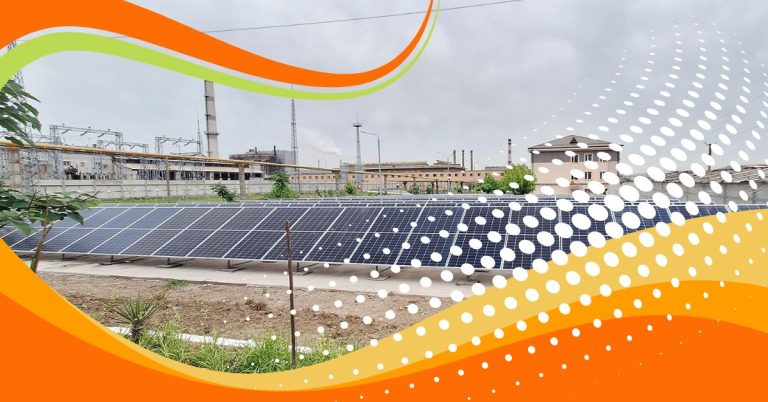
    In a statement quoted in the press release, KGHM CEO Andrzej Szydlo expressed the company’s strategic approach to bolstering its renewable energy capacity. Szydlo highlighted KGHM’s plans to augment its photovoltaic sources, both through independent investments on its sites and acquisitions of pre-existing plants within the country. The incorporation of photovoltaic farms into KGHM’s assets is viewed as a measure to mitigate market volatility in the energy sector, with the recently acquired installations projected to cover approximately 2 percent of the company’s electricity consumption.

    Echoing this sentiment, KGHM’s CFO, Piotr Krzyżewski, emphasized the company’s commitment to reducing carbon emissions by increasing the share of renewable energy sources in its energy mix by 2030. Krzyżewski underscored specific projects, including photovoltaic power plant installations at various KGHM facilities such as the Glogow smelter, the Cedynia smelter, the Tailings Plant, and the Obora sand plant.

    The signing of the letter of intent took place during the European Economic Congress held in Katowice, marking a pivotal moment in KGHM’s journey towards sustainable energy practices.

  • PGE Polska Grupa Energetyczna S A : with the approval of the Board of Directors of the European Investment Bank to support the financing of the Baltica Offshore Wind Farm

    PGE Polska Grupa Energetyczna S A : with the approval of the Board of Directors of the European Investment Bank to support the financing of the Baltica Offshore Wind Farm

    The European Investment Bank (EIB) approved the in-principle financing of the Baltica OWF project to be implemented by the PGE Group. The total financing package amounts to EUR 1.4 billion. This is a significant step towards ensuring an optimal financing structure that will enable the construction of PGE’s first offshore wind farms in the Baltic Sea.

    Project will consist of several sages – for each of the stages of the Baltica OWF – stages Baltica 2 and Baltica 3 – there is one tranche to be disbursed in the Project Finance formula in the amount of up to EUR 350 million, and one tranche to be disbursed based on guarantees from financial institutions, banks or export credit agencies.

    Accelerating the energy transformation is a priority, which is why the EIB Group and the European Commission established the REPowerEU initiative. This aims to make the European Union independent of Russian energy resources and move the EU energy sector towards renewable energy. The Baltica Offshore Wind Farm project meets these goals.

    Obtaining a preliminary credit decision from the European Investment Bank is a significant step for financing the construction of the largest offshore wind farm in the Baltic Sea. The presence of a recognized and experienced international financial institution in financing the project is a signal that we are a reliable partner for financial institutions, the projects we run meet the highest standards, and the interest of the financial sector in cooperation with PGE in the field of offshore wind energy is really high

    Wojciech Dąbrowski, President of the Management Board of PGE Polska Grupa Energetyczna.

    Diversification of energy sources and independence from fossil fuels are key tasks for Poland and the European Union, and Baltica Offshore Wind Farm is a very important project implementing these goals. Supporting energy transition is a priority for the EIB as it accelerates green economic development and supports labor market

    Vice-President of the EIB, prof. Teresa Czerwińska.

    PGE is building the Baltica OWF together with its Danish partner – Ørsted. The project with a total capacity of approx. 2.5 GW consists of two stages – Baltica 2 with a capacity of approx. 1.5 GW, which is scheduled to be commissioned in 2027, and Baltica 3 with a capacity of approx. is planned by the end of this decade.

  • Polish government outlines offer to buy coal assets from state energy firms

    Polish government outlines offer to buy coal assets from state energy firms

    [vc_section][vc_row][vc_column width=”1/6″][/vc_column][vc_column width=”1/2″][vc_row_inner][vc_column_inner][vc_empty_space][vc_column_text]

    Poland’s government has outlined details of the billions of zloty it is proposing to pay state energy firms to buy their coal assets.

    [/vc_column_text][/vc_column_inner][/vc_row_inner][vc_empty_space][vc_separator][vc_empty_space height=”10px”][vc_row_inner][vc_column_inner width=”2/3″][widget-SocialWidget][/vc_column_inner][vc_column_inner width=”1/3″][link url=”https://notesfrompoland.com/2023/07/17/polish-government-outlines-offer-to-buy-coal-assets-from-state-energy-firms/” content_text=”News source”][/vc_column_inner][/vc_row_inner][vc_empty_space][vc_column_text]The move is part of a process to create a new separate entity to gradually wind down the use of coal and allow other energy firms to focus on developing lower-emission sources.

    The four firms – PGE, Tauron, Energa and Enea – on Friday received a proposal from the state assets ministry on behalf of the state treasury. It outlined purchase prices and debt settlement mechanisms that will now be negotiated further.

    Enea would receive almost 2.5 billion zloty (€560 million) for its shares in Enea Wytwarzanie – Poland’s largest producer of electricity from hard coal – and 632 million zloty for Enea Elektrownia Połaniec, a coal power plant. The state treasury will also provide guarantees covering up to 70% of 2.4 billion zloty in debts owed to Enea by the subsidiaries.

    A similar purchase amounting to 849 million has been proposed to PGE, 153 million to Energa and a symbolic 1 zloty to Tauron. PGE and Tauron have also been offered deals relating to debt owed by their subsidiaries.


    The state assets ministry notes that the offer made on Friday is part of the “final phase” in setting up an entity called the National Energy Security Agency (NABE), which was approved by the government last year.

    NABE is being created to take control of state energy firms’ coal assets, which in turn is supposed to help those firms more easily obtain financing for investment in cleaner forms of energy.

    Poland still produces around 70% of its electricity from coal, by far the highest proportion in the European Union. While the government still sees coal remaining the main source of energy for some time, it has taken steps to transition towards renewables and nuclear, which together will generate three quarters of power by 2040.


    “NABE will guarantee energy security in the transformation process,” wrote the ministry on Saturday. It noted that, as a result of EU climate policies, “financial institutions have been limiting their involvement in financing entities with coal assets”.

    Wojciech Dąbrowski, the CEO of PGE, said that he welcomed the ministry’s proposal, which would help his firm with “obtaining financing for investments in line with the strategic direction that we – as a leader of the energy transformation in Poland – have set for ourselves”.

    Shares in the four state energy firms subject to the proposal rose this morning – 30% for Enea, 24.7% for Tauron, 20% for PGE and 4% for Energa – notes financial news service Bankier.pl


    Under plans being developed by the government and state energy firms, Poland’s first nuclear power plant is due to open by 2033, with two more to subsequently follow.

    A number of state and private firms are also developing plans to launch so-called small modular reactors (SMRs) to produce nuclear energy.

    Recent years have seen a rapid expansion in renewables, especially solar, in Poland. The government and state energy firms are also planning to develop both offshore and onshore wind in the coming years.


    Main image credit: Enea press materials[/vc_column_text][vc_empty_space][epic_post_tag compatible_column_notice=”” font_size=”17px”][/vc_column][vc_column width=”1/6″][vc_text_separator title=”LATEST NEWS” color=”juicy_pink”][vc_empty_space height=”10px”][widget-LatestPosts post_number=”4″][vc_empty_space height=”10px”][vc_text_separator title=”MOST POPULAR” color=”juicy_pink”][vc_empty_space height=”10px”][widget-popular-posts post_count=”4″][vc_empty_space][vc_wp_search title=”Search”][vc_empty_space][lvs display_like=””][/vc_column][vc_column width=”1/6″][/vc_column][/vc_row][/vc_section][vc_section][vc_row][vc_column][distance desktop_type=”50″][/vc_column][/vc_row][vc_row][vc_column width=”1/2″][epic_block_28 compatible_column_notice=”” number_post=”6″ post_offset=”0″ first_title=”You may also like”][/epic_block_28][vc_empty_space][/vc_column][vc_column width=”1/2″][epic_hero_5 compatible_column_notice=”” hero_margin=”0″ content_filter_number_alert=”” post_offset=”0″][/vc_column][/vc_row][/vc_section]